Welcome to the beautiful, chaotic, and incredibly rewarding world of parenting with a pup! You envisioned idyllic walks in the park, your baby cooing softly in the stroller and your loyal dog trotting happily by your side. The reality? It often feels more like you’re trying to pilot a land-speeder with one hand while wrangling a furry Wookiee with the other. If your dog pulls, lunges, or zig-zags, turning every walk into a stressful ordeal, you are absolutely not alone.
The good news is that achieving those peaceful strolls is not a far-off dream. It’s an attainable skill that requires patience, the right techniques, and a little bit of understanding from both ends of the leash. This guide is your complete roadmap. We’ll break down the process into simple, manageable steps, from choosing the right gear to mastering the walk itself. Get ready to transform your walks from a source of stress into a cherished part of your family’s routine.
Gearing Up for Success: The Right Tools for the Job
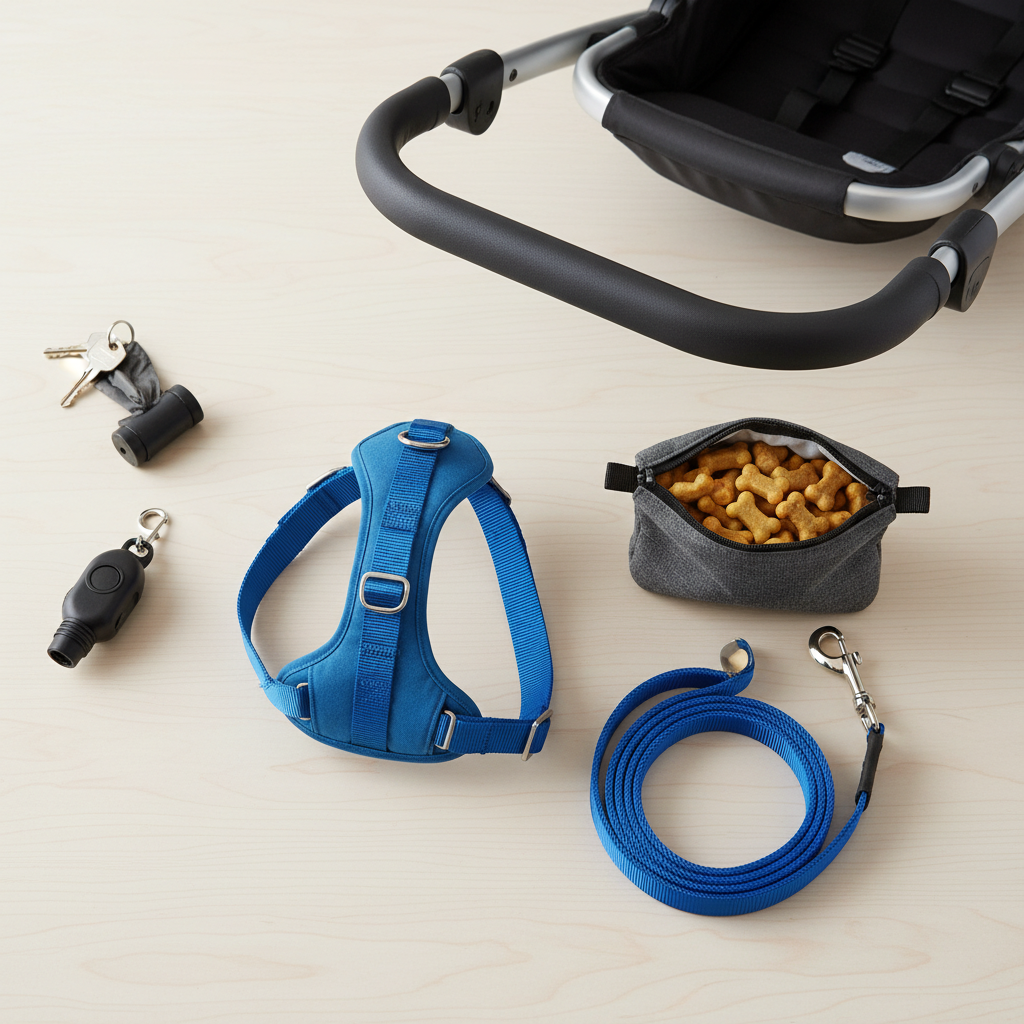
Before you even think about hitting the pavement, let’s make sure you have the right equipment. Using the proper tools can make the training process infinitely easier and safer for you, your baby, and your dog. Think of it as setting the stage for a successful performance!
The Essentials for Stroller Walks
- A Maneuverable Stroller: You’ll have one hand on the leash and one on the stroller. A stroller that you can steer easily with one hand is a game-changer. Test it out before you bring your dog into the equation.
- A Standard 6-Foot Leash: This is non-negotiable. Avoid retractable leashes at all costs. They offer very little control, can malfunction, and teach dogs that pulling extends their range—the exact opposite of what we want. A simple, sturdy nylon or leather leash is perfect.
- The Right Harness or Collar: For pullers, a standard collar can put dangerous pressure on their trachea. A well-fitted harness is a much better option. Front-clip harnesses are particularly effective because when the dog pulls, it gently turns them back toward you, discouraging the forward pulling motion.
- A Treat Pouch & High-Value Rewards: Fumbling for treats in your pocket while managing a stroller and a dog is a recipe for frustration. A treat pouch worn on your hip allows for quick, easy access to rewards. And don’t skimp on the quality! We need something more enticing than their regular kibble. Think small pieces of chicken, cheese, or high-quality commercial training treats.
Choosing the right walking aid can make a huge difference. Here’s a quick comparison:
| Tool | Pros | Cons |
|---|---|---|
| Front-Clip Harness | Excellent for reducing pulling; redirects the dog’s momentum back towards you. Doesn’t put pressure on the throat. | Can sometimes cause the leash to get tangled in the dog’s legs if not fitted properly. |
| Back-Clip Harness | Comfortable for the dog and easy to put on. Good for dogs that don’t pull much. | Can actually encourage pulling in strong dogs by engaging their opposition reflex (like sled dogs). |
| Head Halter (e.g., Gentle Leader) | Offers maximum control over the dog’s head, making it very effective for strong, reactive dogs. Where the head goes, the body follows. | Requires a careful introduction period as many dogs dislike the sensation on their face initially. |
| Flat Collar | Good for holding ID tags and for dogs who are already proficient at loose leash walking. | Can cause tracheal damage if the dog pulls hard; offers minimal control over strong pullers. |
Expert Tip: The goal is to eventually have your dog walk nicely on any equipment, but a tool like a front-clip harness is a fantastic training aid that helps you manage your dog safely while they are still learning.
The Foundation: Mastering Loose Leash Walking *Without* the Stroller
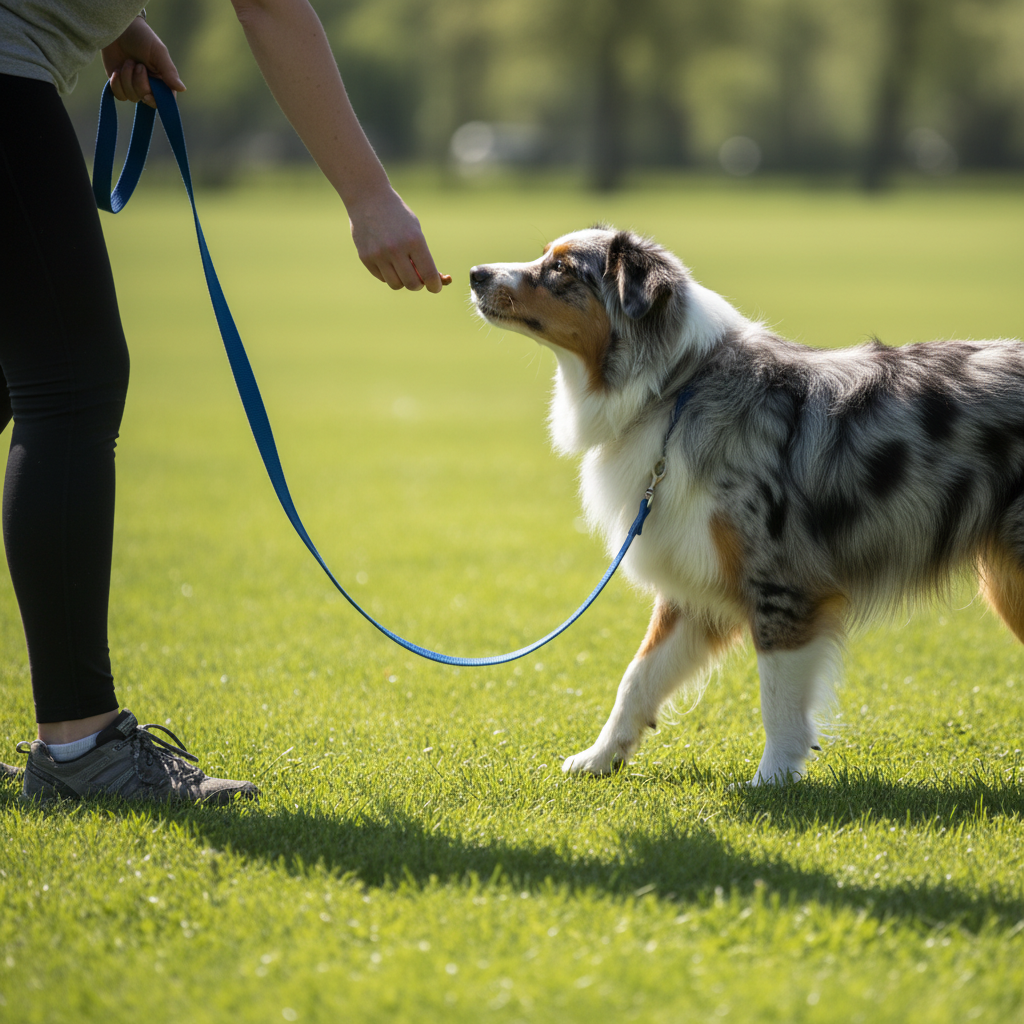
Trying to teach loose leash walking and introduce the stroller at the same time is like learning to juggle while riding a unicycle. Let’s master the basics first. Before the stroller ever enters the picture, your dog needs to understand the fundamental concept: a loose leash is rewarding, and a tight leash is not.
Step-by-Step Foundation Training
- Find Your ‘Sweet Spot’: The ideal position for your dog is by your side, with their shoulder roughly aligned with your leg. This is the ‘sweet spot’. When your dog is in this position with a slack leash, reward them! Use a happy tone, “Yes!” and give them a high-value treat.
- Be a Tree: The moment your dog pulls and the leash tightens, stop walking. Instantly. Stand still and silent like a tree. Don’t pull back, don’t scold them. Just wait. The instant they release the tension on the leash—even by looking back at you or taking a half-step closer—say “Yes!” and reward them by continuing the walk. They quickly learn that pulling gets them nowhere, while a loose leash lets the fun continue.
- The 180-Degree Turn: If ‘being a tree’ isn’t enough for your persistent puller, try this. The moment they pull, say a cheerful “This way!” and immediately turn 180 degrees, walking in the opposite direction. When they catch up and are back in the ‘sweet spot’, reward them. This teaches them they need to pay attention to you, because you could change direction at any moment.
- Practice, Practice, Practice: Keep these initial training sessions short (5-10 minutes) and in a low-distraction environment like your backyard or a quiet street. The goal is to build a strong history of reinforcement for walking on a loose leash before we add the complexity of the stroller.
Remember this mantra: A tight leash stops all forward movement and fun. A loose leash earns praise, treats, and the continuation of the walk. This simple rule is the bedrock of everything that follows.
Phase Two: Introducing the Stroller as a Friendly Object
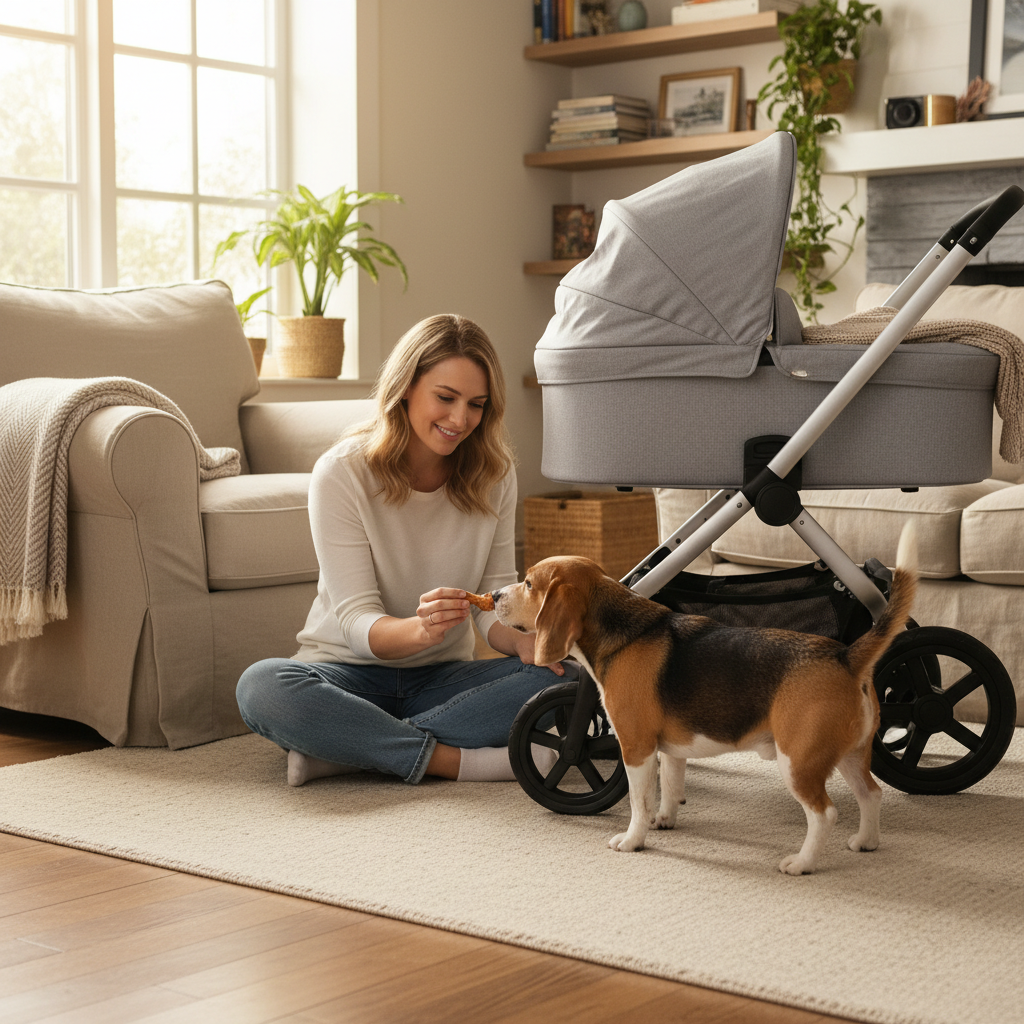
To your dog, a stroller can be a weird, wheeled monster. It moves, it makes noises, and it changes your shape. Our job is to convince them that this new contraption is not just harmless, but actually a predictor of great things (like treats!). This process is called desensitization and counter-conditioning.
Creating a Positive Association
- The Stationary Introduction: Start by simply parking the stroller in your living room. Let your dog approach it and sniff it at their own pace. Any time they are calm near the stroller, toss a treat on the floor next to it. Don’t force interaction. We want them to discover that good things happen near this new object. Do this for a few minutes over several sessions.
- Adding a Little Movement: Once your dog is comfortable with the stationary stroller, start adding small movements. Push it forward a foot, then stop. As you do, toss a treat. Wiggle the handle. Roll it back and forth. Any time your dog remains calm, reward them. If they get nervous, you’ve moved too fast. Go back a step to where they were successful.
- Indoor Walks: Now, it’s time to practice walking with the empty stroller inside your house. Hold the leash in one hand, push the stroller with the other, and walk a few steps. Encourage your dog to walk in the ‘sweet spot’ between you and the stroller or on your other side. Reward heavily with praise and treats for every few steps they take calmly beside you. This is a low-distraction way to practice the mechanics.
The goal of this phase is to make the stroller so boring and normal that your dog barely pays it any mind. By pairing every interaction with high-value treats, you’re changing their emotional response from “What is that weird thing?” to “Oh, the treat machine is here!”
Putting It All Together: Your First Real Stroller Walks
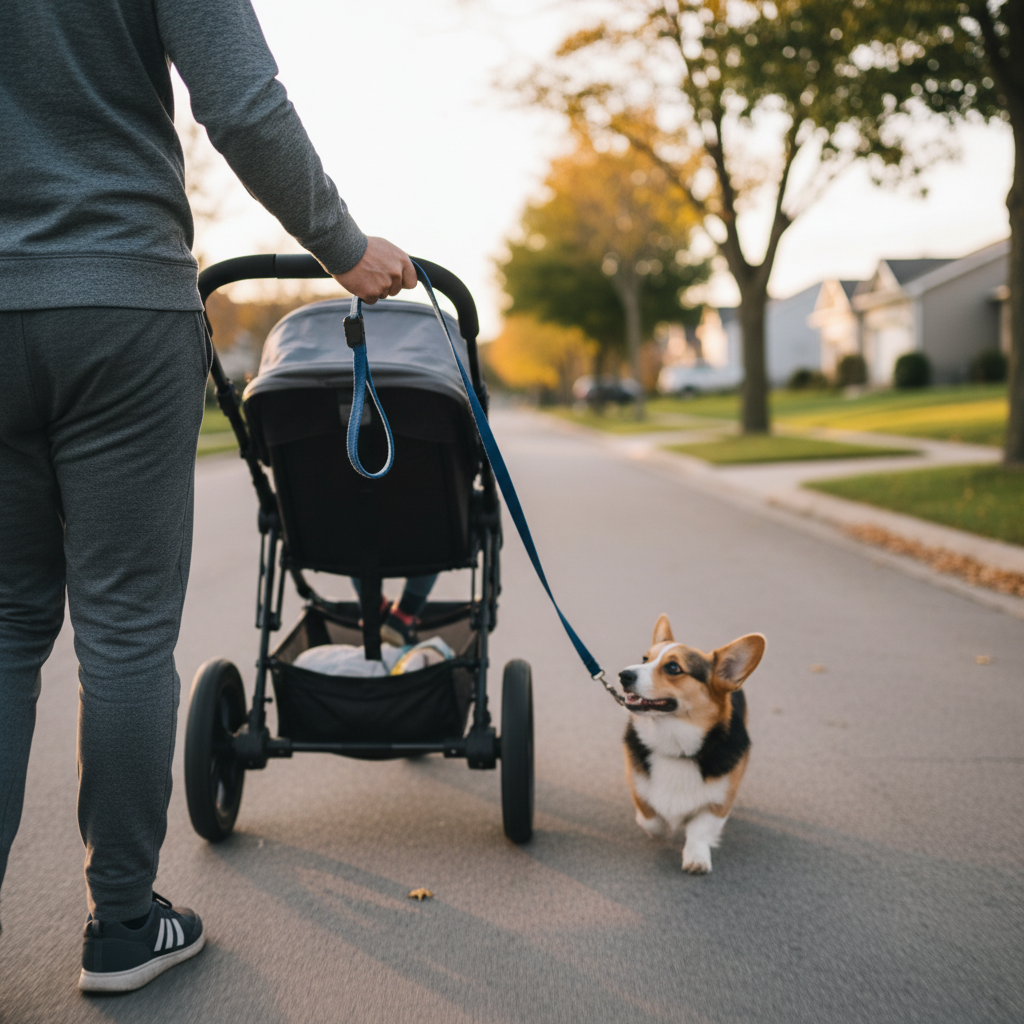
Okay, deep breaths! You’ve laid the foundation, and your dog sees the stroller as a friend. It’s time to combine these skills and take your show on the road. The key here is to start small and set everyone up for success.
Your Step-by-Step Guide to the First Walk
- Step 1: Start Somewhere Boring. Your first walk should not be at the bustling farmers market. Choose a very low-distraction area, like your own driveway or a deserted sidewalk at an off-peak time. We want to make it as easy as possible for your dog to focus.
- Step 2: Get in Position. Place your dog on the side with more space, away from the street. You should be in the middle, with the stroller on one side and your dog on the other. This prevents the leash from getting tangled in the wheels and keeps your dog safe. Hold the leash with the hand closest to your dog, and the stroller with your other hand.
- Step 3: Walk and Reward. Begin walking slowly. For the first few walks, your goal is to reward your dog every few steps for simply being in the correct position with a loose leash. Yes, you will go through a lot of treats! This high rate of reinforcement is crucial for building the behavior.
- Step 4: Use Your Foundation Skills. Does your dog pull ahead? Stop moving. Be a tree. Wait for that leash to slacken, then continue. Do they get distracted? Use the 180-degree turn to get their focus back on you. All the work you did without the stroller will now pay off.
- Step 5: Keep it Short and Sweet. Your first few outings might only be five minutes long, and that’s a huge success! We are aiming for quality over quantity. End the walk on a positive note, before your dog gets tired, frustrated, or overwhelmed. Gradually increase the duration as your dog becomes more proficient.
Pro-Tip: Before you head out, consider a quick 5-10 minute game of fetch or a tug session in the yard. This helps burn off that initial burst of frenetic energy, making it easier for your dog to settle into a calm walking mindset from the start.
Troubleshooting Common Stroller Scenarios
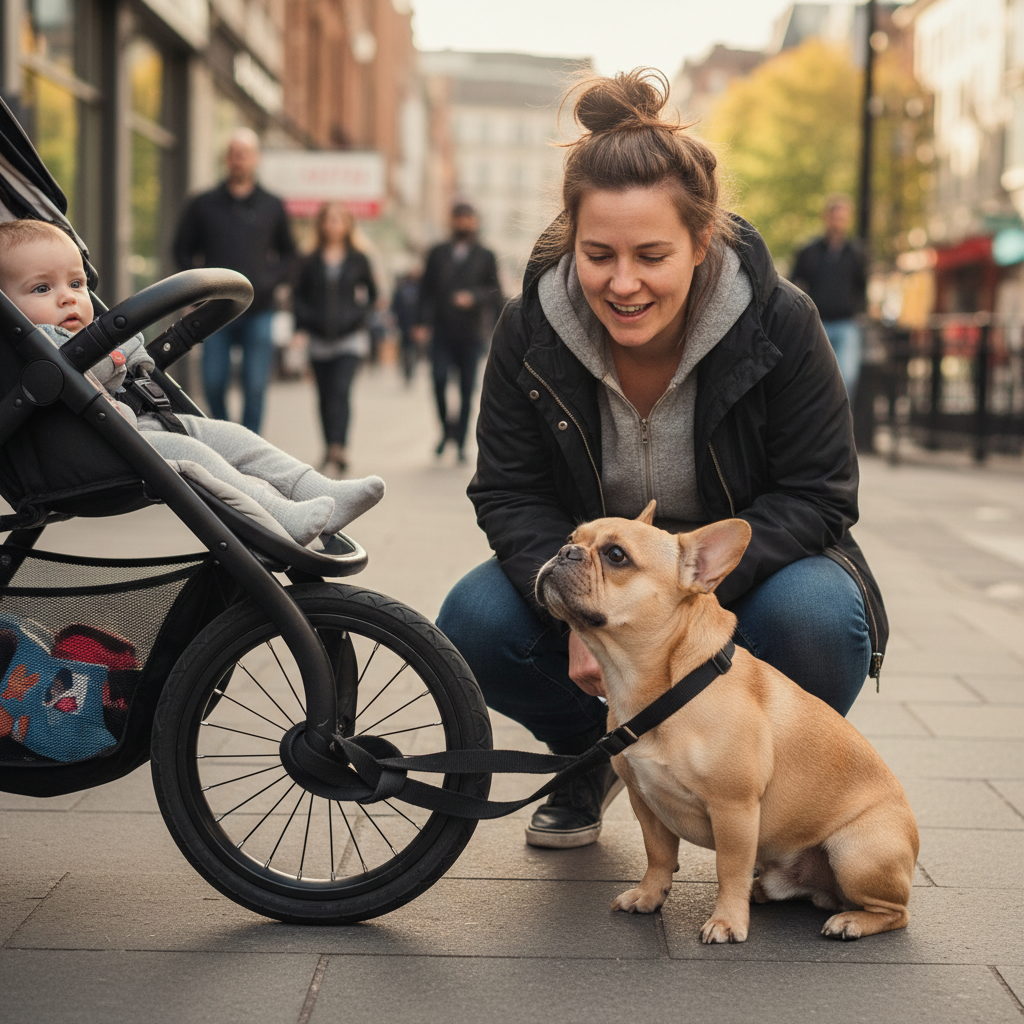
Even with the best training, real-world challenges will pop up. A squirrel will dart across your path, a loud truck will rumble by, or your dog will simply have an off day. Here’s how to handle some of the most common hiccups you might encounter on your stroller walks.
Common Problems and Their Solutions
| The Problem | The Solution |
|---|---|
| Dog Weaving in Front of the Stroller | This is dangerous as they can get tangled in the wheels. If your dog weaves, immediately stop. Use a treat to lure them back to the correct side. You may need to increase your rate of reward for them staying in the ‘sweet spot’ to make that position more valuable than weaving. |
| Lunging at Distractions (Squirrels, Other Dogs) | Increase your distance from the trigger. If you see another dog approaching, cross the street or step onto a lawn to create space. Work on the ‘Look at That’ game: when your dog sees a trigger, say “Yes!” and reward them for looking at it and then back at you. This changes their reaction from a lunge to a check-in. |
| Dog is Scared of the Stroller’s Motion/Noise | This means you may have moved too fast in the introduction phase. Go back a few steps. Practice just moving the stroller inside again with very high-value treats. On walks, reward any moment of calm and try walking on smoother surfaces initially to reduce wheel noise. |
| Leash is Constantly Getting Tangled | Ensure you are keeping your dog on one side (away from the street) and the stroller on the other. Use your body as a natural barrier. Keeping the leash relatively short (but still loose) will prevent it from dropping and getting caught under the wheels. |
Two Final Pro-Tips for Lasting Success
- Give the Walk a Name: Use a specific verbal cue like “Let’s go walk” or “Stroller time!” right before you head out. This helps your dog understand what kind of walk this is—a calm, structured one, as opposed to a free-for-all romp at the park.
- Be Patient and Consistent: This skill won’t be mastered overnight. Some days will be better than others. The key is to be consistent with your rules and rewards. Every walk is a training session. Stay positive, celebrate the small victories, and remember that you are building a wonderful skill that will serve your family for years to come.
Conclusion
You did it! You’ve navigated the steps from chaotic pulling to calm, controlled strolls. Remember the core principles: set your dog up for success with the right gear, build a solid foundation without the stroller, create a positive association, and then practice with patience and consistency. It’s a process, not a race. There will be fantastic days and days where it feels like you’ve taken a step back, and that’s perfectly normal.
Celebrate every loose-leash step and every calm moment. You are not just teaching your dog a new behavior; you are strengthening your bond and creating the foundation for countless happy, peaceful family adventures. So grab that leash, click your baby safely into the stroller, and step out the door with confidence. Those idyllic park walks you dreamed of are waiting for you.