As the leaves turn brilliant shades of red and gold, every pet owner knows what’s coming: hours of raking. But what if you could turn this seasonal chore into a fun and engaging training game for your four-legged friend? Teaching your dog to drag a tarp of leaves isn’t just a neat trick; it’s a fantastic form of canine enrichment that provides mental stimulation, physical exercise, and a wonderful opportunity for bonding.
This task taps into the natural instincts of many breeds that were historically bred to pull carts or sleds. By channeling this energy into a positive and helpful activity, you give your dog a ‘job’ to do, which can build confidence and reduce boredom-related behaviors. In this guide, we’ll walk you through everything you need to know, from assessing if your dog is right for the job to a detailed, step-by-step training plan using only positive reinforcement. Let’s get ready to make this autumn’s yard work the best one yet!
Before You Begin: Is Your Dog a Good Candidate?

Before you grab a tarp and a handful of treats, it’s crucial to ensure this activity is safe and appropriate for your individual dog. Not every pup is cut out to be a leaf-hauling helper, and that’s perfectly okay! Safety and your dog’s well-being should always be the top priority.
Physical Health and Structure
First and foremost, consider your dog’s physical condition. This task requires a certain level of strength and fitness.
- Age: This is not a job for young puppies whose growth plates haven’t closed yet, as pulling weight can cause serious developmental issues. Generally, wait until your dog is at least 18-24 months old, especially for larger breeds. Likewise, senior dogs with arthritis or other joint problems should sit this one out.
- Breed and Size: While a tiny Chihuahua won’t be hauling much, you don’t need a Bernese Mountain Dog to have fun. Medium to large breeds with a sturdy build, like Labradors, Retrievers, Rottweilers, and Shepherds, are often natural candidates. However, any healthy, medium-sized dog can learn to pull a very light load.
- Veterinary Check-up: A quick chat with your veterinarian is always a great idea before starting any new physical activity. They can check for underlying hip, back, or joint issues that might make pulling unsafe for your dog.
Temperament and Confidence
Your dog’s personality is just as important as their physical ability. A good candidate for this job is typically:
- Confident: A dog who is easily spooked by new objects or strange sounds might find a noisy, dragging tarp terrifying. This activity is best for dogs who are generally confident and curious about their environment.
- Eager to Please: Dogs that enjoy learning and working with you are more likely to find this game fun and rewarding.
- Free of Fear or Anxiety: If your dog has a history of anxiety or fear-based behaviors, introducing a ‘scary’ dragging object behind them could be detrimental to their confidence. Focus on other, more suitable enrichment activities instead.
Expert Tip: Never force your dog to participate. This entire process should be a fun game. If at any point your dog shows signs of stress—like tucking their tail, yawning, licking their lips, or trying to run away—stop immediately and go back to a step where they were comfortable, or end the session for the day on a positive note with a different, fun activity.
Gathering Your Gear: Setting Up for Success
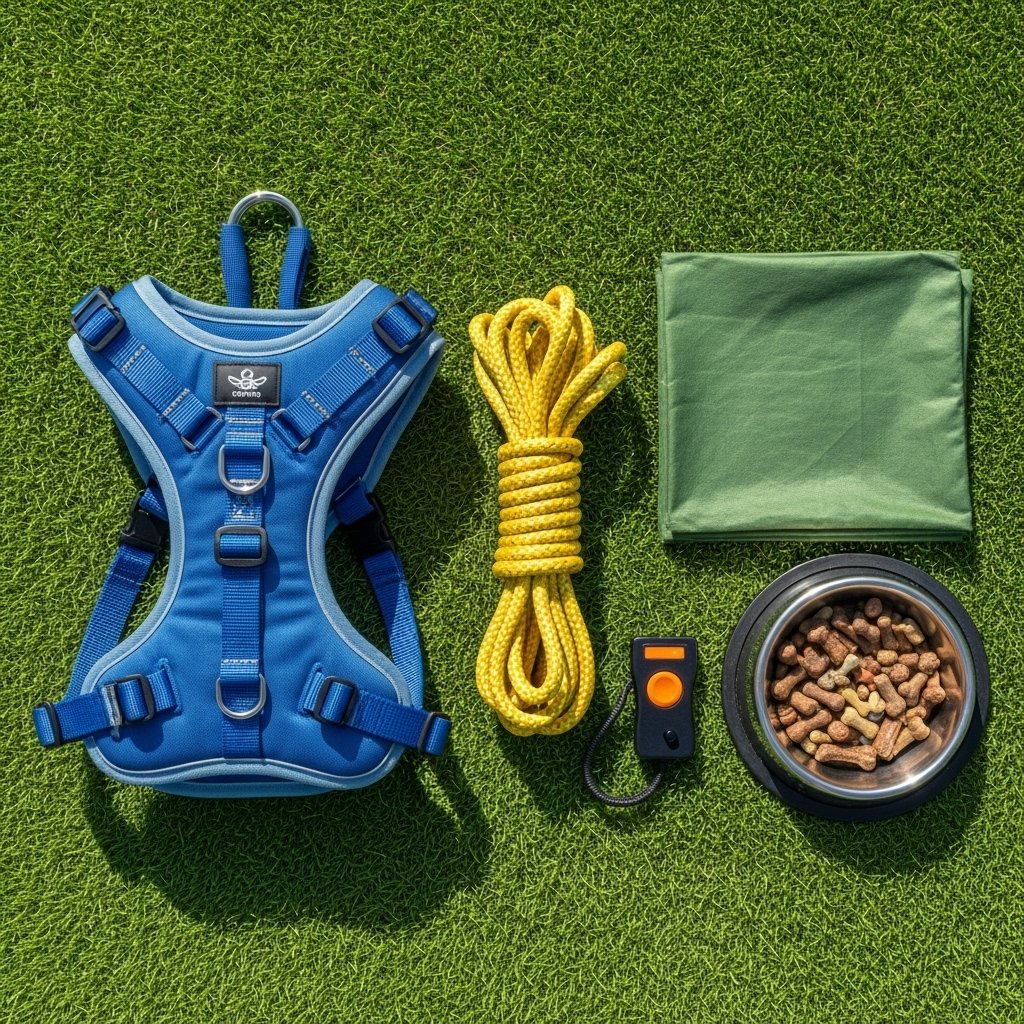
Having the right equipment is essential for keeping training sessions safe, effective, and fun for your dog. You don’t need a lot of fancy gear, but the items you do use should be chosen with care. Here’s what you’ll need to get started:
- A Small, Lightweight Tarp: Start small! A 4×6 or 5×7 foot tarp is plenty. Choose a lightweight plastic or canvas one. A heavy, noisy construction tarp can be intimidating. The goal is for the dog to barely notice it at first.
- A Well-Fitting Back-Clip Harness: This is the most important piece of equipment. Never, ever attach the tarp to your dog’s collar. Doing so can cause serious injury to their neck, throat, and spine. Use a comfortable, padded harness that allows for full range of motion in the shoulders. A Y-front harness is an excellent choice. The leash or rope should attach to a ring on the dog’s back.
- A Long Leash or Light Rope: You’ll need something to connect the harness to the tarp. A 6-10 foot rope or a long training lead works well. This creates a safe distance between your dog and the tarp, so it doesn’t accidentally run into their back legs.
- High-Value Treats: This is your dog’s paycheck! Use extra-special treats that your dog absolutely loves and doesn’t get all the time. Small pieces of chicken, cheese, or high-quality commercial training treats work wonders. You’ll need lots of them to keep your dog motivated.
- A Clicker (Optional): If your dog is already clicker-trained, this is a fantastic tool for precisely marking the moment they perform the correct behavior. If not, a consistent verbal marker like a happy “Yes!” works just as well.
| Item | Why It’s Important | Pro-Tip |
|---|---|---|
| Back-Clip Harness | Prevents neck and spine injury. Distributes weight evenly across the chest and shoulders. | Ensure you can fit two fingers snugly under the straps. It shouldn’t chafe or restrict movement. |
| Lightweight Tarp | Less intimidating and easier for the dog to move, building confidence from the start. | Let your dog sniff and explore the tarp on the ground before you ever try to attach it. |
| High-Value Treats | Keeps the dog highly motivated and makes the training a positive, rewarding experience. | Cut treats into tiny, pea-sized pieces so you can reward frequently without overfeeding. |
The Fun Part: Your Step-by-Step Training Guide
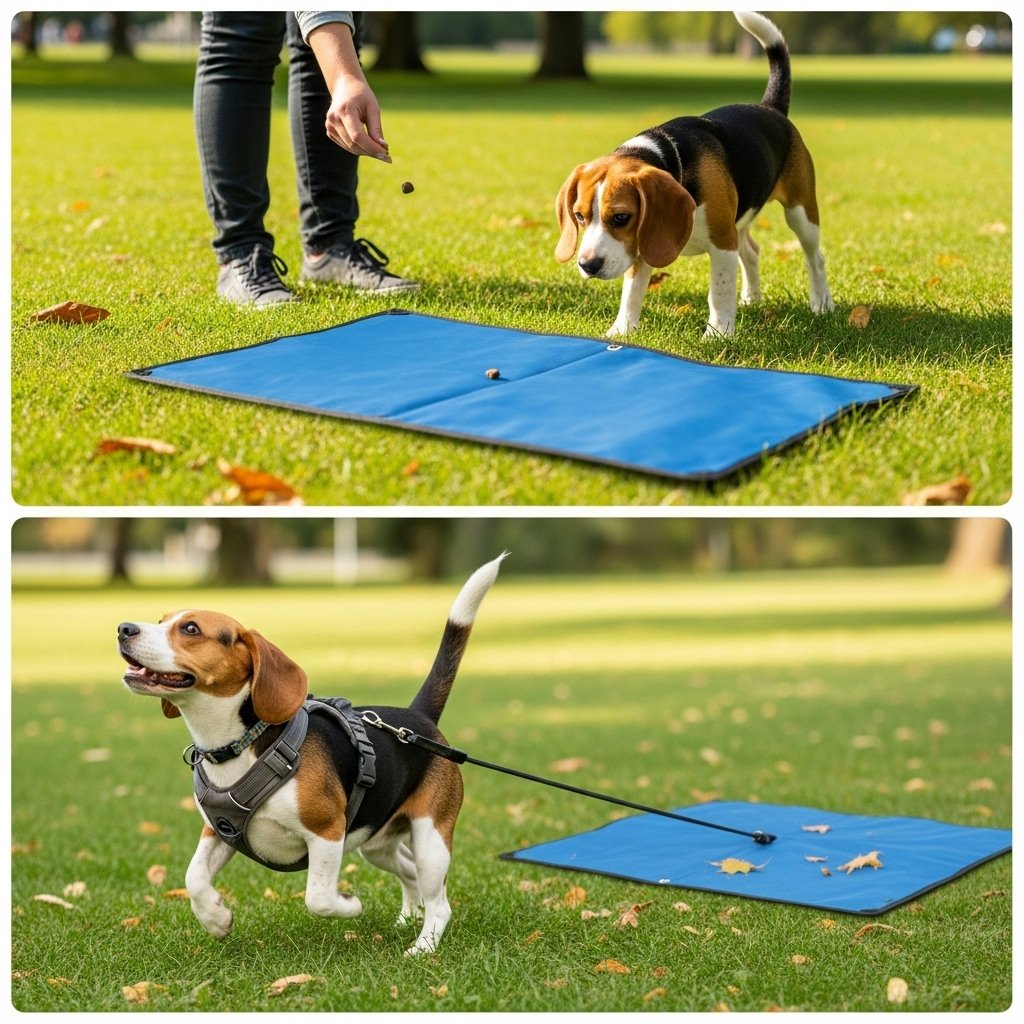
Patience is key! This process is a marathon, not a sprint. Keep sessions short (5-10 minutes) and always end on a positive note. The goal is for your dog to think this is the best game ever. We’ll break it down into tiny, achievable steps.
-
Step 1: Making Friends with the Tarp
The first step is to convince your dog that the tarp is a wonderful, treat-dispensing object. Lay the tarp flat on the ground. Whenever your dog looks at it, sniffs it, or steps on it, click (or say “Yes!”) and toss a treat onto the tarp. Let them eat the treat off the tarp. Do this for a few short sessions until your dog happily runs over to the tarp when you bring it out.
-
Step 2: Getting Used to the Harness and Rope
Put your dog’s harness on. Attach the rope to the back clip and let them walk around with it dragging behind them. Keep it fun! Toss treats, play a little, and praise them for ignoring the rope. We want them to be completely comfortable with something following them before we add the scary tarp.
-
Step 3: Combining the Tarp (No Weight)
This is a big step. Attach the rope to one of the grommets on the tarp. Encourage your dog to walk forward just one or two steps. The moment the tarp moves even an inch behind them, click/”Yes!” and give them a jackpot of treats and praise. Make a huge, happy fuss! Keep the movement minimal at first. We are rewarding the initiation of pulling, not distance. Repeat this over several sessions, gradually asking for a few more steps each time.
Important: During this stage, you should hold the other end of the rope or tarp to prevent it from snagging on anything or moving unexpectedly, which could frighten your dog.
-
Step 4: Adding a Single Leaf
Once your dog is confidently walking around dragging the empty tarp, it’s time to add a tiny bit of ‘weight’. Place a single, large leaf on the tarp. The change in weight is negligible, but it helps the dog generalize the concept. Act like it’s a huge accomplishment and reward them generously for pulling the tarp with its single leaf.
-
Step 5: Gradually Increasing the Load
This is where you build duration and weight. Slowly, over many sessions, add a few more leaves at a time. Let your dog’s comfort level be your guide. If they hesitate, you’ve added too much too soon. Go back to a lighter weight where they were successful. Your goal is for them to be happily trotting along, not straining. Remember, this is a fun game, not a weight-pulling competition.
-
Step 6: Introducing a Verbal Cue
Once your dog is reliably pulling the tarp when you encourage them forward, you can add a verbal cue. Right as they are about to start pulling, say your chosen cue, such as “Pull,” “Haul,” or “Bring it.” After a few repetitions, they will associate the word with the action. You can then start asking for the behavior with the cue.
Troubleshooting Common Hiccups and Keeping it Safe
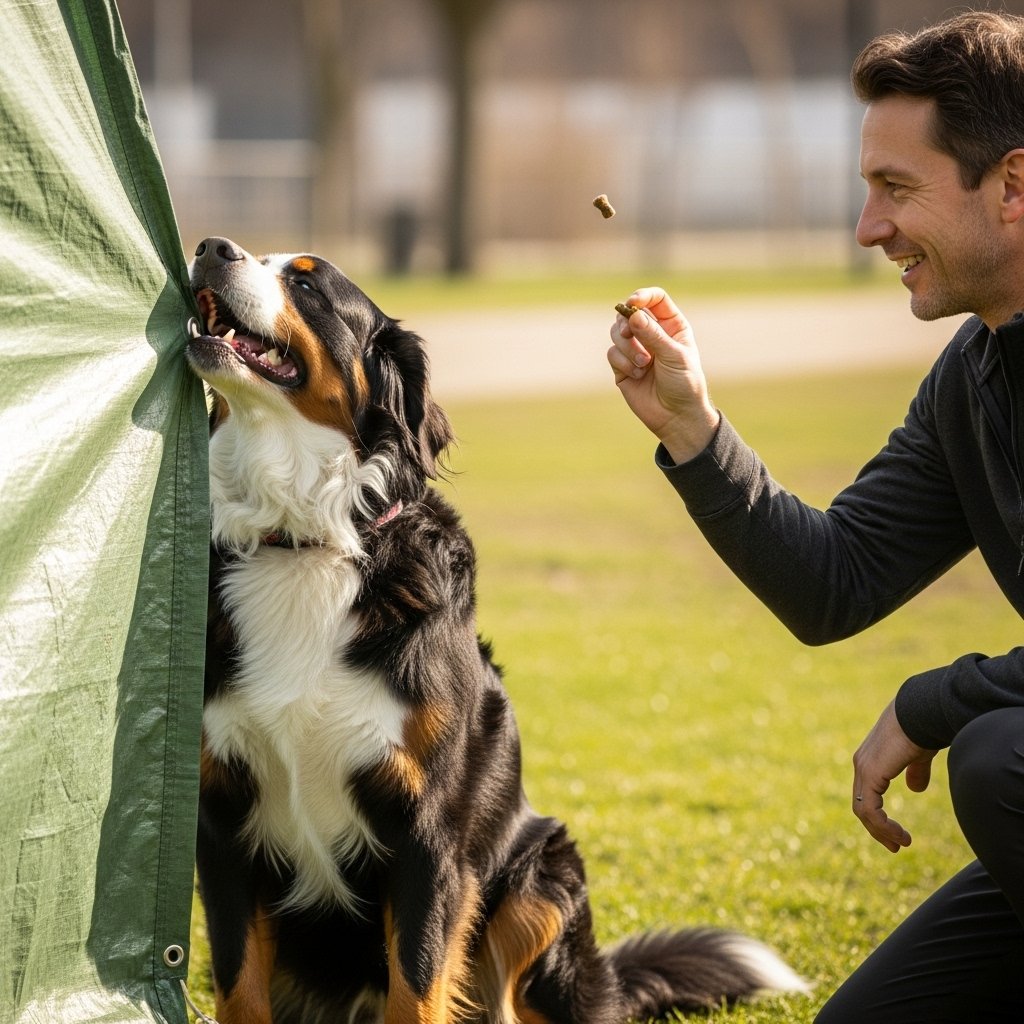
Even with the best plan, you might run into a few bumps in the road. Don’t worry, it’s a normal part of the training process! Here’s how to handle some common challenges and ensure the activity always remains safe.
What if my dog is scared of the tarp?
Fear is the number one obstacle. If the tarp itself is scary, go all the way back to step one. Don’t even think about attaching it. Spend several days just making the tarp a source of amazing things. Play games on it, feed your dog their dinner on it, and leave treats on it for them to find. We need to change their emotional response from ‘scary monster’ to ‘magic food carpet’ before moving on.
What if my dog just chews on the tarp or rope?
This usually means the dog is either bored, confused, or just being a playful pup! It’s a sign that you need to make the ‘game’ of pulling more engaging. Increase your rate of reinforcement (more treats, faster!) for any forward motion. If they start to chew, use a positive interrupter like a happy clap and then redirect their attention by tossing a treat a few feet in front of them to encourage forward movement. Keep the sessions shorter to hold their focus.
What if my dog won’t pull?
This is a classic sign that you’ve asked for too much, too soon. The ‘weight’ (even if it’s just the tarp itself) might feel weird or heavy. Go back a step. If they were fine with the rope, but not the tarp, then practice dragging other, less scary items first. A small towel or a piece of cardboard can be a good intermediate step. Ensure your rewards are high-value enough to make the effort worthwhile for them.
Ongoing Safety Rules
As you progress, always keep these safety rules in mind:
- Always Supervise: Never, ever leave your dog unattended while attached to the tarp. They could easily get tangled or snagged on something, leading to panic and injury.
- Keep Loads Light: This is for fun and light assistance, not for heavy-duty hauling. The total weight of the tarp and leaves should never be enough to cause your dog to strain.
- Watch the Terrain: Only practice on smooth, clear ground like grass or smooth dirt. Avoid areas with rocks, roots, or sticks that could catch the tarp and jerk your dog.
- Know When to Quit: Always end the session before your dog gets tired or bored. We want them to be excited for the next time you bring out the tarp!
Conclusion
Congratulations! You now have all the tools and knowledge to transform a routine chore into an incredible enrichment activity for your dog. Teaching your dog to drag a tarp of leaves is about so much more than getting a little help with the yard work. It’s about building communication, trust, and a deeper bond with your canine companion. It’s about providing them with a meaningful ‘job’ that satisfies their mind and body.
Remember to always listen to your dog, keep the sessions positive and fun, and celebrate every tiny step of progress. By focusing on the journey rather than the destination, you’ll not only have a tidier yard but also a happier, more confident, and more engaged dog. So grab that harness, pocket those treats, and get ready to make some wonderful memories together this autumn.