Is your daily walk more of a frantic dash than a relaxing stroll? Do you find yourself holding your breath every time you spot another dog, a skateboarder, or even a person wearing a hat? If the sight of these ‘triggers’ sends your dog into a frenzy of barking, lunging, and pulling, you’re living with a reactive dog. And let’s be honest, it’s incredibly stressful for both of you.
First, take a deep breath. You’re not a bad dog owner, and your dog isn’t ‘bad,’ either. Reactivity is an over-reaction to normal stimuli, and it often stems from fear, anxiety, or frustration. Your dog is having big, overwhelming feelings and doesn’t know what to do with them. But what if you could teach them a different response? What if you could give them a simple, rewarding job to do instead of reacting?
That’s where the ‘Look Away’ Game comes in. This isn’t about suppressing your dog’s behavior or punishing them for their feelings. It’s a transformative training game based on positive reinforcement that changes your dog’s entire emotional response. The goal is simple: to teach your dog that seeing a trigger and then choosing to look away from it and back at you is the most wonderful, rewarding thing they can do. It empowers them to make a calm choice, building their confidence and strengthening your bond along the way. Ready to turn reactivity into focus? Let’s start playing!
First, Let’s Understand Reactivity: What’s Going On in Your Dog’s Head?
Before we can change a behavior, it’s crucial to understand it. Reactivity is one of the most misunderstood concepts in the dog world. Many people label reactive dogs as ‘aggressive,’ but that’s often not the case. Aggression has the intent to cause harm, while reactivity is typically a fear-based, knee-jerk reaction to a trigger. Think of it as your dog shouting, “Go away! You’re scary!” because they don’t have the tools to handle the situation calmly.
Thresholds and Trigger Stacking
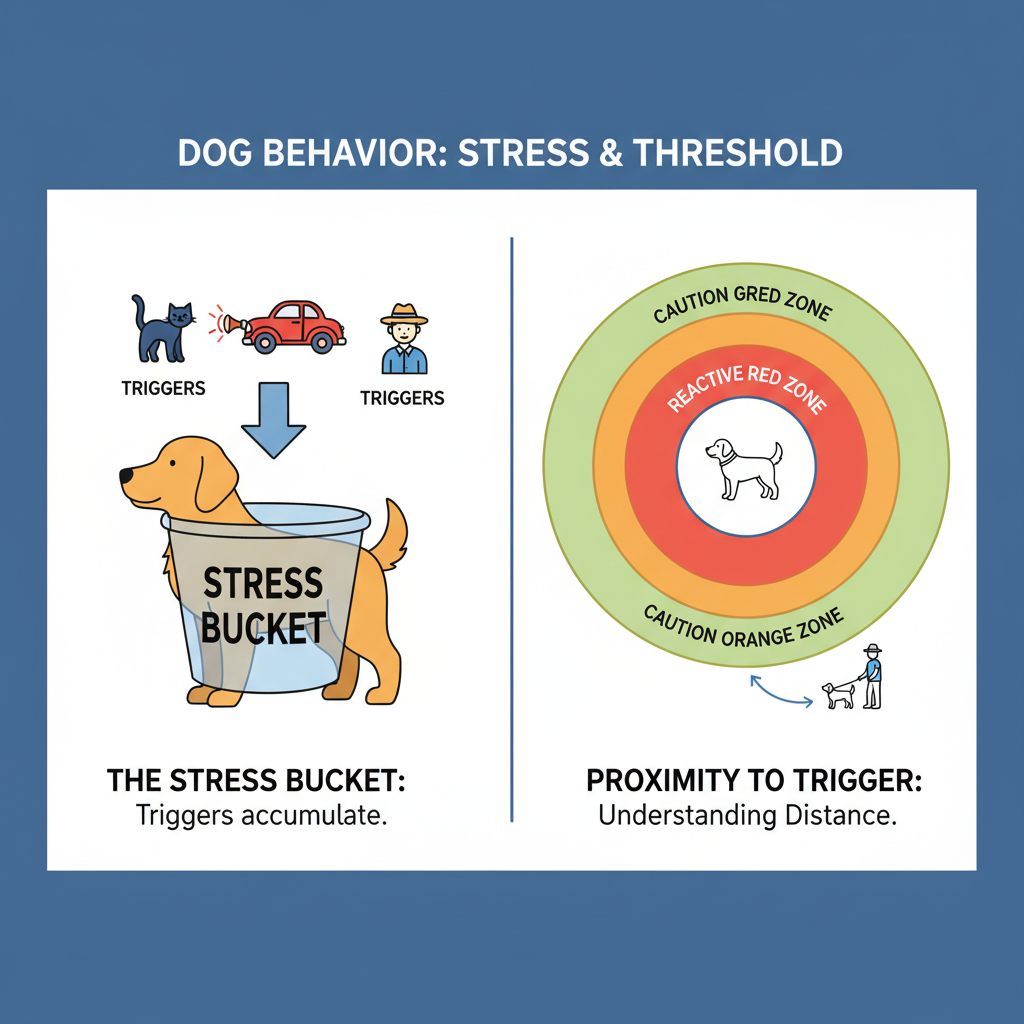
Every dog has a ‘threshold,’ an invisible line where they go from being able to cope with a stimulus to being completely overwhelmed. A dog who can see another dog 100 feet away and remain calm might be ‘under threshold.’ That same dog, seeing another dog at 10 feet, might explode in a fit of barking and lunging, having gone ‘over threshold.’ Our goal in training is to always work with the dog while they are under their threshold.
Now, imagine your dog’s stress is a bucket. A noisy truck goes by (a few drops in the bucket). A child on a scooter zips past (a few more drops). Then, a person with a big hat appears (more drops). The bucket is getting full. Finally, another dog appears, and even though it’s far away, the bucket overflows. This is ‘trigger stacking.’ Your dog isn’t just reacting to the final trigger; they’re reacting to the cumulative stress of the entire walk. This is why a dog might seem fine one minute and be a mess the next.
Expert Tip: The key to helping a reactive dog isn’t to ‘correct’ the outburst. The key is to manage their environment and teach them skills so they don’t feel the need to have an outburst in the first place. Disengagement is that skill.
By teaching your dog to disengage—to see a trigger and voluntarily look away—you are giving them a powerful coping mechanism. You’re replacing the panicked, reactive thought (‘Oh no, a scary thing! I must make it go away!‘) with a confident, proactive one (‘Oh look, a thing! I know if I look at my person, something amazing happens!‘). This simple shift is the foundation of changing their behavior for good.
Gearing Up for the Game: Your ‘Look Away’ Toolkit
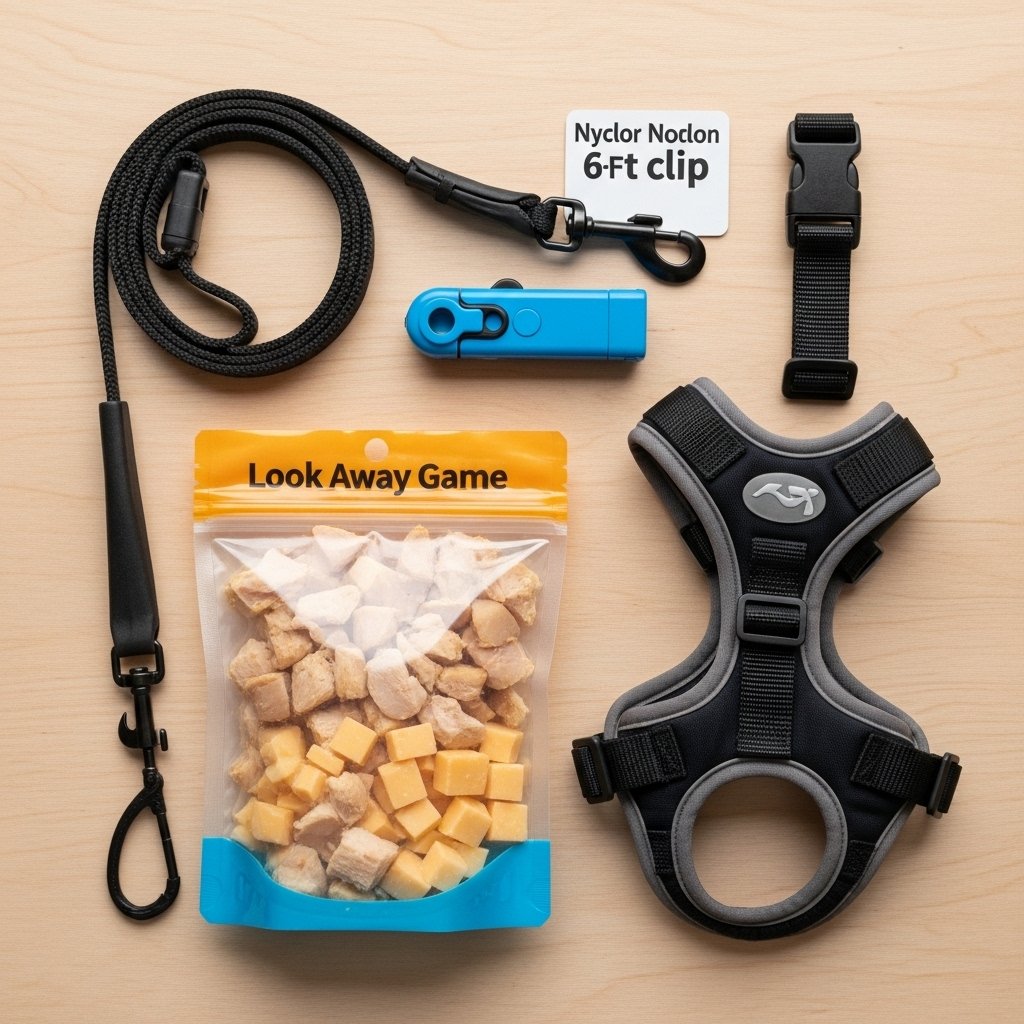
Great training starts with great preparation! You don’t need a lot of fancy equipment to play the ‘Look Away’ Game, but having the right tools will set you and your pup up for maximum success. Think of this as your reactivity-busting toolkit.
- Out-of-This-World, High-Value Treats: We’re not talking about your dog’s everyday kibble or a dry biscuit. We need the good stuff! These are treats so delicious that they outshine even the most tempting trigger. Think small, pea-sized pieces of boiled chicken, freeze-dried liver, cheese, or hot dogs. They should be soft, smelly, and easy to swallow quickly. You’ll need a lot, so prepare a generous pouchful.
- A Clicker (Optional, but Recommended): A clicker is a small plastic box that makes a distinct ‘click’ sound. It’s a fantastic tool because it acts as an ‘event marker’—it allows you to tell your dog with split-second precision, ‘YES! THAT behavior right there is what earned you a treat!‘ If you’re not comfortable with a clicker, a consistent verbal marker like a sharp ‘Yes!’ works too.
- A Standard 6-Foot Leash: Control and safety are paramount. A standard nylon or leather leash gives you a secure, reliable connection to your dog. Please avoid retractable leashes. They offer very little control, can snap, and can teach dogs to pull, which is the opposite of what we want.
- A Well-Fitting Harness: A good harness can make a world of difference. A front-clip harness, which has a leash attachment point on the chest, can be particularly helpful for reactive dogs as it gently discourages pulling and gives you better directional control without putting any pressure on their throat. A comfortable back-clip harness is also a great option.
- A Quiet Starting Place: Your first few sessions shouldn’t be on a busy street corner. Start in your living room, looking out a window, or in a quiet corner of a park far away from any action. The goal is a controlled environment where your dog can think and learn without being overwhelmed.
Let’s Play! How to Teach the ‘Look Away’ Game, Step-by-Step
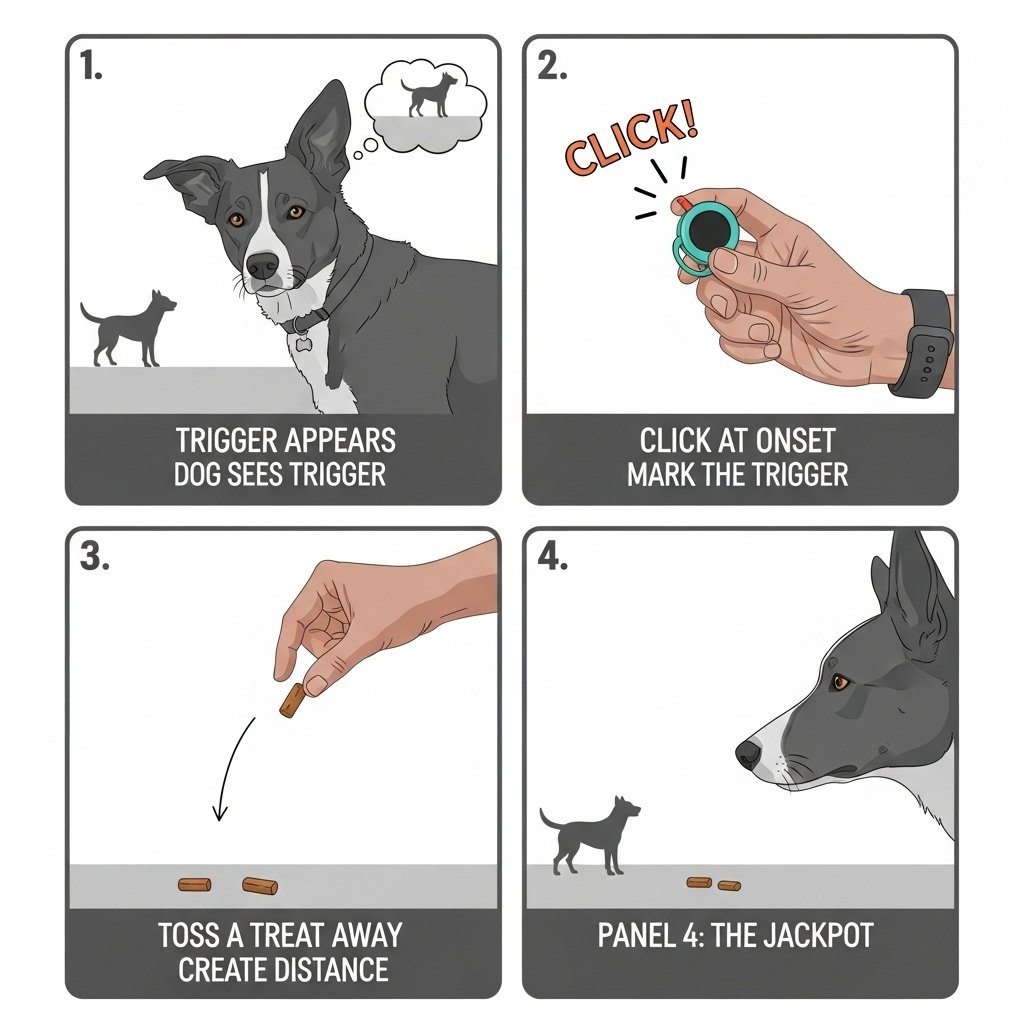
Alright, you’ve got your tools, you understand the ‘why,’ and you’re ready to go! Remember, this game is all about patience, timing, and making it fun for your dog. Keep your sessions short (just 3-5 minutes at a time) and always end on a positive note. Let’s break it down.
- Step 1: Charge Your Marker: Before you even introduce a trigger, you need to teach your dog what the clicker or your verbal marker (‘Yes!’) means. In a quiet room, simply click, then immediately give your dog a high-value treat. Pause for a second, then repeat. Do this 10-15 times. You’ll know it’s working when you click and your dog’s head whips around looking for their treat. The click now means, ‘A delicious snack is coming your way!’
- Step 2: Find the ‘Boring’ Distance: Take your dog to your chosen quiet spot where you can see a trigger (e.g., a person walking, a calm dog) from a very long distance. You need to find the distance where your dog notices the trigger but doesn’t react. They might prick their ears or stop sniffing, but they won’t be barking, stiffening, or pulling. This is their ‘under threshold’ distance, and it’s your perfect training zone. If they react, you are too close. Simply turn and walk away, and try again from further back.
- Step 3: Mark the ‘Look At’: The moment your dog’s eyes lock onto the trigger, CLICK! Your timing here is critical. We are marking the very first moment they notice the trigger, before they have a chance to even think about reacting.
- Step 4: Reward and Reset: Immediately after the click, give them a treat. Here’s a pro tip: instead of handing them the treat, toss it on the ground a step or two away from the trigger. This does two things: it gets them sniffing (which is calming) and it naturally forces them to turn their head and body away from the trigger to get the food. This is the beginning of the ‘look away.’
- Step 5: Capture the ‘Look Away’: Repeat steps 3 and 4 a few times. Your smart dog will quickly learn the pattern: see the thing, hear a click, get a treat. Soon, something magical will happen. Your dog will look at the trigger and then, anticipating the click and treat, will quickly look back at you. THE MOMENT their head turns back to you, CLICK and deliver a jackpot of treats! Give them 3-4 treats, one after another, with lots of praise. This is the behavior we want to build on! You are now rewarding the choice to disengage.
- Step 6: Practice and Gradually Decrease Distance: Continue playing this game. As your dog gets really good at looking at the trigger and immediately looking back at you, you can *slowly* and *gradually* decrease the distance to the trigger over many different training sessions. If at any point your dog starts to react, you’ve moved too fast. Just increase the distance again until they are successful and end the session there.
Remember this mantra: ‘Look at that, look at me.’ You are teaching your dog that seeing their trigger is a cue to check in with you for a reward. This changes the trigger from something scary into a predictor of wonderful things.
Oops! Troubleshooting Common ‘Look Away’ Game Hiccups
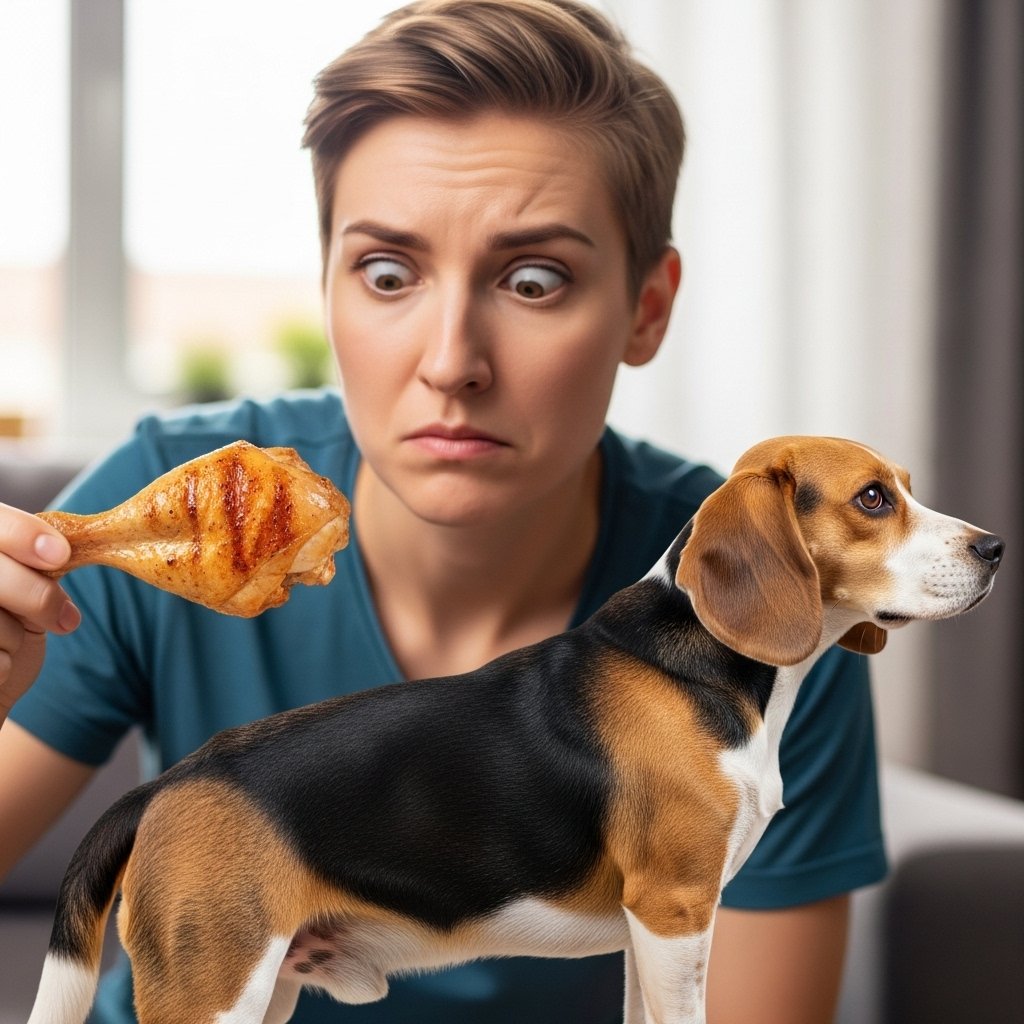
Even with the best game plan, you might run into a few bumps in the road. That’s completely normal! Dog training is rarely a straight line. Here are some of the most common challenges and how to navigate them with grace.
My Dog Stares and Won’t Look Away!
This is the most common issue, and it almost always has the same cause: you are too close to the trigger. If your dog is ‘locked on’ and staring intently, their brain has switched from ‘learning mode’ to ‘reacting mode.’ They are too stressed to think about the game. The solution is simple: create more distance. Turn and cheerfully walk your dog away until they can relax, then try again from much further back where the trigger is less intense and more ‘boring.’ Success is built on keeping your dog under their threshold.
My Dog Reacts Before I Can Even Click!
This is another sign that you’re over your dog’s threshold. You’ve gotten too close, too fast, or perhaps trigger stacking is at play. Don’t scold your dog. Your job is to be their advocate. Quickly and calmly increase your distance, maybe even leaving the area entirely. End the session by asking for a simple behavior they know, like a ‘sit,’ and reward them for it. Next time, start much, much further away from the trigger than you think you need to be.
My Dog Isn’t Interested in the Treats.
If a dog who normally loves food is refusing treats, it’s a giant red flag that their stress levels are too high. When a dog is in a ‘fight or flight’ state, their digestive system shuts down, and eating is the last thing on their mind. Just like the other issues, the answer is to increase distance and reduce the intensity of the trigger. Alternatively, your treats might not be ‘high-value’ enough. Experiment with different, smellier, tastier options to find what truly motivates your dog when distractions are present.
This Feels Like It’s Taking Forever!
Patience is the most important tool in your kit. Modifying a deep-seated emotional response like fear or frustration doesn’t happen overnight. Every successful repetition, no matter how small, is building new, positive neural pathways in your dog’s brain. Celebrate the small wins: a single calm look from 100 feet away is a huge victory! Stay consistent, keep sessions short and positive, and trust the process. You are playing the long game for a lifetime of calmer walks.
Leveling Up: Taking the ‘Look Away’ Game on the Road
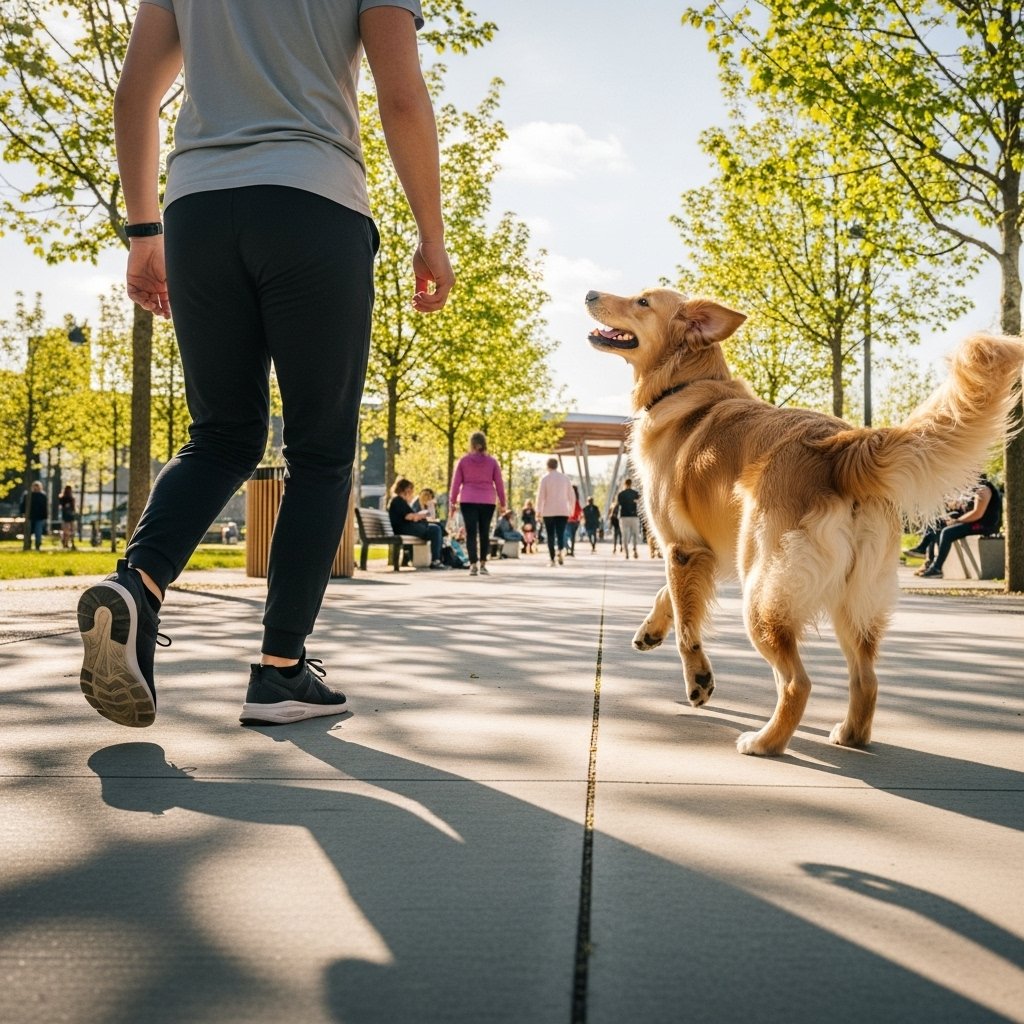
Once your dog has mastered the ‘Look Away’ Game in your go-to quiet spot, it’s time to help them ‘generalize’ the skill. Dogs don’t naturally apply learned behaviors to new situations. Just because they can calmly look away from a dog in Park A doesn’t mean they’ll automatically do it in the busier Park B. We need to teach them that the rules of the game are the same everywhere.
Start with New Places, Not Harder Triggers
The key to generalization is to change only one variable at a time. Don’t immediately go to the busiest street in town. Instead, go to a new, but still quiet, location. Maybe it’s a different part of your neighborhood, a deserted parking lot on a Sunday, or the far edge of a different park. Practice the game there with easy, distant triggers. This helps your dog understand that ‘look at that, look at me’ applies in this new environment, too.
Vary the Triggers
Is your dog mainly reactive to other dogs? Once they’re doing well, start practicing with other types of triggers from a safe distance. Try playing the game when they spot a person jogging, a child on a bike, or a squirrel. This teaches them that the concept of disengagement applies to anything that might cause them concern, not just their primary trigger.
Management is Still Your Best Friend
Remember, training and management go hand-in-hand. When you are not in an active training session, it’s still your job to manage your dog’s environment to prevent reactions. This might mean walking at quieter times of the day, crossing the street to avoid another dog, or using a visual barrier like a parked car. Every time your dog has a full-blown reaction, it reinforces that behavior and sets your training back. Preventing reactions is just as important as building new skills.
Final Thought: Think of this game as building a muscle. Every short, successful session is another rep, making your dog’s ‘disengagement muscle’ stronger. Over time, looking to you will become their new default response, a conditioned emotional reaction that is stronger than their old, fearful one.
Conclusion
Living with a reactive dog can feel isolating and overwhelming, but it doesn’t have to be a life sentence of stressful walks and constant management. The ‘Look Away’ Game is more than just a training exercise; it’s a communication tool that transforms your relationship with your dog. You’re moving from being a handler who simply restrains them to a trusted partner who guides them through their fears.
By teaching your dog to disengage, you’re giving them the greatest gift of all: confidence. You’re showing them that the world doesn’t have to be a scary place and that they have a choice other than reacting. Every click and treat builds a new layer of trust and resilience. The journey requires patience, consistency, and a deep well of empathy for what your dog is experiencing, but the payoff is immeasurable.
So, grab your treat pouch and your clicker, and start small. Celebrate every tiny flicker of an eye back towards you. You’re not just stopping your dog from barking; you’re opening up a whole new world of calmer, happier adventures together. You’ve got this!