That pitter-patter of raindrops on the windowpane can be a cozy sound… unless you have a dog that needs a walk. The vision is simple: a happy pup, protected from the elements in a cute little raincoat. The reality? A frantic chase around the coffee table, a dog that freezes into a statue the moment the fabric touches its back, or a full-on Houdini act to escape the dreaded gear. If this sounds familiar, take a deep breath and know you’re in the right place!
Many dogs have a tough time with clothes, and rain gear is often a top offender. It can feel restrictive, make strange crinkly noises, and cover parts of their body they’re not used to having touched. But with a little patience and a whole lot of treats, you can change your dog’s mind. This guide is your roadmap to transforming your dog’s rain gear reaction from ‘absolutely not’ to ‘let’s go!’ We’ll use a gentle, positive process called desensitization to make raincoats, boots, and hats just another normal part of the routine.
The ‘Why’: Understanding Your Dog’s Rain Gear Resistance
Why Bother with Rain Gear Anyway?
Before we dive into the ‘how,’ let’s talk about the ‘why.’ Is a doggy raincoat just a fashion statement? Not at all! It’s a practical tool that offers real benefits for both you and your pup.
- A Cleaner Home: Let’s be honest, this is a big one. A good raincoat dramatically reduces the amount of mud, water, and general grime your dog tracks into the house. Less cleanup for you means more quality time with your pet.
- Your Dog’s Comfort: While some dogs with thick, water-repellent coats might love the rain, many others, especially short-haired breeds, small dogs, or seniors, get cold and miserable when they’re wet. A coat keeps them warmer and drier, making walks more enjoyable.
- Health & Hygiene: A perpetually damp coat can lead to skin irritations or that lovely ‘wet dog’ smell. Keeping your dog dry helps maintain a healthy coat and skin, and can be especially important for dogs prone to hot spots or other dermatological issues.
So, Why the Dramatic Refusal?
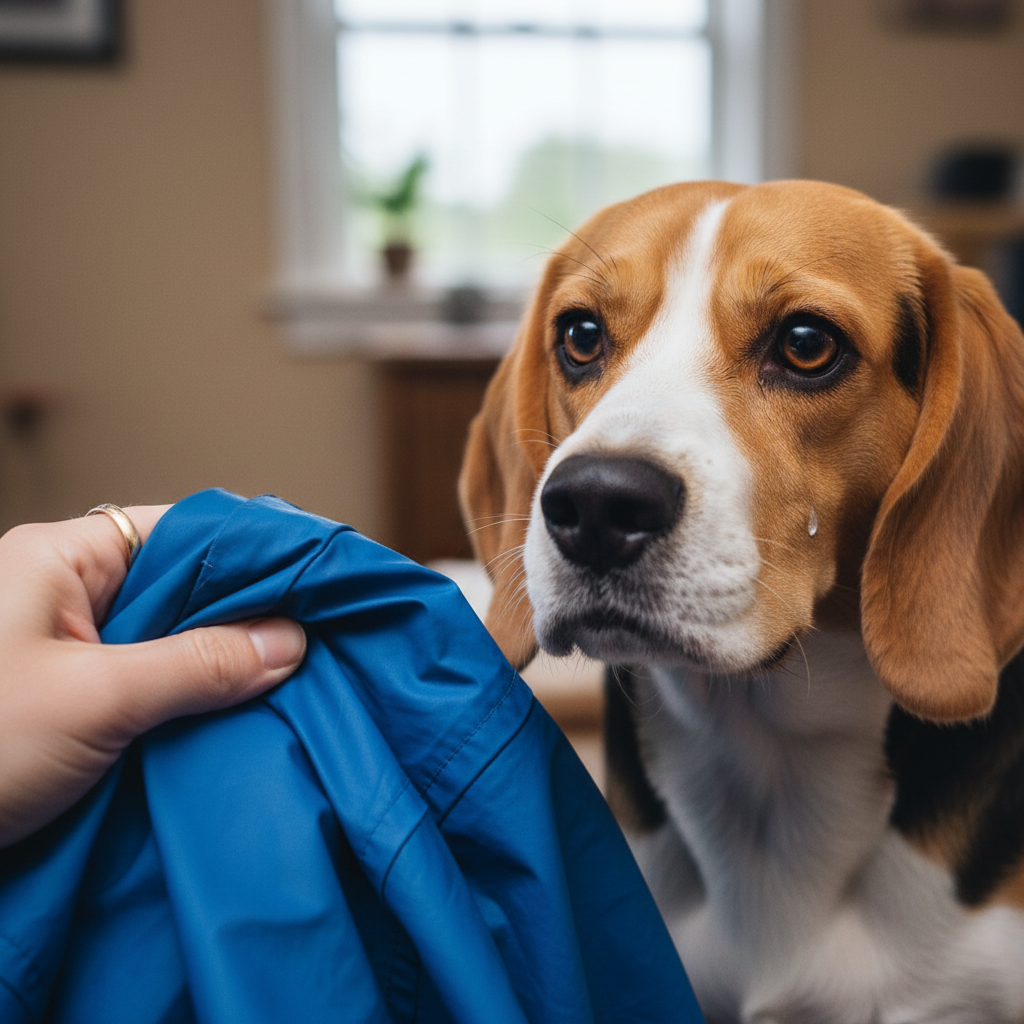
If rain gear is so great, why does your dog act like you’re trying to put it in a straitjacket? It’s rarely about being stubborn. Their resistance usually comes from a place of genuine discomfort or fear.
- Sensory Overload: Dogs experience the world differently. The sound of a crinkly nylon coat can be jarring to their sensitive ears. The feeling of a strange fabric against their fur, especially if it’s tight or restrictive, can be overwhelming.
- Feeling Trapped: The pressure of a coat, especially around the chest and under the belly, can trigger a feeling of being restrained. For some dogs, this can cause anxiety or even panic. This is often called a ‘freeze’ response, where the dog simply shuts down and refuses to move.
- Negative Associations: Perhaps the first time you tried to put a coat on, it was a rushed, stressful event. Your dog may have learned to associate the sight of the coat with that unpleasant feeling, creating a cycle of anxiety.
Understanding these reasons is the first step. It helps us approach the problem with empathy, realizing we’re not ‘fixing’ a bad dog, but rather helping a confused or anxious dog learn that this new object is safe and even rewarding.
Setting the Stage for Success: Your Desensitization Toolkit
Gathering Your Arsenal for a Positive Experience
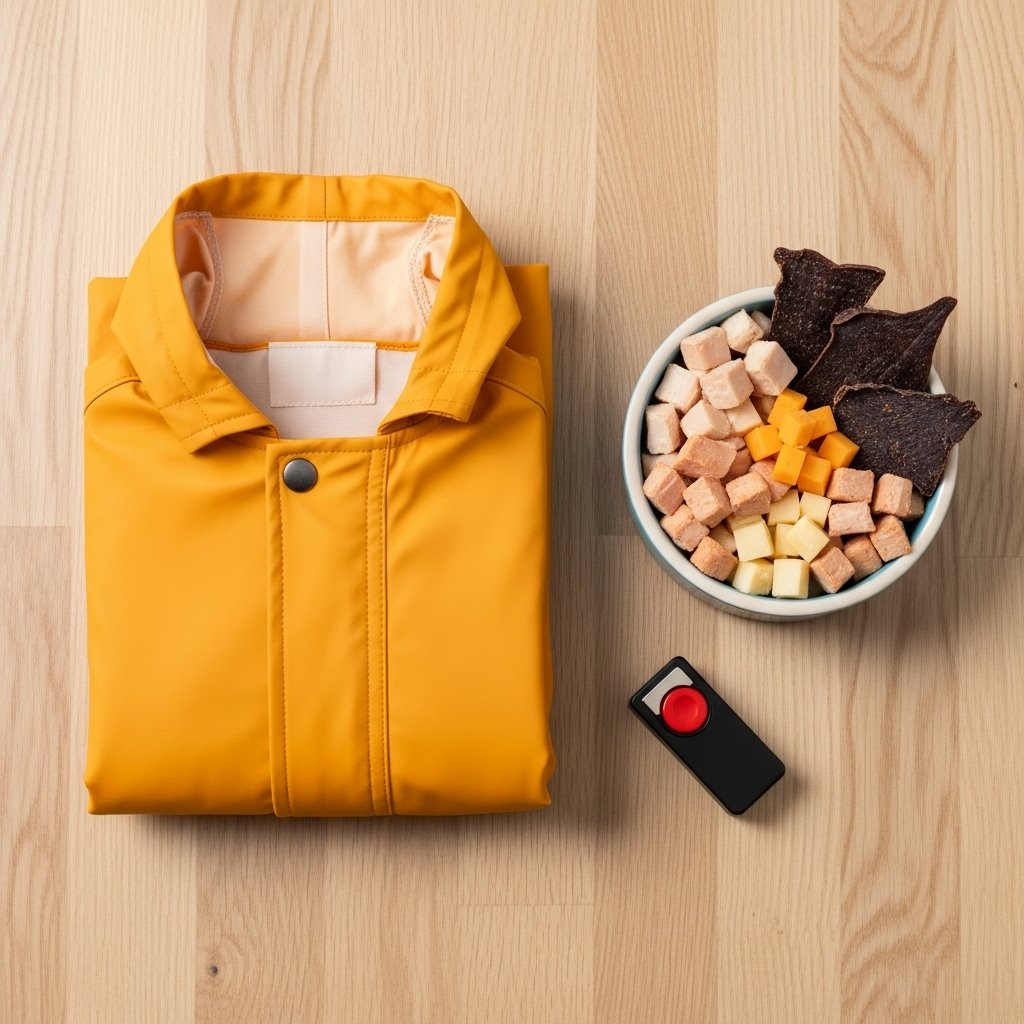
Success in dog training is all about preparation. Before you even bring the raincoat out, let’s get your toolkit ready. Having everything on hand will make the process smoother and more effective. Think of yourself as preparing for a fun new game, not a chore.
Essential Supplies:
- The Rain Gear: Start with just one item, preferably a simple coat. If it’s brand new, leave it out of the packaging in a common area for a day or two so your dog can get used to its presence and smell without any pressure.
- High-Value Treats: This is non-negotiable! We’re talking about the good stuff, not their regular kibble. Think tiny pieces of boiled chicken, cheese, hot dogs, or a special soft treat they absolutely love. The treat has to be more exciting than the gear is scary. Chop them into pea-sized bits so you can reward frequently without filling your dog up too quickly.
- A Clicker (Optional): If your dog is clicker-trained, this is a fantastic tool for precisely marking the moments your dog shows calm, positive behavior around the gear. If not, a consistent, happy marker word like ‘Yes!’ works just as well.
- A Calm, Quiet Space: Choose a time and place where there are minimal distractions. Avoid trying to do this when the kids are running around, when you’re in a rush to get out the door, or when your dog is already hyped up. A quiet living room is perfect.
Expert Tip: Your energy is contagious. If you’re stressed, anxious, or frustrated, your dog will pick up on it immediately. Take a few deep breaths, put on some calming music, and approach each session with a patient, positive, and playful attitude. This is a journey, not a race.
The Step-by-Step Guide to Rain Gear Acceptance
The Gradual Gauntlet: From Sight to Stroll
This is where the magic happens. The key is to go at your dog’s pace and make every single step a positive experience. Keep sessions short—just 2-5 minutes once or twice a day is perfect. We want to end each session on a high note, leaving your dog wanting more.
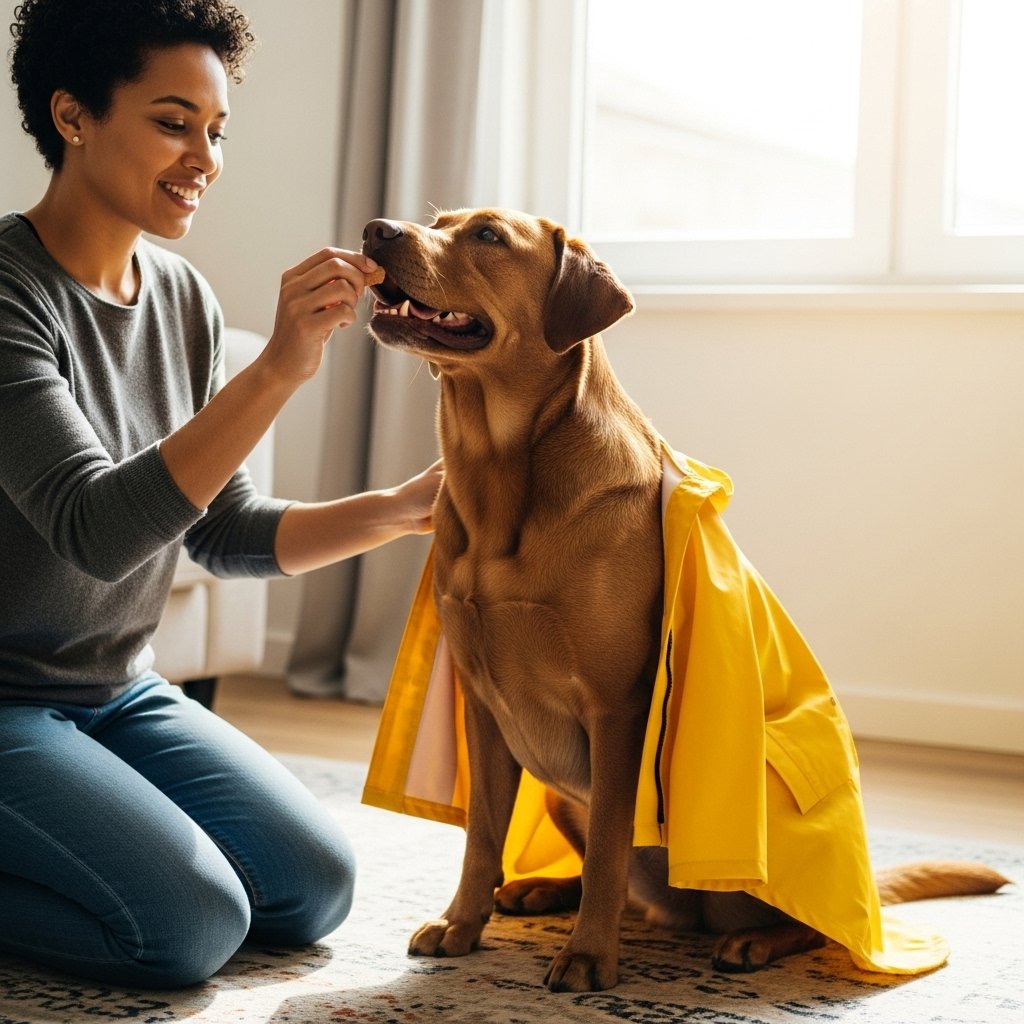
- Step 1: The Object of Affection. Place the raincoat on the floor. The second your dog looks at it, say ‘Yes!’ (or click) and toss a treat near the coat. Don’t ask for more. Just look = treat. If they sniff it, jackpot! Give them several treats. Do this for a few sessions until the sight of the coat makes your dog look at you expectantly for a treat.
- Step 2: Touch and Treat. Hold the coat in one hand and treats in the other. Gently touch the coat to your dog’s shoulder or back for just a split second, say ‘Yes!’ and give a treat. The touch should be so brief they barely notice. Repeat, gradually increasing the duration of the touch from a tap to a one-second rest.
- Step 3: The Drape. Once your dog is comfortable with being touched by the coat, gently drape it over their back without fastening any straps. Let it rest there for one second, then ‘Yes!’, treat, and remove the coat. The removal of the coat is part of the reward! Slowly build up the duration until they can stand calmly with the coat draped on them for 5-10 seconds.
- Step 4: Sound Check. Many dogs are spooked by the sound of velcro ripping or buckles clicking. Before you ever try to fasten it on them, work on the sounds separately. With the coat on the floor, rip the velcro open. ‘Yes!’ and treat. Click a buckle. ‘Yes!’ and treat. Start with the sounds at a distance and gradually work closer until your dog associates these specific noises with a tasty reward.
- Step 5: Strap In, Briefly. Now, with the coat draped on their back, reach under and fasten the easiest strap (usually the chest one). Fasten it loosely. ‘Yes!’, treat, and immediately unfasten and remove the coat. The reward comes *after* the action. Repeat until you can fasten it, leave it for a few seconds, and then unfasten it without any signs of stress. Then, introduce the second strap in the same way.
- Step 6: The Full Monty (Indoors). With your dog calmly accepting the straps, put the coat on fully. Give a shower of treats and praise! Ask them to do a simple trick they know, like ‘sit’ or ‘shake,’ to take their mind off the coat. Keep it on for just 15-30 seconds, then take it off.
- Step 7: Add a Little Movement. With the coat on, toss a treat a few feet away so they have to take a step to get it. Praise them for moving! Engage them in a fun game of tug or a quick training session inside. We want to teach them that they can still move, play, and be a normal dog while wearing the coat.
- Step 8: The Grand Finale. Once your dog is comfortably moving around the house in their gear, it’s time for the real world! Leash them up and head out for a very short, fun walk around the yard or just to the end of the block and back. Make it a ‘treat party’ walk with lots of praise. Congratulations, you did it!
Troubleshooting Common Rain Gear Roadblocks
Help! My Dog Is Still Not Having It
Sometimes, even with the best plan, you hit a snag. Don’t worry! This is completely normal. Here’s how to handle some of the most common issues.
My dog freezes and won’t move. What do I do?
This is often called ‘learned helplessness,’ where the dog feels so trapped it just shuts down. It’s a clear sign you’ve moved a little too fast. Go back a few steps in the training plan to where your dog was last comfortable (e.g., just draping the coat without straps). The goal is to rebuild their confidence. When you do get the coat on, instead of expecting them to walk, try luring them one step at a time with a super high-value treat right at their nose. Celebrate every tiny step with huge enthusiasm. Keep these sessions extremely short.
My dog tries to bite or chew the coat.
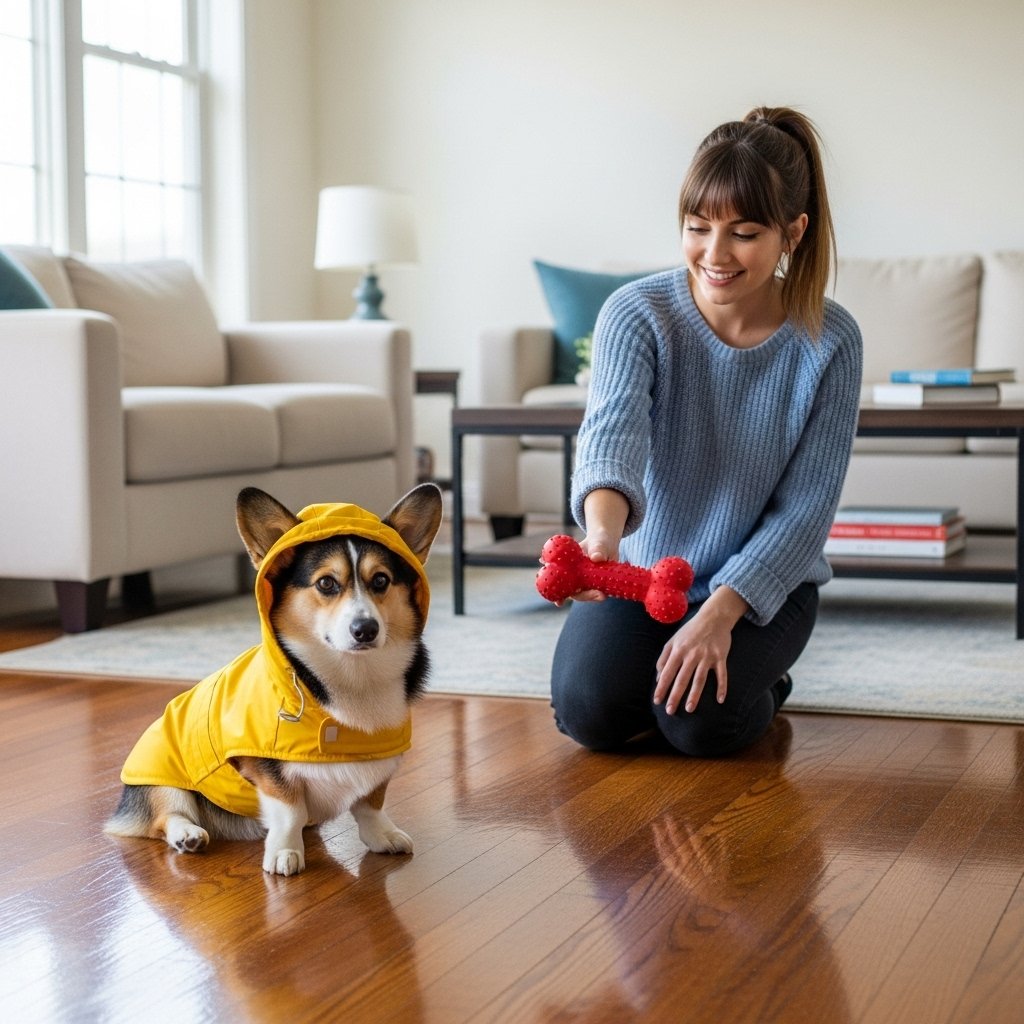
This can be a sign of anxiety or frustration. The dog is trying to ‘remove’ the source of its discomfort. First, ensure the fit is correct—a coat that’s too tight or chafes can be irritating. If the fit is good, redirect the behavior. When the coat is on, immediately engage them in a game with a favorite toy, like tug-of-war. This gives them an appropriate outlet for their mouthy-ness. You can also use a tasty chew, like a bully stick, that they only get when wearing the coat. This creates a powerful positive association and keeps their mouth busy.
My dog is fine inside but panics as soon as we go out.
The combination of the coat and the overwhelming sights, sounds, and smells of the outdoors can be too much at once. Practice wearing the coat for fun activities that *don’t* involve going outside. Put it on for 5 minutes during playtime or dinnertime. The goal is to make the coat so boring and normal that it’s not even on their radar. Then, re-introduce the outdoors by just opening the door and stepping onto the porch for 10 seconds. Reward and come back inside. Gradually increase the duration until a walk feels like the next logical step.
Remember the Golden Rule: Never force it. Forcing your dog to wear the gear will only confirm their fears that it’s a scary, unpleasant thing. If your dog is showing major signs of stress (panting, yawning, whale eye), end the session and try again later, taking a big step back in the process. Patience is your superpower.
Finding the Perfect Fit: Not All Rain Gear Is Created Equal
Choosing a Coat Your Dog Will Actually Tolerate
The type of rain gear you choose can have a massive impact on your dog’s acceptance. A comfortable, well-fitting coat is much easier to get used to than one that’s noisy, tight, or restrictive. Here’s what to look for:
Material Matters
Some raincoats are made from stiff, crinkly nylon that can be very loud and unsettling for dogs. Look for newer, soft-shell materials or fabric-lined coats. These are much quieter and feel softer against your dog’s fur, reducing sensory offense.
Fit is Everything
A poorly fitting coat is a recipe for disaster. It can chafe, restrict movement, and make your dog miserable. Always measure your dog before buying! You’ll typically need three key measurements:
- Length: From the base of the neck to the base of the tail.
- Girth: The widest part of their chest, right behind the front legs.
- Neck: Around the neck where a collar would sit.
Compare these to the manufacturer’s sizing chart. When in doubt, it’s often better to size up slightly to ensure freedom of movement.
Style and Coverage
Different dogs need different types of coats. Consider your dog’s build and your local climate when choosing a style.
| Gear Type | Best For | Pros | Cons |
|---|---|---|---|
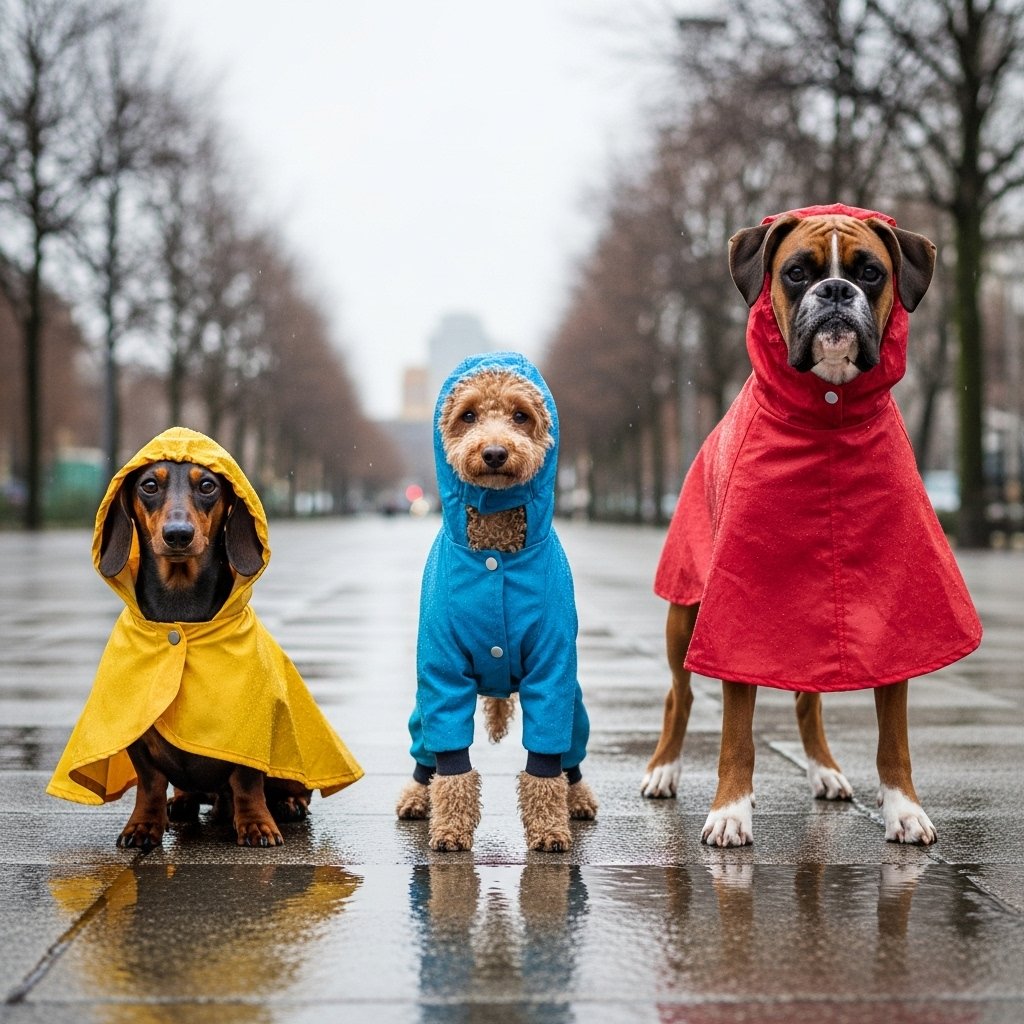
| Standard Cape-Style Coat | Most dogs, easy introduction | Easy to put on/take off, good coverage for back, less restrictive. | Belly and legs are exposed to splashes. |
| Full Body Suit (with legs) | Dogs who get very dirty, cold climates | Maximum coverage and cleanliness, offers more warmth. | Can be very restrictive, much harder for dogs to get used to. |
| Lightweight Poncho | Hot, rainy climates, dogs who overheat easily | Very lightweight and breathable, simple design. | Offers minimal coverage, can flap around in the wind. |
| Rain Boots | City dogs walking on dirty pavement, dogs with sensitive paws | Keeps paws clean and dry, protects from salt or chemicals. | Extremely difficult for most dogs to tolerate; requires a separate, very slow desensitization process. |
For your first attempt at desensitization, a simple, soft, cape-style coat is almost always the best choice. You can always ‘upgrade’ to a full body suit later once your dog has mastered the basics.
Conclusion
Turning your rain-gear-resistant pup into a happy, puddle-stomping partner is more than possible—it’s a wonderful bonding experience. By replacing fear and anxiety with trust and tasty treats, you’re not just teaching your dog to wear a coat; you’re teaching them that you are a safe, patient leader who will help them navigate new things. Remember to celebrate the small victories, whether it’s a calm sniff of the coat or the first few steps taken without hesitation. Every positive interaction builds a foundation of confidence that will last a lifetime.
So, the next time the clouds roll in, you won’t have to sigh and cancel your walk. You can grab that once-dreaded raincoat, watch your dog’s tail start to wag in anticipation, and head out the door together, ready for whatever adventures the weather brings. Dry dogs and happy owners—it’s the perfect forecast.