Hey there, fellow pet parent! We all want to do our part for the planet, from using reusable bags to sorting our waste. But have you ever looked at your four-legged friend and thought, ‘What if they could help, too?’ Well, get ready for some tail-wagging, eco-friendly fun! Teaching your dog to put bottles in the recycling isn’t just an impressive party trick; it’s a fantastic way to provide mental stimulation, strengthen your bond, and add a little green-pawed help to your daily routine.
This isn’t about turning your pup into a chore-machine. It’s about engaging their brilliant mind with a purposeful game. Dogs, especially intelligent breeds, thrive on having a ‘job’ to do. This task channels their natural instincts to fetch and carry into a positive and productive activity. In this guide, we’ll walk you through everything you need, from the essential supplies to a detailed, step-by-step training plan. We’ll also cover common hiccups and, most importantly, how to keep it safe and fun for everyone. Let’s get started on training your very own Recycling Rover!
Gearing Up for Green Paws: What You’ll Need
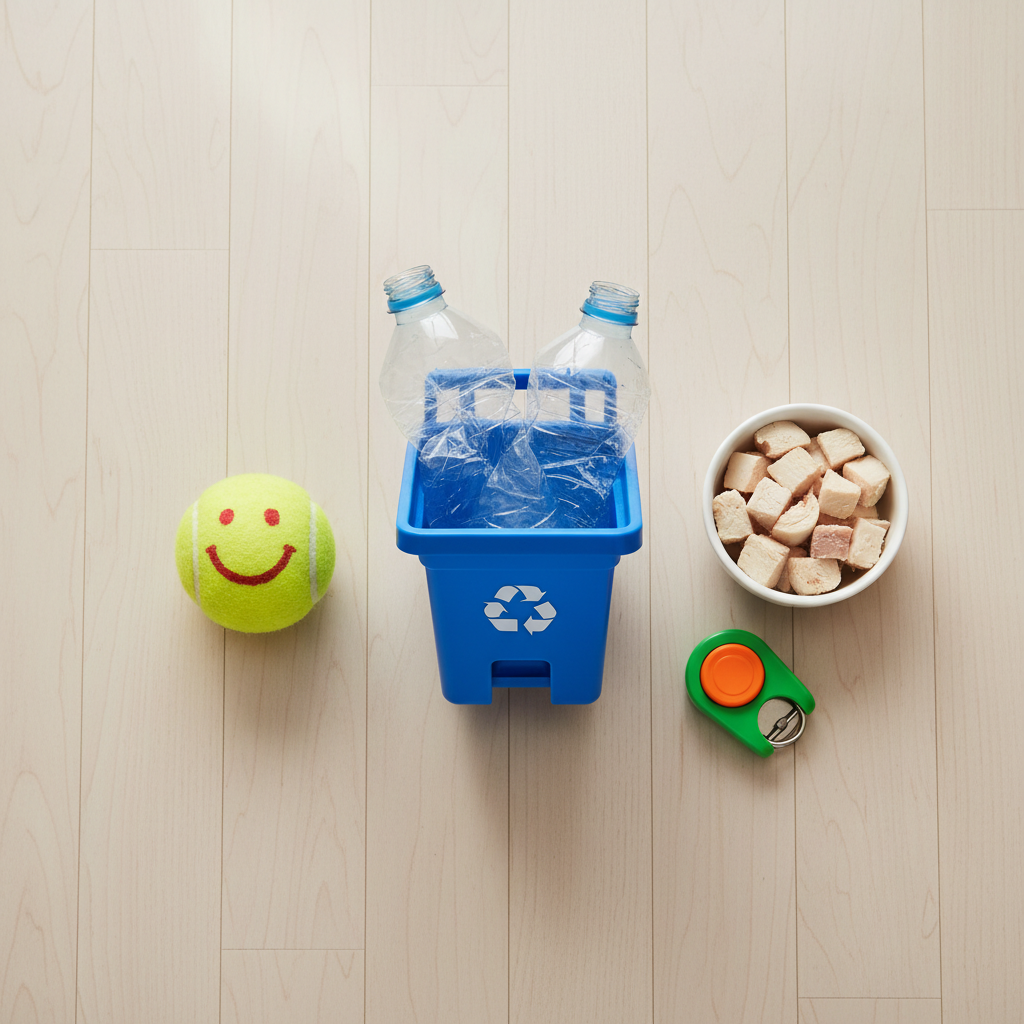
Before you and your pup embark on this eco-adventure, it’s best to gather a few simple supplies. Having everything ready will make your training sessions smooth, positive, and effective. Think of this as setting the stage for success!
The Essentials for Your Recycling Trainee:
- High-Value Treats: We’re talking about the good stuff! Small, soft, extra-tasty treats that your dog absolutely loves will be your primary motivator. Think tiny pieces of chicken, cheese, or their favorite store-bought training treats. The goal is to make them say, ‘Wow, it’s really worth it to touch that bottle!’
- A Clicker (Optional, but Recommended): A clicker is a fantastic tool for marking the exact moment your dog does the right thing. This precise communication helps your dog learn faster. If you’re not using a clicker, choose a consistent verbal marker, like a sharp ‘Yes!’.
- Clean, Empty Plastic Bottles: Start with standard 16-ounce water or soda bottles. Make sure they are completely empty, rinsed out, and dry. Crucially, remove the caps and the small plastic rings around the neck, as these can be choking hazards. You’ll want a few on hand for each session.
- A Low, Open Recycling Bin: To start, you need a target that’s easy for your dog to succeed with. A small, open-top bin, a sturdy cardboard box, or even a laundry basket will work perfectly. Avoid anything with a lid or a small opening initially.
- Patience and a Positive Attitude: This is the most important tool in your kit! Training should always be a fun and positive experience. Keep your energy upbeat, celebrate the small wins, and never get frustrated. Your dog will feed off your positive vibes.
Expert Tip: Schedule your training sessions when your dog is a little hungry and has had a chance to burn off some excess physical energy. A focused mind is a trainable mind!
The Step-by-Step Guide to a Recycling Rockstar
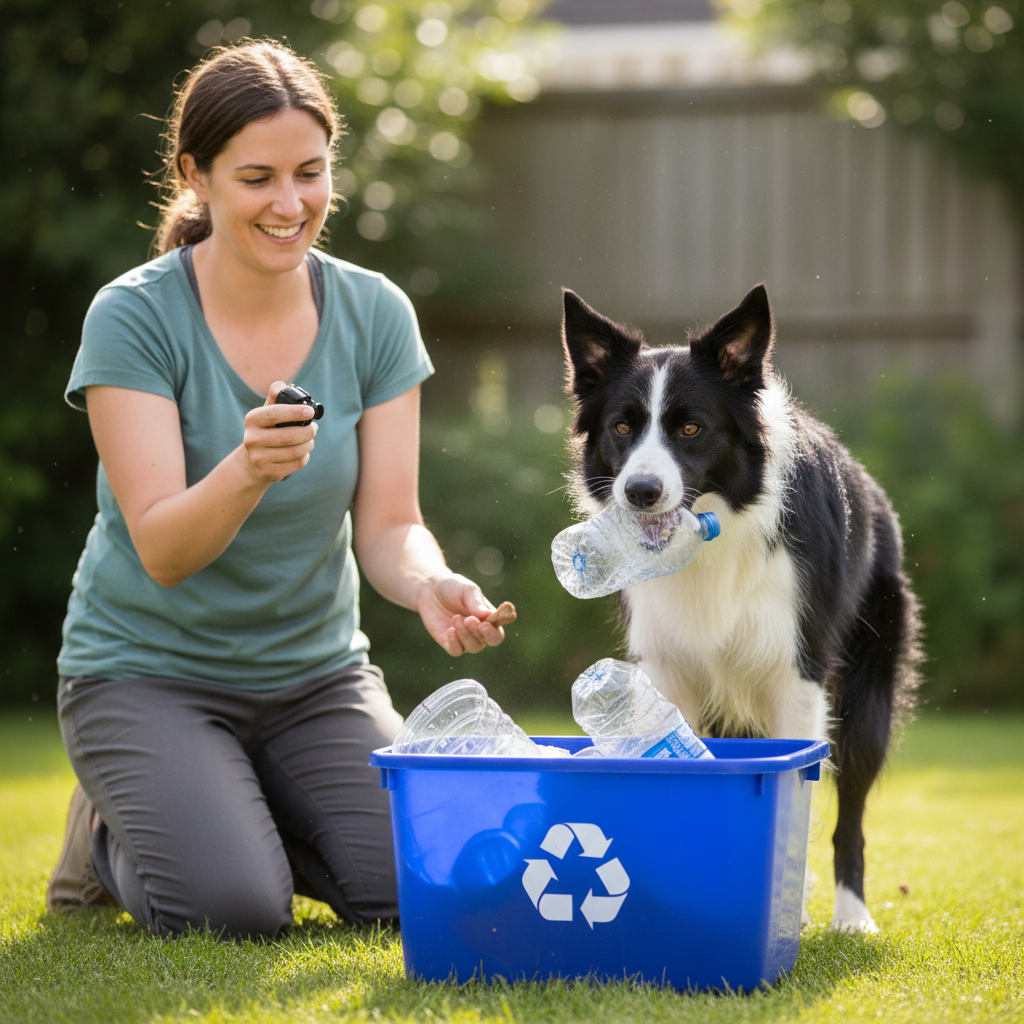
Alright, let’s break this impressive trick down into small, achievable steps. The key is to build on each success, creating a ‘chain’ of behaviors that eventually becomes one fluid action. Remember to keep sessions short—just 5-10 minutes once or twice a day is perfect.
-
Step 1: Introduce the Bottle (The ‘Touch’ Command)
The first goal is simply to make the bottle interesting and rewarding. Place a bottle on the floor in front of you. The moment your dog shows any interest—sniffing it, looking at it, or nudging it—click (or say ‘Yes!’) and give them a treat. Repeat this until your dog is eagerly interacting with the bottle. You are building a positive association: Bottle = Treat.
-
Step 2: From Touching to Taking (The ‘Take It’ Command)
Now, we want to encourage your dog to put their mouth on the bottle. Hold the bottle out to them. When they open their mouth and touch it, click and treat. Gradually, start waiting for them to apply a little pressure before you reward them. Once they are reliably mouthing the bottle, add the verbal cue ‘Take It’ right as they are about to grab it. Work towards them holding the bottle for a second or two before you reward them.
-
Step 3: The Journey to the Bin (The ‘Bring It’ Command)
With your dog comfortably holding the bottle, it’s time to add movement. Place the recycling bin right next to you. Ask your dog to ‘Take It’. Once they have it, use a treat to lure them one or two steps towards the bin. Click and treat for any movement in the right direction. Slowly increase the distance between your dog and the bin over several sessions. If they already know ‘Fetch’ or ‘Bring It’, you can use that cue to help!
-
Step 4: The Grand Finale (The ‘Drop It’ Command)
This is the final piece of the puzzle. With your dog holding the bottle near the bin, hold a super high-value treat right over the bin. To get the treat, your dog will naturally have to drop the bottle. The moment the bottle falls into the bin, click and give them the treat, along with lots of praise! As they get the hang of it, add the cue ‘Drop It’. Practice this step over and over until they are confidently dropping the bottle inside the bin on cue.
-
Step 5: Putting It All Together
Now, you’ll chain the behaviors. Place the bottle a few feet away from the bin. Point to the bottle and say ‘Take It’ or ‘Get the bottle’. As they pick it up, encourage them towards the bin. Once they are hovering over it, say ‘Drop It’. When they succeed, throw a jackpot party—multiple treats and tons of praise! Over time, you can simply point to a bottle and say ‘Recycle!’, and your brilliant pup will know exactly what to do.
Oops! Troubleshooting Common Recycling Hiccups
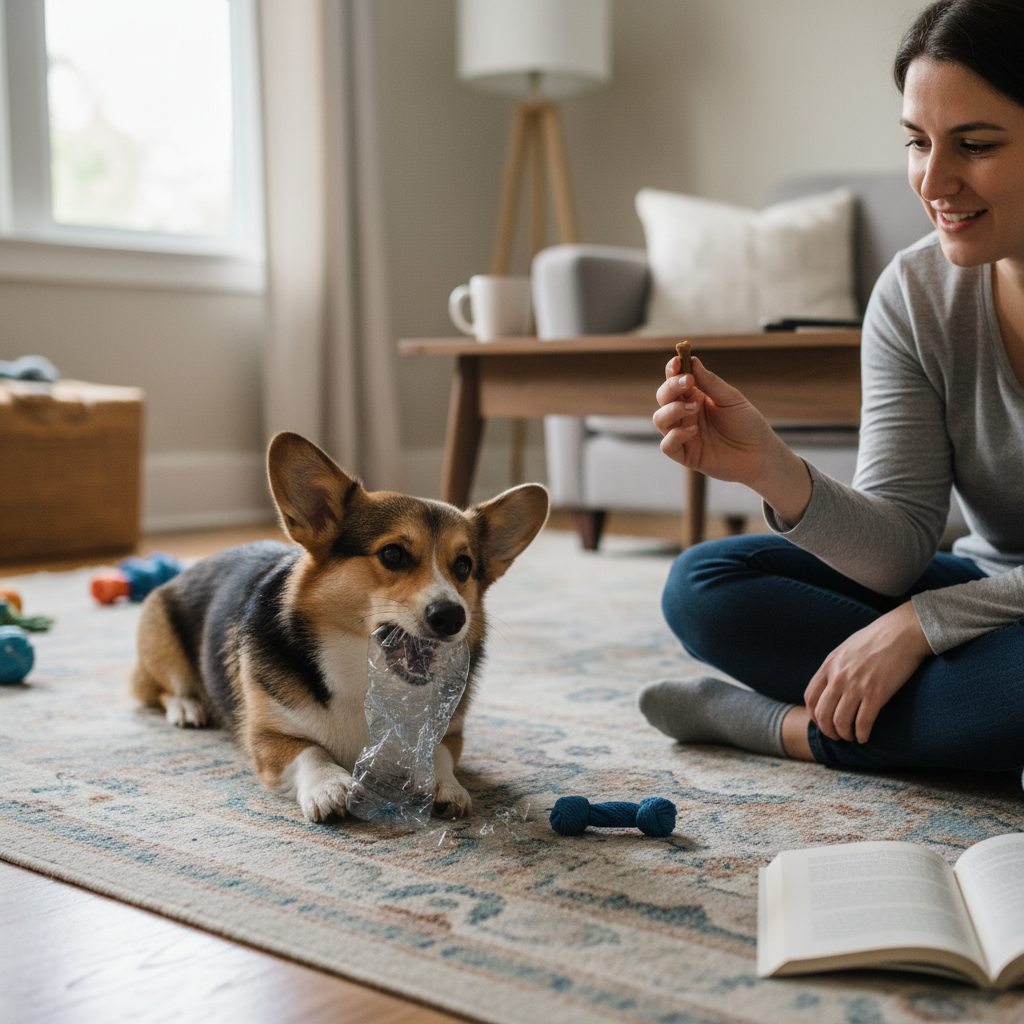
Even the best students have off days! Training is never a straight line, and hitting a snag is a totally normal part of the process. If you find yourself stuck, don’t worry. Here are some common challenges and how to work through them with a smile.
- Problem: My dog chews the bottle instead of carrying it.
Solution: This is very common! It usually means the training is moving a bit too fast or the dog sees the bottle as a chew toy. Go back to rewarding for a gentle hold. Use a higher rate of reward for short, gentle holds, and don’t give them time to start chewing. You can also try using a slightly tougher plastic bottle that isn’t as satisfying to crunch.
- Problem: My dog won’t pick up the bottle.
Solution: The bottle might be unappealing or intimidating. Try rubbing a tiny bit of peanut butter or cream cheese on it to encourage mouth interaction. You can also start with something more familiar, like a favorite toy, and practice the ‘Take It’ and ‘Drop It’ game with that first before transitioning back to the bottle.
- Problem: My dog drops the bottle before reaching the bin.
Solution: This usually means the distance is too great for their current skill level. Shorten the distance! Place the bin so close that they only need to take one step. Celebrate that success wildly, and then slowly, inch by inch, increase the distance over many sessions. You’re building their duration and focus.
- Problem: My dog gets the bottle but then runs off to play.
Solution: Ah, the classic game of keep-away! This means the reward for dropping the bottle isn’t high enough to compete with the fun of having the bottle. Increase the value of your treats and make the celebration for dropping it in the bin the most exciting party ever. Ensure training sessions are short and end on a high note before they get bored.
Remember the Golden Rule: If your dog is failing more than they are succeeding, make the task easier. The goal is to build confidence, not frustration. Take a step back, find a point of success, and reward it heavily!
Safety First: Keeping Your Eco-Pup Protected
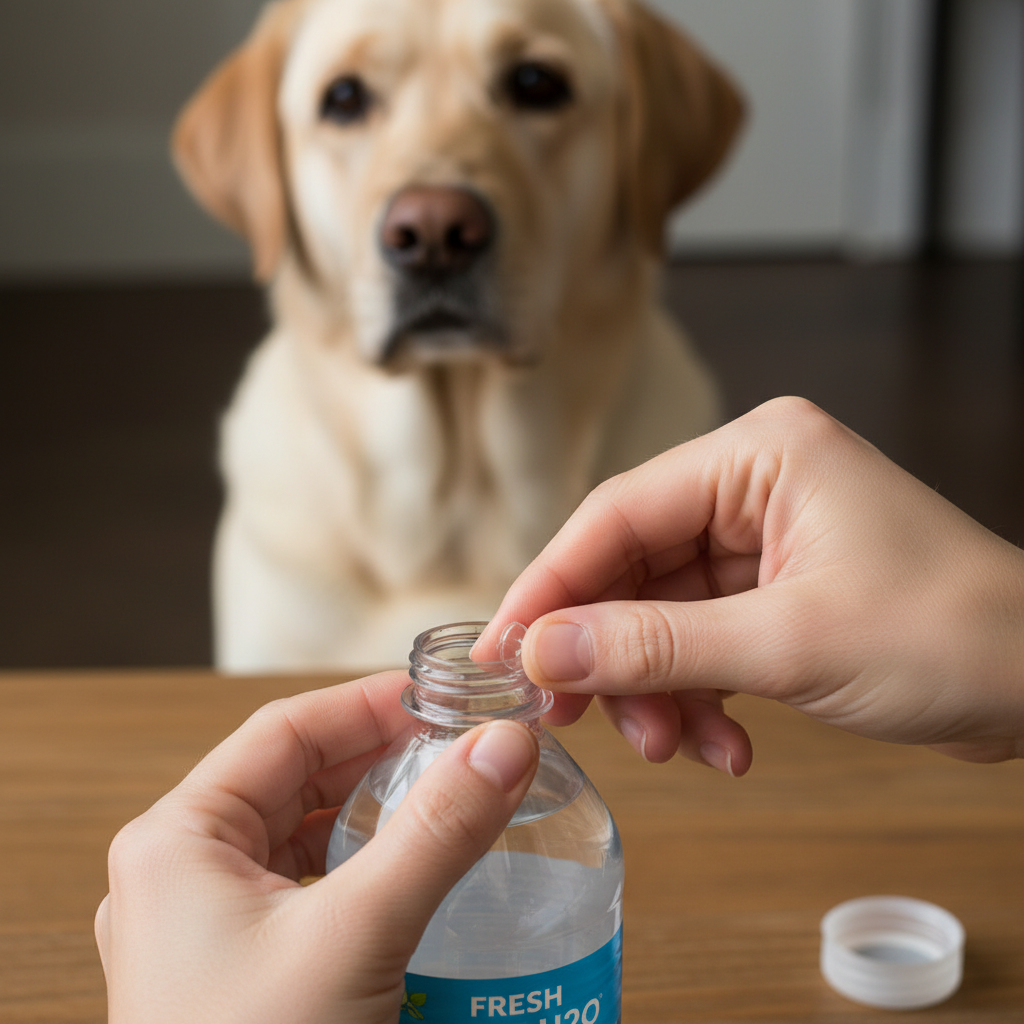
While this trick is incredibly fun, your dog’s safety is always the number one priority. Plastic bottles aren’t traditional dog toys, so we need to take a few precautions to ensure this game remains safe and positive for your furry helper.
Key Safety Guidelines
- Always Remove Caps and Rings: This is the most critical rule. Before giving your dog a bottle, always unscrew the cap and pull off the small plastic security ring that breaks off from it. These small pieces are serious choking hazards.
- Inspect Every Bottle: Give each bottle a quick check for sharp edges or cracks. If a dog bites down hard, the plastic can splinter. Discard any bottles that are broken or have become excessively chewed up and sharp over time.
- Stick to Safe Materials: For this trick, only use #1 (PETE) plastic bottles, like those used for water and soda. They are relatively soft and less likely to splinter than harder plastics. Never use glass, aluminum cans, or brittle plastic containers, as these can easily injure your dog’s mouth.
- Supervise, Supervise, Supervise: This training game should only be played when you are actively supervising. Don’t leave plastic bottles lying around as if they are regular toys. When the training session is over, put the bottles and the bin away.
- Keep It Positive, Not Pressured: This is a game, not a job. If your dog seems stressed, tired, or uninterested, end the session on a positive note with an easy win (like a simple ‘sit’) and try again another day. Forcing them will only create negative associations.
By following these simple rules, you can ensure that your eco-friendly training is a safe, fun, and wonderful bonding experience for you and your best friend.
Conclusion
Congratulations, you’ve got all the knowledge you need to cultivate a recycling champion right in your own home! Teaching your dog to put bottles in the recycling is so much more than a neat trick. It’s a testament to your partnership, a boost for your dog’s confidence, and a brilliant way to keep their mind sharp and engaged. Every time they successfully drop a bottle in the bin, you’re not just cleaning up; you’re communicating, collaborating, and strengthening the incredible bond you share.
Remember to be patient, celebrate every tiny step forward, and most importantly, have fun with it. Your enthusiasm is contagious! Before you know it, you’ll have a happy, tail-wagging assistant who’s always eager to help you save the planet, one bottle at a time. Now go grab some treats and get started—your eco-friendly pup is ready to learn!