Have you ever seen a dog rest its chin flat on the floor, looking up with those big, soulful eyes? It’s a pose that can melt even the toughest of hearts. Often called the ‘sad dog’ pose or a chin rest, this adorable behavior is more than just a party trick—it’s a fantastic tool for communication, husbandry, and strengthening the bond you share with your furry best friend. It’s a quiet, calm behavior that can help your dog settle in new environments or signal that they are relaxed and ready to engage.
Teaching the chin rest is a wonderful journey into the world of positive reinforcement training. It’s a simple concept that builds on capturing and rewarding a natural behavior. Whether you’re a seasoned dog training pro or a brand-new pet parent, this guide is for you. We’ll break down the process into easy-to-follow steps, troubleshoot common issues, and explore how this one simple trick can open up a world of cooperative care, making things like vet visits and grooming sessions a breeze. So grab some tasty treats, find a comfy spot, and let’s teach your dog how to master the ultimate heart-melting pose!
Why Teach the Chin Rest? More Than Just a Cute Trick!
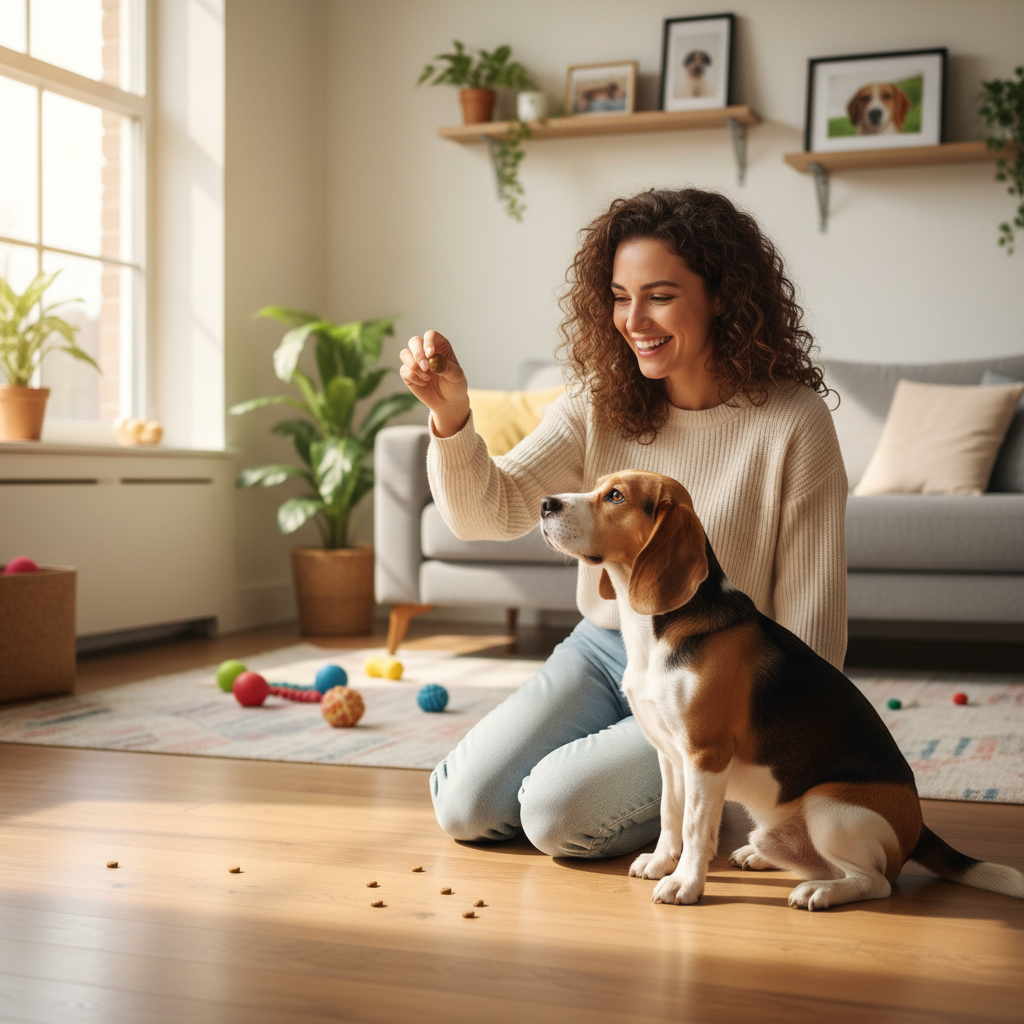
Before we dive into the ‘how-to,’ let’s talk about the ‘why.’ While the chin rest is undeniably adorable, its benefits go far beyond creating the perfect photo op. Integrating this skill into your dog’s repertoire can have a profound impact on their well-being and your relationship.
Strengthening Your Bond
Any time you engage in a positive training session, you’re building a stronger connection with your dog. You’re learning to communicate with each other through cues, rewards, and body language. Teaching the chin rest is a quiet, focused activity that builds trust and mutual understanding. It’s a shared language that says, ‘I see you, and I appreciate you working with me.’
A Gateway to Cooperative Care
This is perhaps the most powerful application of the chin rest. Many dogs find procedures like ear cleaning, eye drop administration, or even having their temperature taken to be stressful. By teaching your dog to voluntarily place their chin on a surface (or your lap) and hold it there, you are giving them a way to consent and participate in their own care. Instead of a struggle, these husbandry tasks become a predictable, rewarding routine.
Expert Tip: A dog that can hold a chin rest is a dog that is communicating its readiness. This ‘duration’ behavior is a cornerstone of cooperative care, making vet visits and home grooming sessions less stressful for everyone involved.
Building Confidence and Calmness
The chin rest is a ‘settle’ behavior. Asking your dog to perform this cue can help them calm down in exciting or slightly stressful situations, like when guests arrive or during a thunderstorm. It gives them a simple, familiar task to focus on, which can lower their anxiety levels. For a nervous dog, having a predictable, rewarded behavior to offer can be a huge confidence booster.
Boosting Mental Stimulation
Dogs need mental exercise just as much as physical exercise. A 10-15 minute training session can be just as tiring as a long walk! Learning a new skill like the chin rest engages your dog’s brain, prevents boredom, and can help curb destructive behaviors that often stem from a lack of mental enrichment. It’s a fun puzzle for them to solve, with a delicious reward at the end!
Gearing Up for Success: What You’ll Need
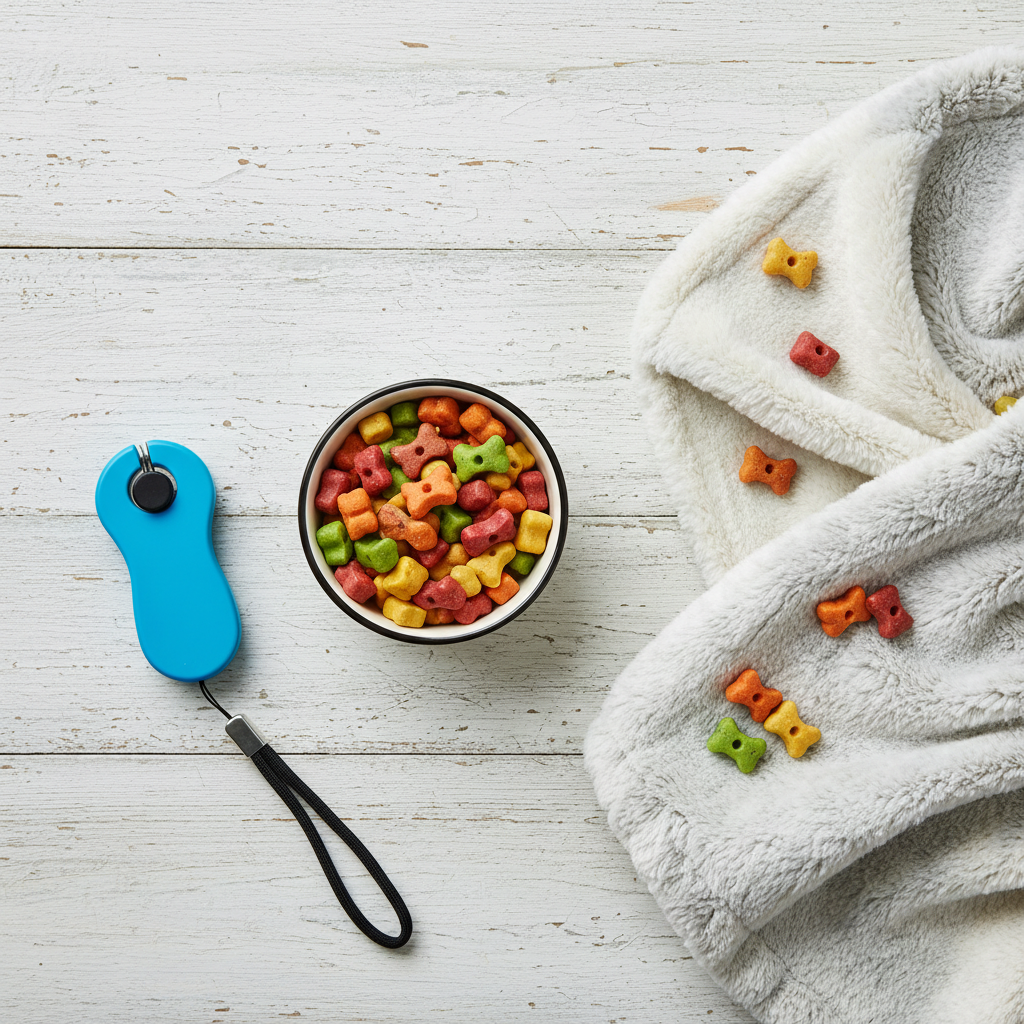
The best part about teaching the chin rest is that you don’t need a lot of fancy equipment. The most important tools are your attitude and your understanding of your dog. Here’s a simple checklist to get you started on the right paw:
- High-Value Treats: This is crucial! You want something your dog absolutely loves and doesn’t get all the time. Think small, soft, and smelly treats that can be eaten quickly, so you don’t break the flow of training. Pieces of cooked chicken, cheese, or commercial training treats work well. The goal is to make the reward so fantastic that your dog is eager to figure out what you’re asking.
- A Clicker (Optional but Recommended): A clicker is a ‘marker’ tool. It makes a distinct sound the exact moment your dog does the correct behavior. This precise timing helps your dog understand exactly what they’re being rewarded for. If you don’t have a clicker, a consistent verbal marker like a sharp ‘Yes!’ works just as well.
- A Comfortable Training Space: Choose a quiet area with minimal distractions. A soft surface like a rug, carpet, or a dog bed is ideal, as it’s more comfortable for your dog to rest their chin on than a hard, cold floor.
- A Positive and Patient Mindset: This is non-negotiable! Your dog can sense your frustration. Training sessions should always be fun and upbeat. Keep them short—just 5-10 minutes at a time is perfect—and always end on a successful repetition so your dog finishes feeling confident and eager for the next session.
The Step-by-Step Guide to the Perfect Chin Rest
Alright, let’s get to the fun part! Remember to go at your dog’s pace. Some dogs might pick this up in a single session, while others may need several shorter sessions to grasp the concept. Patience is key!
Step 1: Luring the Head Down
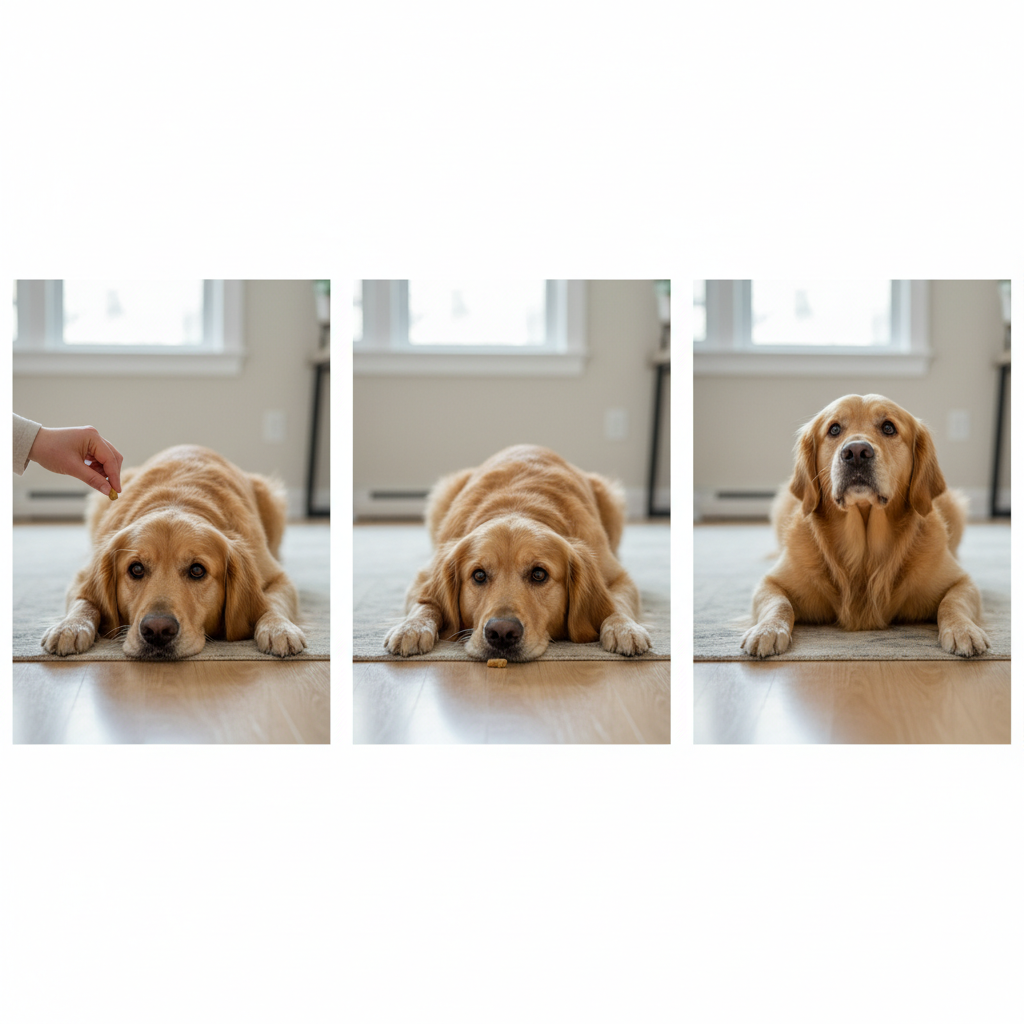
Start with your dog in a ‘down’ or ‘sphinx’ position. Hold a tasty treat between your thumb and forefinger. Let your dog sniff the treat, then slowly lower your hand straight down towards the floor between their paws. Their nose should follow the treat. The goal is to get their head to lower, even just an inch. The moment their head moves down, click (or say ‘Yes!’) and give them the treat. Repeat this 5-10 times until your dog is eagerly following the treat lure downwards.
Step 2: Capturing the Chin Touch
Now, we want to encourage their chin to make contact with the floor. Continue luring their head down, but this time, wait for their chin to actually touch the surface. It might only be for a split second at first, and that’s okay! The very instant their chin makes contact, click/Yes! and reward. If they are struggling, you can place a flat hand or a folded towel on the floor to give them a clearer target. The goal here is to mark the specific action of the chin touching the surface.
Step 3: Building Duration
Once your dog is reliably touching their chin to the floor, it’s time to ask them to hold the position. Lure them into the chin rest, and instead of clicking immediately, wait a single second before you click/Yes! and reward. Gradually increase the duration—one second, then two, then four. If your dog lifts their head before you click, that’s okay! Just go back to a shorter duration they can be successful with. It’s also helpful to introduce a ‘release cue’ like ‘Okay!’ or ‘Free!’ to let them know when the trick is over and they can get up.
Pro-Tip: When building duration, feed multiple small treats in a row while your dog holds the position (‘jackpotting’) before giving the release cue. This teaches them that good things happen when they stay in the chin rest.
Step 4: Adding the Verbal Cue
When you’re confident your dog understands the behavior and can hold it for a few seconds, you can add a verbal cue. Say your chosen cue (e.g., ‘Chin,’ ‘Settle,’ or ‘Pose’) right before you begin to lure them into position. After several repetitions, your dog will start to associate the word with the action. The sequence should be: Verbal Cue -> Lure -> Behavior -> Mark -> Reward.
Step 5: Fading the Lure
The final step is to remove your hand lure. Start making your hand motion smaller and smaller each time. Eventually, you can just point to the floor. The goal is for your dog to perform the chin rest with only the verbal cue. This takes time and lots of practice, so be patient. If your dog gets stuck, simply reintroduce the lure for a few repetitions to help them remember, and then try fading it again.
Troubleshooting Common Stumbling Blocks
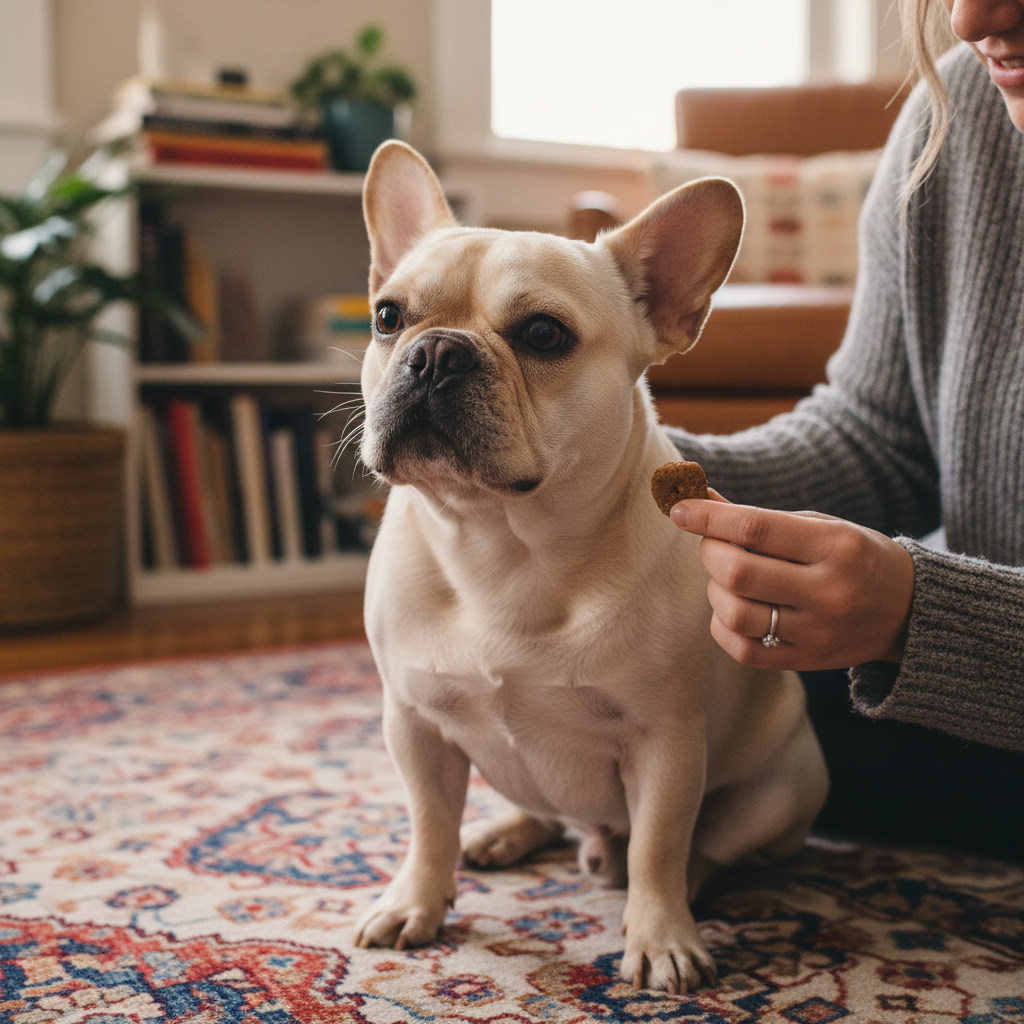
Training is never a straight line; there will always be little bumps in the road. Don’t worry, it’s completely normal! Here are some common issues and how to navigate them.
‘My dog keeps trying to paw at my hand!’
This usually means the treat is too distracting or your dog is getting a little frustrated. Try using a less exciting treat for the luring part, or hold the treat in a closed fist so they can only sniff it. Make sure you’re rewarding for nose/chin movement, not pawing. If they paw, simply reset calmly and try again.
‘My dog won’t put their head all the way down.’
You might be asking for too much, too soon. Go back a step! Reward any downward movement of the head, no matter how small. This is called ‘shaping.’ You can reward them for looking down, then for dipping their nose an inch, then for dipping it two inches, and so on, until you gradually build up to the full chin rest. Celebrate the small victories!
‘As soon as they get the treat, they pop right back up!’
This is a classic duration challenge. To fix this, change how you deliver the reward. Instead of giving the treat and letting them get up, try delivering several small treats in quick succession while their chin is still on the floor. This teaches them that the reward happens during the behavior, not after it ends. Also, make sure you’re using your release cue (‘Okay!’) consistently to signal when it’s time to get up.
‘My dog seems bored or distracted.’
This is a sign to end the session! Always keep training sessions short and sweet, especially when learning a new skill. Five minutes of focused, successful training is far more valuable than 20 minutes of frustrated, sloppy attempts. End on a high note with a trick they know well, give them lots of praise, and try again later or the next day. Your dog’s enthusiasm is your most valuable asset, so protect it!
Taking It to the Next Level: Advanced Applications
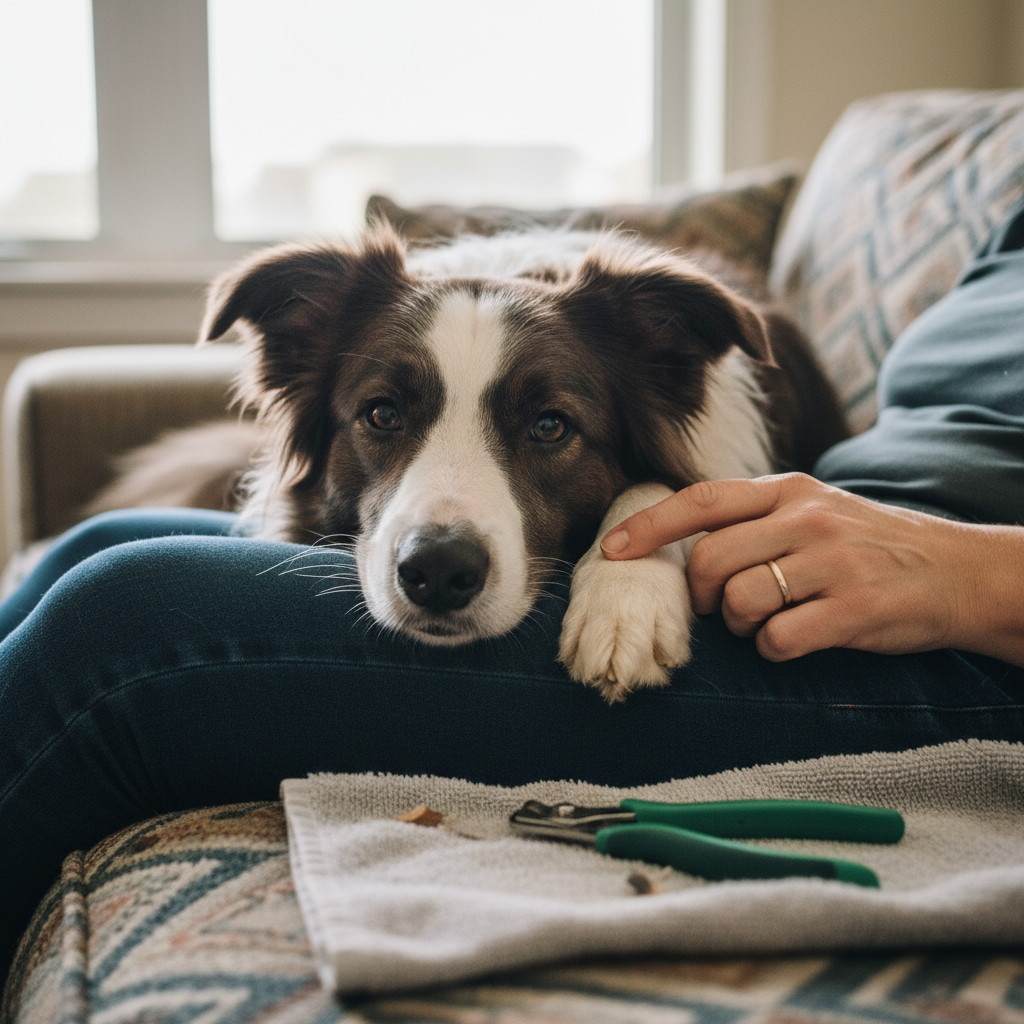
Once your dog has mastered the basic chin rest on the floor, you can start ‘generalizing’ the behavior and applying it to new situations. This is where the trick truly transforms into a powerful tool.
On Different Surfaces
Practice the chin rest on a variety of surfaces: a different rug, a towel, a mat, or even a patch of grass outside. This teaches your dog that the cue ‘Chin’ means the same thing no matter where you are.
Chin Rest in Your Lap
This is a game-changer for cooperative care. Sit on the floor or a low chair and pat your lap, using your cue to ask for a chin rest there. This position is perfect for examining their eyes, ears, and teeth. With practice, you can even build up to doing nail trims while they calmly rest their head in your lap. Always associate this with very high-value rewards to keep the experience positive.
The ‘Settle on a Mat’ Cue
The chin rest is the foundation for teaching your dog to go to a mat and settle. Once they can target the mat with their chin, you can build duration until they are happily resting there for extended periods. This is incredibly useful for managing your dog’s behavior in public places like a café patio or at a friend’s house.
Adding Distance and Distractions
Can your dog perform the chin rest while you’re standing a few feet away? Can they do it if another person walks into the room? Slowly and gradually introduce distance and mild distractions to make the behavior more reliable in the real world. This process is called ‘proofing’ and is the final step in solidifying any new skill.
Conclusion
And there you have it! From a simple head-dip to a reliable, multi-purpose skill, the chin rest is a truly special behavior to share with your dog. It’s a testament to your communication, a foundation for stress-free care, and, of course, an endlessly adorable pose that will have all your friends and family fawning. Remember that every dog learns at their own pace, so celebrate the small successes, keep your sessions full of joy, and cherish the process. The journey of teaching this skill is just as rewarding as the final result. Now go have fun with your amazing, clever canine companion!