Let’s be honest, laundry day doesn’t usually spark joy. It’s a never-ending cycle of sorting, washing, and folding. But what if you could transform this tedious chore into a delightful bonding experience with your canine companion? Teaching your dog to help with the laundry isn’t just a cute party trick; it’s a fantastic form of mental stimulation and enrichment that can curb boredom and build confidence.
This guide will walk you through the entire process, from gathering your supplies to troubleshooting common hiccups. Using positive reinforcement techniques, you’ll teach your dog a complex and useful new skill, all while having a ton of fun. Get ready to look at that pile of dirty clothes in a whole new light. Your dog is about to become the most enthusiastic laundry assistant you’ve ever had!
Setting the Stage for Success: What You’ll Need
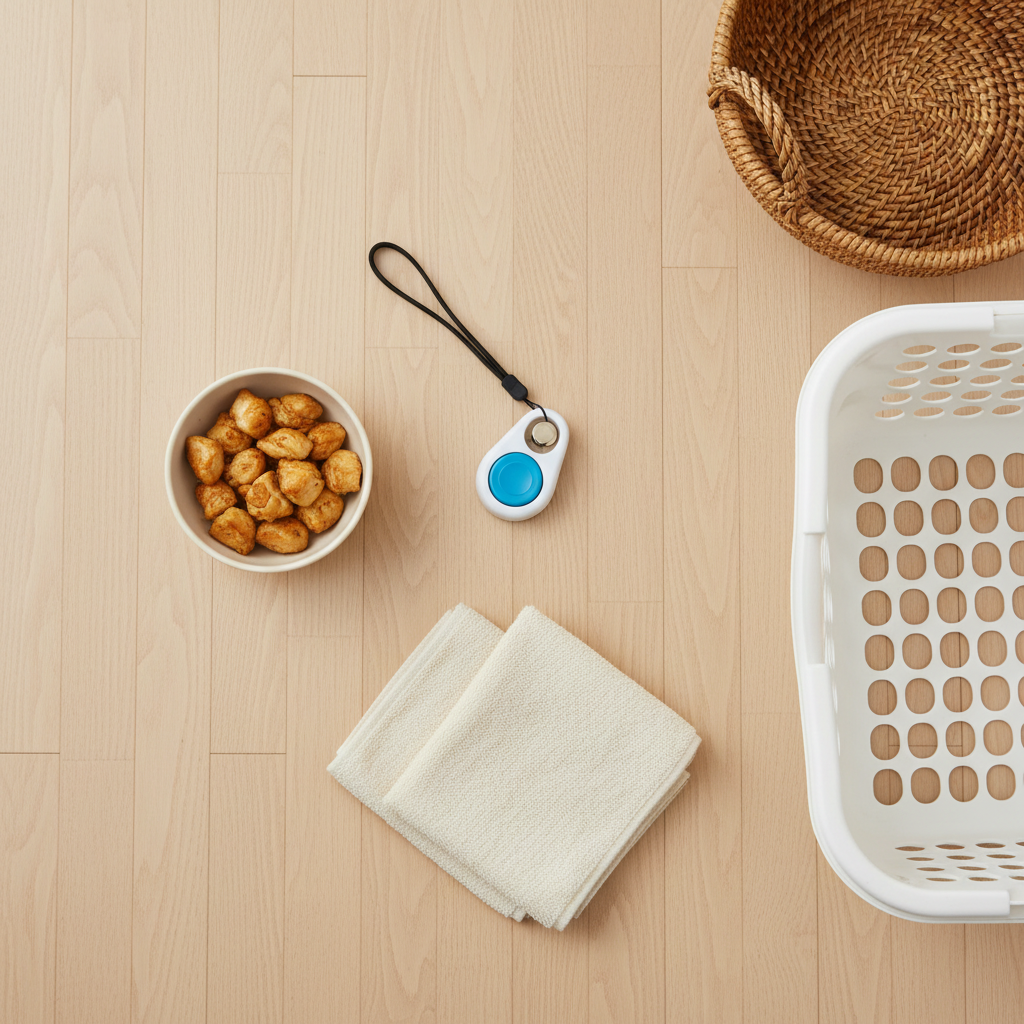
Before you and your pup embark on this laundry adventure, it’s important to gather a few key items and set up a training-friendly environment. Proper preparation is the first step to ensuring your sessions are fun, productive, and stress-free for everyone involved.
Essential Supplies:
- Laundry Baskets: You’ll need at least two. It’s helpful if they are visually distinct (e.g., different colors or materials) to help your dog later if you advance to color sorting.
- High-Value Treats: This is the fun part for your dog! Use small, soft, and extra-tasty treats that your dog absolutely loves. Think tiny pieces of chicken, cheese, or special training treats. This isn’t the time for their regular kibble.
- A Clicker (Optional): If you’re familiar with clicker training, it’s an excellent tool for marking the exact moment your dog performs the correct behavior. If not, a consistent verbal marker like a happy “Yes!” works just as well.
- ‘Laundry’ Items: Start with clean items! Old (but clean) socks, washcloths, or t-shirts are perfect. Using dirty clothes right away might encourage your dog to see all your laundry as a chew toy.
Creating the Right Atmosphere:
Choose a quiet room with minimal distractions. Turn off the TV, ask other family members for some space, and put away any tempting toys that aren’t part of the training. The goal is to make it easy for your dog to focus on you and the task at hand. Remember the golden rule of dog training: keep sessions short and sweet! Aim for 5-10 minute sessions once or twice a day to keep your dog engaged and excited to learn, rather than frustrated or bored.
From Paws to Pile: The Step-by-Step Training Process
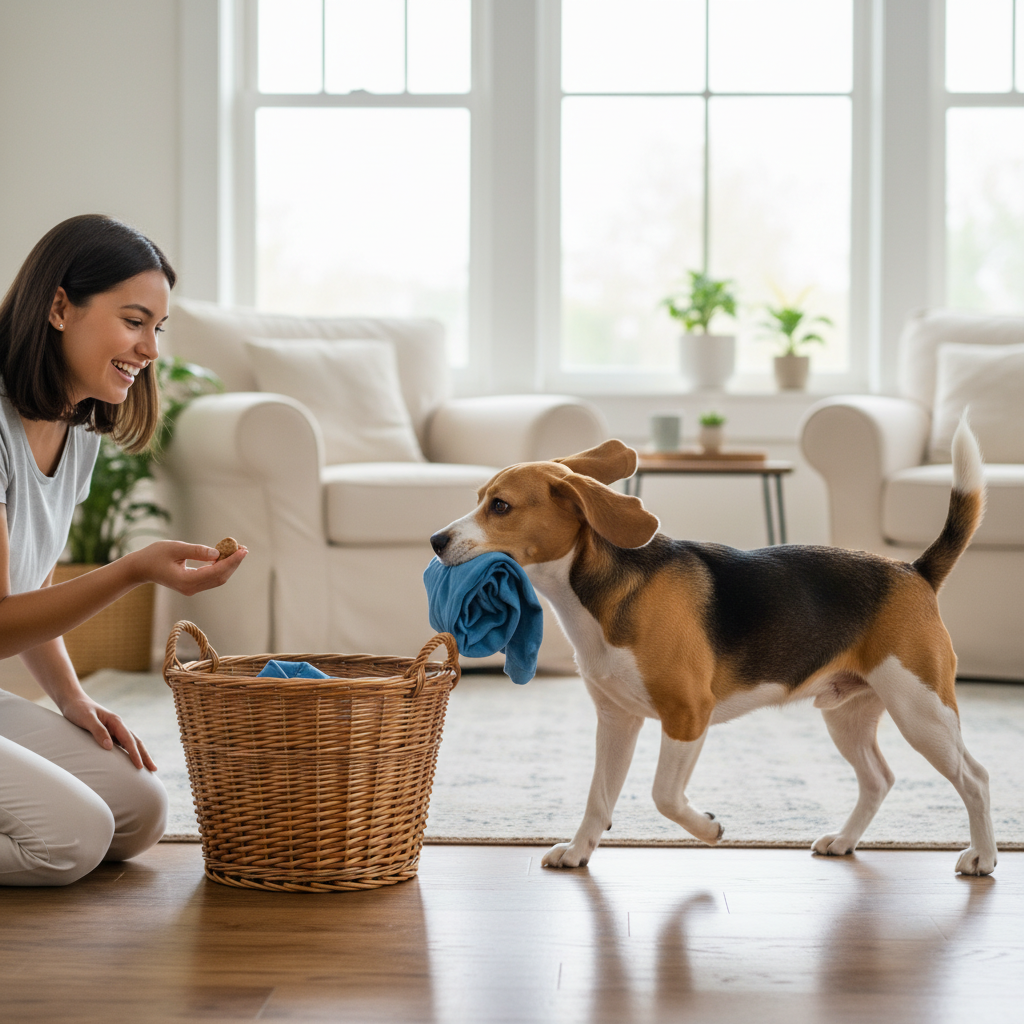
This is where the magic happens! We’re going to break down the complex task of sorting laundry into tiny, achievable steps. This process is called ‘shaping,’ and it’s all about rewarding small successes along the way. Be patient, stay positive, and celebrate every bit of progress your dog makes.
-
Step 1: Introduce the Basket (Targeting)
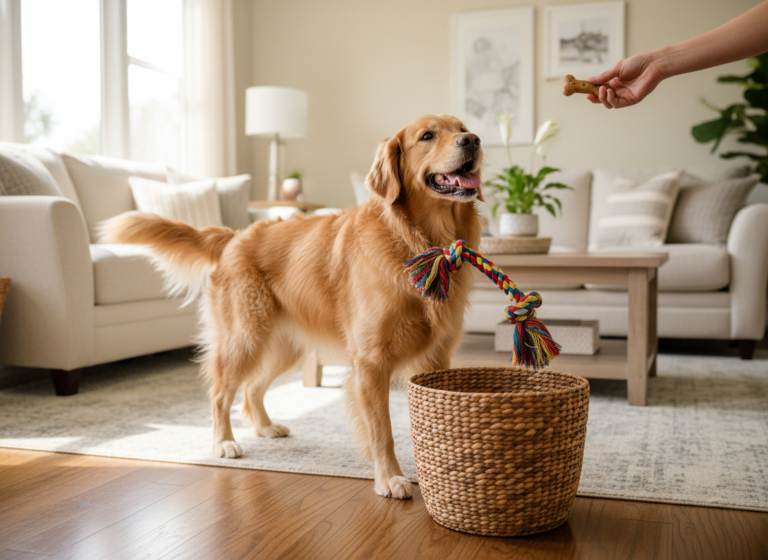
First, we need to teach your dog that the laundry basket is an awesome place to be. Place a basket on the floor. The moment your dog shows any interest—sniffing it, looking at it, moving toward it—click (or say “Yes!”) and give them a treat. Repeat this until your dog is confidently interacting with the basket. You can then raise the criteria, rewarding them only for touching it with their nose or a paw.
-
Step 2: Picking Up the ‘Laundry’ (The ‘Take It’ Cue)
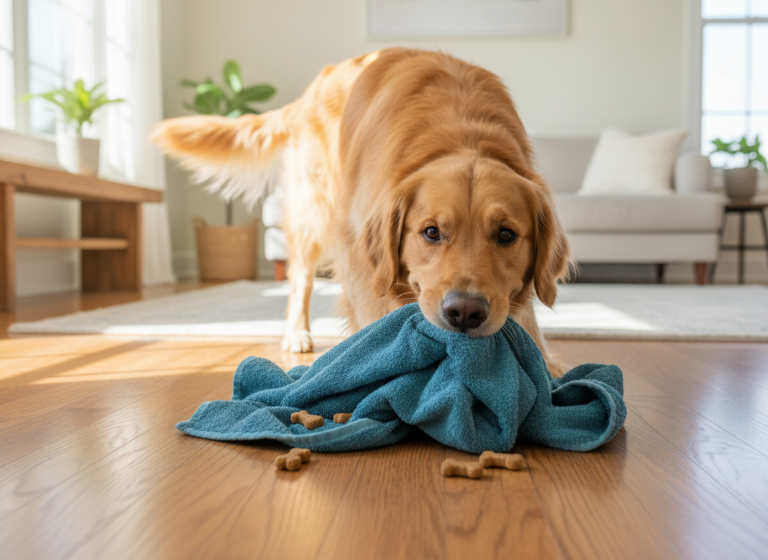
Now, let’s get them interested in the laundry itself. Start with a clean washcloth. Make it exciting! Wiggle it around to pique their interest. When they put their mouth on it, click/”Yes!” and reward. Gradually work up to them picking the item up off the floor. Use a cue like “Take It” as they begin to understand the game.
-
Step 3: Carrying the Item (The ‘Hold’ Cue)
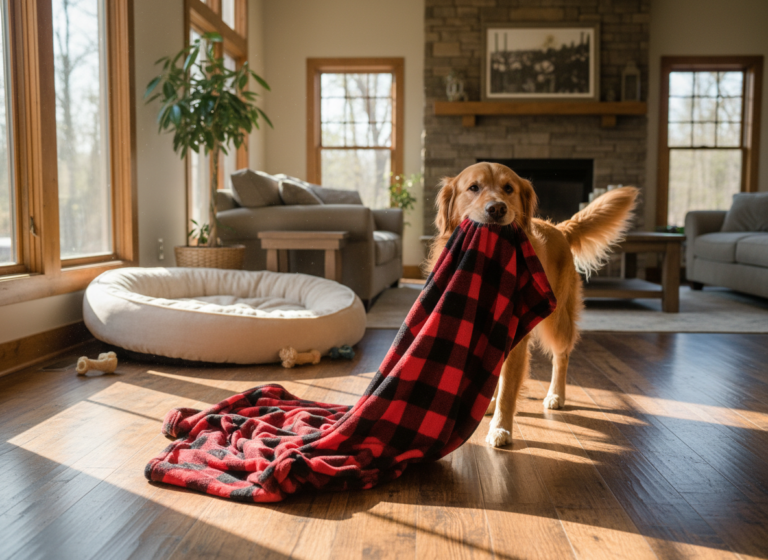
Once your dog is reliably picking up the item, we want them to hold it for a second or two. This can be tricky, as many dogs want to immediately play tug or chew. Give the “Take It” cue, and if they hold the item gently for even a split second, click/”Yes!” and reward. Slowly increase the duration of the ‘hold’ before you reward them. If they start to chew, simply trade them for a treat to get the item back without a struggle.
-
Step 4: Combining Cues (Moving to the Basket)
Here’s where we put it all together. Place the basket very close to you. Ask your dog to “Take It.” Once they have the item, use a treat to lure their head over the basket. As they move towards the basket with the item in their mouth, reward them enthusiastically. We’re not asking for a drop yet, just rewarding the motion of carrying the item towards the basket.
-
Step 5: Dropping it In (The ‘Drop It’ Cue)
With your dog holding the item over the basket, say your ‘Drop It’ cue and hold a very high-value treat near their nose. Most dogs will drop the item to get the treat. The second the item falls into the basket, click/”Yes!” and have a jackpot party—give them several treats and lots of praise! This is the big moment!
-
Step 6: Adding Distance and Fading the Lure
Once your dog understands the full sequence, you can start to gradually increase the distance. Place the laundry item a foot away from the basket, then two feet, and so on. Slowly fade your physical lure (the treat in your hand) and rely more on your verbal cues and hand signals. Before you know it, your dog will be picking up items from across the room and proudly trotting them to the basket.
Common Roadblocks and How to Navigate Them
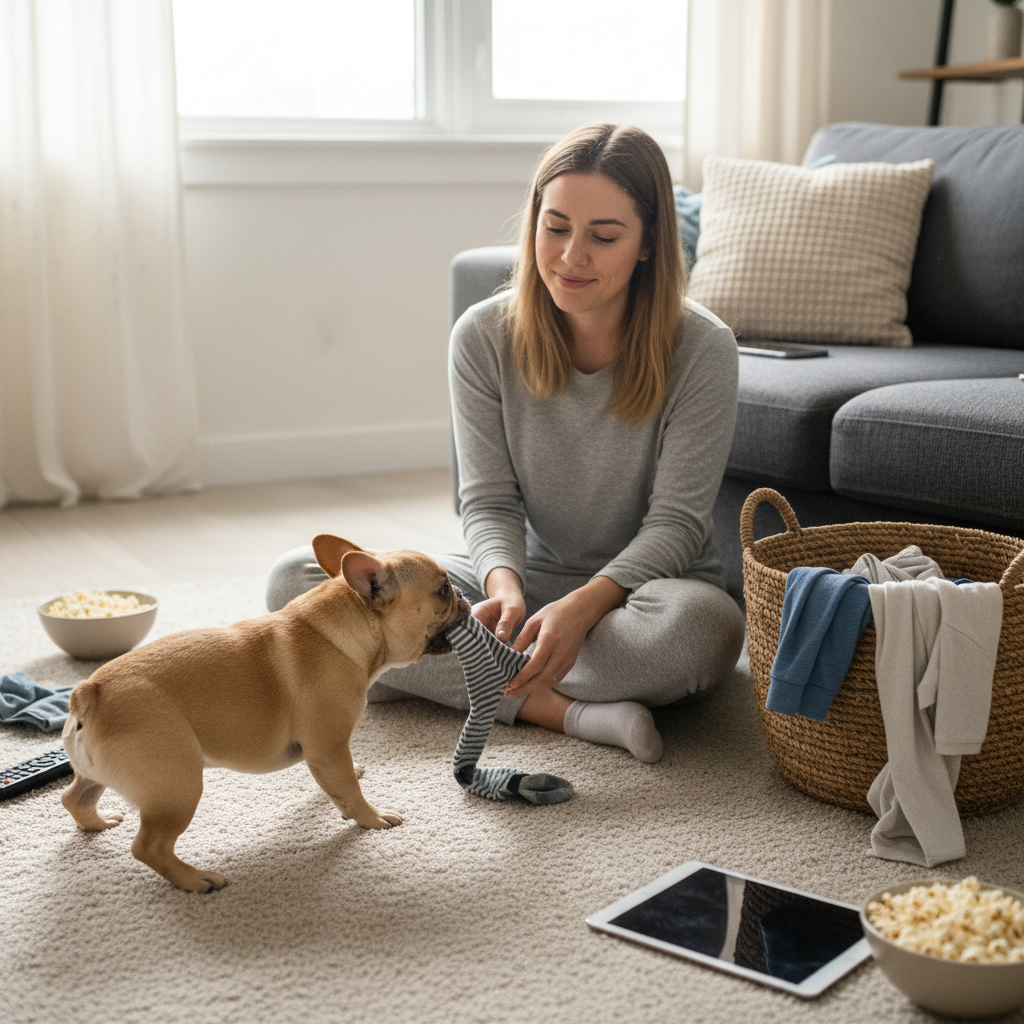
Even the most brilliant pup can hit a snag during training. Don’t worry, it’s completely normal! The key is to identify the problem and take a step back if needed. Training should always be fun, never frustrating. Here are some common issues and how to solve them.
Remember, every dog learns at a different pace. If you or your dog are getting frustrated, it’s always best to end the session on a positive note with an easy win (like a simple ‘sit’) and try again later.
| The Problem | The Solution |
|---|---|
| My dog keeps chewing or shredding the clothes! | This usually means the item is too exciting. Go back to practicing the ‘Hold’ cue with a less tempting item, like a boring piece of knotted rope. Also, ensure your dog has had plenty of physical exercise and appropriate chew toys before a training session. |
| My dog won’t pick up the laundry item. | The item might not be interesting enough. Start with a favorite soft toy to build momentum. You can also try rubbing a tiny, tiny amount of peanut butter or cream cheese on the cloth to encourage them to interact with it. |
| He drops the item before reaching the basket. | You’ve likely increased the distance too quickly. Go back a step! Shorten the distance to the basket so it’s almost impossible for them to fail. Reward for every single step they take towards the basket with the item in their mouth. |
| She loses interest halfway through the session. | Your training sessions are probably too long. Keep them under 10 minutes. It’s far better to have three separate, super-fun 5-minute sessions throughout the day than one long, boring 15-minute session. Also, make sure your treats are high-value enough to keep their attention. |
Leveling Up: From Helper to Laundry Connoisseur
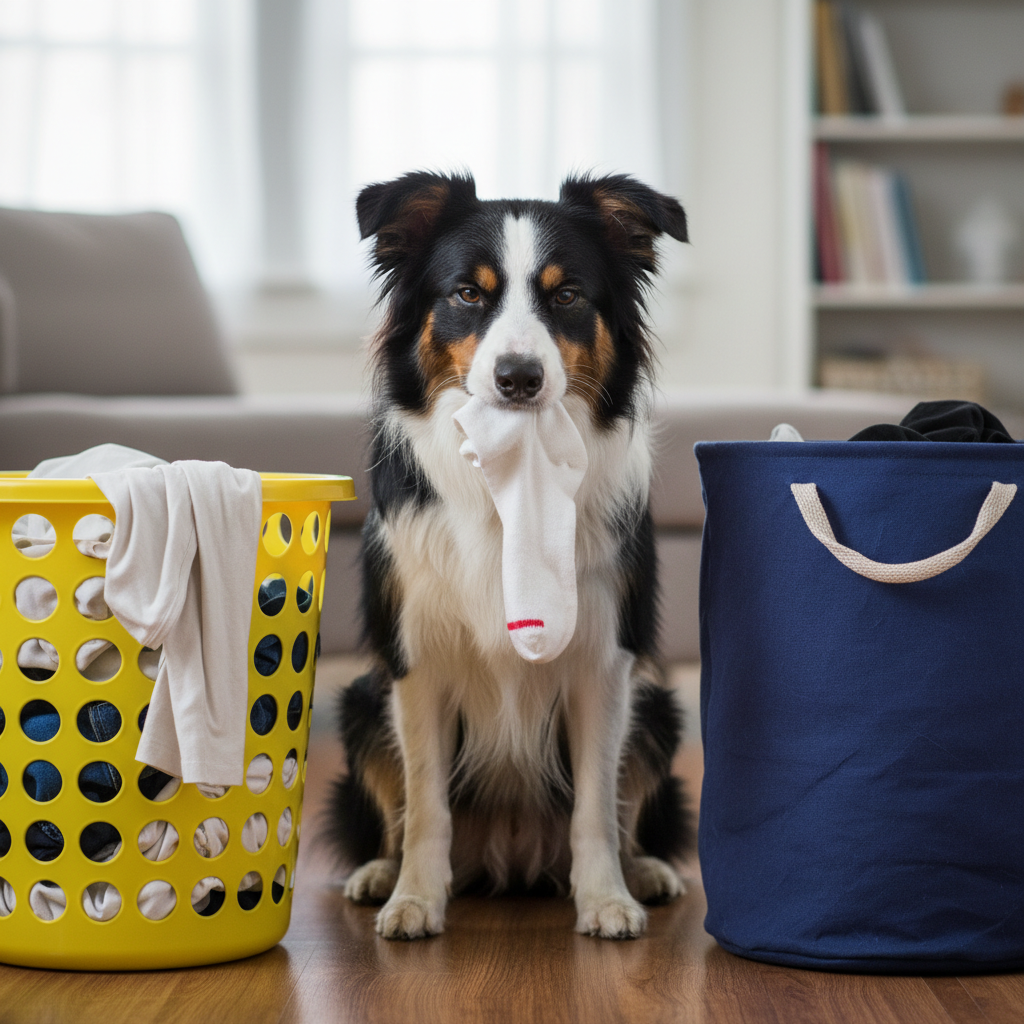
Once your dog has mastered the basic ‘put laundry in the basket’ skill, you might be wondering if you can take it to the next level. Can you actually teach them to sort lights from darks? The answer is… maybe! This is a very advanced trick that requires a lot of patience, but it’s a fun challenge for super-smart dogs (and their dedicated owners).
The Challenge of Canine Vision
It’s important to understand that dogs don’t see color the same way we do. Their world is mostly made up of yellows, blues, and shades of gray. They can’t easily distinguish between red and green. This means asking them to sort a red shirt from a green one is setting them up for failure. However, they are very good at distinguishing between different shades of brightness.
Methods for Teaching Sorting:
- Use Visually Distinct Baskets: The easiest way to start is by using two very different baskets. For example, a tall, dark blue plastic hamper for darks and a short, wide, yellow wicker basket for lights. You’re teaching them to target a specific basket based on its shape and color, not necessarily the color of the clothing item itself. You would hand them a light item and only reward them for dropping it in the yellow basket, and vice versa.
- Focus on Contrast: When starting, use items with extreme contrast. Give them a bright white sock to put in the ‘lights’ basket and a black t-shirt for the ‘darks’ basket. This makes the game much clearer for them.
- Scent Cues (For the Super Advanced): Some professional trainers have even taught dogs to sort using scent. This involves adding a unique, dog-safe scent (like a drop of lavender oil on a cotton ball taped to one basket, and chamomile on the other) to each basket. You would then need to teach your dog to associate the scent of the basket with the item they are carrying. This is extremely advanced and not for the casual trainer, but it shows the amazing capabilities of a dog’s nose!
Ultimately, teaching advanced sorting is more about the process and the mental workout for your dog than about achieving perfectly sorted laundry. Have fun with it, be creative, and be amazed at what your dog can learn!
Conclusion
Congratulations on embarking on this fun training journey! Teaching your dog to sort laundry is so much more than a neat trick. It’s a powerful way to enrich their life, provide crucial mental exercise, and deepen the communication and bond you share. Every time your dog successfully drops a sock in the basket, you’re building their confidence and strengthening your partnership.
Remember to always be patient, keep it positive, and celebrate the small victories along the way. The goal isn’t a perfectly automated laundry system, but the joy and laughter you’ll share during your training sessions. So grab some treats, a basket, and a sock, and get ready to make chore time the best part of your dog’s day!