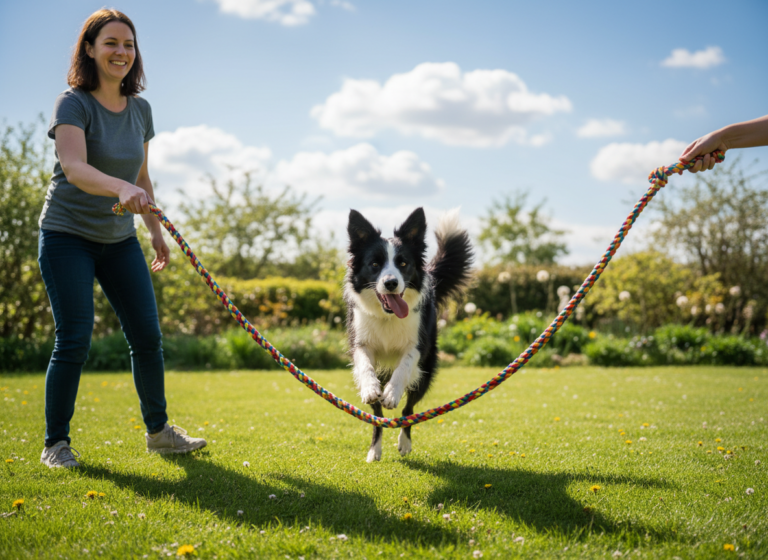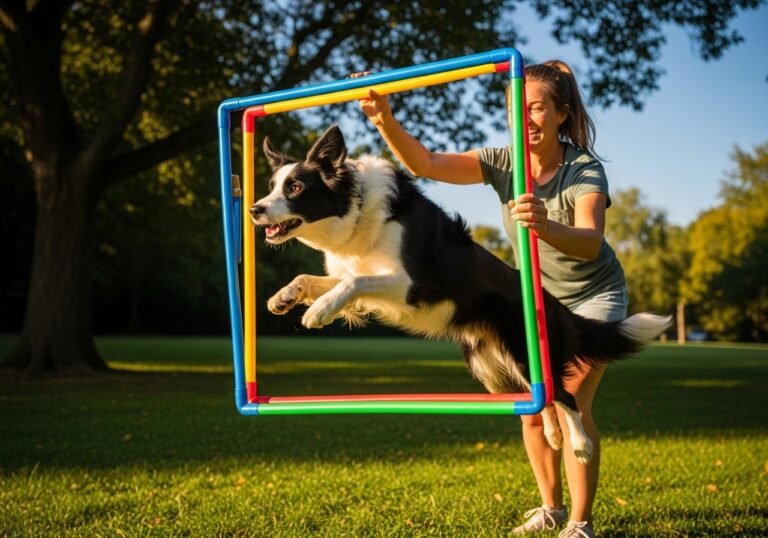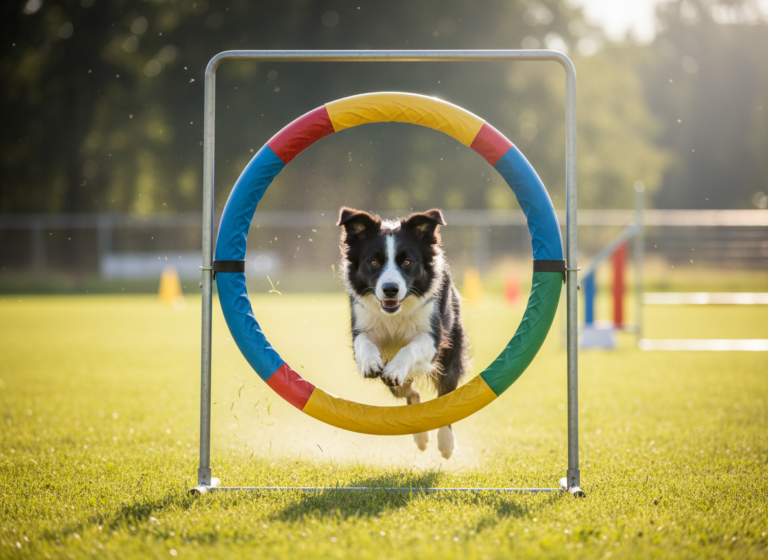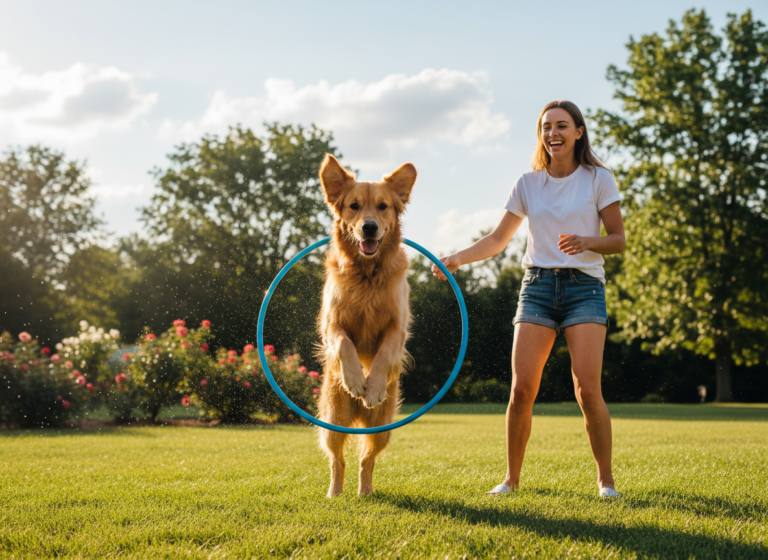
Have you ever watched a performance and thought, ‘Wow, I wish my dog could do that!’? Well, get ready to bring a little bit of that big-top magic right into your living room! Teaching your dog to burst through a paper-covered hoop is more than just a cool party trick. It’s a fantastic mental workout, a great confidence booster for shy dogs, and an incredible bonding experience for you both.
Don’t worry, you don’t need to be a professional animal trainer to master this. All it takes is a little patience, a handful of tasty treats, and a whole lot of fun. This guide will walk you through every single step, from introducing the hoop to that final, spectacular paper-shredding leap. So, grab your hula hoop, and let’s get ready to train your canine superstar!
Gathering Your Big Top Tools: What You’ll Need
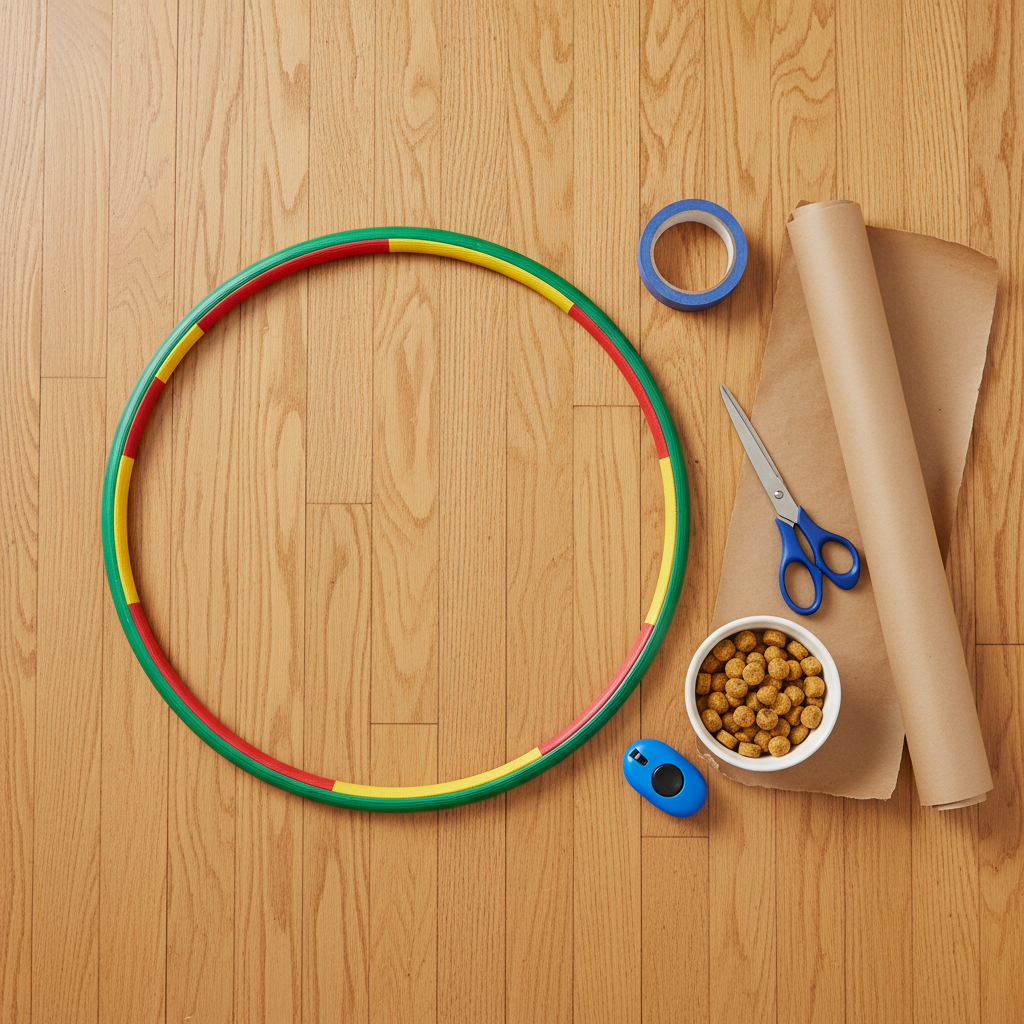
Before you and your pup can run away and join the circus, you’ll need to gather a few simple supplies. The good news is you probably have most of these items around the house already! Having everything ready before you start will make your training sessions smoother and more successful.
Essential Supplies List:
- A Hoop: A standard hula hoop is perfect for most medium to large dogs. For smaller breeds, you might consider a smaller agility hoop or even the hoop from an embroidery kit. The key is that it should be comfortably larger than your dog.
- Lightweight Paper: You have plenty of options here! Newspaper, craft paper, or leftover wrapping paper all work wonderfully. The goal is to use something that tears easily and won’t intimidate your dog. Avoid anything thick like cardboard.
- Dog-Friendly Fasteners: You’ll need a way to attach the paper to the hoop. Non-toxic glue sticks, painter’s tape, or masking tape are all great choices. Steer clear of staples or anything with sharp edges.
- Scissors: For cutting your paper to size.
- High-Value Treats: This is the secret sauce! You need something extra special that your dog absolutely loves and doesn’t get all the time. Think small pieces of cooked chicken, cheese, or their favorite smelly training treats. The more exciting the reward, the more motivated your dog will be.
- A Clicker (Optional): If you’re familiar with clicker training, this is a fantastic trick to use it with. The clicker helps you mark the exact moment your dog does the right thing, making communication crystal clear.
Expert Tip: When choosing a hoop, think about your dog’s comfort. A lightweight plastic hula hoop is much less intimidating than a heavy or weighted one. Safety and fun are our top priorities!
The Main Event: A Step-by-Step Guide to Hoop Glory
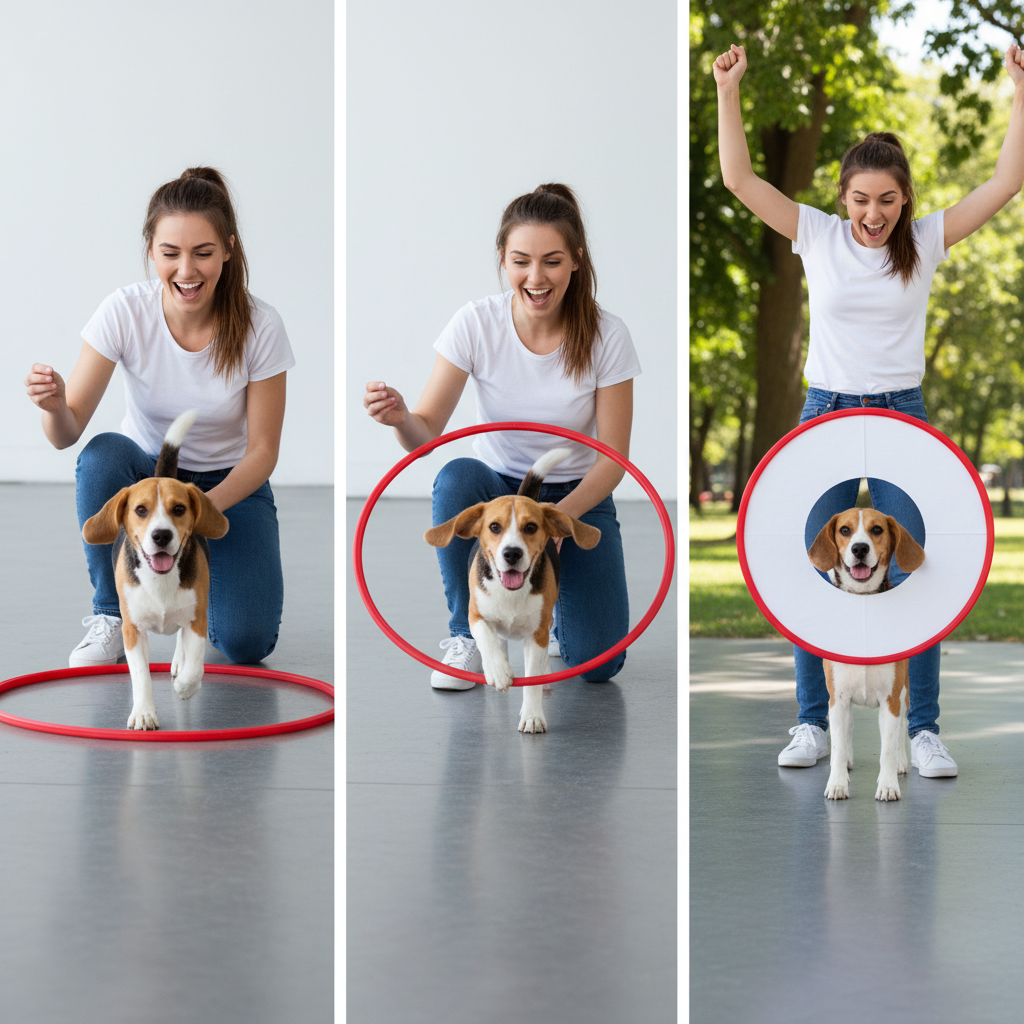
Alright, it’s showtime! Remember, the key to this trick is breaking it down into tiny, achievable steps. We want to build your dog’s confidence, not overwhelm them. Keep your sessions short (5-10 minutes is perfect) and always end on a positive note. Let’s get started!
Step 1: Hoop Familiarization (The Open Hoop)
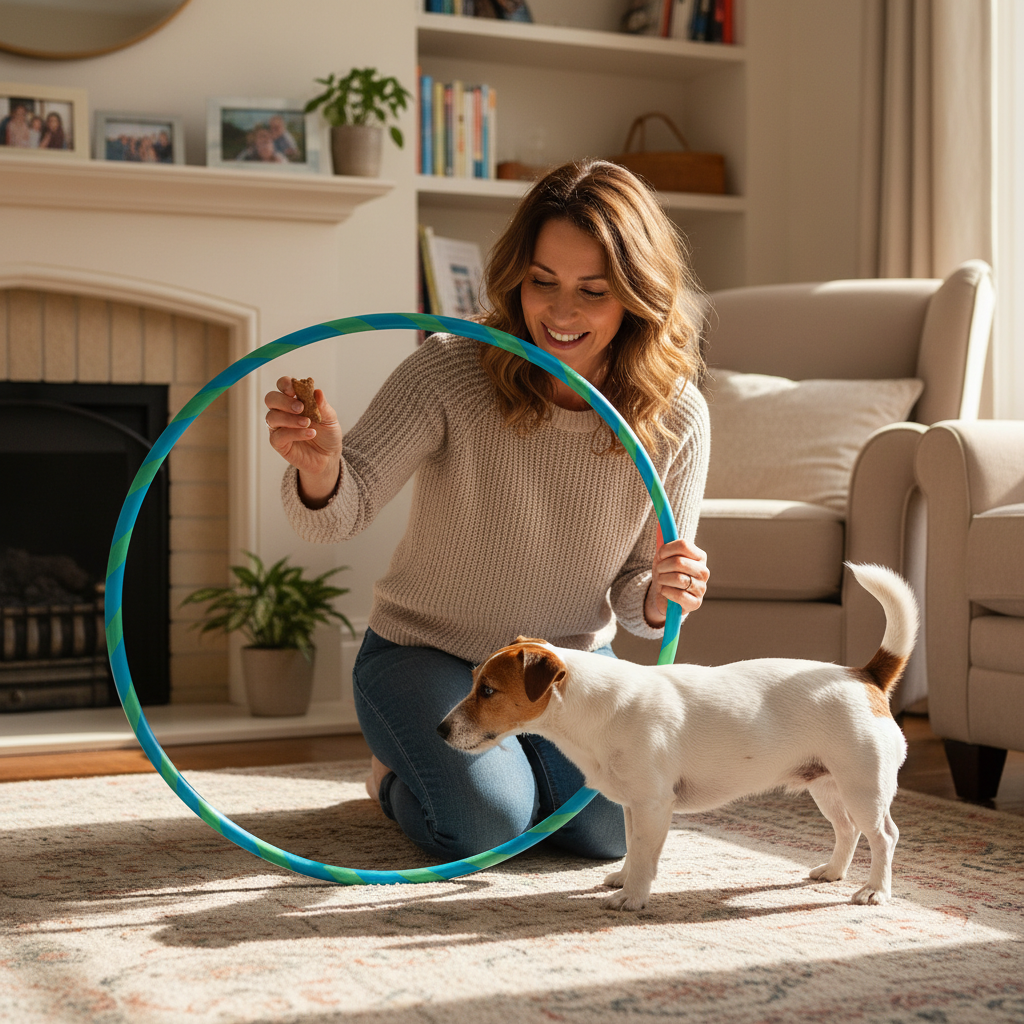
First, we need to convince your dog that the hoop is the best, most treat-filled object in the world. Place the hoop flat on the floor. Whenever your dog shows any interest in it—sniffing it, looking at it, stepping near it—praise them and give them a treat. After a few repetitions, use a treat to lure them to walk across the hoop while it’s still on the floor. Once they’re comfortable with that, hold the hoop upright, with the bottom edge touching the floor. Use a treat to lure them to walk through the open hoop. Don’t add a jump yet! Just walking through is a huge win. Repeat this until they are happily trotting through the hoop for a treat.
Step 2: Adding the ‘Jump’ Cue
Once your dog is a pro at walking through the hoop on the ground, it’s time for a little lift-off. Hold the hoop so the bottom is just an inch or two off the ground. Lure them through with a treat. They’ll have to make a tiny hop to get through. The moment they do, praise them enthusiastically! As they get the hang of it, you can gradually raise the hoop a little higher. Now is a good time to add a verbal cue. Just as they are about to go through, say your chosen word, like “Hoop!” or “Through!” in an excited tone of voice. Consistency is key!
Step 3: Introducing the Paper Barrier
This is where things get interesting. Cut a piece of paper that covers just a small section—maybe the bottom quarter—of the hoop. Secure it with your tape or glue. The idea is to leave a large, inviting opening for your dog. Hold the hoop and encourage your dog to go through the open part, just as they have been doing. They might be a little hesitant at first because the hoop looks different. Be patient and use your high-value treats to lure them. The goal is for them to go through the open space while getting used to the sight and sound of the paper on the hoop.
Step 4: Covering More Ground (and Hoop!)
Your dog is getting brave! Now, we gradually increase the challenge. With each successful training session, add another piece of paper, making the open space smaller and smaller. You’re slowly building a paper ‘curtain’ for them to push through. At some point, their nose or body will brush against the paper as they go through. When this happens, throw a jackpot party! Lots of treats and praise. This teaches them that touching the paper is a great thing.
Step 5: The Grand Finale: The Full Burst-Through!
The moment of truth has arrived! Cover the entire hoop with your lightweight paper. It might look like a solid wall to your dog, so your energy is crucial. Hold the hoop securely, get down on their level, and with lots of excitement, use your verbal cue (“Hoop!”) and lure them toward the center with a super tasty treat on the other side. The first time they push their head through and the paper rips, it might startle them, so be ready with immediate, over-the-top praise and a shower of treats the second they are on the other side. You did it! You have a circus star!
Troubleshooting for Tricky Pups
Even the most brilliant performers hit a snag sometimes. If you and your pup run into a little stage fright, don’t worry! It’s completely normal. Here are some common issues and how to work through them with patience and positivity.
My dog is scared of the hoop itself.
If the hoop is spooky, take it all the way back to basics. Leave the hoop on the floor in a room where you both hang out. Randomly drop high-value treats on and around it throughout the day without any pressure. This changes their association from ‘scary plastic circle’ to ‘magical treat dispenser.’ This process is called desensitization and it can work wonders.
My dog keeps going around the hoop, not through it.
This is a classic! The solution is to manage the environment. Try practicing in a hallway or doorway where going around isn’t an option. You can also set up some pillows or cushions on either side of the hoop to create a natural funnel that guides them through the middle.
My dog won’t jump, they just duck under it.
This usually means the hoop is too high, too soon. Lower it back down to a height where they were successful and confident. Stay at that level for a while before trying to raise it again, and only raise it by a tiny increment—even half an inch is progress!
The sound of the tearing paper scares my dog.
Sound sensitivity is very real for some dogs. If the rip is too much, start by just crinkling the paper near them and giving them a treat. Then, you can hold a small, single piece of paper (not on the hoop) and have them poke their nose through it for a reward. Build up their tolerance to the sound and sensation slowly before re-introducing it on the hoop. Using thinner paper, like tissue paper, can also create a softer sound.
Remember the Golden Rule: Never, ever push or force your dog through the hoop. This will only create fear and ruin the fun. Every interaction with the hoop should be positive and rewarding. If they’re having an off day, just end the session with an easy win, like a simple ‘sit,’ and try again tomorrow.
Safety First: Keeping Your Canine Star Safe and Sound

While this is a fun, low-impact trick, safety should always be your number one priority. A happy performer is a safe performer! Here are a few key things to keep in mind as you train.
- Choose a Safe Surface: Always practice on a non-slip surface. Hardwood or tile floors can be slippery and could cause your dog to injure themselves. Practice on a carpet, a large rug, or outside on the grass.
- Pick the Right Hoop Size: The hoop should be significantly larger than your dog. They should be able to clear it easily without having to contort their body. A good rule of thumb is that the diameter of the hoop should be at least 1.5 times the height of your dog at the shoulder.
- Keep Jumps Low: This is a novelty trick, not a high-jump competition. For the health of your dog’s joints, especially for large breeds, puppies, or senior dogs, keep the hoop low to the ground. The ‘bursting through’ effect is impressive at any height!
- Use Non-Toxic Materials: As we mentioned in the supplies section, ensure any paper, tape, or glue you use is non-toxic. Dogs explore the world with their mouths, and it’s inevitable that they might try to nibble on a piece of leftover paper.
- Keep Sessions Short & Sweet: Repetitive jumping can be tiring. Keep your training sessions short—no more than 10-15 minutes at a time. This prevents physical fatigue and mental burnout, keeping your dog excited to train next time.
- Listen to Your Dog: Pay close attention to your dog’s body language. If they are showing signs of stress like yawning, lip licking, or avoiding the hoop, it’s time to take a break. Training should always be a fun game, not a chore.
Beyond the Burst: Advancing the Trick
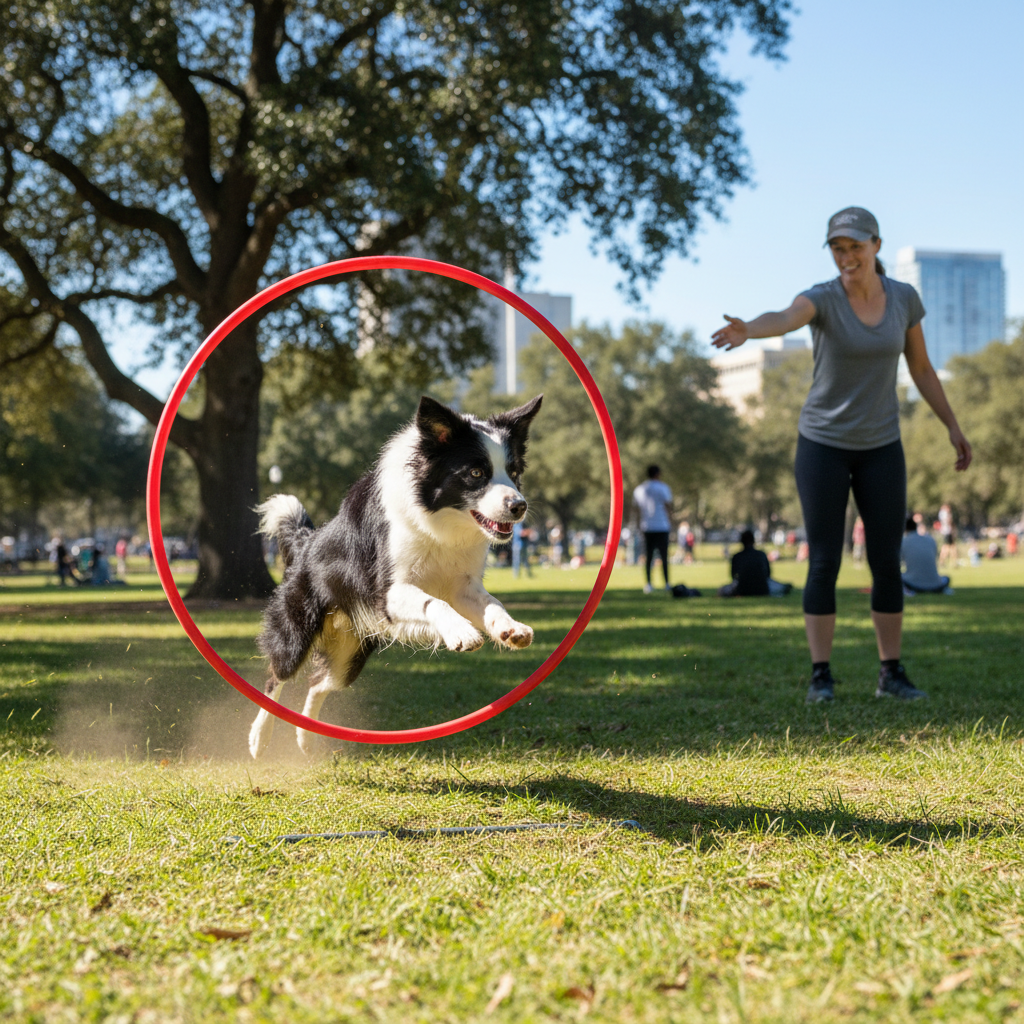
So, your dog is a paper-bursting champion. Now what? Once your pup has mastered the basic trick, you can add new layers of difficulty to keep their brain working and the game interesting. Here are a few ideas to level up your performance.
1. Fade the Lure
Instead of holding a treat to guide them through, start using just a hand signal. Point through the hoop and give your verbal cue. When they jump through, then give them the treat. Eventually, you can fade the hand signal and have them perform the trick on the verbal cue alone.
2. Increase the Distance
Start asking your dog to perform the trick from further away. Have them ‘stay’ a few feet from the hoop, then give your cue. This adds a level of impulse control and understanding. Gradually increase the distance as they succeed.
3. Use Different Hoops
Once they understand the concept, you can ‘generalize’ the behavior to other objects. You could try a smaller hoop, or even teach them to jump through your arms held in a circle (without the paper, of course!).
4. Build a Trick Chain
Incorporate the hoop jump into a sequence of other tricks. For example, you could ask your dog to ‘sit,’ then ‘spin,’ and then ‘hoop!’ Chaining behaviors together is a fantastic mental challenge for smart pups and looks incredibly impressive.
By adding these variations, you keep the trick fresh and exciting for your dog, strengthening their skills and your bond at the same time. The sky’s the limit for your talented performer!
Conclusion
Congratulations to you and your amazing dog! You’ve successfully navigated the exciting world of circus tricks. Teaching your dog to burst through a paper-covered hoop is a journey that celebrates patience, trust, and the incredible connection you share. Remember, the goal was never perfection, but the fun and learning you experienced together along the way.
Every ripped piece of paper and every wagging tail was a step forward. So give your canine companion an extra hug and a tasty treat—they’ve earned it! We’d love to see your superstar in action. Feel free to share a video of your dog’s grand finale performance with us!