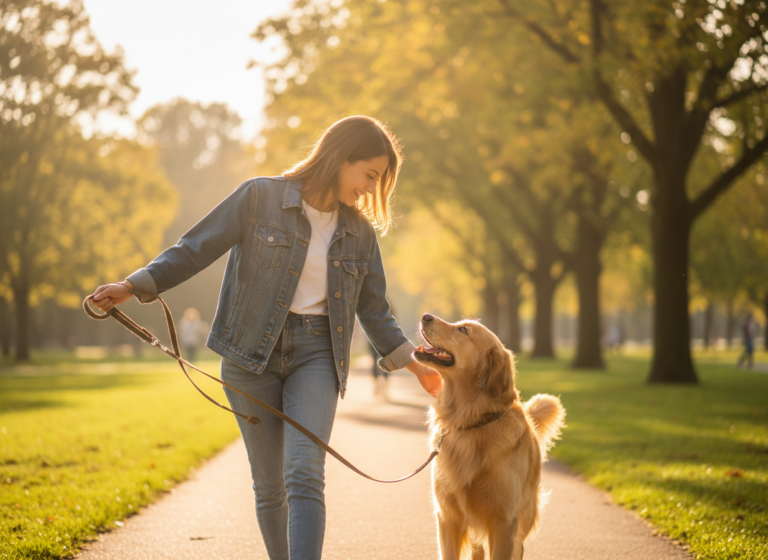
Picture this: you’re trying to bring in groceries, the doorbell rings unexpectedly, or you’re sitting down for a family dinner. Your dog, bless their excited heart, is right in the middle of the action—bouncing, barking, or maybe even offering some unsolicited taste-testing. If you’ve ever wished for a remote control to gently guide your pup to their own comfy spot, you’re in the right place. The ‘Send to Place’ command is that remote control, and it’s a total game-changer for household harmony.
Teaching your dog to go to their ‘place’ (like their bed or a specific mat) is a foundational skill. But teaching them to do it when you’re not even in the same room? That’s next-level dog ownership. It’s not just an impressive party trick; it’s a powerful tool for managing your dog’s behavior, building their confidence, and giving them a safe, relaxing space to call their own. In this guide, we’ll walk you through everything you need, from the basic building blocks to the final triumphant ‘send’ from across the house. Let’s get started!
More Than Just a Trick: The Real-World Benefits of a Solid ‘Place’ Cue
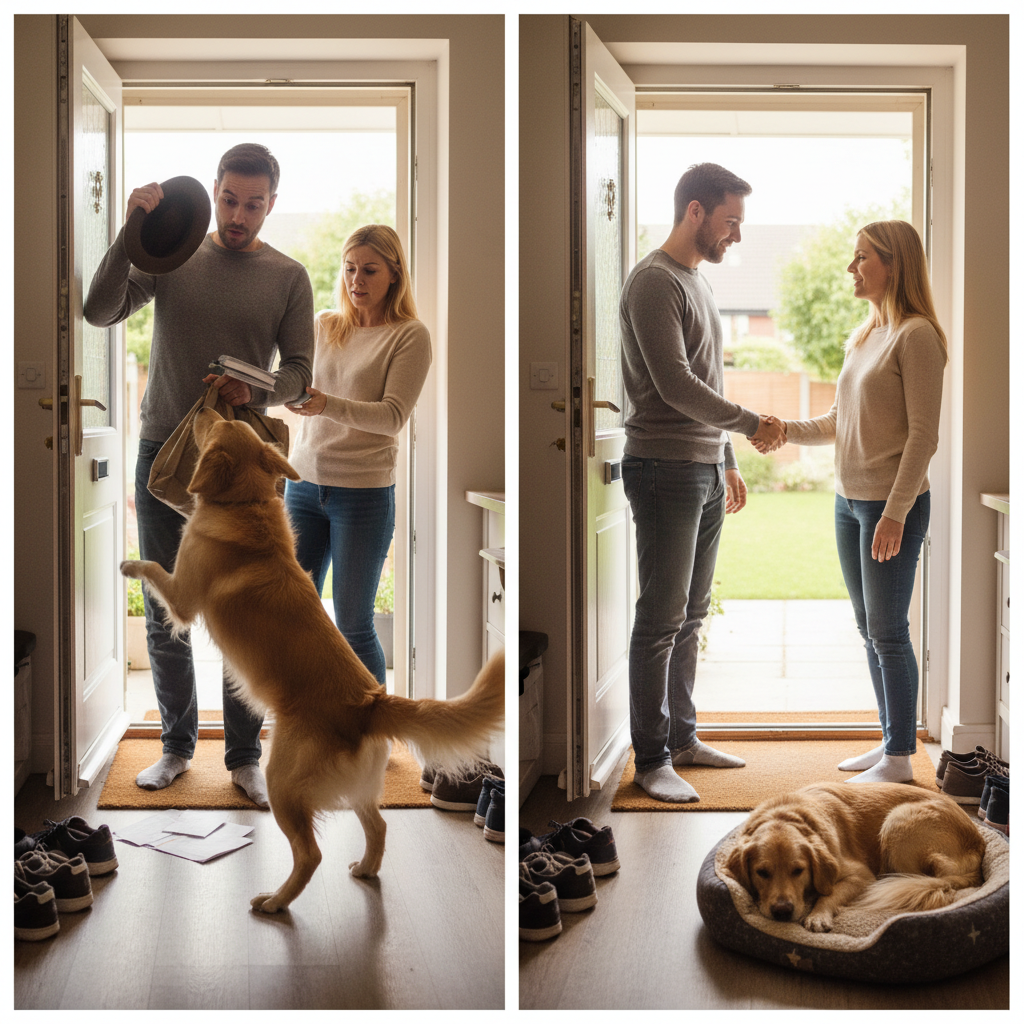
Before we dive into the ‘how-to,’ let’s talk about the ‘why.’ Understanding the incredible benefits of the ‘place’ command will keep you motivated through the training process. This single cue can solve a multitude of common household headaches and strengthen the bond you share with your furry friend.
Creates a Calm Greeter
Is your dog’s enthusiasm for guests a little… overwhelming? The ‘place’ command is the perfect solution. Instead of jumping, barking, or getting underfoot, your dog learns to go to their spot and wait calmly while you welcome visitors. It transforms a chaotic entryway into a peaceful one.
Establishes a Safe Zone
A designated ‘place’ becomes your dog’s personal sanctuary. During stressful times like thunderstorms, fireworks, or a noisy party, their bed is a predictable and secure spot where they know they can relax without being bothered. It gives them a sense of control and safety.
Eliminates Dinner-Time Begging
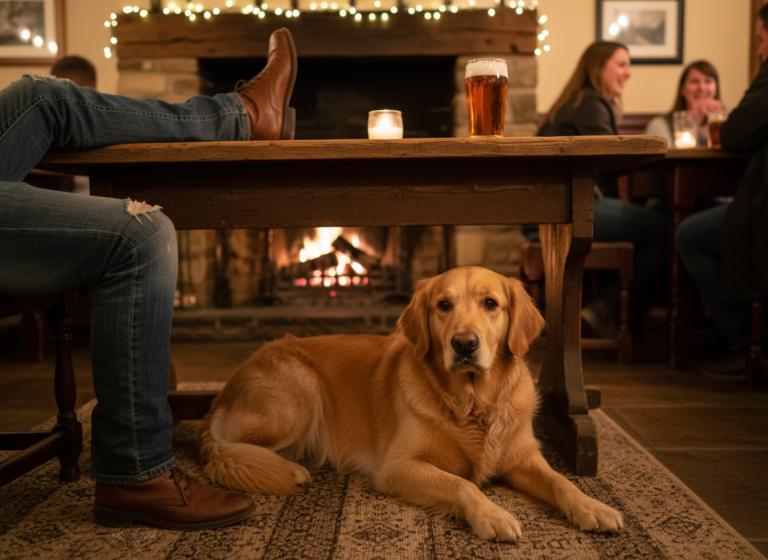
Tired of puppy-dog eyes staring at your steak? By sending your dog to their place during meals, you can enjoy your dinner in peace. They learn that their spot is where they get rewarded, not under the table. Consistency here is key to breaking the begging habit for good.
Builds Independence and Confidence
For dogs who struggle with a little bit of separation anxiety or are constantly following you (hello, furry shadow!), the ‘place’ command teaches them that it’s okay to be relaxed and settled on their own, even if you’re not right next to them. This fosters independence and builds their self-confidence in a huge way.
Expert Tip: The ‘place’ should always be a positive, wonderful location. Never use it as a punishment or for a ‘time-out.’ You want your dog to love going to their spot, not associate it with being in trouble.
Setting the Stage: Your ‘Go to Place’ Training Toolkit
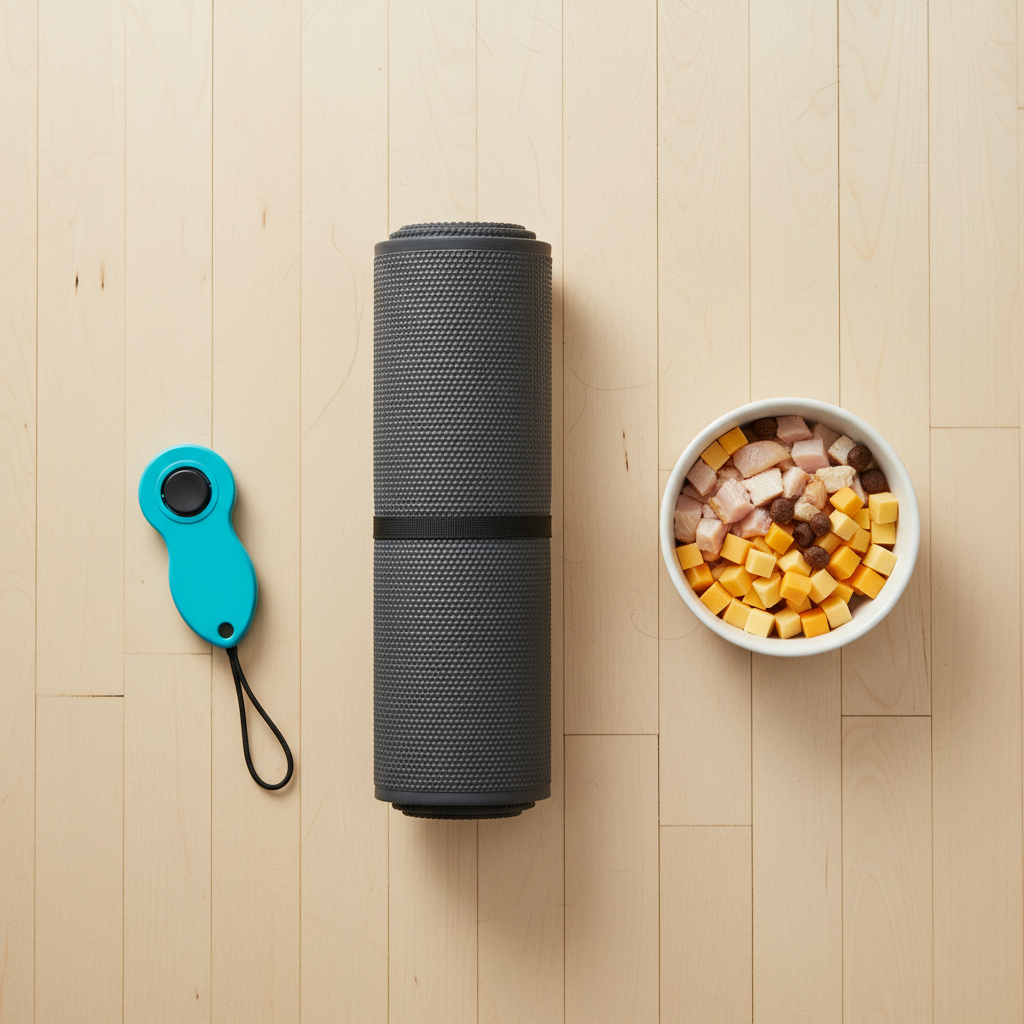
Great news! You don’t need a lot of fancy equipment to teach this command. Success comes from consistency and positive reinforcement, but having the right tools on hand will make the process much smoother for both you and your dog.
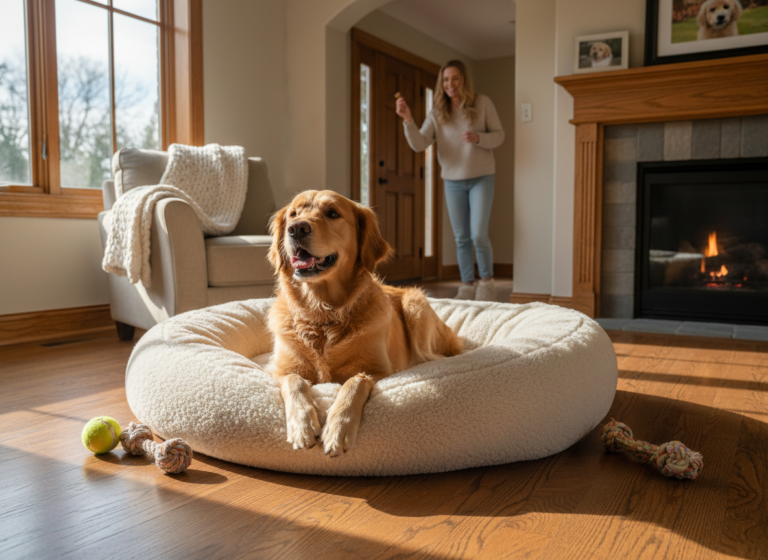
- A Clearly Defined ‘Place’: This is the most important piece of equipment! It should be a specific, comfortable spot. Great options include a raised dog cot, a distinct dog bed, or even a bath mat with a unique texture. The key is that it’s obvious to your dog when they are ‘on’ it versus ‘off’ it.
- High-Value Treats: We’re not talking about your dog’s everyday kibble. For a command this important, you need the good stuff! Think small, pea-sized pieces of boiled chicken, cheese, hot dogs, or special soft training treats. The yummier the reward, the more motivated your dog will be.
- A Clicker (Optional but Recommended): A clicker is a tool that makes a distinct ‘click’ sound. You ‘charge’ it by clicking and immediately giving a treat, over and over. Soon, the dog understands that the click means ‘YES! You did that right, and a treat is coming!’ It allows you to mark the exact moment your dog does the correct behavior with perfect timing.
- Patience and a Positive Attitude: This is non-negotiable. Dog training is a journey, not a race. There will be great days and days where it feels like you’re taking a step back. Stay positive, keep sessions short and fun, and always end on a successful note. Your dog feeds off your energy!
Step 1: Building the Foundation – The ‘In-the-Room’ Place Command
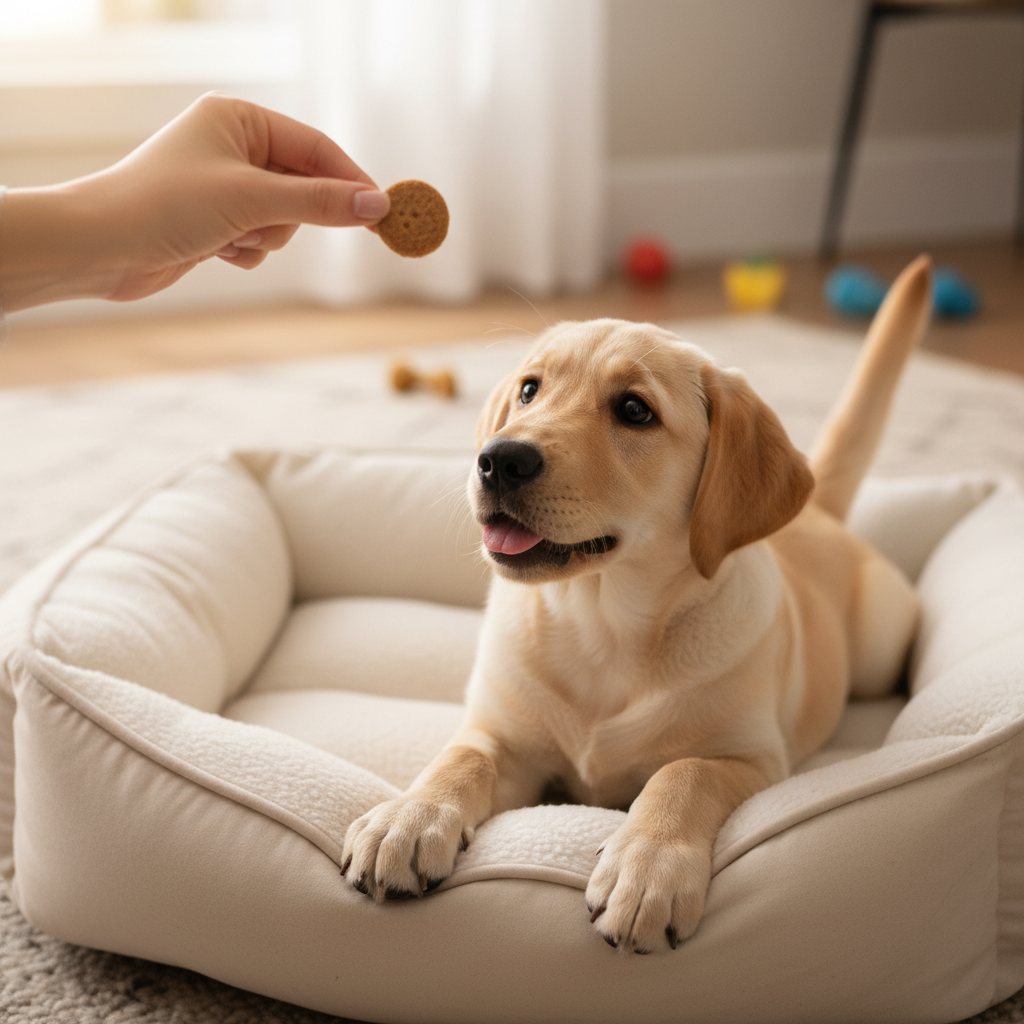
You can’t run before you can walk, and you can’t send your dog to their bed from the kitchen if they don’t know how to go to it when you’re standing right there. This foundational step is all about making the ‘place’ the best spot in the house.
-
Luring and Rewarding
Start close to the bed. Toss a high-value treat onto the bed. When your dog steps onto it to get the treat, say ‘Yes!’ or click your clicker the moment their paws touch the mat. Let them eat the treat and then step off. Repeat this many times. You’re building a strong positive association with the bed.
-
Adding the Verbal Cue
Once your dog is eagerly hopping onto the bed to get the tossed treat, it’s time to add the cue. Just as you toss the treat, say your chosen word—’Place,’ ‘Bed,’ ‘Mat’—in a happy, upbeat tone. After several repetitions, try saying the cue first, then tossing the treat. The goal is for the word itself to prompt the action.
-
Building Duration
Now we want the dog to stay on the bed for more than a second. Lure your dog onto the bed, and as soon as they are on it, start feeding them a slow, steady stream of tiny treats. After a few seconds, say your release word, like ‘Okay!’ or ‘Free!’, and toss a treat off the bed. This teaches them that they only get to leave when you give the release cue. Gradually increase the time between treats while they are on the bed.
-
Fading the Lure
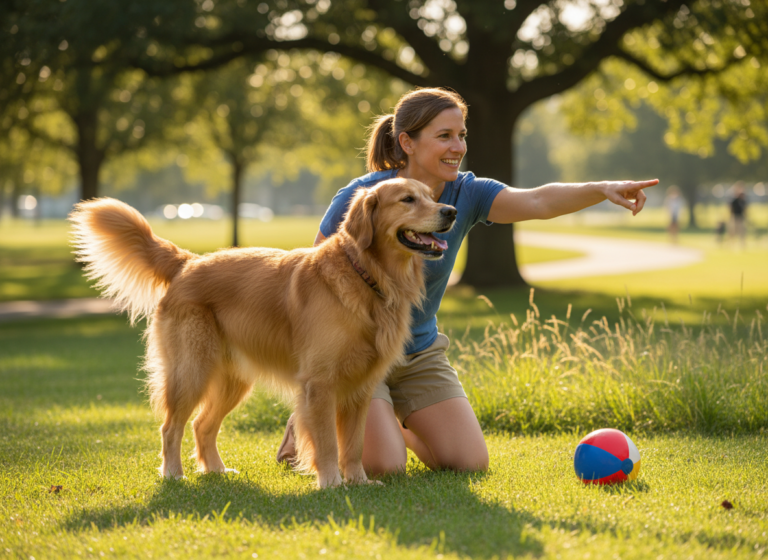
Start using a hand signal (like pointing to the bed) along with your verbal cue, but without a treat in your hand. When your dog goes to the bed, walk over and give them their jackpot of treats. This teaches them to respond to the cue itself, not just the sight of a treat.
Step 2: Let’s Add Some Distance – Moving Away
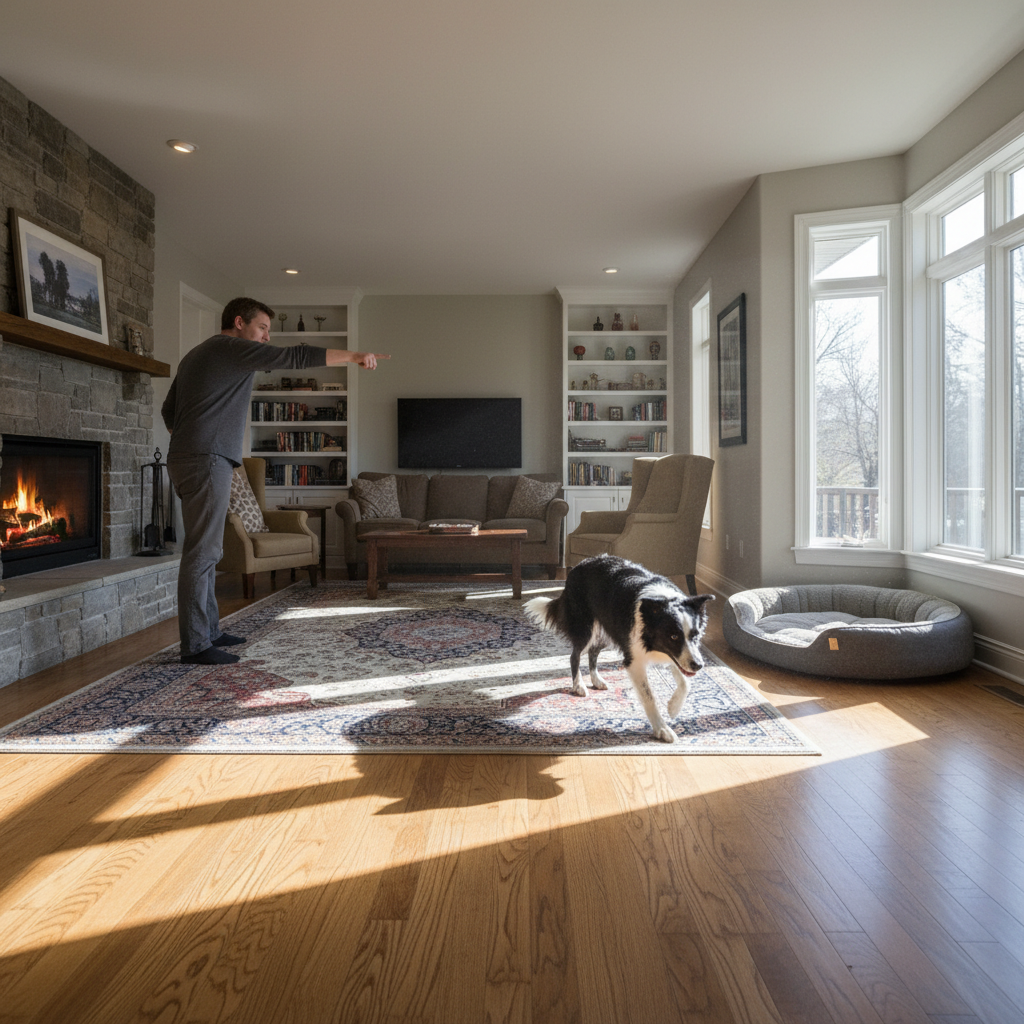
Once your dog is happily going to their bed on command and staying for at least 15-30 seconds while you’re nearby, it’s time to introduce the ‘distance’ part of the equation. We’ll do this gradually to ensure your dog continues to succeed.
Remember the three D’s of dog training: Duration, Distance, and Distraction. The golden rule is to only increase the difficulty of one of these at a time. Since we’re adding distance, we might need to temporarily decrease the duration your dog has to stay.
The Process: A Slow Stretch
- One Step Back: Ask your dog to ‘Place.’ When they do, take one step backward, then immediately step forward and reward them on the bed. Repeat this until it’s boringly easy for them.
- Increase the Steps: Gradually start taking two steps back, then three, always returning to the bed to reward. If your dog gets up before you release them, it’s not a big deal! Simply say nothing, gently guide them back, and try again from a closer distance where they can be successful.
- Vary the Reward Delivery: Sometimes, return to the bed to give the treat. Other times, if they hold their position as you step back, say ‘Yes!’ and toss the treat to them on the bed. This builds their confidence to stay put, knowing the reward will come to them.
- Work Your Way Across the Room: Continue this process until you can stand on the opposite side of the room, give your ‘Place’ cue, and have your dog confidently go to their bed and wait for their release or reward.
Troubleshooting Tip: If your dog keeps breaking the command as you add distance, you’re likely moving too fast. Take it back a few steps to where they were last successful and work from there. Shorter, more frequent training sessions are more effective than long, frustrating ones.
Step 3: The Grand Finale – Cueing from Out of Sight
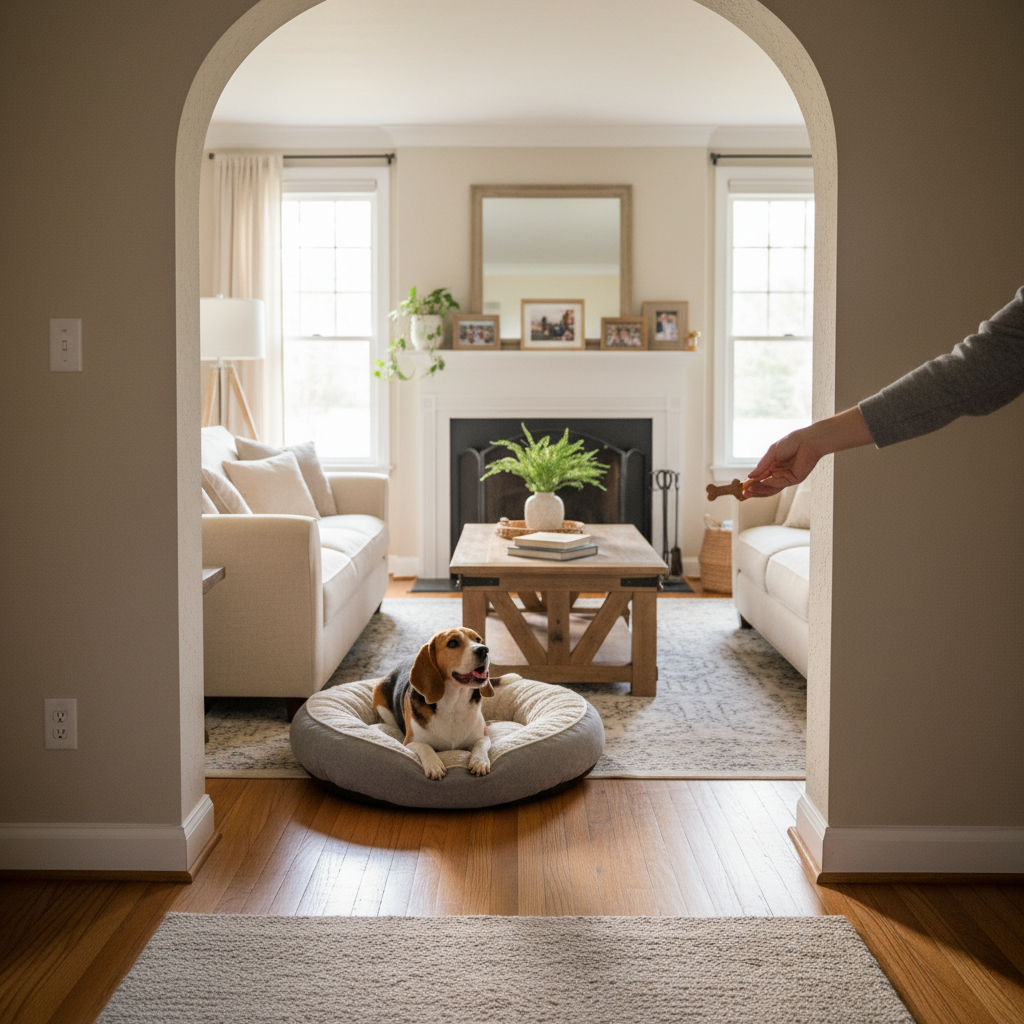
This is the moment we’ve been working towards! Your dog understands the ‘place’ command and can do it from across the room. Now we just need to teach them that the cue still applies even if they can’t see you. The key here is making it a fun game of ‘peek-a-boo’ rather than a scary disappearance.
The ‘Peek-a-Boo’ Method
- Start at a Doorway: Stand in a doorway of the room where the ‘place’ is located. You should still be fully visible. Ask your dog to ‘Place.’ Reward them.
- The Disappearing Act (1 Second): Ask them to ‘Place.’ The moment they are on the bed, step just behind the doorframe so you are out of sight for a single second. Immediately step back into view, walk to them, and give them a huge reward (a ‘jackpot’ of several treats).
- Gradually Increase Your ‘Hidden’ Time: Repeat the step above, slowly increasing the time you are out of sight to two seconds, then three, and so on. If your dog gets up, you’ve gone too long. Just shorten the time on the next repetition.
- Move Further Away: Once your dog is comfortable with you being out of sight for 5-10 seconds, you can start giving the cue from just out of sight. Stand in the doorway, hidden, and say ‘Place!’ Peek your head out to see if they’re going. The moment they get on the bed, pop out and give them a huge celebration and reward.
- Generalize to Other Rooms: Now you can practice from the kitchen, down the hall, or from the next room over. Your dog will start to understand that the cue works no matter where you are in the house.
| Training Stage | Your Goal | Pro Tip |
|---|---|---|
| Foundation | Dog loves going to the bed on cue when you are close. | Use super high-value treats to build a strong positive association. |
| Distance | Dog goes to bed from anywhere in the same room. | Increase distance slowly. If the dog fails, make it easier on the next try. |
| Out of Sight | Dog responds to the cue from another room. | Make it a fun ‘peek-a-boo’ game. Keep the duration you’re hidden very short at first. |
Hitting a Snag? Troubleshooting Common ‘Place’ Problems
Training is rarely a straight line to success. It’s totally normal to hit a few bumps in the road. Here are some of the most common challenges with the ‘send to place’ command and how to work through them with a positive approach.
Problem: ‘My dog gets off the bed before I release them!’
This is the most common issue! It usually means you’ve asked for too much, too soon. Go back to basics. Shorten the duration you’re asking them to stay. If you were trying for 30 seconds, go back to 5 successful seconds. If you were 10 feet away, go back to 3 successful feet. Also, make sure your release cue (‘Okay!’) is clear and that you’re rewarding them for staying on the mat, not for getting off it.
Problem: ‘My dog won’t go unless they see me point or have a treat.’
This means the dog hasn’t fully generalized the verbal cue yet. Go back to the step where you pair the verbal cue (‘Place!’) with the hand signal. Say the word a split second before you point. Also, practice walking to the bed and rewarding them after they get there, so they don’t expect the treat to always be in your hand as a lure.
Problem: ‘My dog gets distracted by other people or sounds.’
This is the ‘Distraction’ part of the 3 D’s. You must master the command in a quiet environment first. Only once it’s rock-solid should you begin to add low-level distractions. For example, have another person walk calmly through the room. Ask your dog to ‘Place’ and reward heavily for success. As they get better, you can increase the level of distraction, like someone knocking on the door. Always set your dog up for success.
Problem: ‘My dog seems to avoid their bed now.’
This is a big red flag that the ‘place’ has developed a negative association. Remember, this must be their happy place! Never, ever send your dog to their bed as a punishment. Make sure the bed itself is comfortable and in a location where they feel safe (not in a high-traffic hallway). You can rebuild the positive association by playing fun games on the mat and leaving surprise treats on it for them to find throughout the day.
Conclusion
Congratulations! You now have the complete roadmap to teaching one of the most useful and impressive commands in the dog training world. The ‘Send to Place’ cue is more than just a trick; it’s a communication tool that fosters a calmer dog and a more peaceful home. It gives your dog the confidence to relax independently and gives you a reliable way to manage everyday situations with ease.
Remember that the key ingredients are always patience, consistency, and a big dose of positivity. Celebrate the small victories, keep your training sessions short and fun, and never forget that you’re building a stronger, more trusting relationship with your best friend every step of the way. Now go grab those high-value treats—you and your pup have a fun challenge ahead!