Does the sight of the vacuum cleaner send your dog diving under the couch, barking frantically, or trembling in a corner? You’re not alone. For many dogs, this loud, unpredictable machine is a true household monster. The roaring sound, the strange smells it kicks up, and its seemingly random movements can trigger a genuine fear response. But what if you could change that narrative? What if, instead of a monster, the vacuum became a magical treat-dispensing machine and a signal for fun? Welcome to the world of fear-free training! In this guide, we’ll walk you through a step-by-step process using positive reinforcement to desensitize and counter-condition your dog. We’re going to turn this chore into a cheerful game, strengthening your bond and bringing peace back to your cleaning routine.
Why is My Dog Terrified? Understanding the Vacuum Monster
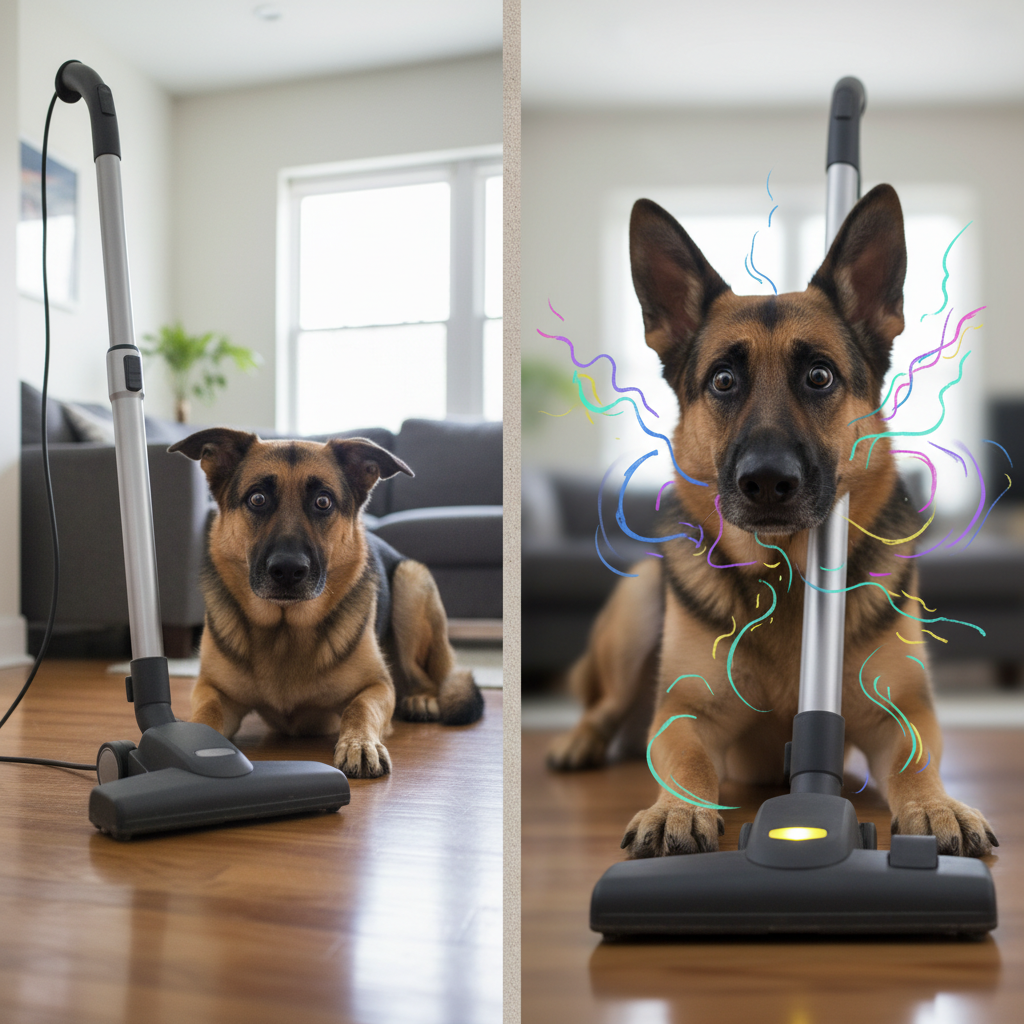
Before we can help our dogs, we need to see the world—or in this case, the vacuum—from their perspective. It’s not just a cleaning tool; it’s a multi-sensory assault. Let’s break down the primary reasons your dog might see it as a terrifying beast.
The Sound
Dogs have incredibly sensitive hearing, far superior to ours. They can hear frequencies we can’t even register. The loud, low-frequency roar of a vacuum motor can be physically uncomfortable, if not downright painful, for their ears. It’s like having a jet engine start up in your living room without any warning.
The Unpredictable Movement
To a dog, the vacuum moves erratically. It comes directly towards them, then retreats, then goes side-to-side. This unpredictable movement can mimic that of a predator, triggering their innate fight-or-flight response. They don’t understand its purpose; they just see a large, noisy object encroaching on their safe space.
The Smell
Vacuums don’t just suck up dirt; they also kick up a storm of dust, dander, and old smells that have been dormant in the carpet. This sudden olfactory overload can be overwhelming and confusing for a dog whose primary sense is smell. It might smell like strange dogs, old food, or just a chaotic mess of scents they can’t place.
Expert Tip: Never force your dog to confront the vacuum. This approach, often called ‘flooding,’ can backfire spectacularly, intensifying their fear and potentially damaging their trust in you. Our goal is to empower them to make positive choices, not overwhelm them.
By understanding these triggers, we can approach the training process with empathy. We aren’t just ‘fixing’ a bad behavior; we are helping our dogs overcome a legitimate fear by changing their emotional response from ‘SCARY!’ to ‘AWESOME! Treats are coming!’
Gathering Your Ghost-Busting Gear: Tools for Success
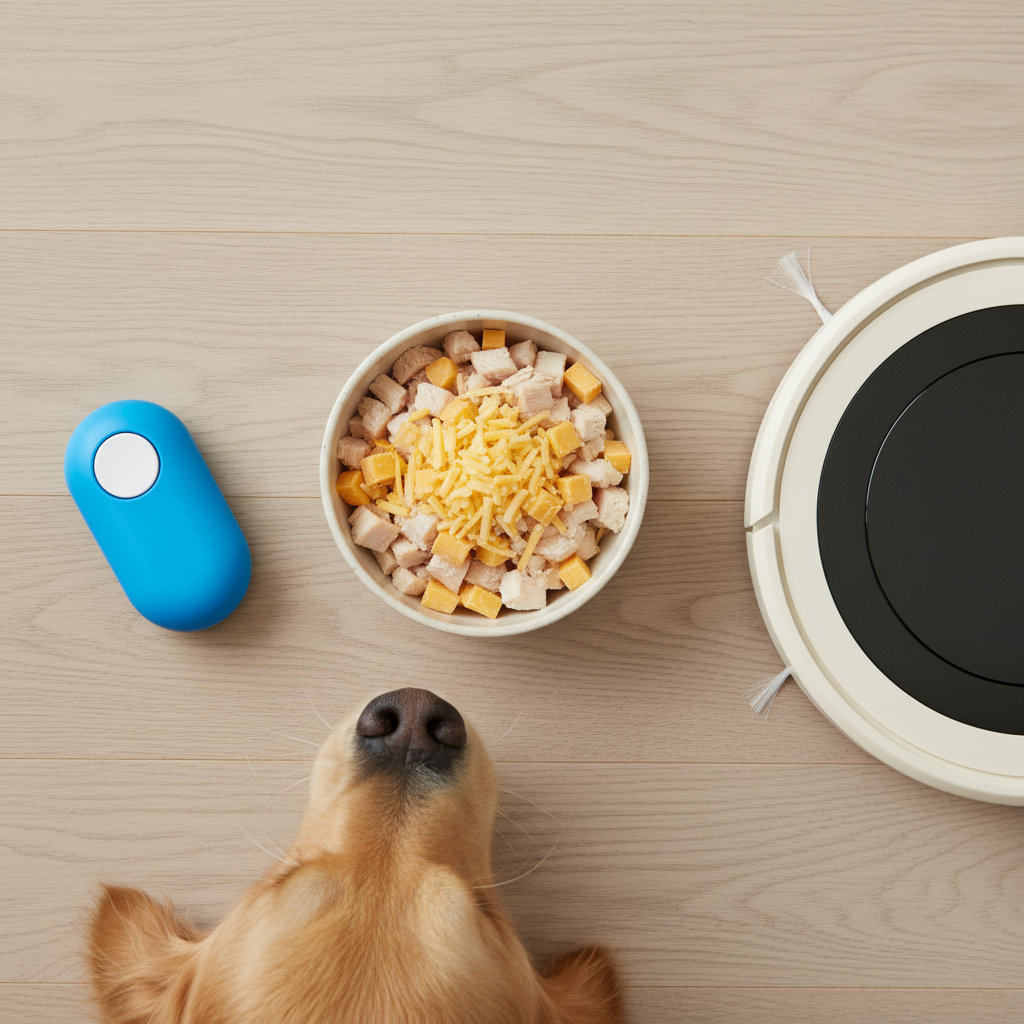
Alright, it’s time to assemble your training toolkit! Having everything ready before you start will make the process smooth and effective. You don’t need a lot of fancy equipment, just a few key items and a positive attitude.
Your Key Supplies:
- High-Value Treats: This is non-negotiable. We’re talking about the filet mignon of dog treats, not the everyday kibble. Think small pieces of cooked chicken, cheese, hot dogs, or special commercial treats that your dog goes absolutely bonkers for. The goal is to make the reward more powerful than the fear. Cut them into tiny, pea-sized pieces so you can reward frequently without filling your dog up too quickly.
- The Vacuum Cleaner: The ‘monster’ itself! Make sure it’s clean and ready to go. For the initial steps, you’ll need it to be unplugged.
- A Hungry and Rested Dog: Don’t try to train right after a big meal or when your dog is tired and cranky. A slightly hungry dog will be more motivated by the food rewards, and a well-rested dog will have a better capacity to learn and handle potential stress.
- A Partner (Optional but helpful): Especially in the later stages, having one person operate the vacuum while the other person focuses on the dog (marking good behavior, delivering treats) can be incredibly helpful.
- A Clicker (Optional): If your dog is already clicker-trained, this is a fantastic tool to use. The ‘click’ precisely marks the moment your dog does something right (like looking at the vacuum calmly), followed immediately by a treat. If you don’t use a clicker, a simple, consistent verbal marker like a happy “Yes!” works just as well.
Once you have your gear, choose a training space. Start in a large, open room where your dog doesn’t feel cornered, like the living room. This gives them the freedom to move away if they feel uncomfortable, which is a critical part of building their confidence. Now, with your pockets full of delicious treats, you’re ready to begin the first phase of your mission!
Phase 1: Making Peace with the Silent Beast
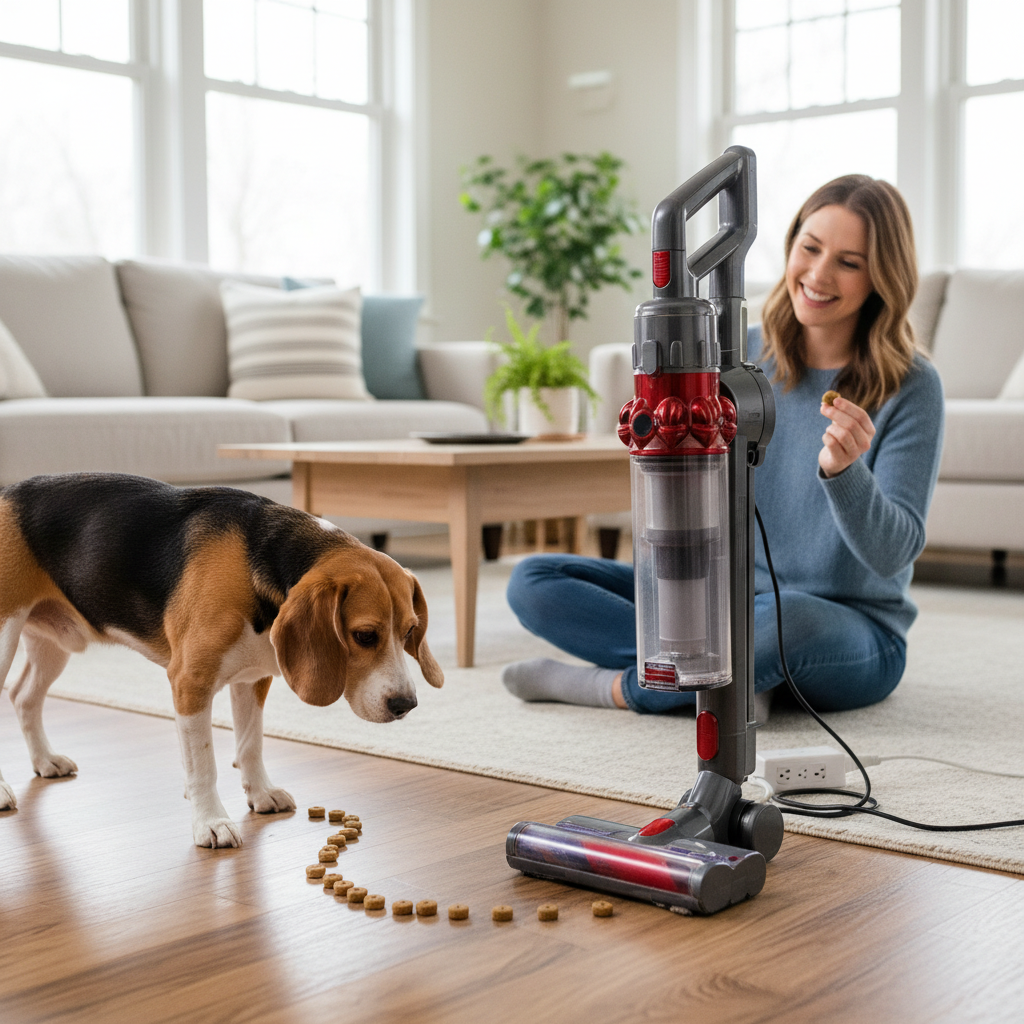
The goal of this first phase is simple: teach your dog that the mere presence of the vacuum cleaner predicts amazing things (aka treats). The machine will remain off and stationary for this entire stage. Patience is your superpower here. Don’t rush it!
- Bring Out the Vacuum: Place the unplugged vacuum in the middle of the room. Don’t make a big deal out of it. Just set it down and ignore it.
- Observe Your Dog’s Reaction: Watch your dog’s body language. Are they giving it side-eye from across the room? Are they brave enough to approach? Their starting distance tells you where you need to begin.
- The Treat Trail Game: Start by placing a high-value treat on the floor, far away from the vacuum but within your dog’s line of sight. As they eat it, place another one a little closer to the vacuum. Continue making a little trail of treats that leads toward the ‘monster.’ Let your dog choose to follow it. Do not lure or force them.
- Reward Any Interaction: The moment your dog looks at the vacuum, say “Yes!” (or click) and toss a treat to them. If they sniff it, “Yes!” and treat. If they dare to touch it with their nose, jackpot! Give them a bunch of treats. We are rewarding curiosity and calm behavior in the presence of the object.
- Keep Sessions Short & Sweet: Aim for multiple 2-5 minute sessions throughout the day rather than one long, draining one. End each session on a high note, with your dog feeling successful and happy.
Repeat this process until your dog sees the stationary vacuum and immediately looks to you, anticipating a treat. Their body language should be loose and happy. When you see a wagging tail instead of a tucked one, you’re ready to move on to the next phase.
Phase 2: Adding Motion to the Mix (No Noise Yet!)
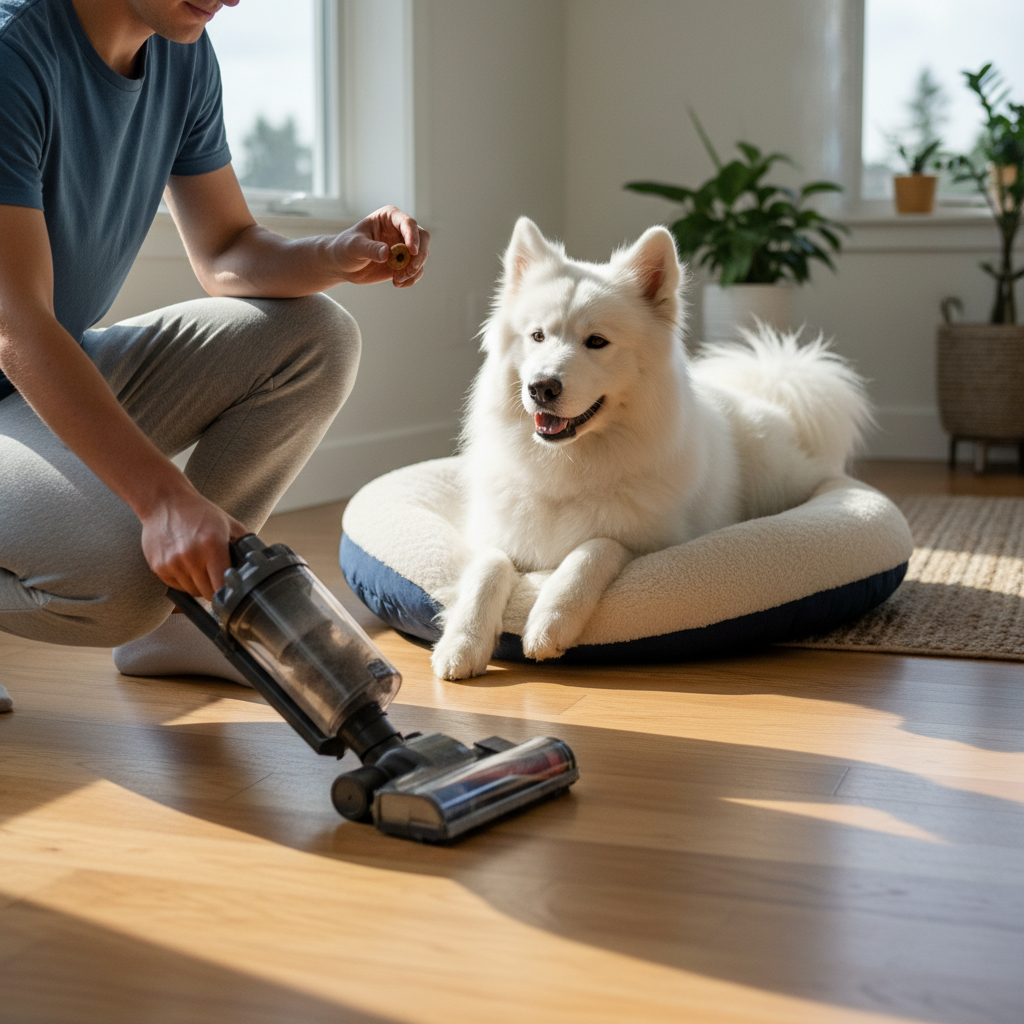
Now that your dog is comfortable with the vacuum as a stationary object, it’s time to introduce movement. Remember, the machine stays OFF for this entire phase. The unpredictable motion is a huge trigger for many dogs, so we need to make movement just as predictable and rewarding as its presence.
- Start Small: With your dog a comfortable distance away (perhaps relaxing on their bed), simply touch the vacuum’s handle. If they stay calm, “Yes!” and toss them a treat. Wiggle the handle. “Yes!” and treat. We’re breaking the action of ‘vacuuming’ down into its tiniest components.
- Introduce Rolling: Gently push the vacuum forward an inch. “Yes!” and treat. Pull it back an inch. “Yes!” and treat. Keep the movements very small and slow at first.
- Make it a Game: As your dog gets more comfortable, you can make it more interactive. Push the vacuum a foot away from you, place a treat on the floor where it was, and call your dog over to get it. The vacuum ‘magically’ makes treats appear!
- Vary the Speed and Direction: Gradually increase how far and how fast you move the silent vacuum. Push it across the room. Pull it back. Move in a pattern similar to how you would actually clean. Continue to reward your dog for calmly observing from their spot. If they get up and follow you with a happy, curious attitude, reward that too!
Pacing is Key: If at any point your dog shows signs of fear (tucking their tail, ears back, barking), you’ve moved too fast. Simply take a step back to the previous level where they were successful and work there a bit longer before trying to advance again. This isn’t a race!
Your goal for this phase is to have your dog be completely unbothered by the sight of you pushing the silent vacuum all around the room. They should see it as a boring piece of furniture that sometimes means treats are coming their way.
Phase 3: Conquering the Roar from a Distance
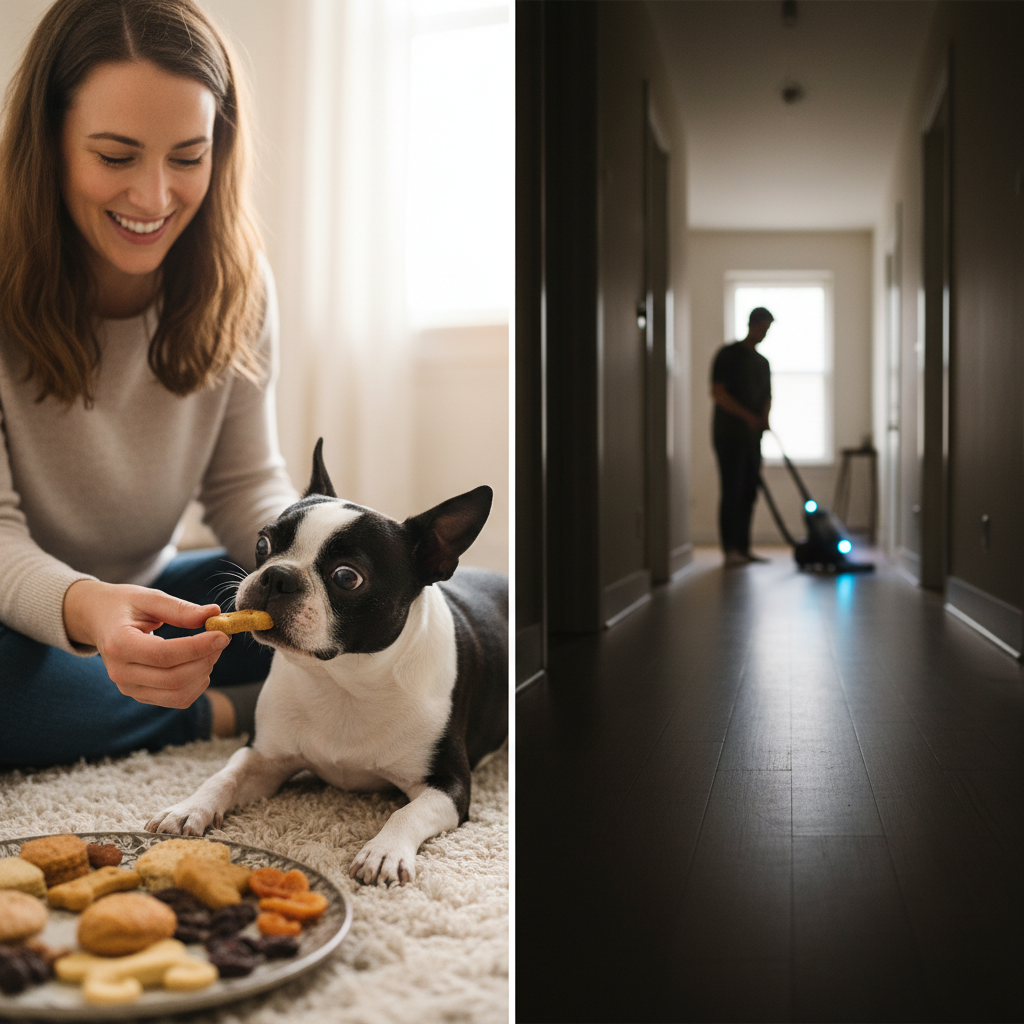
This is the big one: introducing the noise. The key to success in this phase is distance and duration. We will start with the sound far away and for a very short time, pairing it with something absolutely amazing for your dog.
- Create Distance: This is where a partner is extremely helpful. Have one person (Person A) take the dog into a room as far away from the vacuum as possible, maybe even on a different floor of the house. Person A’s job is to make it a party! They can be feeding the dog a constant stream of super high-value treats or giving them a favorite lick-mat or stuffed Kong.
- Introduce the Sound (Briefly!): The other person (Person B) will go to the vacuum, plug it in, and turn it on for just one second. Literally: ON-OFF.
- Immediate Reward: The instant the sound starts, Person A should feed the dog a jackpot of treats. The sound should start, and the best treats should immediately follow. The sound stops, the special treats stop. The goal is for the dog to learn that the scary noise predicts the most amazing food party.
- Gradual Increases: Repeat this several times. ON-OFF. Treat party! After a few successful sessions, try two seconds. ON-ON-OFF. Treat party! Keep the sessions short. A few repetitions and then take a break.
- Decrease the Distance: Once your dog is comfortable with the sound from the farthest point in the house, you can gradually decrease the distance. Try it from the next room over. Then from the doorway of the same room. Go slowly! This part of the process can take days or even weeks, and that’s perfectly okay.
You’re looking for a specific reaction called a Conditioned Emotional Response (CER). Eventually, when your dog hears the vacuum turn on, instead of looking scared, they should whip their head around and look at you with bright, expectant eyes, as if to say, “Oh boy! Where’s my chicken?” That’s when you know you’re building a new, positive association.
Phase 4: The Grand Finale – Turning Vacuuming into a Game!
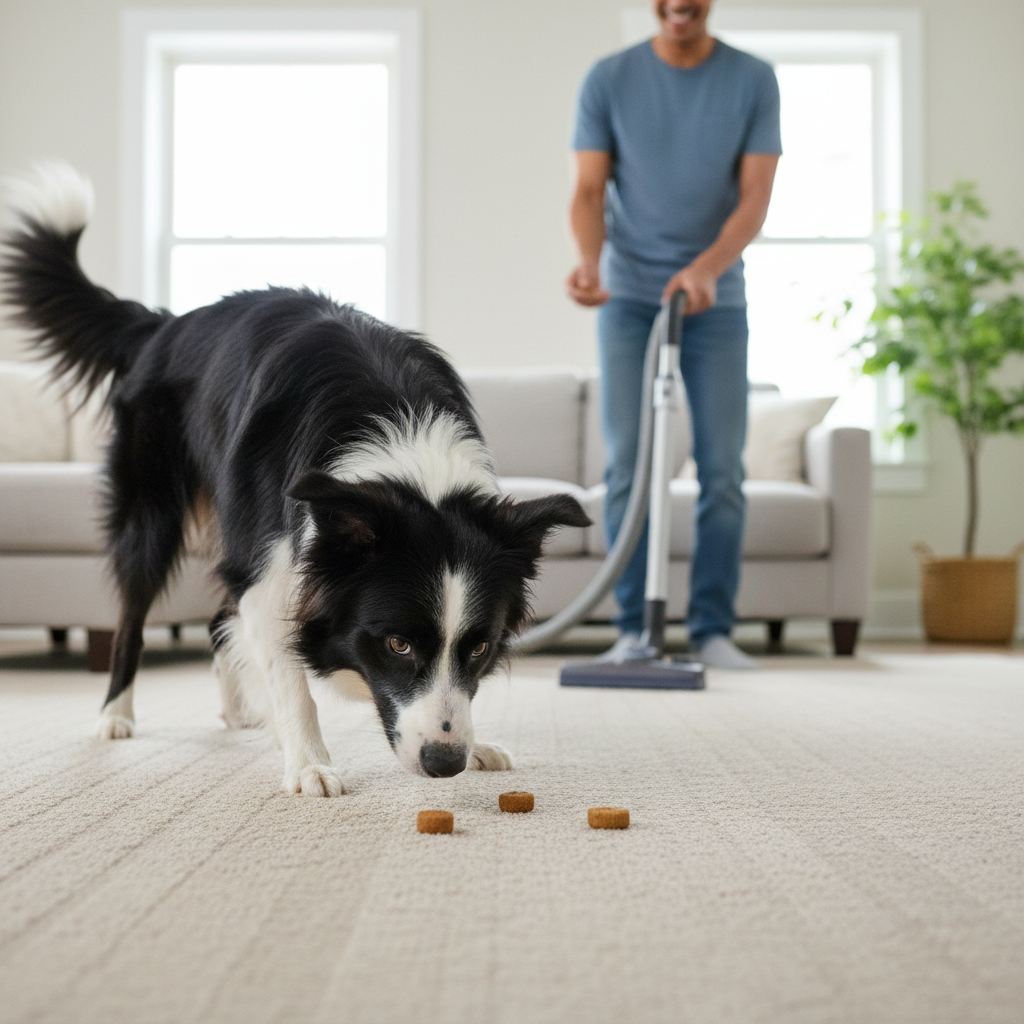
You’ve made it to the final phase! Your dog is okay with the vacuum’s presence, its movement, and its sound from a distance. Now it’s time to put it all together and transform your cleaning routine into an interactive game.
The Treat Scatter Game
This is a fantastic way to make the vacuum a source of fun. While a partner vacuums a section of the room, you can be in another section, tossing treats on the floor for your dog to find. The vacuuming is happening, but your dog’s focus is on the fun foraging game.
- Start in One Spot: Begin by turning the vacuum on (use the lowest setting if you have one) and leaving it stationary in one corner of the room. As it runs, toss treats for your dog on the opposite side of the room. Let them get used to the noise and the game happening simultaneously.
- Introduce Movement: Now, have your partner begin to vacuum a small area, still far away from the dog. Continue playing the treat scatter game. The vacuum’s movement should now be associated with the fun game you’re playing.
- Close the Gap Slowly: Over many sessions, gradually decrease the distance between the vacuuming action and the treat game, always watching your dog’s comfort level.
‘Find It!’ with the Vacuum Trail
Another great game is to have the vacuum ‘leave’ treats in its wake.
- As you pull the vacuum backward, drop a treat onto the freshly cleaned spot.
- Encourage your dog to “Find it!”
- Your dog will start to follow the path of the vacuum, eagerly awaiting the treats that it leaves behind. They are now actively and happily engaging with the cleaning process!
The ultimate goal is for you to be able to vacuum your home while your dog either relaxes calmly on their bed or happily follows you around, waiting for an occasional treat. They will have learned that the monster isn’t a monster at all—it’s just a weird, loud machine that signals fun and food.
Troubleshooting: What to Do When Your Dog Gets Spooked
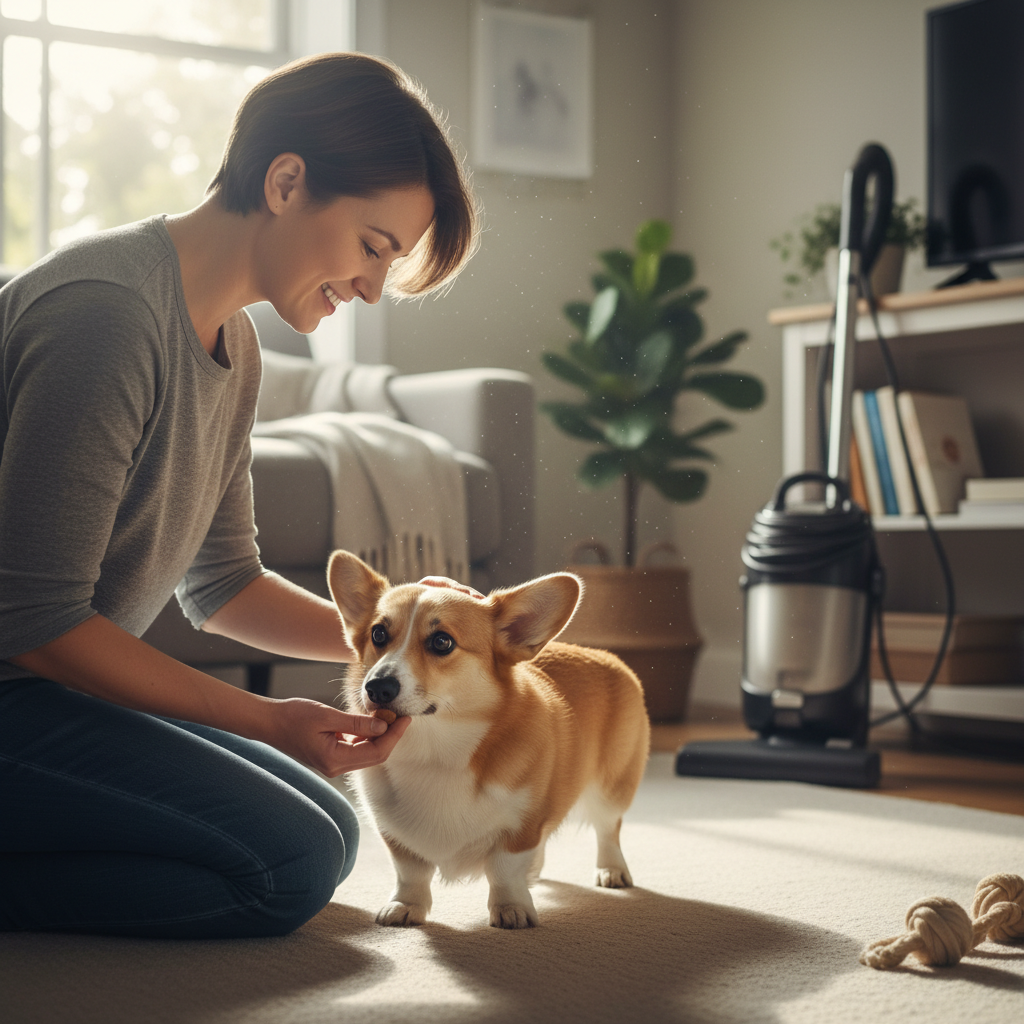
Training is never a straight line; there will be good days and not-so-good days. Setbacks are a normal part of the process. The key is how you respond to them. Here are some common issues and how to handle them.
Problem: My dog was doing great, but suddenly they’re scared again!
Solution: This is called spontaneous recovery, and it’s totally normal. It just means you might have progressed a little too quickly. Don’t panic or get frustrated. Simply take a step or two back in the training plan to a point where your dog was last successful and confident. Spend a few more sessions reinforcing that step before trying to move forward again. Maybe they were fine with the sound for 2 seconds, but 4 seconds was too much. Go back to 2-second bursts for a while!
Problem: My dog won’t take treats when the vacuum is on.
Solution: This is a clear sign that your dog is ‘over threshold,’ meaning their fear or anxiety is too high for them to think about food. This is a signal to stop the session immediately. The stimulus (the vacuum’s noise or proximity) is too intense. You need to increase the distance significantly or lower the intensity (e.g., put a blanket over the vacuum to muffle the sound slightly) until they are able to comfortably take treats again.
Problem: This is taking forever!
Solution: It’s crucial to go at your dog’s pace, not yours. Every dog is an individual. A confident adult dog might breeze through these steps in a week, while a genetically fearful puppy or a rescue with a traumatic past might take several months. Celebrate small victories and focus on making every interaction a positive one. Rushing the process is the surest way to fail. Remember, you are undoing a deep-seated fear and building new, positive emotional responses. That takes time and consistency.
By staying patient, positive, and observant of your dog’s body language, you can navigate any bumps in the road and continue on your path to a peaceful, fear-free home.
Conclusion
Congratulations! You now have a complete roadmap to transform your dog’s biggest fear into their new favorite game. By replacing fear with fun and anxiety with anticipation, you’re not just solving a noise problem; you’re building a deeper level of trust and communication with your furry companion. Remember the core principles: go at your dog’s pace, keep it positive, and celebrate every small step forward. Before you know it, the roar of the vacuum will be met not with trembling, but with a happily wagging tail, ready for the fun to begin. You’ve got this!