Ever watch your dog meticulously arrange their toys or figure out a tricky puzzle feeder and think, ‘There’s a little genius in there’? Well, you’re probably right! Dogs are incredibly intelligent, and they thrive on mental challenges that let them use their amazing brains. If you’re looking for a fun, rewarding, and downright impressive new skill to teach your furry friend, look no further than the Genius Dog Challenge: sorting laundry!
Now, before you imagine your dog taking over all your household chores (if only!), let’s be clear. Teaching your dog to sort laundry is less about practical help and more about providing top-tier mental enrichment. It’s a complex task that combines several behaviors—picking things up, carrying them, and making a choice. This isn’t just a cool party trick; it’s a fantastic way to strengthen your bond, build your dog’s confidence, and prevent boredom. This guide will walk you through every step, from gathering your supplies to troubleshooting common hiccups, all while keeping things positive and fun. So, are you ready to unlock your dog’s inner Einstein? Let’s get started!
Gearing Up for Genius: What You’ll Need
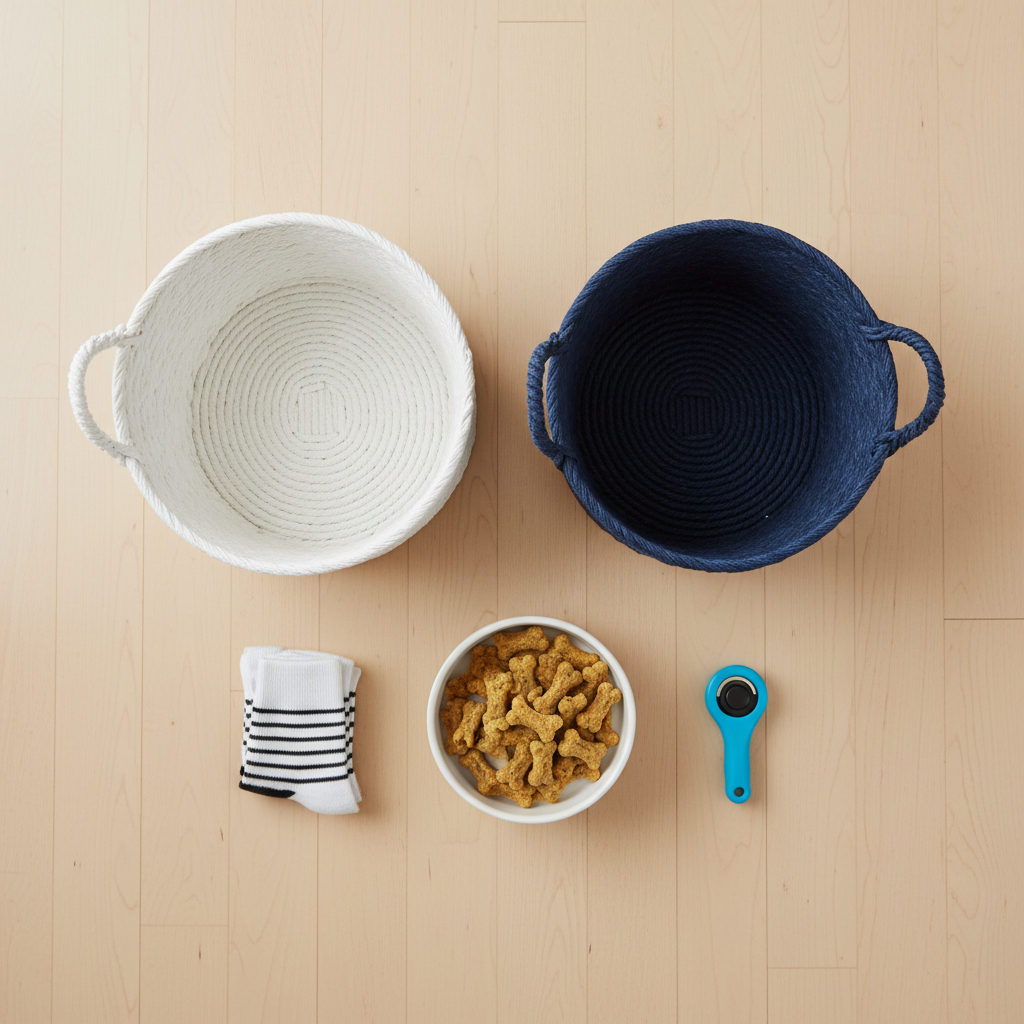
Before you dive into your first training session, a little preparation goes a long way. Setting up for success means having the right tools on hand to make the learning process as smooth and clear as possible for your pup. Think of it as setting the stage for a brilliant performance! You don’t need a lot of fancy equipment, just a few simple items.
Your Laundry Sorting Toolkit:
- Two Distinct Laundry Baskets: The key here is ‘distinct.’ Use baskets of different colors (e.g., one white, one blue) or clearly label them. This visual difference is crucial for helping your dog learn to discriminate between the two piles.
- A Pile of ‘Training’ Laundry: Start with clean clothes, please! For early sessions, choose items that are easy for your dog to pick up and hold, like socks, washcloths, or t-shirts. Avoid anything with lots of buttons or zippers that could be tempting to chew.
- High-Value Treats: This is the cornerstone of positive reinforcement training. ‘High-value’ means something your dog absolutely loves and doesn’t get all the time. Think small pieces of chicken, cheese, or special training treats. The yummier the reward, the more motivated your dog will be.
- A Clicker (Optional, but Recommended): A clicker is a fantastic tool for marking the exact moment your dog does the right thing. This precision communication can speed up the learning process significantly. If you’re not using a clicker, a consistent verbal marker like a sharp “Yes!” works too.
- A Distraction-Free Space: Choose a quiet room where you and your dog won’t be interrupted. The living room during a family movie night is probably not the best spot. A calm environment helps your dog focus entirely on you and the task at hand.
- Patience and a Positive Attitude: This is the most important item on the list! This is a complex skill. There will be moments of confusion and silly mistakes. Your job is to be your dog’s patient coach and cheerleader. Keep sessions short, upbeat, and always end on a positive note.
The Ultimate Laundry Sorting Guide: A Step-by-Step Breakdown
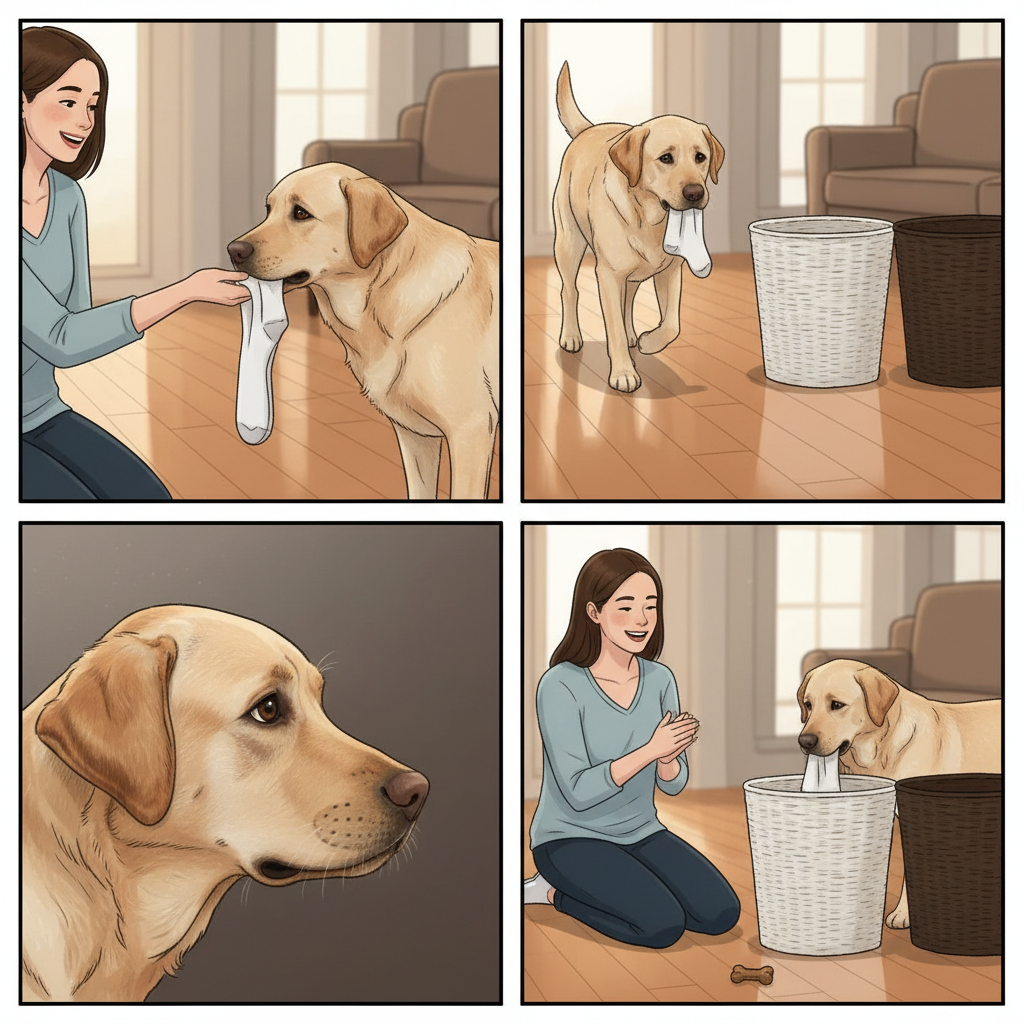
Alright, you’ve got your gear, your treats are ready, and your dog is looking at you with eager anticipation. It’s time to begin the training! We’re going to break this down into small, manageable steps. The golden rule is to master one step before moving on to the next. Remember to keep sessions short—5 to 10 minutes once or twice a day is perfect—to keep your dog engaged and prevent frustration.
Step 1: Master the Fundamentals: ‘Take It’ and ‘Drop It’
Before your dog can sort laundry, they need to be pros at picking things up and putting them down on cue. If your dog already knows these, do a quick refresher! If not, start here. Hold a sock. When your dog shows interest, say “Take It!” and let them gently take it. Praise them. Then, offer a high-value treat. To get them to release the sock, they’ll have to drop it. As they do, say “Drop It!” and give them the treat. Repeat until they reliably take and drop the item on cue.
Step 2: Introduce Basket Number One
Place one basket (let’s say the ‘Lights’ basket) in your training space. Now, combine the cues. Hand your dog a light-colored sock and say “Take It.” Once they have it, lead them over to the basket. Use the treat to lure their head over the basket and say “Drop It!” The moment the sock falls in—jackpot! Lavish them with praise, clicks, and a handful of treats. This is a huge moment! Repeat this process several times until your dog starts to anticipate dropping the sock in the basket.
Step 3: Add a Verbal Cue for the Basket
Once your dog is confidently dropping the light-colored items into the first basket, it’s time to name it. As they are performing the action, start saying your chosen cue, like “Lights” or “Whites.” For example: “Take It… good! Bring it here… Lights… Drop It! YES! Good dog!” The goal is for them to associate the word “Lights” with that specific basket and action.
Step 4: Repeat with Basket Number Two
Now, put the first basket away and start the process all over again with the second basket (‘Darks’) and dark-colored items. Use a different verbal cue, like “Darks” or “Colors.” It’s important to train this completely separately at first to avoid confusion. Go through Steps 2 and 3 with the new basket and new cue until your dog is just as confident with this one.
Step 5: The Big Challenge: Introducing the Choice
This is where the magic happens. Place both baskets a few feet apart. Give your dog a light-colored item. Say your cue, “Lights,” and see what they do. If they go to the correct basket, throw a party! If they head for the wrong one, don’t worry and don’t say “No.” Simply and calmly reset. You can make it easier by pointing or tapping the correct basket to help them succeed. Then, try with a dark-colored item and your “Darks” cue. This step takes the most time and patience. Your dog is learning to listen to the cue and make a conscious decision based on it.
Expert Tip: If your dog keeps getting it wrong, you’ve likely moved too fast. Take a step back! Go back to practicing with just one basket at a time for a few more sessions to build more confidence and a stronger association.
Step 6: Generalize and Make It a Game!
Once your dog can successfully sort the two piles based on your verbal cues, it’s time to ‘proof’ the behavior. Start moving the baskets to different spots in the room. Begin to stand further away when you give them the item. Mix up the order of lights and darks. The goal is for them to perform the skill reliably in different contexts. Keep it fun and energetic, and your dog will see this ‘chore’ as the best game ever!
Troubleshooting Common Laundry Day Snags
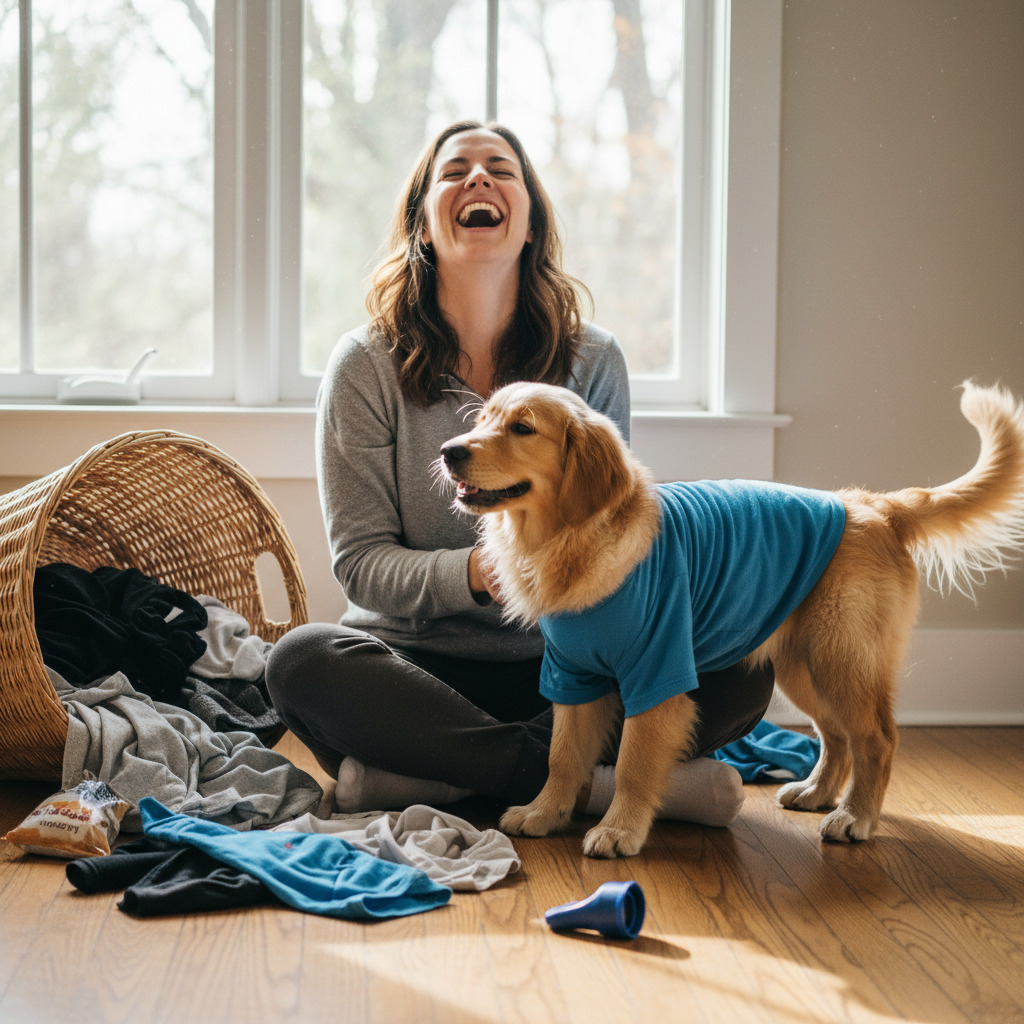
Even with the best plan, you might hit a few snags. That’s completely normal in dog training! The key is to see these moments not as failures, but as valuable information telling you where your dog needs a little more help. Here are some common issues and how to work through them.
- Problem: My dog keeps chewing or playing tug-of-war with the clothes!
Solution: This usually means the ‘Drop It’ cue isn’t solid enough yet. Go back to basics and practice ‘Drop It’ with less ‘fun’ items, like a boring toy, before moving back to soft, tug-able laundry. Also, make sure the treats you’re offering are way more exciting than the sock itself! - Problem: My dog always goes to the same basket, no matter what I say.
Solution: Your dog may have developed a habit or a preference for one side. Go back to training with a single basket for a few sessions to break the pattern. When you reintroduce the second basket, make the ‘correct’ one extra fun and easy to get to, and deliver an extra-special jackpot of treats for choosing it. - Problem: My dog just won’t pick up the laundry items.
Solution: The item might not be interesting enough. Try using a different texture, like a balled-up sock, which is more toy-like. You can also briefly rub the item in your hands to get your scent on it. For very reluctant dogs, you can start by teaching them to pick up a favorite toy and then gradually transition to laundry items. - Problem: My dog gets frustrated and walks away.
Solution: This is a clear sign that the session has gone on too long or the step is too difficult. Always, always end on a success. If your dog is struggling, ask for a simple behavior you know they can do (like ‘sit’), reward it enthusiastically, and end the session there. Keep future sessions shorter (even just 2-3 minutes) to build their enthusiasm back up.
Beyond the Basket: What This Trick Teaches Us About Our Dogs

Mastering the laundry sort is an incredible achievement, but the benefits go far beyond a (slightly) tidier laundry room. This single task is a window into the amazing cognitive abilities of our canine companions. When your dog successfully sorts an item, they aren’t just following a command; they’re engaging in a complex mental process.
A Peek Inside the Canine Brain
Here’s what’s happening when your dog is on the job:
- Discrimination: Your dog is learning to discriminate, not based on the color of the clothing (as dogs have limited color vision), but on your verbal cue. They are distinguishing between the sounds “Lights” and “Darks” and associating each with a different target.
- Sequencing: This task requires them to perform a chain of behaviors in order: take the item, carry it to the basket area, listen for the cue, choose the correct basket, and drop the item. This is a significant cognitive workout!
- Problem-Solving: When you move the baskets or change the item, your dog has to generalize what they’ve learned and apply it to a new situation. This flexibility in thinking is a hallmark of intelligence.
Famous dogs like Chaser, the Border Collie who knew over 1,000 words, showed us that dogs have a deep capacity for learning and language comprehension. While your dog might not be the next Chaser, challenges like sorting laundry tap into that same innate intelligence. It proves that any dog, regardless of breed, can benefit from and enjoy activities that make them think. The real ‘genius’ of the challenge is not whether your dog gets it perfect every time, but the joy and confidence they gain from learning with you.
Conclusion
Congratulations, you’ve made it through the Genius Dog Challenge! Whether your laundry room is now a model of canine-assisted efficiency or simply the scene of many happy, treat-filled training sessions, you’ve given your dog an incredible gift. You’ve provided mental stimulation that wards off boredom, strengthened your communication, and built a deeper bond of trust and teamwork.
Remember, the ultimate goal isn’t perfection. It’s about the process. It’s about celebrating the small victories, laughing at the silly mistakes, and marveling at the incredible capacity of the animal you share your life with. This challenge is a testament to the fact that training can and should be a joyful game you play together.
So, keep challenging your clever pup. What’s next? Teaching them to put away their toys? Fetch you the remote? With patience, positivity, and a pocketful of treats, you’ll be amazed at what you and your genius dog can accomplish together.