Have you ever wished you could just… point… and have your dog understand exactly what you mean? Imagine easily showing them where their favorite toy rolled under the sofa, or directing them to their bed when guests arrive, all with a simple, silent gesture. It feels a bit like magic, or maybe even a secret language between you and your best friend. Well, guess what? It’s not magic—it’s a completely achievable training goal that can revolutionize how you communicate with your dog.
Teaching your dog to understand a pointing cue is more than just a neat party trick. It’s a fundamental building block for advanced training, a practical tool for everyday life, and a wonderful way to deepen your bond. It shows your dog that you are a reliable source of information, someone to look to for guidance. In this guide, we’re going to walk you through everything you need to know, from the basic building blocks to advanced, fun games. Get ready to unlock a communication breakthrough with your canine companion!
Why Pointing is a Communication Superpower
Before we dive into the ‘how,’ let’s talk about the ‘why.’ Why invest your time in teaching this specific skill? Simply put, it bridges a significant communication gap between species. While humans use pointing instinctively from a very young age, it’s not a natural part of a dog’s communication repertoire. By teaching them what this gesture means, you’re essentially handing them a key to understanding your world a little better.
The Practical Perks
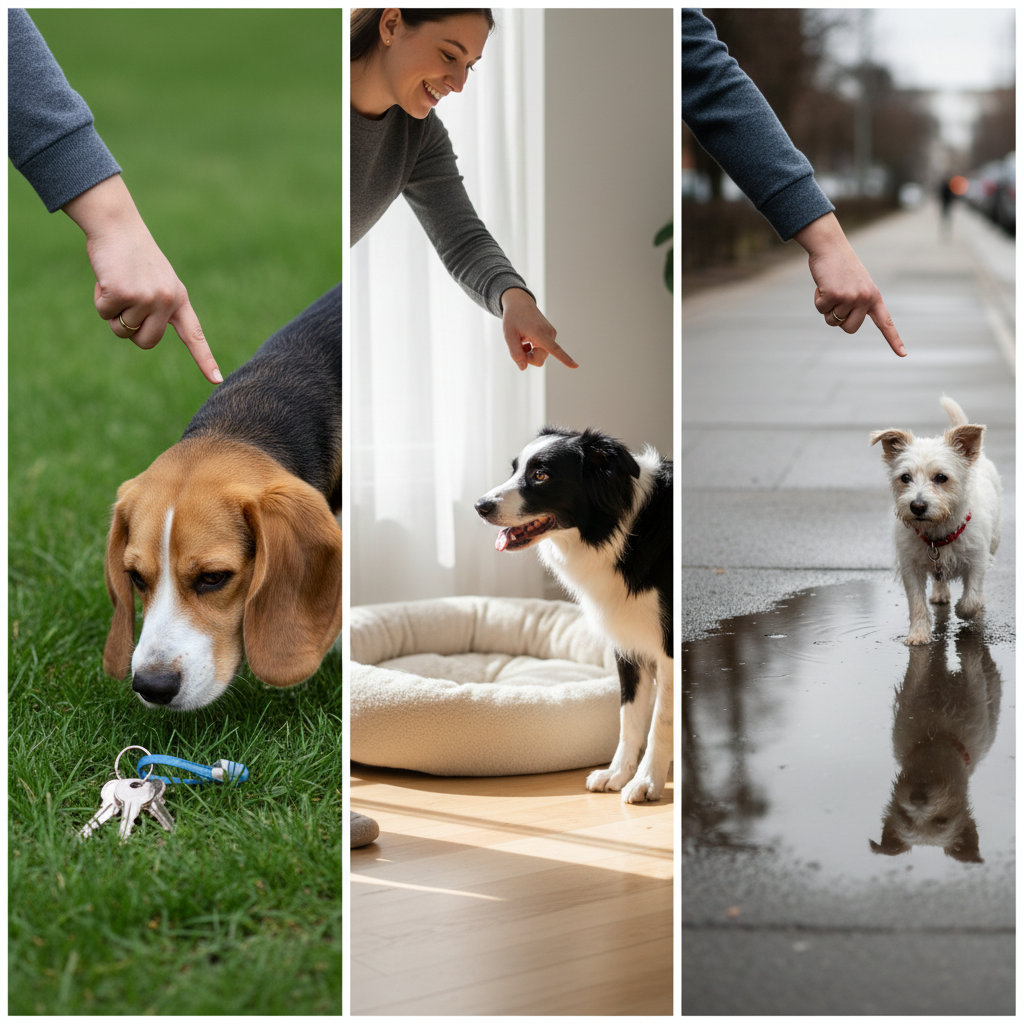
- Finding Lost Items: Dropped your keys in the tall grass? Can’t find the remote? Your dog can become an amazing little helper. By pointing to a general area, you can direct their powerful nose to assist in the search.
- Effortless Direction: Instead of a complex verbal command, a simple point can direct your dog to their crate, their water bowl, a specific spot to ‘stay,’ or even which direction to go on a walk.
- Safety First: A solid pointing cue can be a safety tool. You can quickly and silently direct your dog away from a potential hazard on the sidewalk or guide them to a safe spot without needing to shout.
Strengthening Your Bond
Every training session is an opportunity to strengthen your relationship. Teaching the pointing cue is a collaborative exercise built on trust and positive reinforcement. When your dog successfully follows your point and is rewarded, it builds their confidence and reinforces the idea that paying attention to you leads to good things. This shared understanding creates a deeper, more intuitive connection that goes beyond basic commands like ‘sit’ or ‘stay.’ It transforms your partnership into one of true teamwork.
Expert Tip: Think of teaching the point as building a shared vocabulary. It’s a non-verbal word that you both come to understand, making your daily interactions smoother and more enjoyable.
Gearing Up for Success: What You’ll Need
The great news is that you don’t need a lot of fancy equipment to teach this skill. The most important tools are patience and a positive attitude! However, having a few things ready will make your training sessions smoother and more effective.
The Essentials Checklist:
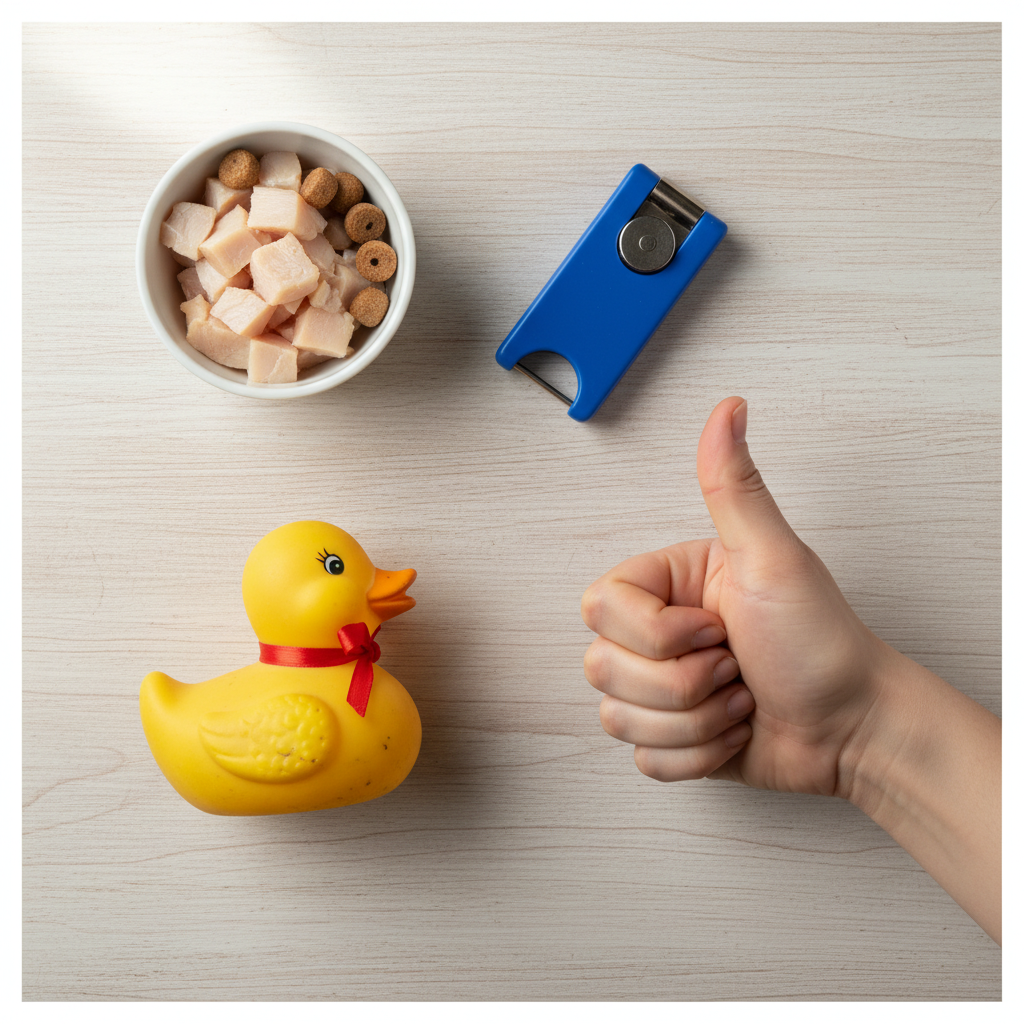
- High-Value Treats: We’re talking top-tier stuff here! Small, soft, smelly treats work best because they’re quick to eat and highly motivating. Think tiny pieces of cooked chicken, cheese, or your dog’s absolute favorite commercial training treat. The goal is to make the reward so good that your dog is eager to figure out the puzzle.
- A Clicker (Optional but Recommended): A clicker is a fantastic tool for marking the exact moment your dog does the right thing. This precision helps your dog understand precisely what action earned them the reward. If you’re not using a clicker, you can use a consistent, short verbal marker like “Yes!”.
- A Quiet Training Environment: Start in a place with minimal distractions. A quiet room in your house is perfect. You want your dog’s full attention on you, not on the squirrel outside the window or the kids playing in the next room.
- Your Dog’s Favorite Toy: Once your dog starts to get the hang of it, you can switch from rewarding with treats to rewarding with a quick game of tug or fetch. This is a great way to keep things exciting!
- Patience and a Positive Vibe: Your dog can read your energy. Keep sessions short (5-10 minutes is plenty), upbeat, and always end on a positive note. If you or your dog gets frustrated, it’s time for a break. Training should always be fun!
The Step-by-Step Guide to Teaching the Point
Alright, let’s get to the fun part! We’re going to break this down into simple, manageable steps. Remember to master each step before moving on to the next. Let’s begin!
Step 1: The Foundation – Charging the Marker
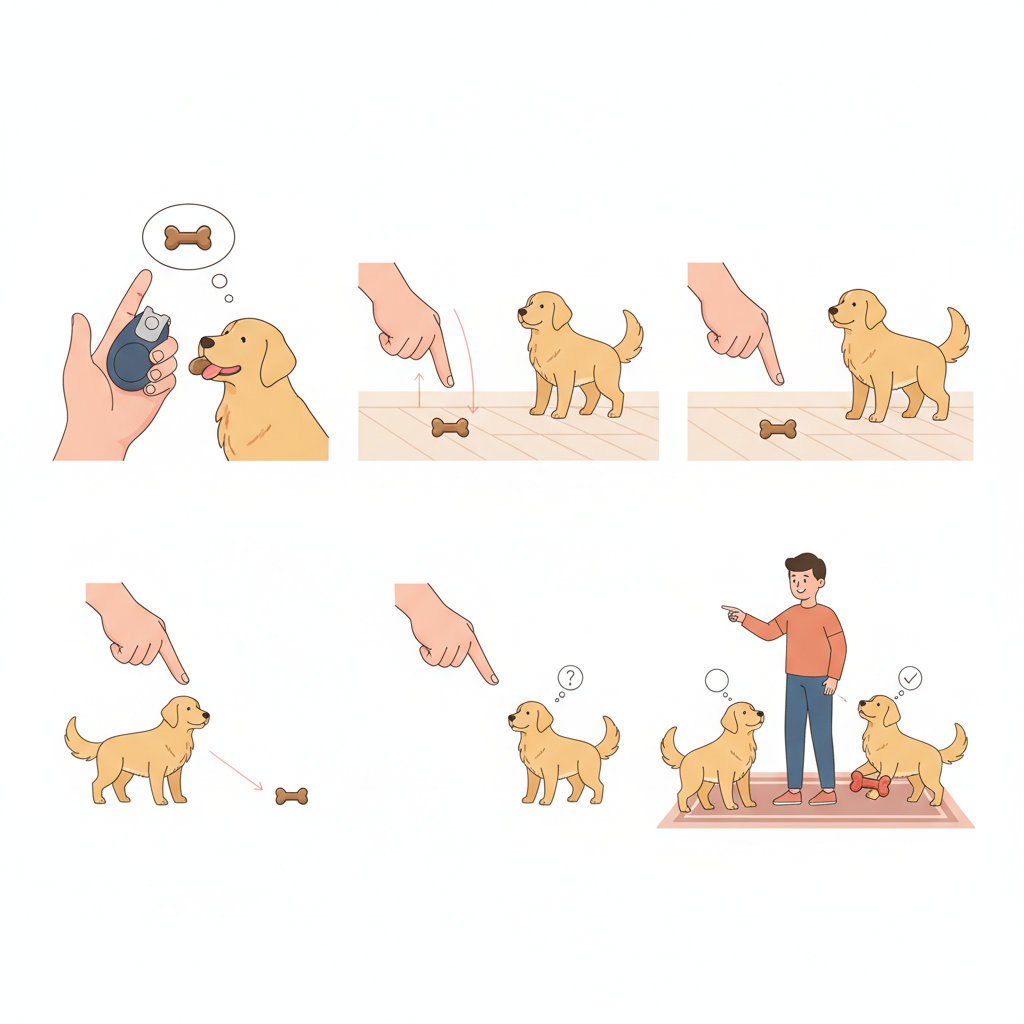
If you’re using a clicker or a verbal marker like “Yes!”, you first need to teach your dog what it means. It’s simple: Click (or say “Yes!”), then immediately give a treat. Repeat this 10-15 times. Your dog will quickly learn that the sound predicts a delicious reward. This sound becomes your way of saying, “That! That’s exactly what I wanted you to do!”
Step 2: The Lure – Object and Hand Together
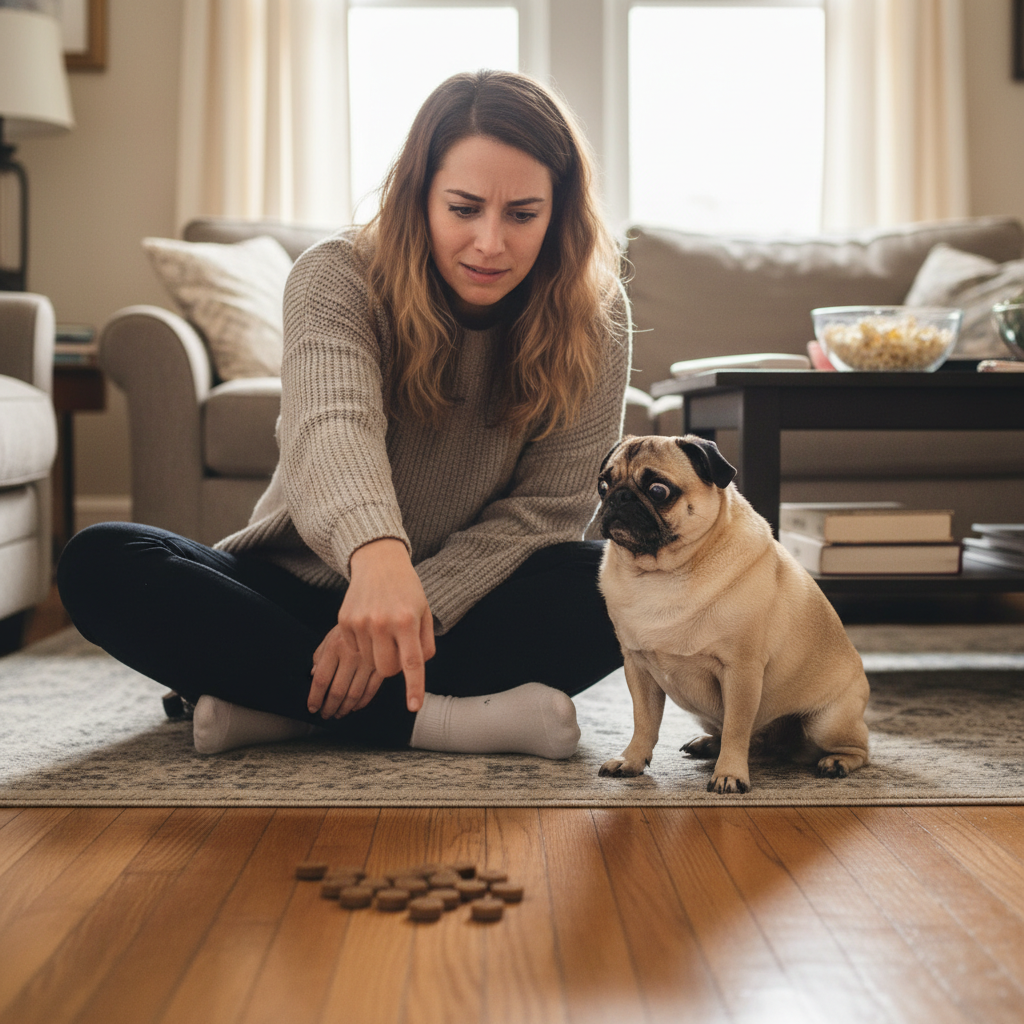
Now we connect the treat to the location. Place a treat on the floor. As your dog goes to eat it, point directly at it with your index finger, almost touching it. As soon as their nose touches the treat, click/mark and let them eat it. Repeat this several times. You are creating a clear association: point -> treat on the floor.
Step 3: Introducing the Point – Creating a Tiny Gap
This is where the magic starts. Place a treat on the floor. This time, point to it from about 6 inches away. The moment your dog moves their head towards the treat (not your hand!), click/mark and let them have the treat. If they just look at your hand, don’t worry. Simply move your hand closer to the treat to help them succeed, then try again from a slightly further distance.
Troubleshooting Tip: If your dog keeps staring at your pointing hand, you’re not alone! Try making your pointing motion a quick, decisive gesture rather than holding your hand out. You can also try tossing the treat onto the floor to draw their attention away from your hand and towards the target.
Step 4: Increasing the Distance
Once your dog is reliably looking towards the treat from 6 inches away, it’s time to up the ante. Gradually increase the distance between your pointing finger and the treat. Go from 6 inches to a foot, then a foot to two feet, and so on. Also, start varying the location. Place the treat to your left, then to your right. The goal is for your dog to follow the line from your finger to the target, no matter the distance or direction.
Step 5: Fading the Lure – Pointing at Nothing!
Now, we remove the visible treat. Point to an empty spot on the floor where you’ve previously placed treats. The moment your dog looks at or sniffs the spot, click/mark and then reward them with a treat from your other hand. This is a critical step! It teaches the dog that the reward comes from you, but the information comes from your pointing finger. This breaks the dependency on seeing the treat first.
Step 6: Generalization – Pointing at Objects
Your dog now understands that your point indicates a location. Let’s apply it to objects! Place a familiar toy on the floor a few feet away. Point to the toy. When your dog looks at or moves toward the toy, click/mark and reward enthusiastically. You can then build on this by teaching them to touch the object with their nose or paw. You can do this with their bed, their water bowl, or any object you want to be able to direct them to.
Troubleshooting Common Hurdles
Training is never a perfectly straight line. It’s totally normal to hit a few bumps in the road. Here are some of the most common challenges you might face when teaching the pointing cue and how to navigate them with a smile.
Challenge 1: “My dog just stares at my hand!”
This is by far the most common issue. Dogs are naturally drawn to our hands, especially if they’re used to getting treats from them.
Solutions:
- Make the Target More Obvious: Use a very high-value, smelly treat that’s more interesting than your hand.
- Change Your Gesture: Instead of a slow, sustained point, make it a quicker, more dynamic flick of your finger or even your whole arm towards the target. This can help break their focus on your static hand.
- Reward Head Turns: Go back a step. Reward the slightest turn of your dog’s head in the correct direction. Don’t wait for them to look all the way. We’re shaping the behavior, one tiny step at a time!
Challenge 2: “My dog gets distracted and loses focus.”
A short attention span can be a real challenge, especially with younger dogs or in new environments.
Solutions:
- Shorter Sessions: Keep your training sessions super short—even just 2-3 minutes can be effective. It’s better to have five short, successful sessions throughout the day than one long, frustrating one.
- Up the Reward Value: If your dog is getting bored, maybe the paycheck isn’t good enough! Break out the extra-special treats that are only used for training.
- Check the Environment: Are you asking for too much too soon? Go back to a boring, quiet room where you are the most exciting thing happening.
Challenge 3: “My dog seems confused and isn’t getting it.”
It can be disheartening when your dog just gives you a blank stare. Don’t worry, it doesn’t mean your dog isn’t smart! It just means we need to communicate more clearly.
Solutions:
- Take a Step Back: Confusion often means you’ve moved ahead too quickly. Go back to the last step where your dog was successful and practice that a few more times before trying to move forward again.
- Break It Down Further: Can you make the step even smaller? For example, if your dog is struggling with the 6-inch gap, try a 2-inch gap first. Success builds confidence.
- End on a High Note: Always end the session with something your dog knows and can be successful at, even if it’s just a simple ‘sit.’ This ensures they finish feeling confident and happy, making them eager for the next session.
Level Up! Advanced Pointing Games & Real-World Uses
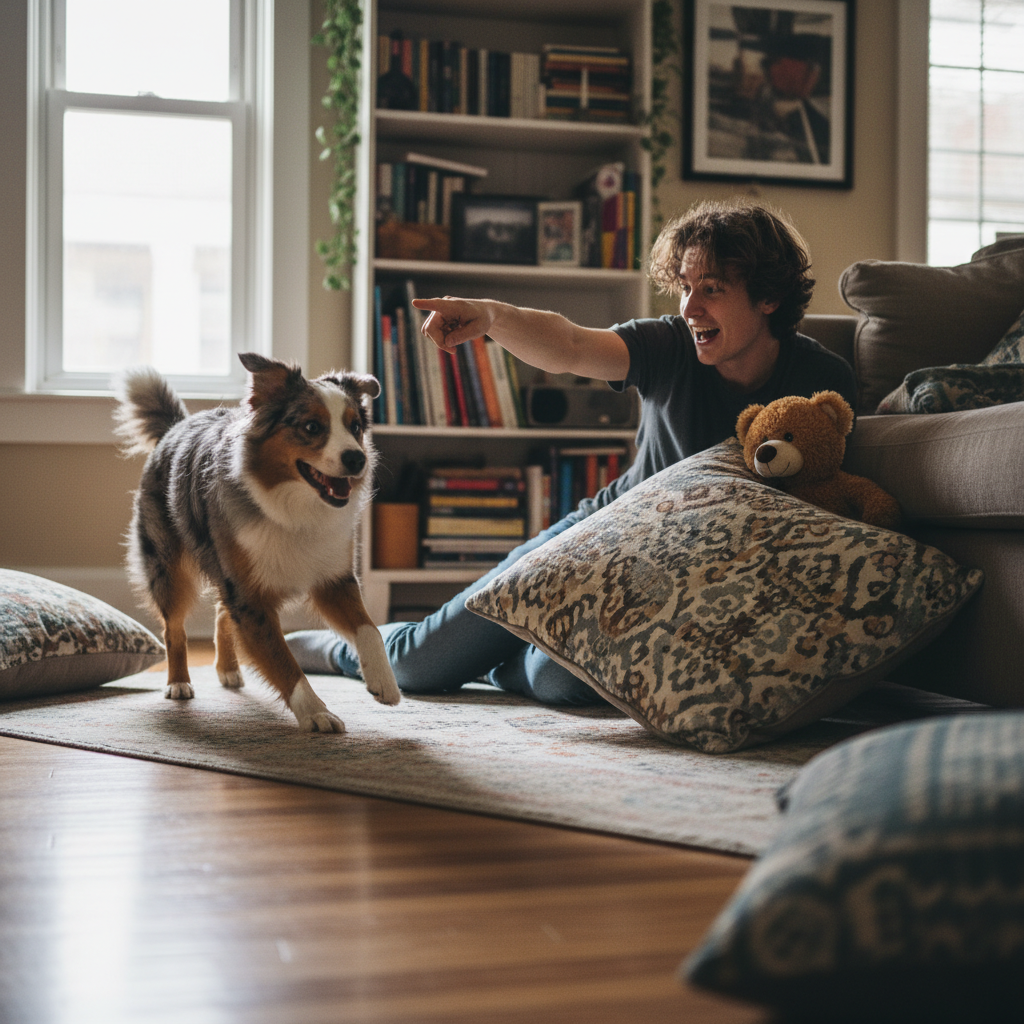
Once your dog has mastered the basic point, you can unlock a whole new world of fun and practical applications. This is where your hard work really pays off and you can start showing off your dog’s amazing new skill!
Fun Games to Play
- The Shell Game: Place three opaque cups upside down on the floor. While your dog watches, place a treat under one of the cups. Shuffle them around, then point to the correct cup and say “Find it!”. This is a fantastic brain game that sharpens their new skill.
- Toy Hide-and-Seek: Have your dog ‘stay’ while you “hide” their favorite toy in plain sight (e.g., on a chair or next to a table leg). Return to your dog and point to the toy. Celebrate wildly when they run to get it! As they get better, you can make the hiding spots more challenging.
- Multiple Choice: Line up two or three different toys. Ask your dog, “Where’s your ball?” and point to the ball. This helps them learn the names of their toys and associate them with your pointing cue.
Practical Real-World Applications
Beyond games, the pointing cue can make your everyday life so much easier.
| Situation | How Pointing Helps |
|---|---|
| Time to go out | Point to the door to indicate it’s time for a potty break or walk. |
| Bedtime | Point to their crate or bed to signal it’s time to settle down for the night. |
| Cleaning Up | Point to various toys on the floor and use a cue like “Put away” to have them help tidy up their toy basket. |
| Navigating New Places | On a hike or in a new environment, use a point to guide them around obstacles or show them the path you want to take. |
By integrating this cue into your daily routine, you’ll reinforce the training and discover just how powerful this simple gesture can be. It’s a continuous conversation, making your dog feel more included and in-tune with your intentions.
Conclusion
You’ve done it! You now have the full roadmap to teaching your dog one of the most useful and bond-enhancing skills out there. By teaching your dog to follow a point, you’re doing more than just training a behavior; you’re opening a new, clearer line of communication. You’re showing them how to look to you for information, building trust, and creating a partnership that feels truly in sync.
Remember, the key ingredients are always patience, positivity, and consistency. Celebrate the small victories, laugh at the goofy mistakes, and enjoy the process of learning together. Every short training session is a deposit in your relationship bank. Before you know it, that simple point will feel like your own special superpower, a silent language that only the two of you share. Happy training!