Hey there, fellow dog lovers! Let’s talk about something that gets a bit of a bad rap in the dog world: muzzles. For many, the sight of a muzzled dog conjures up images of aggression or danger. But what if I told you that a muzzle is actually one of the most responsible and loving tools you can have in your pet parent toolkit? It’s true! Muzzle training isn’t about punishment; it’s about preparation, safety, and opening up a world of possibilities for you and your furry best friend.
Think of it like teaching your dog to love their crate or enjoy car rides. It’s a life skill that ensures their safety and the safety of others in stressful situations, like an unexpected vet visit or a run-in with an off-leash dog. The secret isn’t forcing it—it’s making it a game. We’re going to transform the muzzle from a scary monster into a magical treat dispenser, a signal for fun times, and a cool piece of gear for adventures. So, grab your pup and some high-value treats, and let’s get ready to play our way to muzzle-wearing success. It’s time to show your dog that this whole muzzle thing isn’t scary at all—it’s a blast!
Why Muzzle Training is a Superpower for Your Dog (And You!)

Before we dive into the fun and games, let’s get on the same page about why muzzle training is such a game-changer. Ditching the stigma and understanding the benefits is the first step in becoming a confident advocate for your dog’s well-being. A muzzle-trained dog is a dog that is prepared for anything life throws at them.
Stress-Free Vet and Groomer Visits
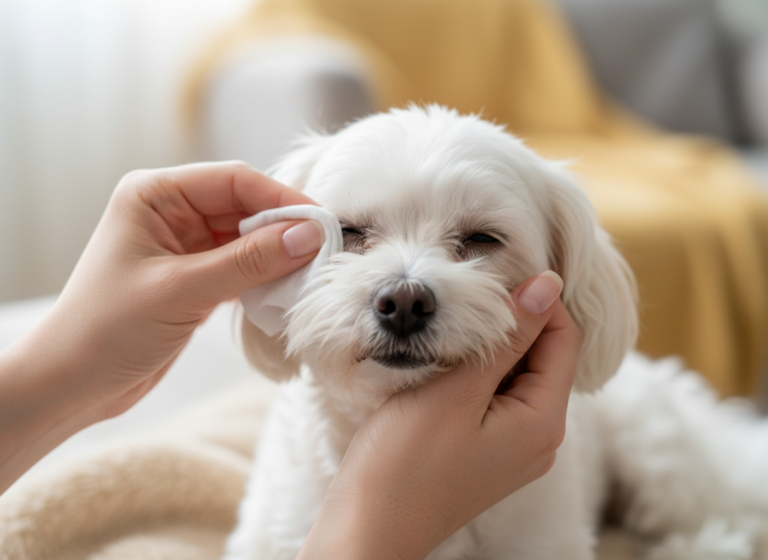
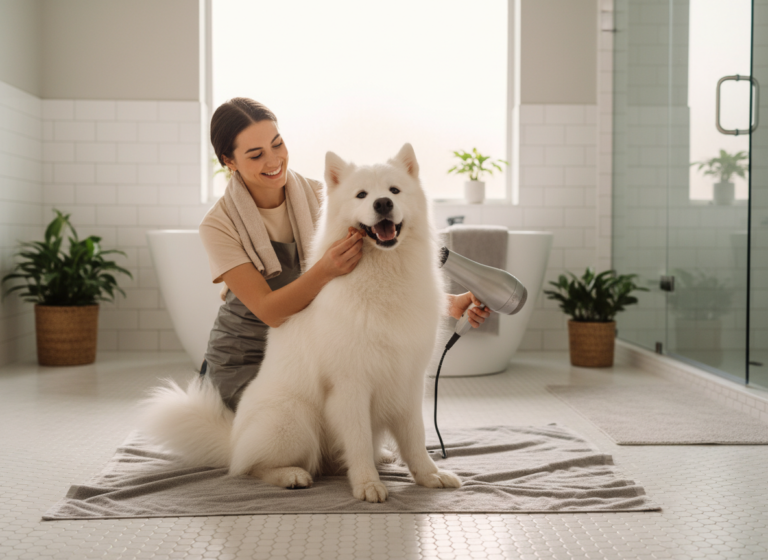
Even the sweetest, most gentle dog can react unpredictably when in pain or scared. A vet exam or a grooming session can be stressful. Having your dog comfortably trained to wear a muzzle means procedures can be done safely and efficiently, reducing stress for everyone involved—your dog, the vet staff, and you. It’s a proactive measure that says, ‘I’m helping you keep my dog safe while you care for them.’
The Scavenging Stopper
Do you have a four-legged vacuum cleaner who thinks every walk is a buffet? From discarded food to potentially toxic items, scavengers can get themselves into serious trouble. A basket muzzle is a fantastic management tool to prevent your dog from eating dangerous things on walks, giving you peace of mind while still letting them sniff and explore.
Navigating Breed-Specific Legislation (BSL) and Travel Rules
In some areas or on public transport, certain breeds are required to wear a muzzle. While BSL is a controversial topic, being prepared makes life easier. If you plan to travel with your dog, especially internationally, muzzle training is often a requirement. Having your dog already happy in their muzzle makes these transitions smooth and stress-free.
Safety During Social Situations
A muzzle can be an invaluable tool for dogs who are reactive or fearful around other dogs or people. It provides a crucial layer of safety that allows you to work on behavior modification with a certified trainer without the constant worry of a bite. It’s a clear signal to others to give your dog space, empowering you to be a better advocate for your dog’s needs.
Expert Tip: A muzzle is a safety tool, not a substitute for training. It prevents bites while you work on the underlying behavioral issues with a professional. It gives you the confidence to manage situations safely, which is the foundation of effective training.
Gathering Your Fun-damentals: The Right Gear for the Game
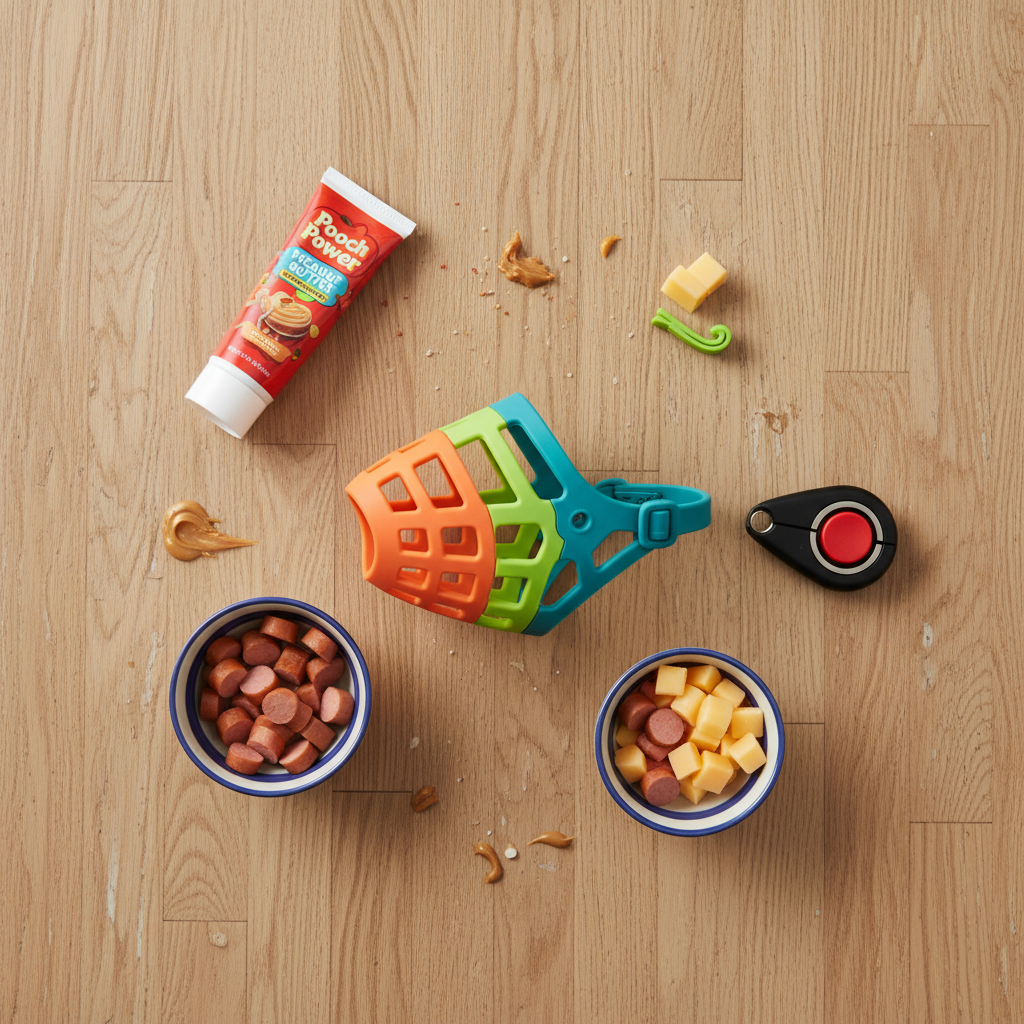
Alright, ready to start playing? Like any good game, you need the right equipment. Setting yourself up for success starts with choosing the right gear and the most irresistible snacks. This isn’t the time for boring old kibble!
Choosing the Perfect Muzzle
Not all muzzles are created equal. For our purposes, there’s only one type we recommend: the basket muzzle. Here’s why:
- Breathability: It allows your dog to pant freely, which is essential for regulating their body temperature.
- Hydration and Treats: The open design lets you easily pass treats through the slots and allows your dog to drink water. This is non-negotiable for positive reinforcement training!
- Comfort: They don’t hold the mouth closed like restrictive fabric or mesh muzzles (which should only be used for very short periods, like a quick nail trim).
When selecting a basket muzzle, look for one made from a lightweight but durable material like rubber or vinyl. Measure your dog’s snout carefully—you want a snug fit that won’t come off, but with enough room for them to pant and open their mouth fully. Brands like Baskerville are a popular and excellent starting point.
The High-Value Treat Arsenal
This is the secret weapon to making the muzzle the best thing ever. We need treats that are so good, your dog will do just about anything for them. Think beyond their daily biscuits. Here are some ideas:
- Squeezable Treats: Peanut butter (xylitol-free!), cream cheese, or dog-specific food tubes are perfect for smearing inside the muzzle.
- Soft, Smelly Goodies: Small pieces of cheese, hot dogs, freeze-dried liver, or boiled chicken work wonders.
- A ‘Jackpot’ Reward: Have an extra-special treat ready for big milestones in your training game.
Other Handy Tools
While not strictly necessary, a clicker can be a fantastic tool to precisely mark the moment your dog does the right thing. If you’ve never used one, the concept is simple: click the instant your dog performs the desired action (like touching the muzzle), then immediately give a treat. The click becomes a powerful ‘yes!’ signal.
Level Up! The Muzzle Training Game Plan (Step-by-Step)
Welcome to the main event! It’s time to play. Remember, the golden rule of this game is to go at your dog’s pace. We want them to be excited and confident at every level. Keep sessions short (1-5 minutes) and always end on a positive note. Let’s begin!
Level 1: The Magical Treat Dispenser Game
The goal here is simple: muzzle = awesome things. We’re not even thinking about putting it on yet.
- Hold the muzzle in one hand and a handful of super tasty treats in the other.
- Show your dog the muzzle. The second they look at it, say “Yes!” and give them a treat from your other hand. Repeat this a few times.
- Now, hold the muzzle out. If they sniff it or touch it with their nose, say “Yes!” and give them a treat. We want them to think, “When I touch that thing, I get chicken!”
- Once they’re eagerly booping the muzzle, start feeding the treat through the front of the muzzle. They have to get close to the muzzle to get the reward.
Level 2: The Peanut Butter Challenge
This level encourages your dog to voluntarily put their nose inside the muzzle. This is a critical step—they are making the choice themselves!
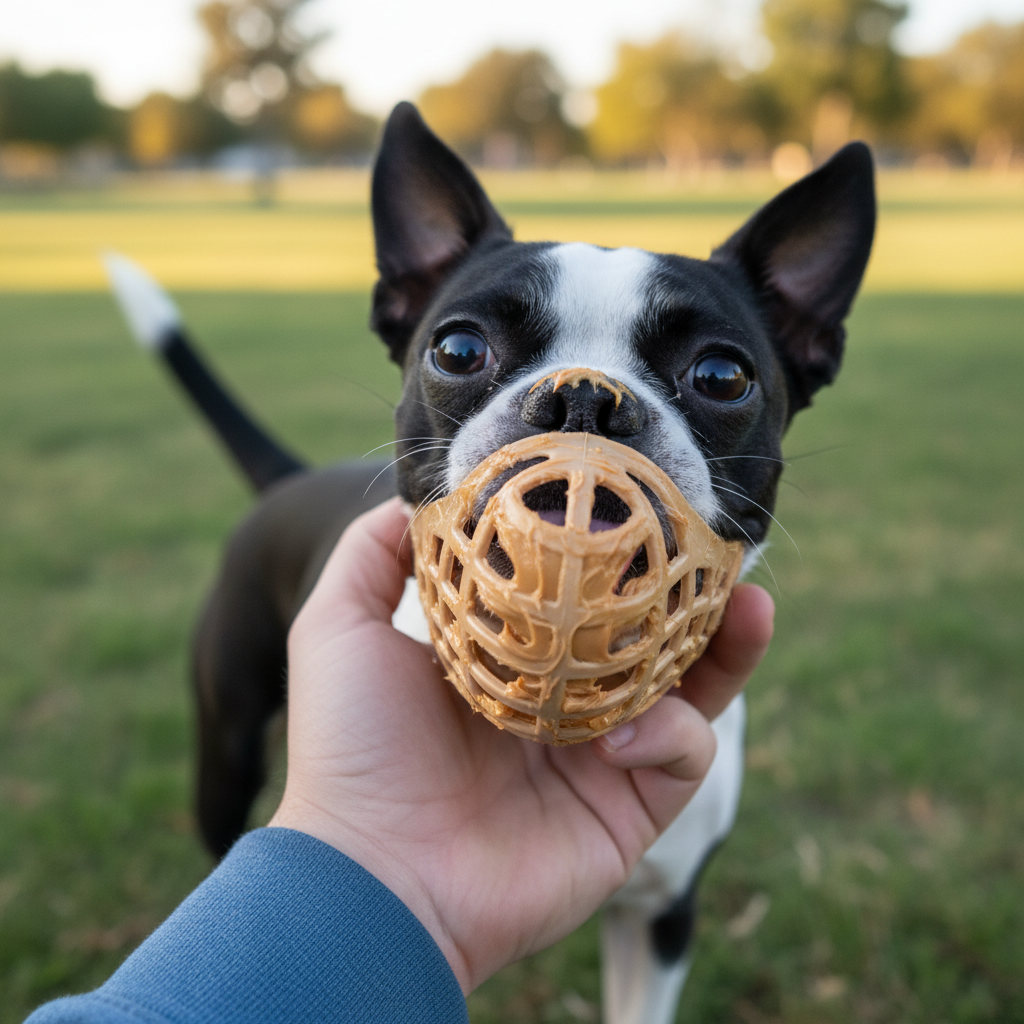
- Take your basket muzzle and smear a generous amount of peanut butter or cream cheese deep inside the front of it.
- Hold the muzzle out and let your dog sniff. Let them discover the jackpot inside.
- To get the treat, they will have to push their snout into the muzzle. Don’t push it onto them! Let them do the work.
- Hold it steady while they lick. Once they’re done, calmly take the muzzle away. Repeat this until they are enthusiastically shoving their face into the muzzle as soon as they see it.
Level 3: Buckle Up, Buttercup!
Now we introduce the straps. This is where many people rush, so take it slow. The sound and feel of the straps can be spooky.
- While your dog is happily licking the peanut butter from inside the muzzle (Level 2), gently lift the straps and touch them to the back of your dog’s head for just a second, then release. Give them a bonus treat after.
- Gradually increase the duration. Drape the straps over their neck for a few seconds while they are occupied with the treat.
- Once they are comfortable with that, you can fasten the buckle for just one second, then immediately unbuckle it and give them a jackpot of treats. The goal is for the muzzle to come off before they have a chance to get worried.
- Slowly increase the time the buckle is fastened, from one second to three, then to five. Always reward generously after it comes off.
Level 4: The Short & Sweet Fashion Show
Your dog is now wearing the muzzle! The goal of this level is to associate wearing it with fun activities, not just standing still.
- Fasten the muzzle and immediately start a fun, quick game. Toss a toy, do a few easy tricks they know (like ‘sit’ or ‘shake’), or scatter some treats on the floor for them to find.
- Keep it super short—start with just 30 seconds. Then, take the muzzle off and give them lots of praise.
- Gradually increase the duration they wear it. Go from 30 seconds to a minute, then a few minutes, all while doing something enjoyable. If they paw at it, you’ve gone too fast. Go back a level and make the duration shorter and the activity more fun.
Troubleshooting: What to Do When You Hit a ‘Paws’ Button
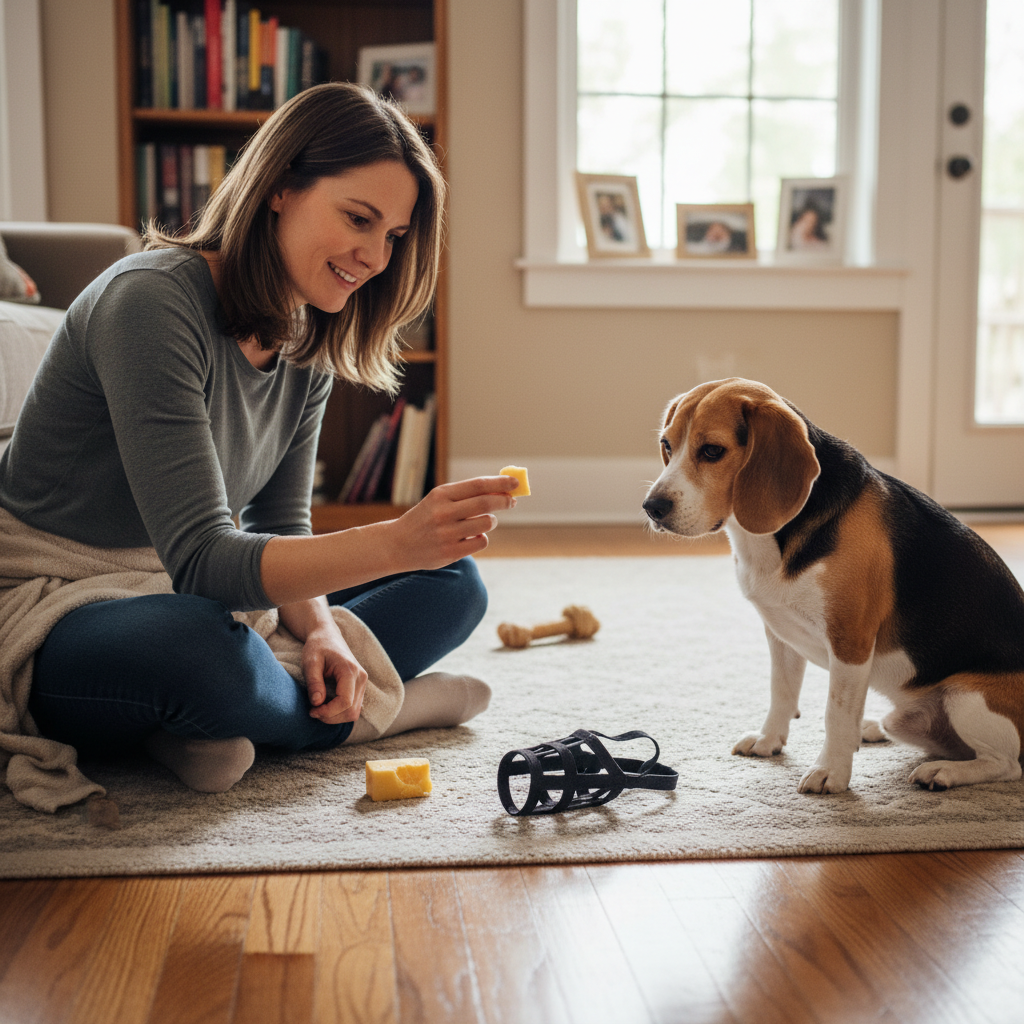
Even with the best game plan, you might hit a snag. Don’t worry! It’s totally normal. The key is to listen to your dog’s body language and adjust your strategy. Here’s how to handle common roadblocks.
Problem: My dog won’t even go near the muzzle.
Solution: You’ve got to make the muzzle less intimidating. Go back to square one. Leave the muzzle on the floor and create a trail of amazing treats leading up to it. Then place a jackpot of treats right on top of it. Don’t even pick it up. Do this for a few days until your dog sees the muzzle and looks at you expectantly for treats. We’re just building a positive association from a distance.
Problem: My dog keeps pawing at the muzzle.
Solution: This is a classic sign that you’ve moved too fast or left it on for too long. The dog is telling you they’re uncomfortable. The immediate fix is to make the next session much shorter. If they start pawing at the 30-second mark, take it off at 20 seconds next time and pair it with an even higher-value activity. Make it so fun they forget they’re wearing it. A ‘find it’ game with smelly treats scattered in the grass is perfect for this.
Problem: My dog panics when I touch the straps.
Solution: The straps can be scary! Desensitize them separately from the muzzle itself. Let your dog sniff the straps. Treat. Touch the straps to their cheek. Treat. Drape them over their neck. Treat. Work in tiny, treat-filled steps until the straps are no big deal. You can also try a muzzle with a different buckle style; sometimes the ‘click’ of a plastic buckle is startling, and a metal one is better, or vice versa.
Remember: A training plateau is not a failure! It’s your dog communicating with you. Take a deep breath, go back to the last step where they were successful and happy, and spend more time there before moving forward again.
Common Mistakes to Avoid: The Muzzle Training No-Nos
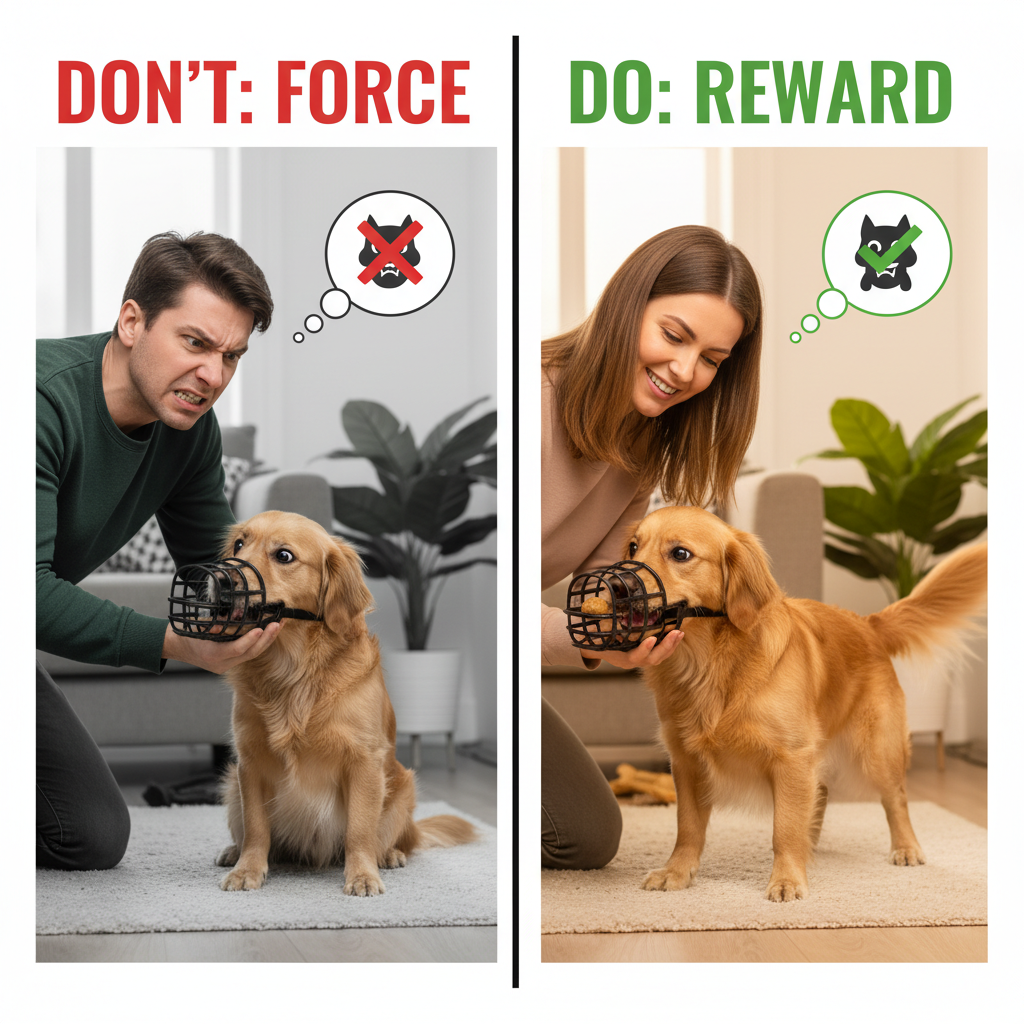
Making the muzzle a positive experience is just as much about what you don’t do as what you do. Avoiding these common pitfalls will keep you on the path to success and ensure your dog’s trust in you—and the muzzle—remains strong.
| Common Mistake (The No-No) | The Pro Move (The Do-This!) |
|---|---|
| Forcing the muzzle onto your dog. This is the fastest way to create a negative association and poison the training process. | Always let your dog make the choice. Lure them to put their own nose in with treats. Their participation should be 100% voluntary. |
| Using the muzzle as a punishment. Putting the muzzle on for barking or chewing will teach your dog that the muzzle is a scary consequence. | The muzzle is for safety and fun only. It should predict good things like walks, games, and super tasty treats, never punishment. |
| Leaving the muzzle on for too long, too soon. This can cause your dog to panic and try to get it off, setting your training way back. | Go slowly and build duration gradually. Start with seconds, not minutes. Always take it off before your dog shows signs of discomfort. |
| Only using the muzzle for stressful events. If the muzzle only comes out for vet visits, your dog will learn to dread it. | Practice makes perfect! Put the muzzle on for short, happy occasions, like the start of a favorite game or a walk around the block. |
| Choosing the wrong size or type of muzzle. A poorly fitting muzzle is uncomfortable and can be dangerous if it restricts panting. | Measure carefully and choose a basket muzzle. Ensure there’s enough room for your dog to pant fully and take treats easily. Comfort is key! |
By steering clear of these mistakes, you’re not just training your dog to wear a piece of equipment; you’re building a foundation of trust and communication. You’re showing them that you will always advocate for them and keep them safe in a way that feels good.
Conclusion
And there you have it! You’ve officially got the playbook to turn muzzle training into one of the most positive and empowering skills you can teach your dog. By breaking it down into fun, bite-sized games, you’re transforming a potentially stressful experience into a joyful bonding activity. You’re not just teaching your dog to tolerate a muzzle; you’re teaching them to see it as a passport to adventure, a predictor of delicious snacks, and a symbol of your commitment to their safety and happiness.
Remember to be patient with your pup and with yourself. Every dog learns at a different pace, so celebrate the small victories—the curious sniff, the voluntary nose-boop, the first second with the buckle clipped. These are huge wins! By making muzzle training a game, you’re building resilience, trust, and a deeper line of communication with your best friend. Now go out there and play—a world of safe, happy adventures awaits!