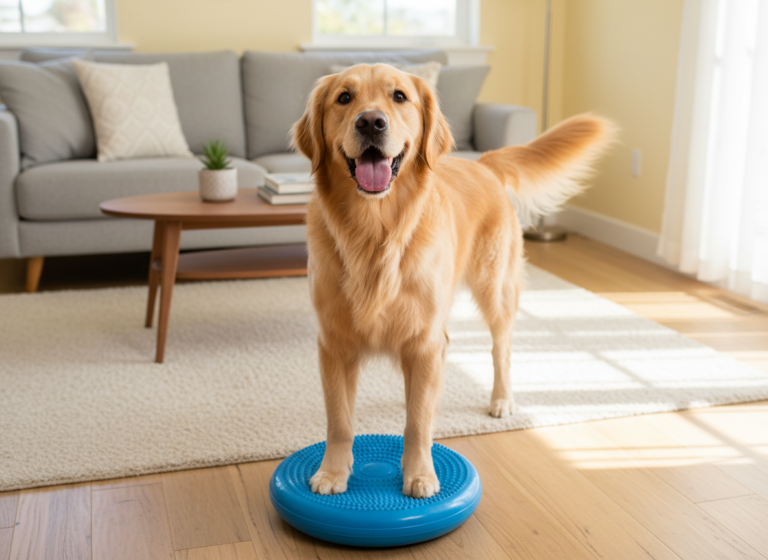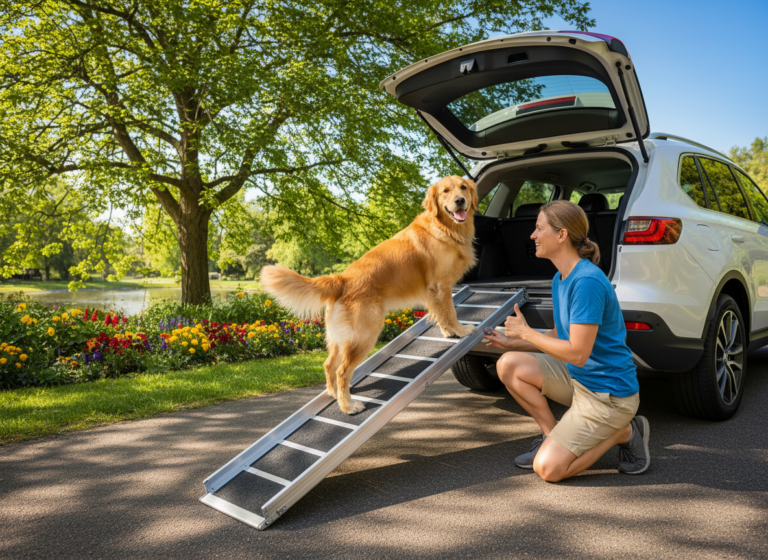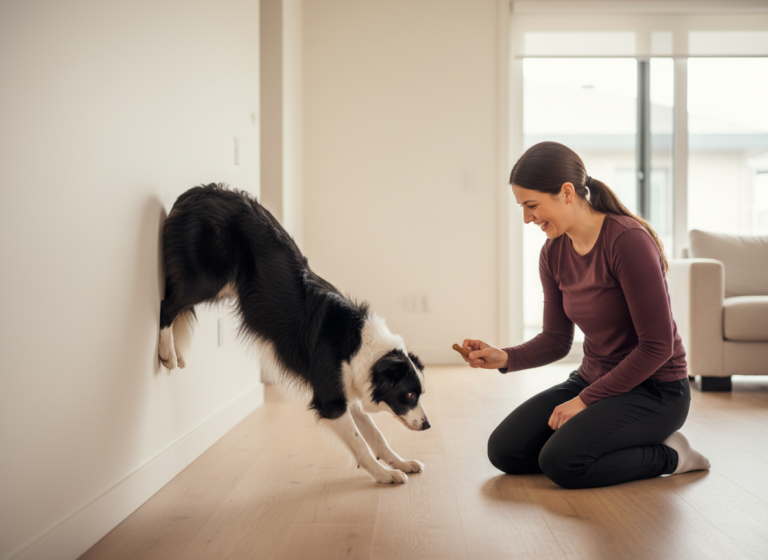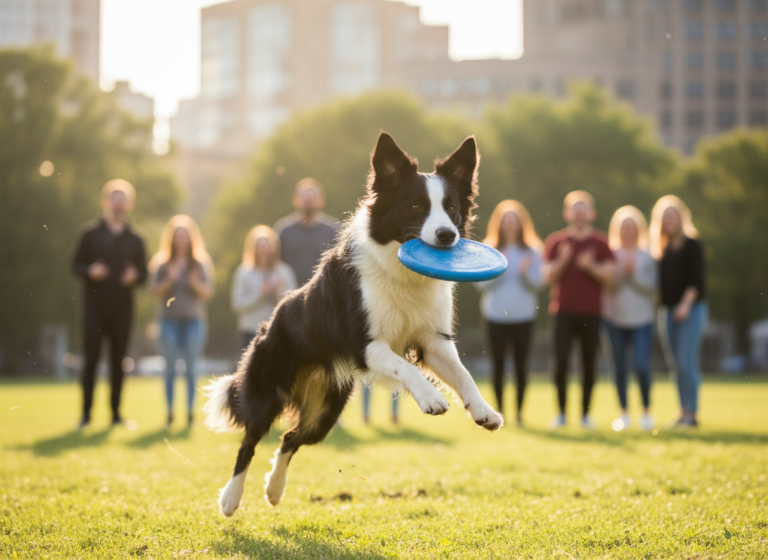
Have you ever watched your dog try to navigate a tight space and seen them bump their back end on the coffee table? Or maybe you’ve noticed your athletic pup isn’t as agile as they could be during a game of fetch? These little moments often point to a single, often-overlooked aspect of canine fitness: rear end awareness.
It sounds a bit technical, but it’s simply your dog’s brain-body connection to their hind legs. Officially known as proprioception, it’s the sense that tells them where their limbs are in space without having to look. A dog with great rear end awareness is more coordinated, less prone to injury, and moves with confidence. And one of the best, simplest, and most effective ways to build this skill is by teaching them to walk backwards up stairs.
It might look like a quirky party trick, but this single exercise is a powerhouse for building strength, balance, and that crucial mind-muscle connection. In this guide, we’ll walk you through everything you need to know—from the incredible benefits to a detailed, step-by-step training plan. Let’s get started on helping your dog become more aware, confident, and physically fit, one backward step at a time!
Why Bother with Backwards? The Amazing Benefits of Rear End Awareness
Before we dive into the ‘how,’ let’s talk about the ‘why.’ You might be wondering if this is really worth the effort. The answer is a resounding yes! Improving your dog’s proprioception isn’t just for canine athletes; it benefits dogs of all ages, breeds, and activity levels.
The Core Benefits
- Injury Prevention: A dog who knows where their back feet are is less likely to take a bad step, slip on an uneven surface, or land awkwardly after a jump. This exercise strengthens the stabilizing muscles around the hips, knees, and hocks, providing better support for the joints.
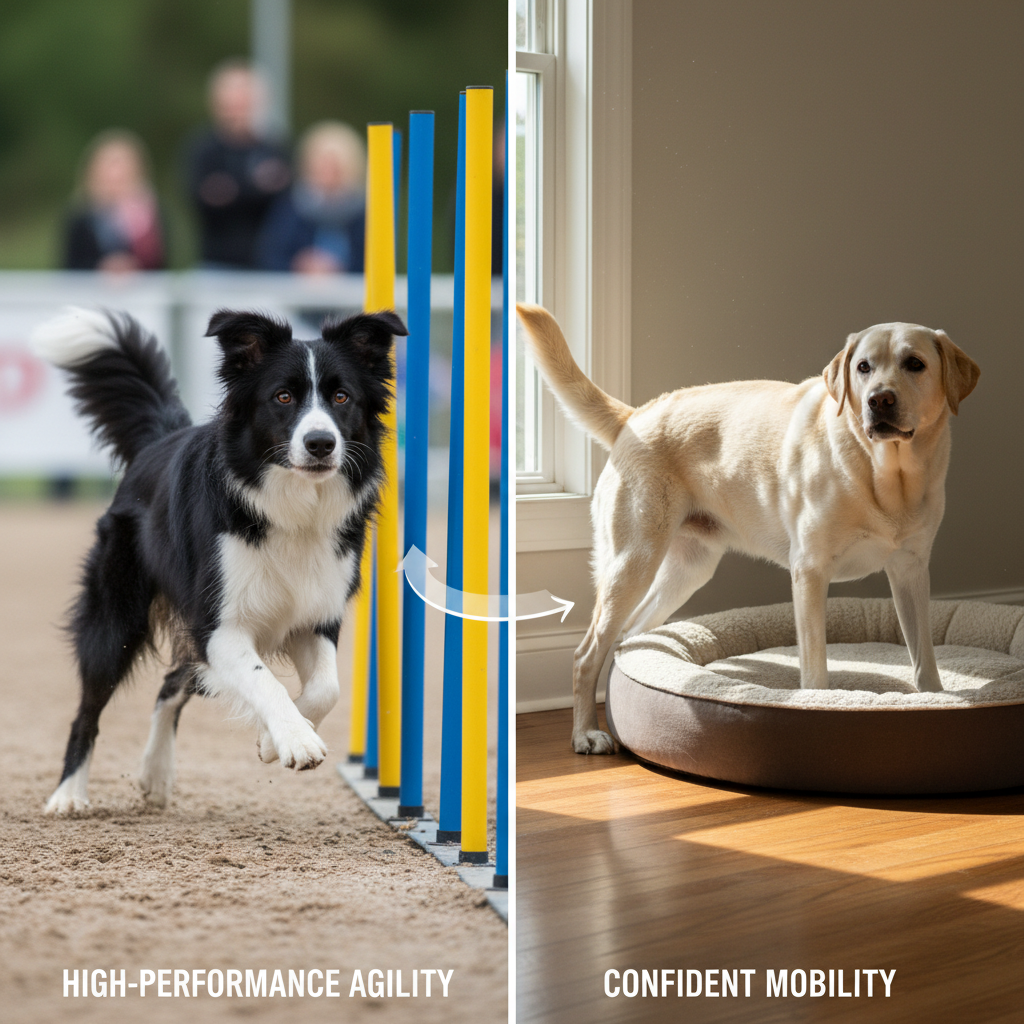
- Improved Athletic Performance: For dogs involved in sports like agility, flyball, or dock diving, rear end awareness is a non-negotiable. It’s the secret to tighter turns, more powerful launches, and greater overall body control.
- Enhanced Confidence: Timid or clumsy dogs often lack body confidence. By successfully learning a complex motor skill like this, they learn to trust their bodies more. This can translate to more confidence in other areas of their life, too.
- Support for Senior Dogs: As dogs age, they can lose muscle mass in their hindquarters, leading to weakness and instability. Gentle exercises like walking backwards up stairs can help maintain muscle tone and proprioception, making it easier for them to navigate their world and reduce the risk of slips and falls.
- Rehabilitation Aid: Veterinarians and canine physical therapists often prescribe this very exercise for dogs recovering from certain orthopedic injuries or surgeries (always with professional guidance, of course!) as it helps rebuild strength without high impact.
Expert Tip: Think of rear end awareness as your dog’s ‘sixth sense.’ It’s what allows them to walk across a rocky beach or jump off the couch without having to consciously think about where each foot will land. It’s a fundamental part of their movement.
Gearing Up: Setting the Stage for Success
Great news! You don’t need a fancy home gym or expensive equipment to get started. Success here is all about the right setup and the right motivation. Safety is paramount, so let’s make sure you have everything you need before you begin your first session.
Your Training Toolkit:
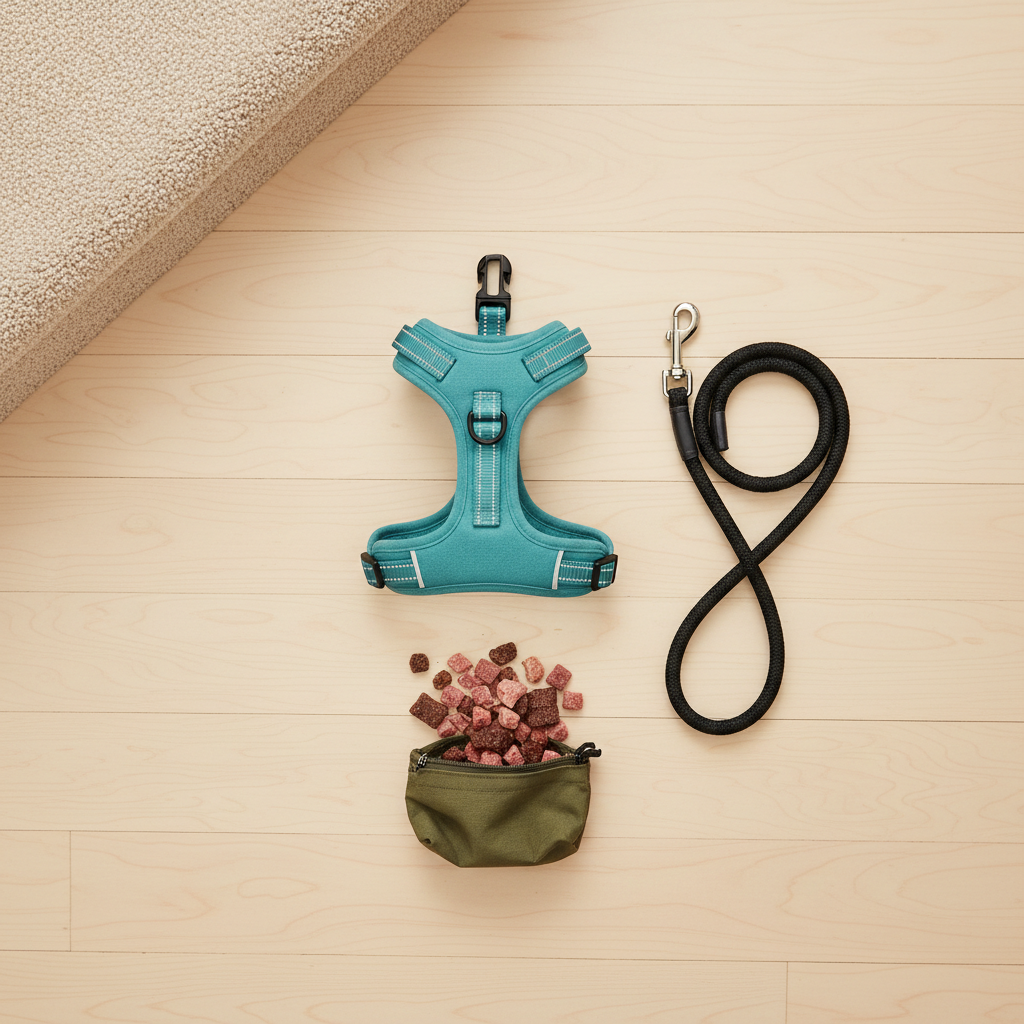
- A Safe Staircase: The ideal staircase is wide, has good traction (carpet is fantastic), and isn’t too steep. Start with just a few stairs—even a single step or a curb can work for the initial stages. Avoid slippery, uncarpeted wood or tile stairs, especially when you’re just starting out.
- High-Value Treats: This is a mentally challenging exercise, so you’ll need to break out the good stuff. Think small, soft, smelly treats that your dog absolutely loves and can swallow quickly. Pieces of chicken, cheese, or commercial training treats work well.
- A Non-Slip Harness: While not strictly mandatory for all dogs, using a back-clip harness can give you a safe way to guide your dog and prevent them from twisting away, without putting any pressure on their neck. We want this to be a positive experience, not a battle.
- A Quiet, Distraction-Free Environment: Choose a time when the house is calm. Turn off the TV, put your phone on silent, and make sure other pets or family members won’t be interrupting the session.
Safety First: Never, ever pull or force your dog backwards. This exercise is about teaching and building muscle memory, not physically manipulating them. If your dog has any pre-existing health conditions, especially back or hip issues, consult your veterinarian before starting this or any new exercise program.
Your Step-by-Step Guide to Walking Backwards Up Stairs
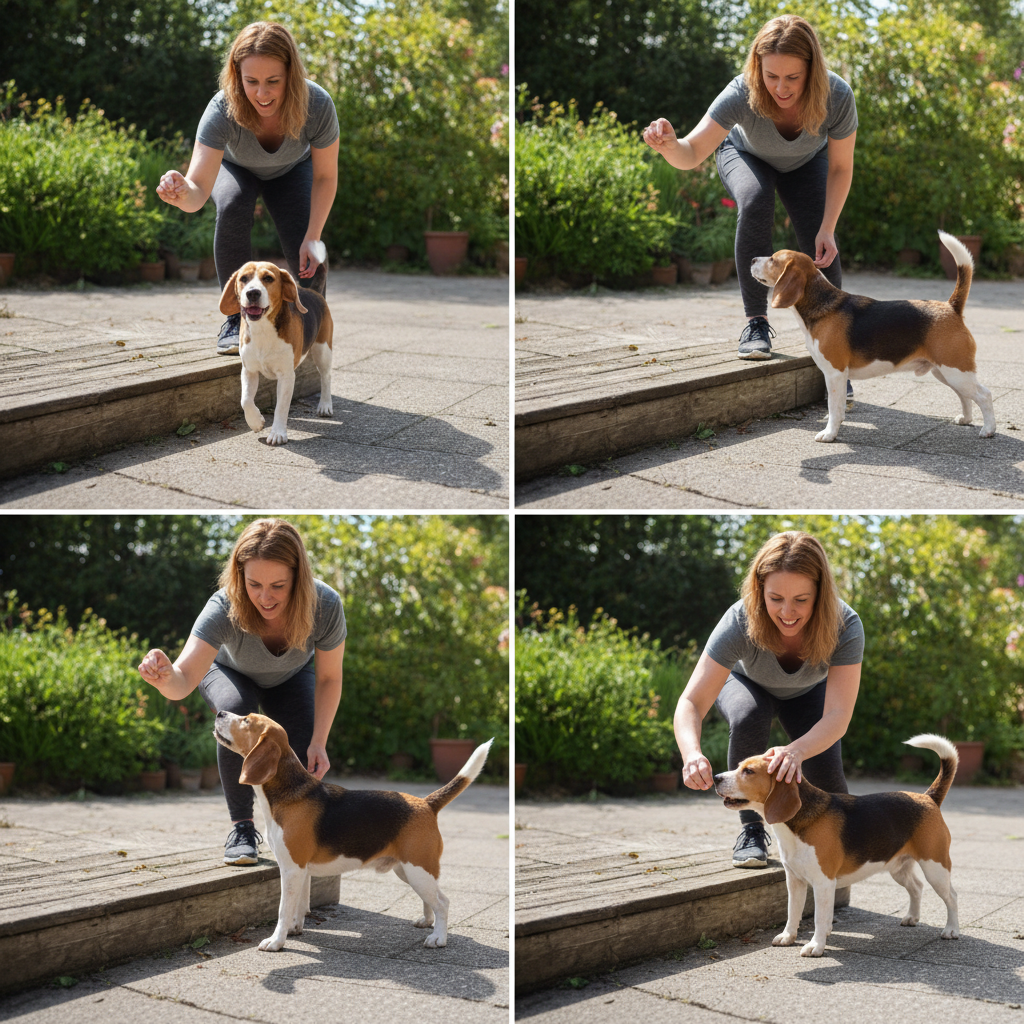
Patience is your best friend here. Some dogs will pick this up in a few sessions, while others may take weeks. The goal is progress, not perfection. Keep sessions short (1-5 minutes) and always end on a positive note!
-
Step 1: Master the Back-Up on a Flat Surface
Before you even look at the stairs, your dog needs to understand the basic concept of moving backward. Stand in front of your dog. Hold a treat near their nose and slowly move it towards their chest. As their head comes in, their weight will shift backward, and they’ll likely take a small step back. The second they do, say ‘Yes!’ (or use a clicker) and give them the treat. Practice this until they can take 2-3 steps back on cue.
-
Step 2: Introduce a Single Stair
Find a single stair or even a curb. Have your dog stand with their back to the stair. You’ll be standing in front of them, facing them. Repeat the luring motion from Step 1. Lure their head towards their chest. As their weight shifts back, their hind paw will likely touch the step. The moment it does, ‘Yes!’ and reward enthusiastically. Your goal is just for them to make contact with the step behind them.
-
Step 3: Luring the First Backward Step UP
This is the magic moment. Position your dog at the bottom of your chosen 2-3 stairs. Stand on the first or second step above them, facing them. Use your treat lure to guide them. As you lure their head in and down slightly, their rear end will need to lift to take a step up onto the first stair. This is a big deal! The instant one or both back paws land on the stair behind them, have a jackpot party—lots of praise and several treats.
-
Step 4: Build on Success
Once your dog is reliably taking one step back onto the stair, you can ask for two. Stand a little higher on the staircase. Lure them back one step, then continue the lure to encourage a second step. Reward after the second step. Keep your criteria clear. If you’re asking for two steps, only reward after two successful steps. Gradually build up until they can back up the entire short flight of stairs.
-
Step 5: Fading the Lure and Adding a Cue
As your dog gets the hang of the movement, you can start to fade the food lure. Pretend to have a treat in your hand and use the same hand motion. When they succeed, reward them with a treat from your other hand. Once they understand the hand signal, you can add a verbal cue like ‘Back,’ ‘Beep,’ or ‘Up.’ Say the cue just before you give the hand signal. Eventually, they’ll respond to the verbal cue alone.
Oops & Uh-Ohs: Navigating Common Mistakes and Sticking Points
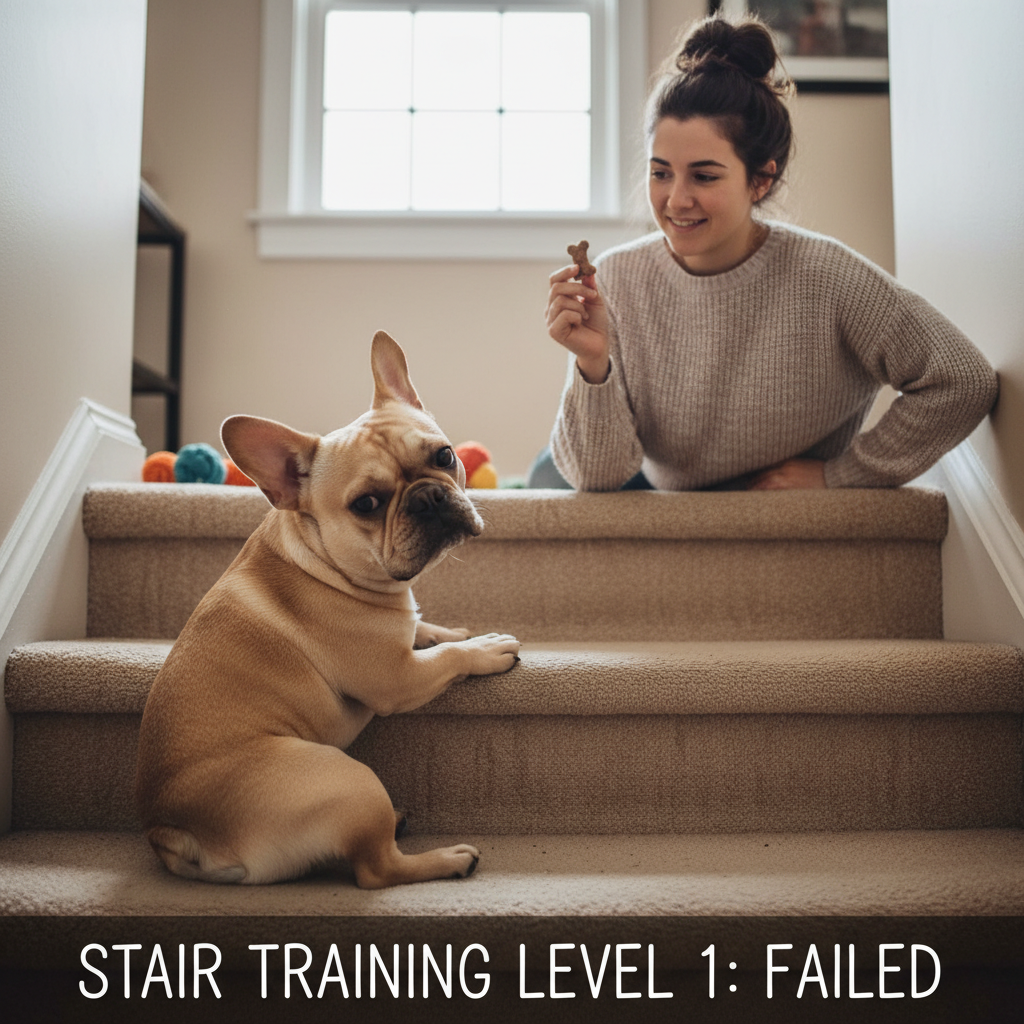
It’s perfectly normal to hit a few bumps in the road. Training is never a straight line! Most issues can be solved by taking a step back and making the exercise easier for your dog. Here are some common challenges and how to work through them.
| The Problem | The Solution |
|---|---|
| My dog keeps turning around to look at the stairs. | This is very common! It means they’re unsure. Go back to a single step and use a wall or hallway to physically prevent them from turning. Keep the lure low and close to their chest to encourage a straight backward path. |
| My dog’s back legs are splaying out to the sides. | This often happens in a wide-open space. Practice in a narrower hallway or use cushions or your own legs to create a ‘chute’ that encourages them to keep their legs underneath them. Slowing down the movement also helps. |
| My dog just sits down instead of stepping back. | You’re likely luring their head up and back, which is the cue for ‘sit.’ Focus on luring the treat straight back towards their chest, or even slightly down between their front paws. This shifts their weight backward, not downward. |
| My dog seems scared or stressed. | Stop immediately. Fear will prevent learning. Go back to the flat-ground back-ups where they were successful. Make it a fun, rewarding game. The stairs might be too steep or slippery. Re-evaluate your training space for safety and comfort. End the session with an easy win. |
| We’re stuck and not making any progress. | You’re probably asking for too much, too soon. Break it down even further. Are you rewarding just a weight shift? A single foot lift? A single foot placement? Go back to the last point of success and stay there for a few sessions before trying to move forward again. Short, successful sessions are better than long, frustrating ones. |
Ready for a Challenge? Progressing the Exercise
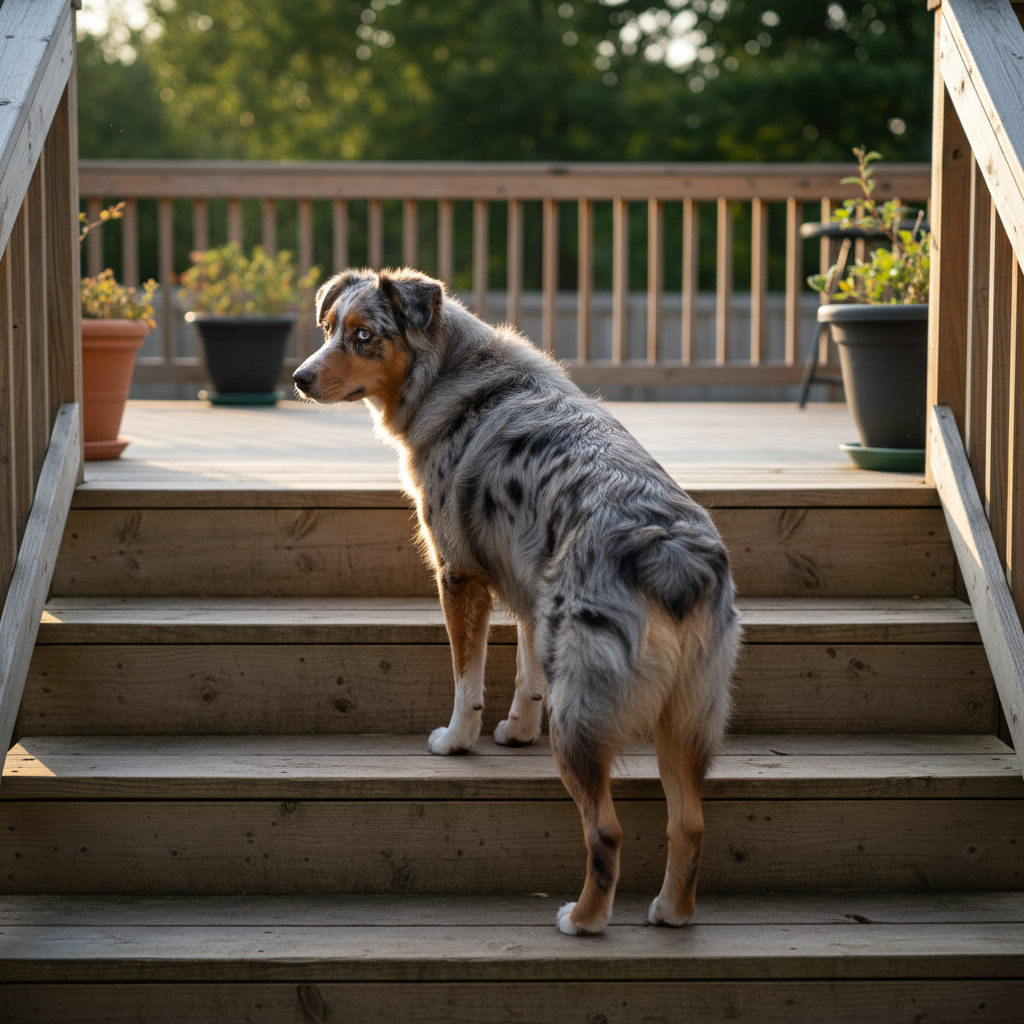
Once your dog has mastered walking backward up a short flight of stairs with perfect form, you might be wondering, ‘What’s next?’ You can absolutely increase the difficulty to continue building strength and coordination. Just remember to introduce new challenges gradually.
Ways to Level Up:
- Increase the Number of Stairs: The most obvious progression is to move from a short flight of 3-4 stairs to a full staircase. Go slow and ensure your dog remains confident and maintains good form.
- Vary the Surface: If you’ve only practiced on carpet, try a different non-slip surface. Outdoor wooden steps or even a gentle, grassy hill can provide a new challenge that engages different stabilizing muscles.
- Introduce Pauses: Ask your dog to back up two steps, then pause for a second before continuing. This ‘stop and hold’ action is fantastic for building core strength and static balance.
- Slow It Down: It’s easy to rush. Deliberately slowing down the entire movement forces your dog to be more precise with each foot placement. This is an incredible workout for their brain and body.
- Add a Head Turn: For a very advanced challenge, you can use a treat to ask your dog to gently turn their head to the left or right while they are paused mid-stair. This shifts their center of gravity and forces their core and hind legs to work harder to maintain balance. This should only be attempted by dogs with a very strong foundation in the basic exercise.
Listen to Your Dog: Advanced work is great, but it’s not for every dog. If your dog struggles with a new challenge or seems uncomfortable, it’s okay to stick with what works. The goal is a healthy, happy dog, not a canine acrobat. Consistency with the basics is more valuable than sloppy advanced moves.
Conclusion
Congratulations! You now have a complete toolkit to teach your dog one of the most beneficial exercises for their physical and mental well-being. Building rear end awareness by walking backwards up stairs is more than just a training exercise; it’s an investment in your dog’s long-term health, a fantastic way to prevent injuries, and a powerful confidence booster.
Remember to be patient, keep it positive, and celebrate the small victories along the way. The time you spend working on this together will not only improve your dog’s physical capabilities but will also strengthen the incredible bond you share. So grab those high-value treats, find a safe set of stairs, and get ready to watch your dog become a more coordinated and confident companion, one backward step at a time.