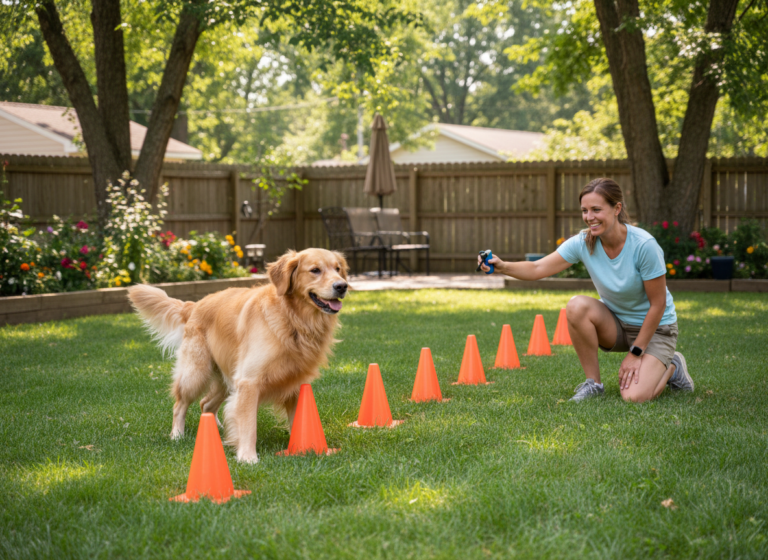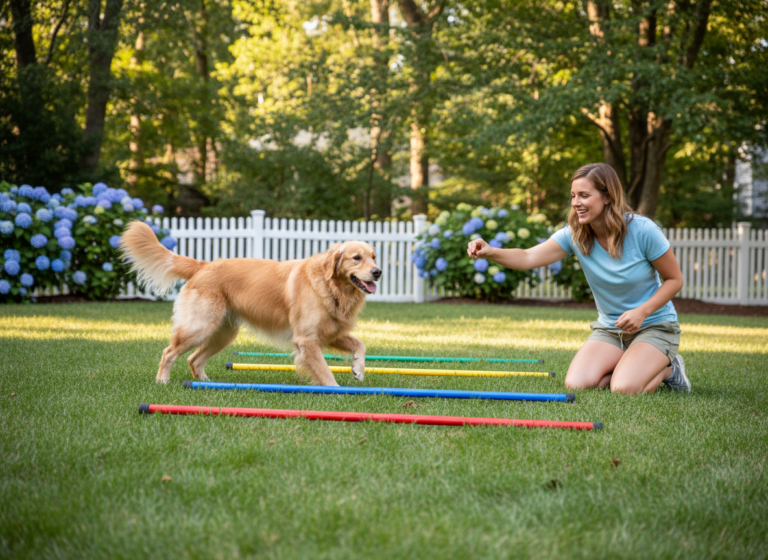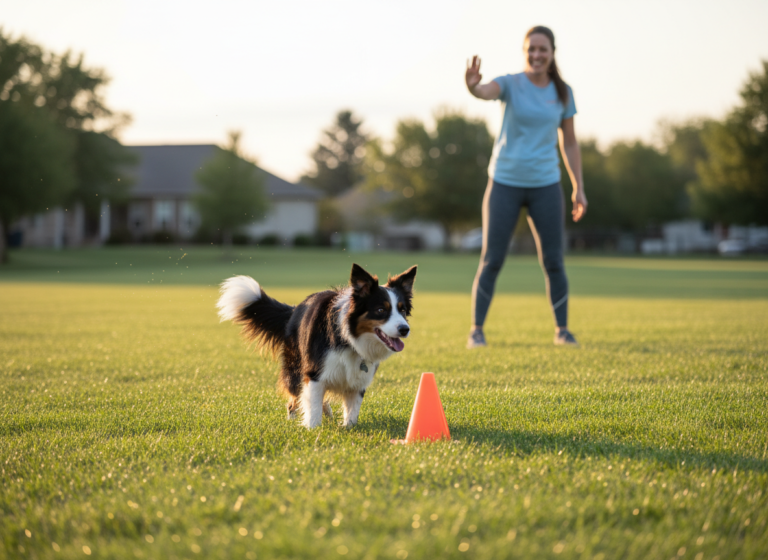
Have you ever watched your puppy do a big, satisfying stretch after a nap and thought they looked like a tiny, furry yoga master? Well, you’re not far off! While your pup might not be ready for a ‘Downward Dog’ in the traditional sense, you can introduce them to a fun and incredibly beneficial set of exercises we lovingly call ‘Puppy Pilates.’
At the heart of this routine is one simple, powerful movement: the down-to-stand repetition. It might sound basic, but when taught correctly, this exercise is a powerhouse for building core strength. A strong core is the foundation of your dog’s physical health, impacting everything from their balance and posture to their ability to prevent injuries. It’s not just for canine athletes; it’s for every dog, from playful puppies to graceful seniors.
In this guide, we’ll walk you through everything you need to know to become your dog’s personal Pilates instructor. We’ll break down the benefits, show you the exact steps, troubleshoot common issues, and give you ideas to keep it fun. Get ready to build muscle, boost confidence, and have a great time doing it!
Why a Strong Core is Your Dog’s Superpower
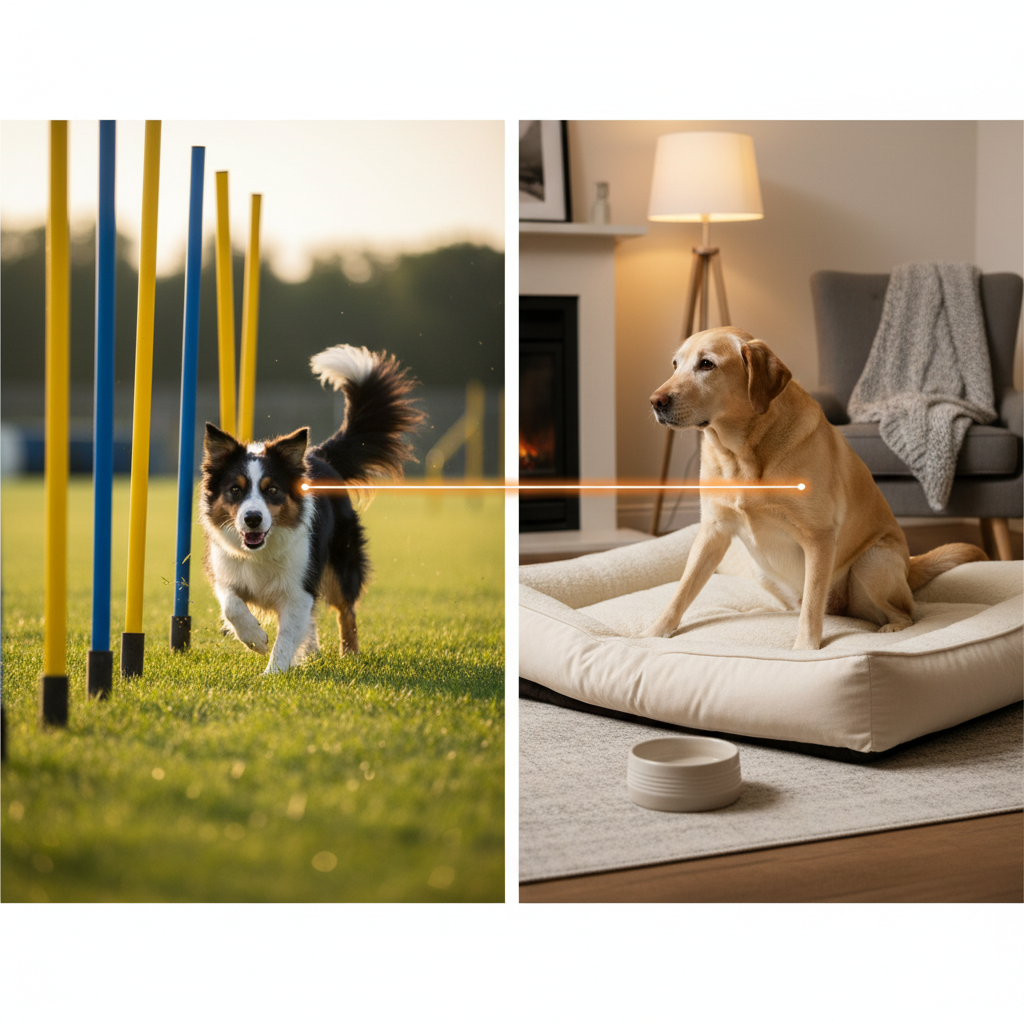
Before we jump into the ‘how-to,’ let’s talk about the ‘why.’ Why should you care about your dog’s core muscles? Think of their core—the muscles around their belly, back, and hips—as their internal stability system. It’s the anchor for every movement they make, from a playful pounce to a soaring leap for a frisbee.
A well-developed core provides a host of amazing benefits for dogs of all ages and breeds:
- Injury Prevention: This is a big one. A strong core supports the spine and joints, acting as a natural brace. This can significantly reduce the risk of strains, sprains, and even more serious issues like Intervertebral Disc Disease (IVDD), especially in long-bodied breeds like Dachshunds and Corgis.
- Improved Balance and Coordination: Ever see a puppy go through that clumsy, gangly phase? Strengthening their core helps them gain better control over their bodies. This translates to more graceful movements and fewer tumbles. For senior dogs, good balance is crucial for preventing falls.
- Enhanced Athletic Performance: If you and your dog are into activities like agility, flyball, or dock diving, a strong core is non-negotiable. It’s the source of power, allowing for tighter turns, higher jumps, and more explosive starts.
- Better Posture and Body Awareness: Puppy Pilates helps dogs learn how to consciously engage different muscle groups. This improved body awareness, or proprioception, helps them navigate their environment more safely and efficiently.
- Support for Senior Years: As dogs age, they naturally lose muscle mass. A strong core built in their younger years can help them stay mobile and independent for longer, making it easier to get up from a nap, climb stairs, and enjoy their daily walks.
Expert Tip: Think of core conditioning as a long-term investment in your dog’s physical well-being. A few minutes of fun exercises each week can pay huge dividends in their health and mobility down the road.
Setting the Stage for Your Pilates Session
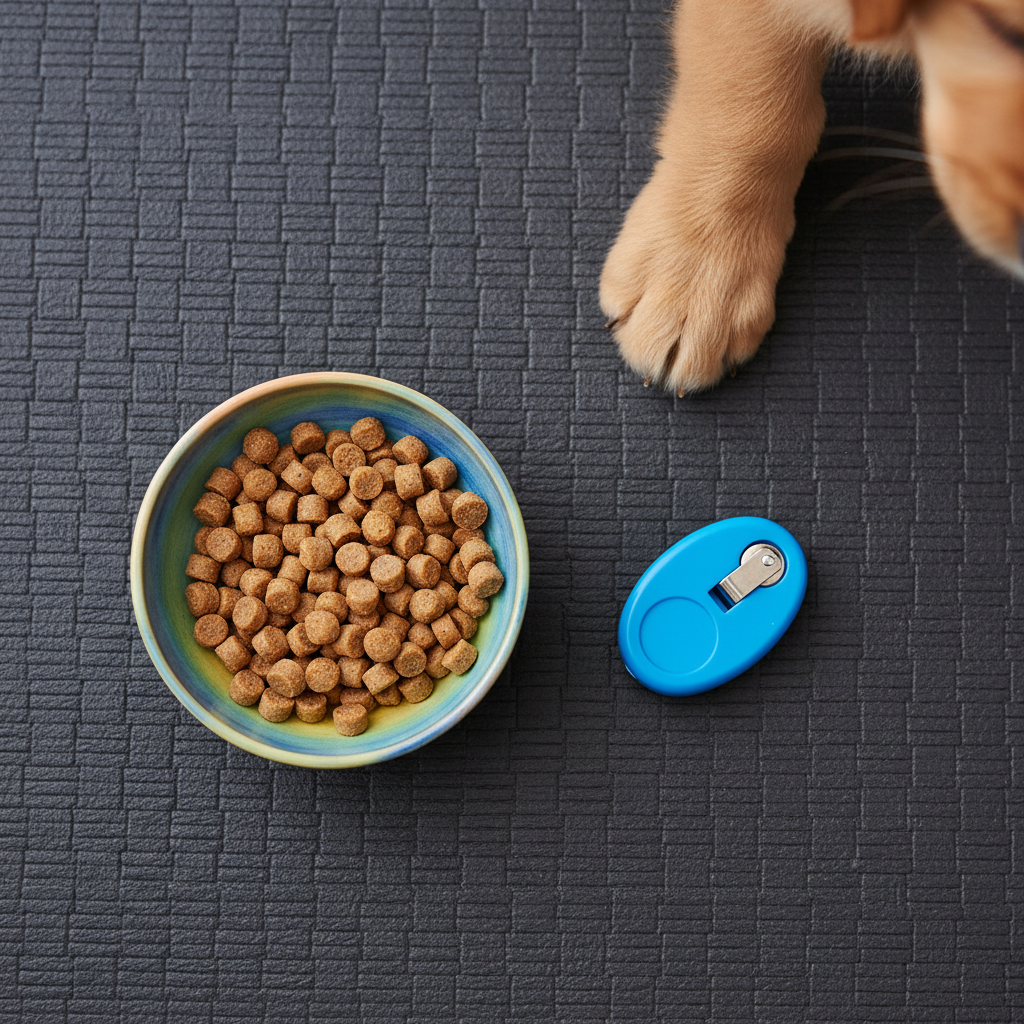
Great news! You don’t need any fancy gym equipment to get started. The best training sessions are built on simplicity, positivity, and a few key items you probably already have at home. Setting up your space correctly ensures your dog is safe, comfortable, and ready to learn.
What You’ll Need:
- High-Value Treats: We’re talking about the good stuff! Small, soft, and extra tasty treats that your dog absolutely loves. Think tiny pieces of chicken, cheese, or special training treats. The goal is to make the reward so exciting that your pup is eager to work for it.
- A Non-Slip Surface: This is crucial for safety. A slippery floor like hardwood or tile can cause your dog to slide, making the exercise difficult and potentially leading to injury. A yoga mat, a rubber-backed rug, or even a patch of grass outdoors are all excellent options.
- A Quiet, Distraction-Free Space: Choose a time and place where you won’t be interrupted. Turn off the TV, put your phone on silent, and find a room where other pets or family members won’t be walking through. This helps your puppy focus entirely on you and the task at hand.
- A Clicker (Optional but Recommended): A clicker is a fantastic tool for marking the exact moment your dog does the right thing. This precision helps your dog learn much faster. If you’re not using a clicker, you can use a verbal marker word like “Yes!” said in an upbeat tone.
- Your Positive Energy: Your dog feeds off your attitude! Come into the session with patience, enthusiasm, and a sense of fun. This is bonding time, not a chore.
Keep your sessions short, especially with puppies whose attention spans are notoriously brief. Aim for just 2-5 minutes per session, a couple of times a day. It’s always better to end on a high note, leaving your pup wanting more, than to push them until they’re tired or frustrated.
The Main Event: A Step-by-Step Guide to Down-to-Stand Reps
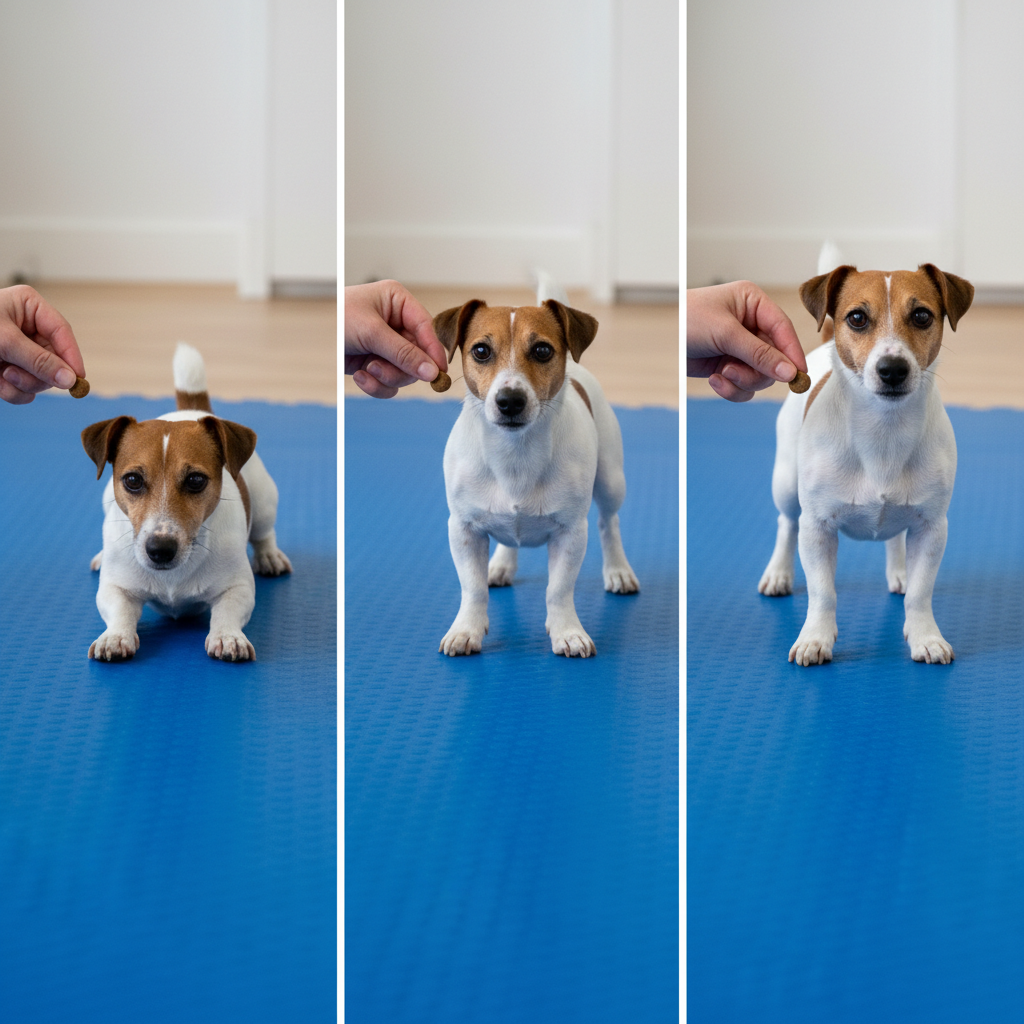
Alright, it’s time to get to the core of the workout! Remember, the magic of this exercise isn’t just getting up from a down position; it’s how they get up. We are aiming for a crisp ‘pop-up’ motion where the dog primarily uses its core and rear legs to stand, rather than walking forward with its front paws. This ‘tucked stand’ is what builds those crucial muscles.
- Step 1: Start in a Solid ‘Down’. Ask your dog to lie down. Once they are in a relaxed ‘down’ position, click (or say “Yes!”) and give them a treat. We want to start from a calm, stable position.
- Step 2: The Upward Lure. Take a high-value treat and hold it right in front of your dog’s nose. Now, slowly lure their head upwards and slightly backwards towards their tail. This backward motion is the secret sauce! It encourages them to shift their weight onto their back legs to stand up, rather than pulling themselves forward with their front legs.
- Step 3: Mark the Moment. The very instant your dog’s belly lifts off the floor and they are in a standing position—without taking a step forward—click your clicker or say “Yes!”. Timing is everything here. You want to mark the exact moment they complete the correct movement.
- Step 4: Deliver the Reward. Immediately after the click/marker word, give them the treat. You can even place the treat on the floor between their paws to encourage them to stay in that spot for the next repetition.
- Step 5: Lure Back Down and Repeat. Use another treat to lure them back into a ‘down’ position, and you’re ready for the next rep! Aim for 3-5 successful repetitions in a single session to start.
Pro Trainer Tip: Focus on quality over quantity. One perfect, crisp ‘pop-up’ is better than five sloppy ones where the dog crawls forward. If you’re struggling, try making the lure’s backward motion more exaggerated at first. Think ‘grasshopper,’ not ‘inchworm’!
Hitting a Snag? Common Sticking Points and Solutions
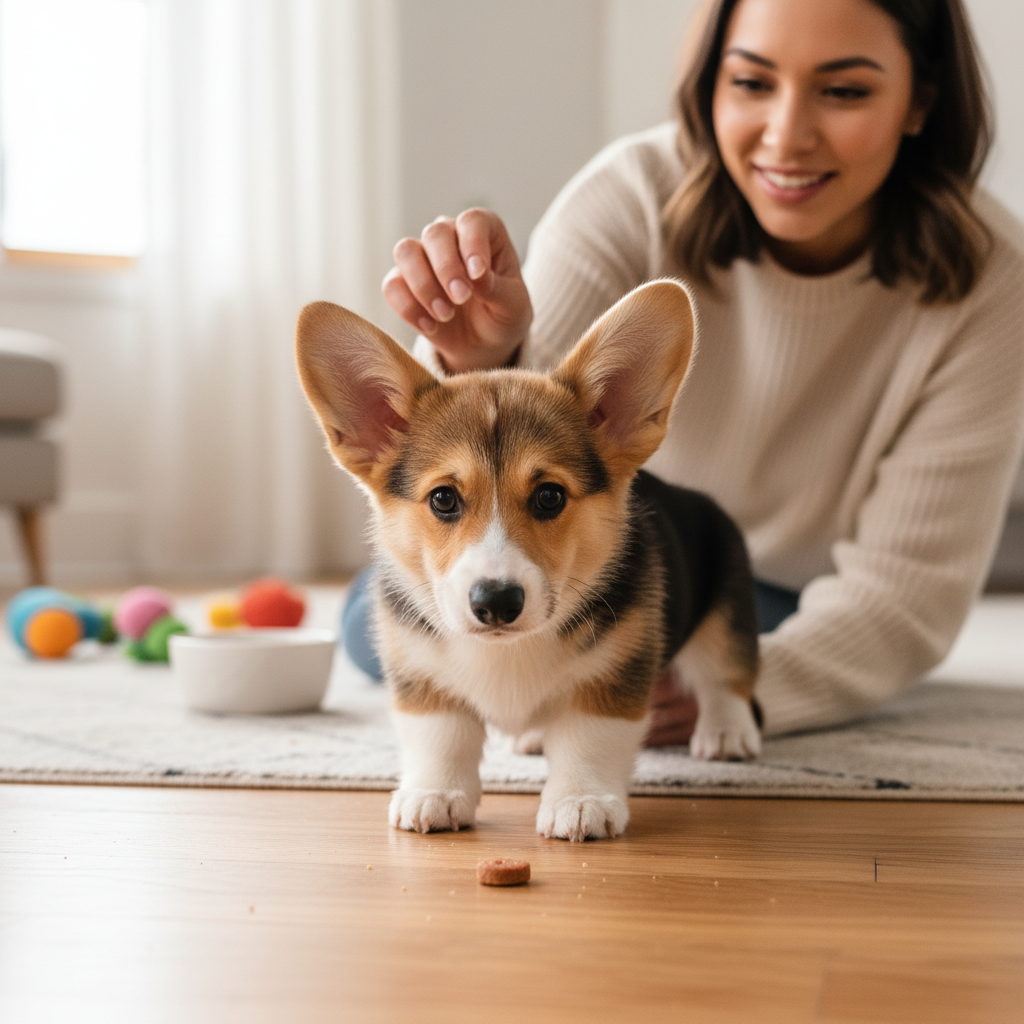
Don’t worry if you and your pup don’t get it perfectly on the first try. Training is a process of communication and problem-solving. Here are some of the most common hurdles you might face and how to clear them with ease.
My dog just crawls forward instead of standing up.
This is the most common issue! It means the dog is pulling with its front end instead of pushing with its back end. The fix is usually in your lure. Make sure you are luring up and back, not up and forward. If they still crawl, you can place your other hand or your leg lightly in front of their chest to act as a gentle barrier, physically preventing the forward movement and encouraging them to think about how to get up differently.
My puppy gets distracted and walks away after one rep.
Puppy attention spans are short! This is a sign to either increase the value of your treats (bring out the super-tasty stuff!) or shorten your sessions even more. One perfect rep followed by a fun game of tug might be more productive than trying to force three reps when their brain has already checked out. End on a success, no matter how small.
My dog stands up so fast they overshoot the mark.
An enthusiastic pup is a great thing! If they’re popping up with too much gusto, slow down your lure movement. A slower, more deliberate lure can help them perform the movement with more control. You can also work on a separate ‘stay’ command to help them learn to hold the standing position for a second before getting the reward.
My dog doesn’t have a reliable ‘down’ command yet.
That’s okay! It’s best to pause the Pilates and focus on building a rock-solid ‘down’ first. The down-to-stand exercise relies on having a clear starting position. Work on the ‘down’ command in short, fun sessions throughout the day, and come back to this exercise once they have it mastered.
Level Up! Turning Reps into a Fun Fitness Game
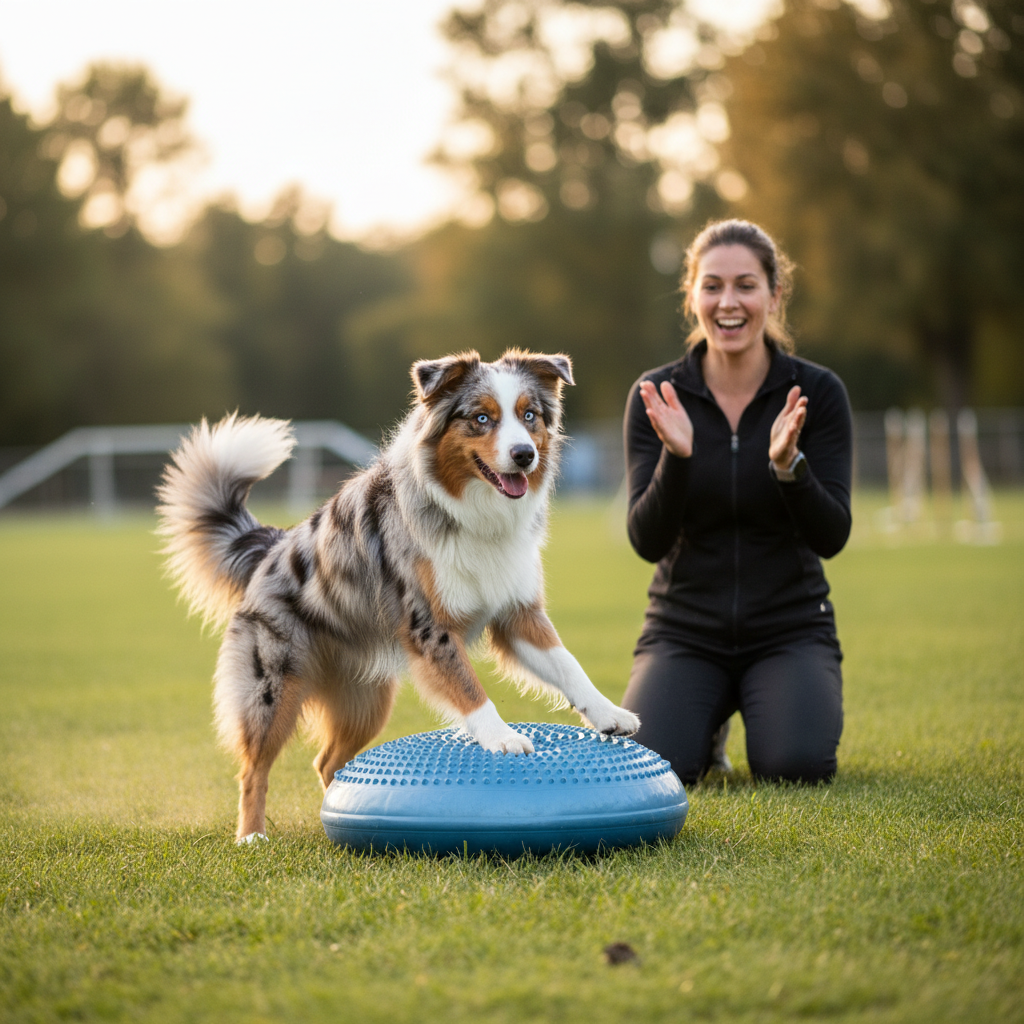
Once your dog has mastered the basic down-to-stand motion, you can start getting creative to keep their mind and body engaged. Turning training into a game is the best way to maintain their enthusiasm and build on your progress.
Introduce a Verbal Cue
When you’re confident your dog understands the lured motion, you can start adding a verbal cue. Just before you begin the lure, say your chosen word in a clear, happy voice. Good cues are short and unique, like “Pop Up!”, “Tuck Stand!”, or even “Pilates!” Over time, your dog will associate the word with the action, and you’ll be able to fade the hand lure.
Challenge Their Stability
For the advanced dog, you can increase the challenge by changing the surface. (Important: Only do this with a healthy, adult dog and consult your vet first). Have them perform the reps on a plush bed pillow, a couch cushion, or a professional-grade canine balance disc. Unstable surfaces force their core muscles to work even harder to maintain balance.
Build an Exercise Flow
Combine Puppy Pilates with other tricks your dog knows to create a mini fitness routine. For example, you could ask for: Down -> Stand -> Spin -> Down -> Stand -> High Five. This ‘trick chaining’ keeps their brain working and makes the session more dynamic and fun.
| Game Idea | How to Play | Benefit |
|---|---|---|
| 30-Second Challenge | Set a timer for 30 seconds and see how many clean reps your dog can perform. Try to beat your record next time! | Builds speed and endurance. |
| Pilates Around the Clock | Place a treat at the 12, 3, 6, and 9 o’clock positions around your dog. Have them do a rep, then release them to get a treat, then call them back to the mat for the next one. | Adds movement and impulse control. |
| Distance Stand | Gradually add distance, asking for the ‘Pop Up’ cue from a few feet away. This tests their understanding of the verbal cue without the lure. | Strengthens verbal command reliability. |
Remember, the goal is always to keep it positive. Celebrate every small success, and if your dog seems tired or stressed, call it a day with some cuddles or a favorite chew toy. Fitness should be fun!
Conclusion
Congratulations, you’re now fully equipped to be your dog’s very own core-conditioning coach! By teaching the down-to-stand repetition, you’re doing so much more than just adding another trick to your dog’s repertoire. You are actively participating in their long-term health, building a stronger, more resilient body that will serve them well throughout their entire life.
From the wobbly first attempts of a puppy to the controlled, powerful movements of a seasoned pro, every repetition is a step towards better balance, improved coordination, and a significantly lower risk of injury. More than that, every training session is a deposit in your relationship bank. It’s focused, positive time spent together, strengthening your communication and your incredible bond.
So, grab your treats, find a comfy spot, and get ready to have some fun. Remember to keep it short, keep it positive, and celebrate the small victories. You’re not just building muscle; you’re building a healthier, happier future for your best friend, one ‘pop-up’ at a time.