Ever feel like your dog has boundless energy, and you’ve run out of ways to channel it? We’ve all been there. You’ve played fetch until your arm is sore, gone on long walks, and provided a mountain of chew toys, but your pup still looks at you with those ‘What’s next?’ eyes. Finding activities that keep our dogs mentally stimulated and physically active is key to their happiness, and it’s even better when they can learn to entertain themselves safely.
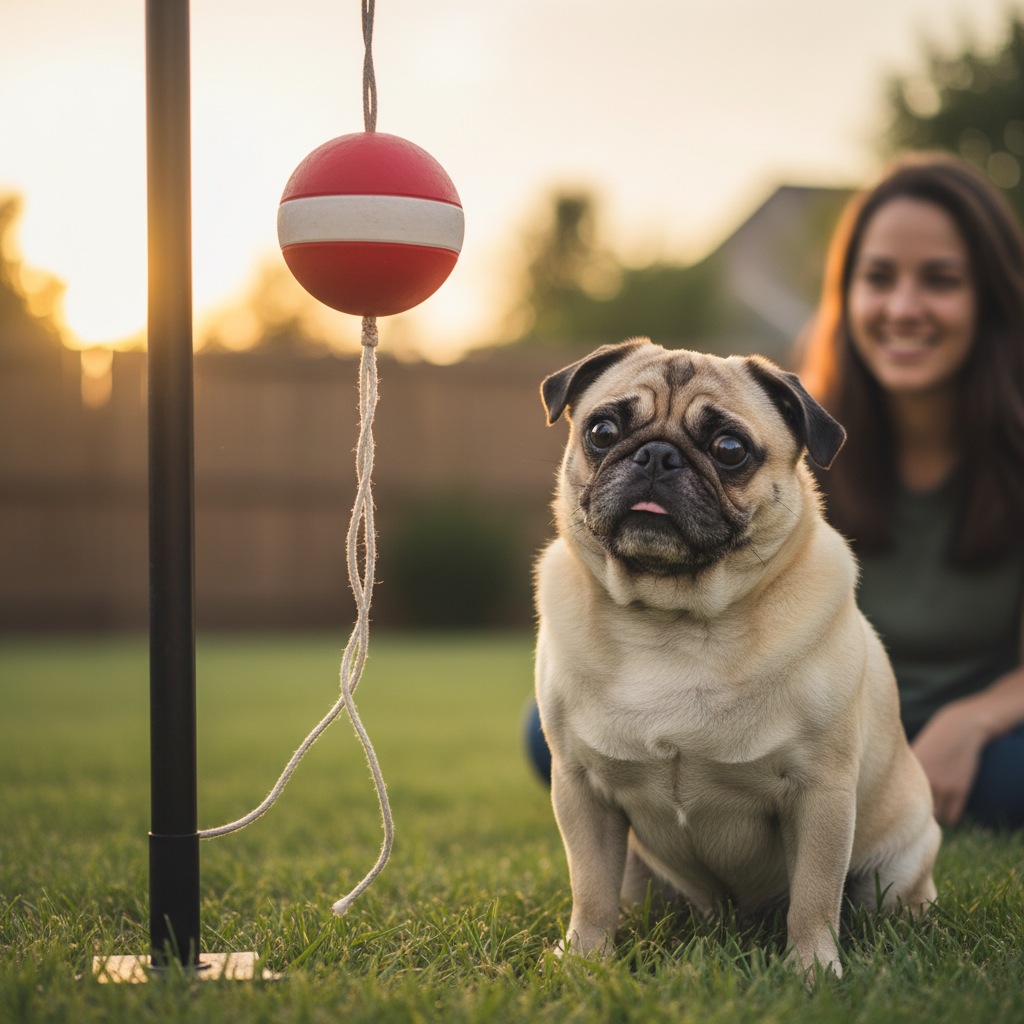
Enter the unsung hero of solo doggy playtime: tetherball! That’s right, the classic playground game is a fantastic way for your dog to burn off steam, engage their brain, and build confidence by playing independently. It’s more than just a toy; it’s an interactive game that you can teach your dog to master. In this guide, we’ll walk you through everything you need to know, from picking the right gear to a step-by-step training plan that will have your canine companion scoring points in no time. Let’s get this ball rolling!
Setting Up for Success: Gear and Location

Getting the Right Equipment
Before you can turn your pup into a tetherball champion, you need to gather the right supplies. Not all tetherball sets are created equal, and choosing dog-specific gear is crucial for safety and durability.
What You’ll Need:
- A Dog-Specific Tetherball Set: This is non-negotiable. Human tetherballs are often too hard for a dog’s mouth and can cause dental damage. Look for a set designed for dogs, which typically features a softer, puncture-resistant ball made from durable rubber or similar materials. The rope should be sturdy but have some give, and the pole must be securely anchored in the ground.
- High-Value Treats: You’ll need some extra-special, pea-sized treats to keep your dog motivated. Think small pieces of chicken, cheese, or their favorite smelly training treats. The goal is to make learning this new game an incredibly positive experience.
- Clicker (Optional): If your dog is clicker-trained, a clicker is an excellent tool for precisely marking the moment your dog performs the correct action (like nudging the ball). If not, a consistent verbal marker like a happy “Yes!” works just as well.
Choosing the Perfect Play Area
Location, location, location! Where you set up the game is just as important as the gear itself.
- Safety First: Choose a spot in your yard that is flat, open, and free from obstacles. Ensure there are no nearby hazards like garden tools, thorny bushes, or holes your dog could trip in.
- Ample Space: The ball will swing in a wide circle, so make sure there’s plenty of room for your dog to move around the pole without running into fences, patio furniture, or other objects. A clear radius of at least 10 feet around the pole is a good starting point.
- Secure Installation: Follow the manufacturer’s instructions to install the pole securely in the ground. It needs to be stable enough to withstand an enthusiastic dog pushing and batting at the ball without wobbling or falling over.
From Intro to Pro: Your 5-Step Tetherball Training Plan
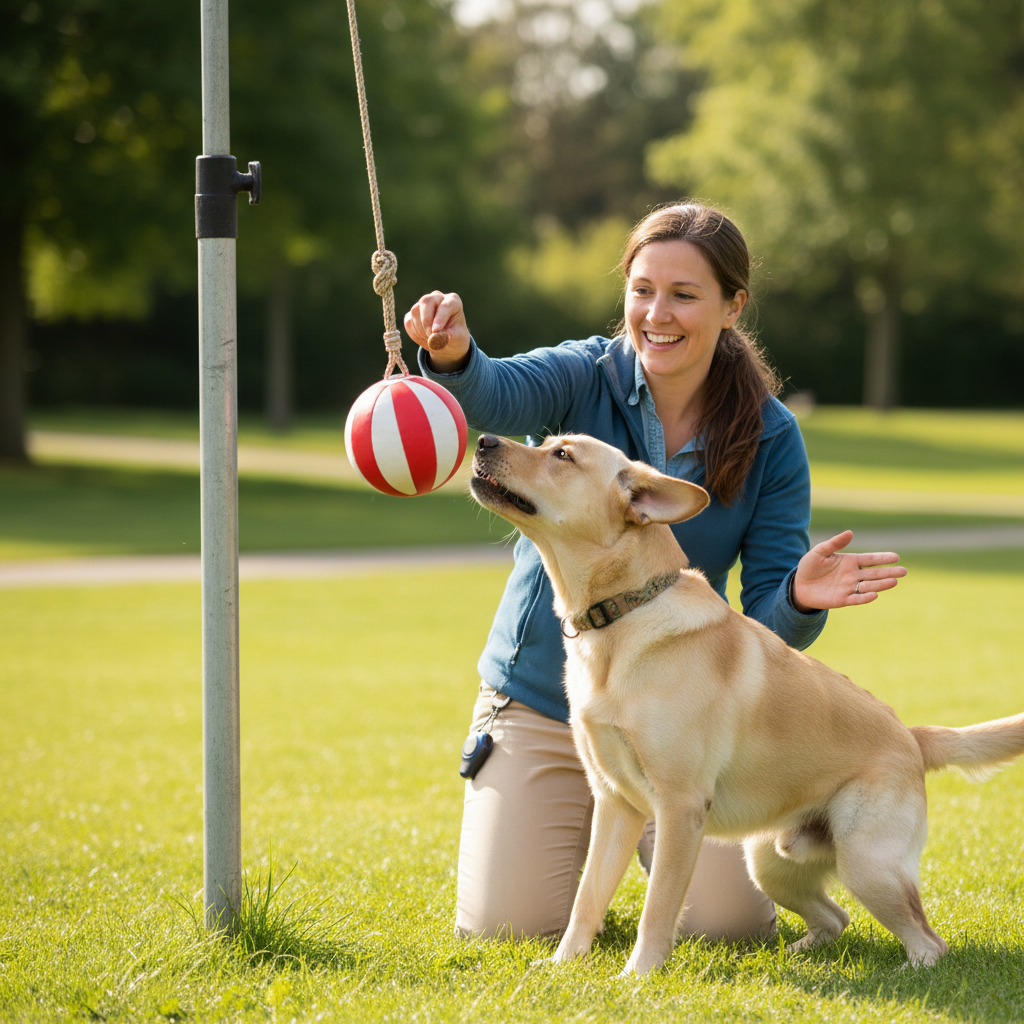
Patience and positivity are your best friends during this process. Keep your training sessions short (5-10 minutes at a time) and always end on a high note! Here’s how to introduce the game and build your dog’s skills, one step at a time.
-
Step 1: The Introduction
The goal here is simple: create a positive association with this new object in the yard. Let the tetherball be still. Lead your dog over to it and let them sniff and investigate at their own pace. The second their nose touches the ball, click (or say “Yes!”) and give them a treat. Repeat this several times. You’re teaching them that interacting with the ball makes good things happen. Don’t push them; let their curiosity lead the way.
-
Step 2: Encouraging the ‘Push’
Now that your dog understands that touching the ball is a good thing, let’s encourage a more deliberate ‘push’ or ‘nudge.’ Hold a treat against the ball and encourage your dog to get it. To get the treat, they’ll have to push their nose into the ball. The moment they do, click/”Yes!” and reward them. You can also use a target stick if your dog is familiar with one. This step helps transition from a simple touch to the actual game mechanic.
-
Step 3: Adding a Little Motion
Once your dog is confidently pushing the stationary ball, it’s time to add a little bit of movement. Gently swing the ball just a tiny bit. Encourage your dog to push it while it’s in motion. This can be tricky at first, so keep the swings small and slow. Reward any attempt to interact with the moving ball. Keep it low-pressure and fun—if they seem hesitant, go back to the stationary ball for a few reps.
-
Step 4: Introducing a Verbal Cue
When your dog is reliably pushing both the stationary and slowly moving ball, you can add a verbal cue. Just as your dog is about to push the ball, say your chosen word, such as “Push,” “Hit it,” or “Tether.” After a few repetitions, they’ll start to associate the word with the action. The goal is to eventually be able to use the cue to prompt the behavior.
-
Step 5: Building Independence
This is the final step! Start to fade your physical presence. Give the cue from a step further away. Encourage them to play for a few pushes in a row before rewarding them. Gradually increase the duration of play and decrease your direct involvement. The ultimate goal is for your dog to understand they can initiate and play the game all on their own when they’re looking for something fun to do in the yard.
Remember, every dog learns at a different pace. Celebrate the small victories and enjoy the process of learning together!
Playing it Safe: Essential Tetherball Rules for Your Pup
Tetherball can be an incredibly safe and fun activity, but just like any dog sport or toy, it requires supervision and a few ground rules to ensure your pup stays out of harm’s way.
Supervise, Supervise, Supervise
Especially when your dog is new to the game, it’s critical to supervise their playtime. This allows you to step in if they get frustrated, overly aroused, or try to play with the toy in an unsafe way. Once they are a seasoned pro, you can supervise from a distance, but never leave them completely unattended with the toy for long periods.
Keep Play Sessions Short and Sweet
A 10-15 minute tetherball session is plenty of time for a great mental and physical workout. Longer sessions can lead to over-exertion, physical strain, or boredom. It’s always better to end the game while your dog is still engaged and having fun. This leaves them eager to play again next time!
It’s a Pushing Game, Not a Tug Game
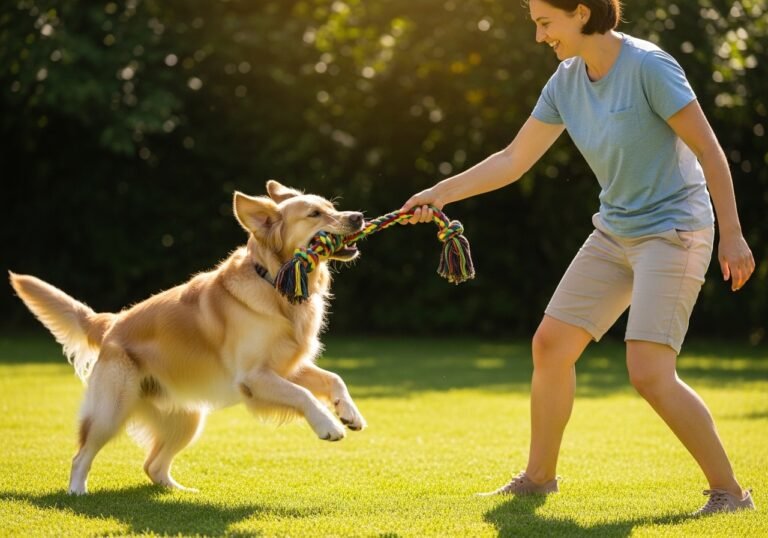
This is a big one. Do not allow your dog to play tug-of-war with the tetherball rope or bite and hang from the ball. This can pose a serious risk of neck and spinal injuries. If your dog starts to bite and pull, calmly interrupt them, ask for a ‘drop it,’ and redirect them to the proper way to play (pushing with their nose or paws). If they persist, end the game and try again later when they are calmer.
Regular Equipment Checks
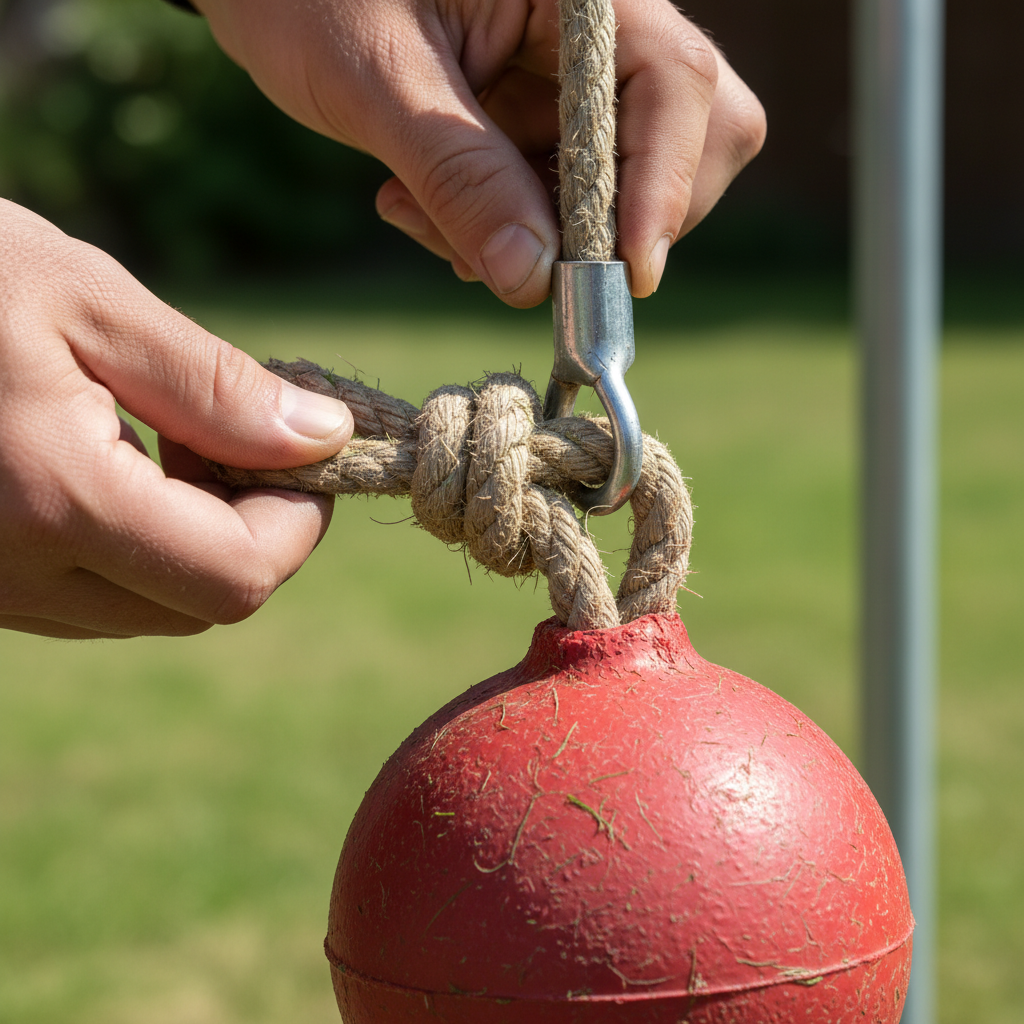
Before each play session, take a moment to inspect the entire tetherball set. Check the rope for any signs of fraying, the ball for cracks or punctures, and the pole to ensure it’s still securely anchored in the ground. A damaged toy can quickly become a safety hazard.
Teach an ‘All Done’ Cue
Just as important as teaching your dog how to start playing is teaching them how to stop. Have a clear ‘All Done’ or ‘Game Over’ cue. When you say it, calmly take the ball and put the toy away. This helps manage their arousal levels and teaches them that the game ends calmly and on your terms.
What If…? Solving Common Tetherball Training Hurdles
Sometimes, despite our best efforts, our training plans hit a snag. Don’t worry! It’s completely normal. Here’s how to troubleshoot some of the most common issues you might encounter when teaching your dog to play tetherball.
| The Problem | The Solution |
|---|---|
| My dog is scared of the ball or won’t go near it. | Go back to square one. Place the stationary ball in the yard and simply scatter very high-value treats (like tiny pieces of hot dog) in a circle around it. Don’t pressure your dog. Let them approach and get the treats on their own terms. This re-establishes that being near the object is safe and rewarding. |
| My dog just wants to bite and chew the ball or rope. | This is a common canine instinct! Immediately interrupt the behavior with a calm ‘Ah-ah’ or ‘Leave it.’ Redirect their attention to pushing the ball with their nose. If they successfully push it, reward them enthusiastically. If they persist in biting, the game ends for a few minutes. They’ll quickly learn that only pushing earns rewards and playtime. |
| My dog loses interest after just a minute or two. | This could mean a few things. Are your training sessions too long? Keep them super short—even just 2-3 minutes. Are your treats exciting enough? Try upgrading to something more enticing. Finally, make sure you’re ending the game before they lose interest to keep them wanting more next time. |
| My dog gets overly excited, barking and lunging at the ball. | Over-arousal can shut down the learning part of a dog’s brain. If your dog gets too frantic, it’s time for a cool-down. Calmly stop the game and ask for a simple behavior they know, like ‘sit.’ Once they are calm, you can try again for a short period. This teaches them that calm behavior makes the fun game continue. |
Expert Tip: Frustration is a learning-killer for dogs. If you or your dog are getting frustrated, it’s the clearest sign you need to take a break. End the session on a positive note with a simple command they know, give them a treat, and try again tomorrow. Training should always be fun!
Conclusion
Teaching your dog to play tetherball is so much more than just a way to burn off energy. It’s an incredible enrichment activity that builds confidence, encourages problem-solving, and provides a fantastic outlet for their natural instincts in a safe and structured way. By following these steps and arming yourself with a little patience and a pocketful of tasty treats, you’re not just installing a new toy in your yard—you’re unlocking a new level of fun and engagement for your best friend.
Remember to celebrate every little nudge and push along the way, and focus on the joy of learning together. Before you know it, you’ll be able to look out your window and see your happy, tired pup enjoying their favorite solo game, and there’s no better feeling than that. Happy training!