Have you ever bought a fancy new puzzle toy, filled it with your dog’s favorite treats, and presented it with a flourish… only to watch them sniff it, give you a confused look, and walk away? You’re not alone! While puzzle toys are fantastic tools for mental stimulation and boredom-busting, they don’t always come with an instruction manual for your dog.
Think of it like this: you wouldn’t hand a calculus textbook to a first-grader and expect them to solve equations. Dogs need to learn how to learn and problem-solve. The good news is that you can be their best teacher! Teaching your dog to solve puzzles isn’t just about speed; it’s about building their confidence, reducing anxiety, preventing destructive behaviors, and strengthening the incredible bond you share. This guide will walk you through everything you need to know to turn your pup into a puzzle-solving pro.
Choosing the Right Puzzle: Setting Your Pup Up for Success
Before you can teach, you need the right tools. The single biggest mistake pet parents make is starting with a puzzle that’s way too difficult. This leads to frustration, and your dog might decide puzzles are ‘not for them.’ Success starts with selecting the perfect challenge level.
Understanding Puzzle Toy Levels
Most puzzle toys are categorized by difficulty, typically from Level 1 (Beginner) to Level 4 (Expert).
- Level 1 (Beginner): These are the perfect starting point. They usually involve a single step, like nudging a cover, lifting a cone, or rolling a ball to get a treat. They teach the basic concept: ‘If I interact with this thing, food appears!’
- Level 2 (Intermediate): These require two or more steps. For example, a dog might have to slide a piece and then lift a cap, or perform a sequence of actions.
- Level 3 (Advanced): Here, things get tricky. These puzzles often involve multiple, non-linear steps, requiring more complex problem-solving skills.
- Level 4 (Expert): Reserved for the canine Einsteins! These are complex, multi-layered puzzles that require a dog to have mastered many different types of actions.
Expert Tip: Always start with a Level 1 toy, even if you think your dog is a genius. A few quick, easy wins will build their confidence and make them eager to try harder puzzles later.
| Toy Type | Best For… | Example Action |
|---|---|---|
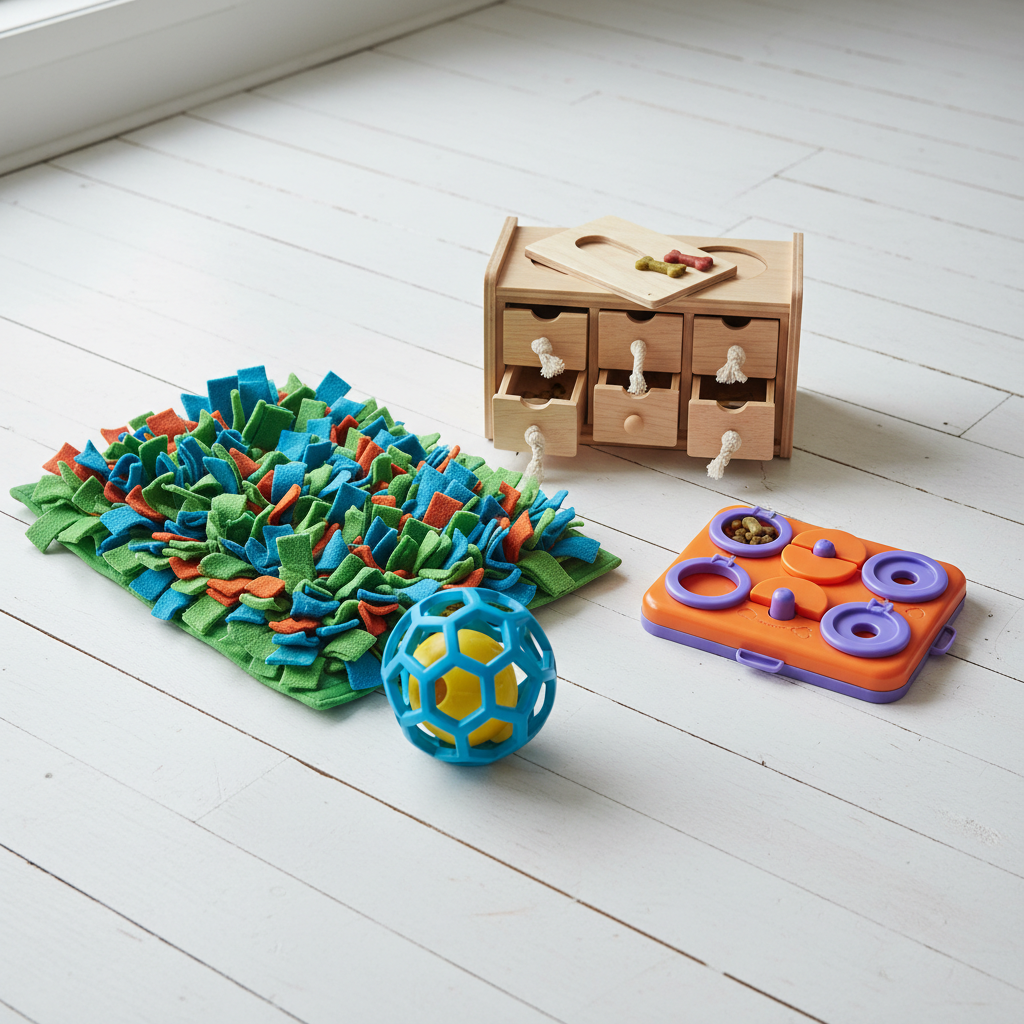
| Dispensing Balls/Toys | Beginners, food-motivated dogs, and high-energy breeds. | Nudging, rolling, or dropping the toy to release kibble. |
| Snuffle Mats | All dogs, especially scent hounds and anxious pups. Great for slowing down fast eaters. | Using their nose to forage for hidden treats among fabric strips. |
| Slider Puzzles | Dogs who like to use their paws and nose. A great step up from dispensing toys. | Pushing or sliding a piece with their nose or paw to uncover a treat well. |
| Lever & Drawer Puzzles | Intermediate to advanced problem-solvers. Good for dogs who are methodical thinkers. | Pulling a rope or pushing a lever to open a drawer or compartment. |
The Step-by-Step Training Method: From Beginner to Brainiac
Alright, you’ve got the perfect beginner puzzle. Now, let’s get to the fun part! Remember, the key here is patience and positive reinforcement. This should be a fun game, not a stressful test.
Step 1: The Grand Introduction
First, just let your dog investigate the new toy without any food in it. Place it on the floor and let them sniff and nudge it. Praise them enthusiastically for any interaction. You want them to associate the toy with positivity from the very start.
Step 2: Make it Impossibly Easy
Now it’s time for treats! Use high-value, smelly treats that your dog absolutely loves—think small pieces of cheese, chicken, or freeze-dried liver. For the first few tries, don’t even hide them properly. Place a treat in a compartment but leave it completely uncovered. Let your dog ‘win’ just for eating out of the toy. Then, cover it just a tiny bit, so they only have to nudge it to succeed. We’re building momentum!
Step 3: Demonstrate and Guide, Don’t Solve
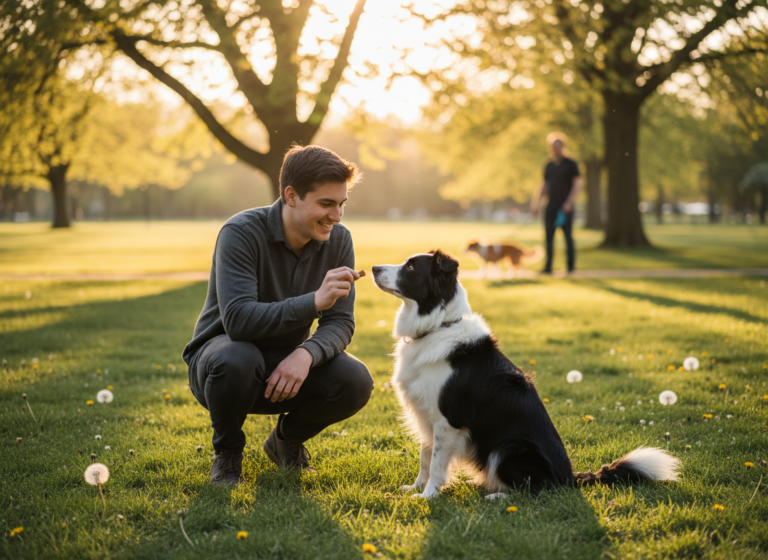
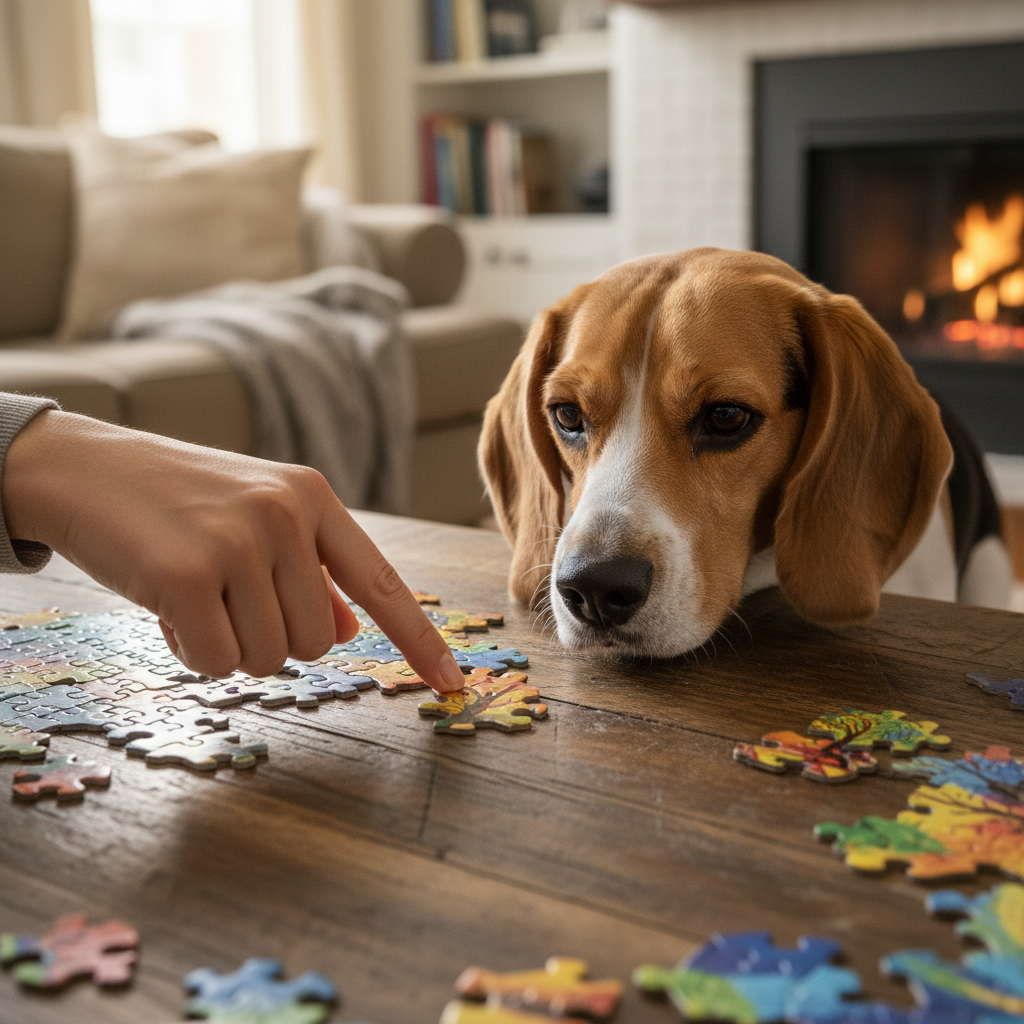
If your dog is stuck, it’s tempting to solve it for them. Resist! Instead, be their cheerleader. Use your finger to tap on the part of the puzzle they need to move. Use an excited voice and cues like, ‘Get it!’ or ‘Find the treat!’ You can even use your own hand to move the piece slightly to show them how it works, then let them do the final nudge. The goal is for them to make the connection.
Step 4: The ‘One New Thing’ Rule
Once your dog has mastered a single step consistently, it’s time to add a challenge. But only add one new thing at a time. If they’ve mastered lifting a cone, maybe now you introduce a puzzle that requires them to lift a cone and then slide a piece. Show them how the new part works while making the old part easy. This gradual increase in difficulty prevents them from getting overwhelmed.
Step 5: Keep Sessions Short and Sweet
Dogs, especially when learning, have short attention spans. Keep your training sessions to just 5-10 minutes once or twice a day. Always end on a positive note, with a successful find! This leaves them feeling accomplished and excited for the next session. If you see them getting frustrated, end the session with an easy win and try again later.
Reading Your Dog’s Cues: Are They Engaged or Exasperated?
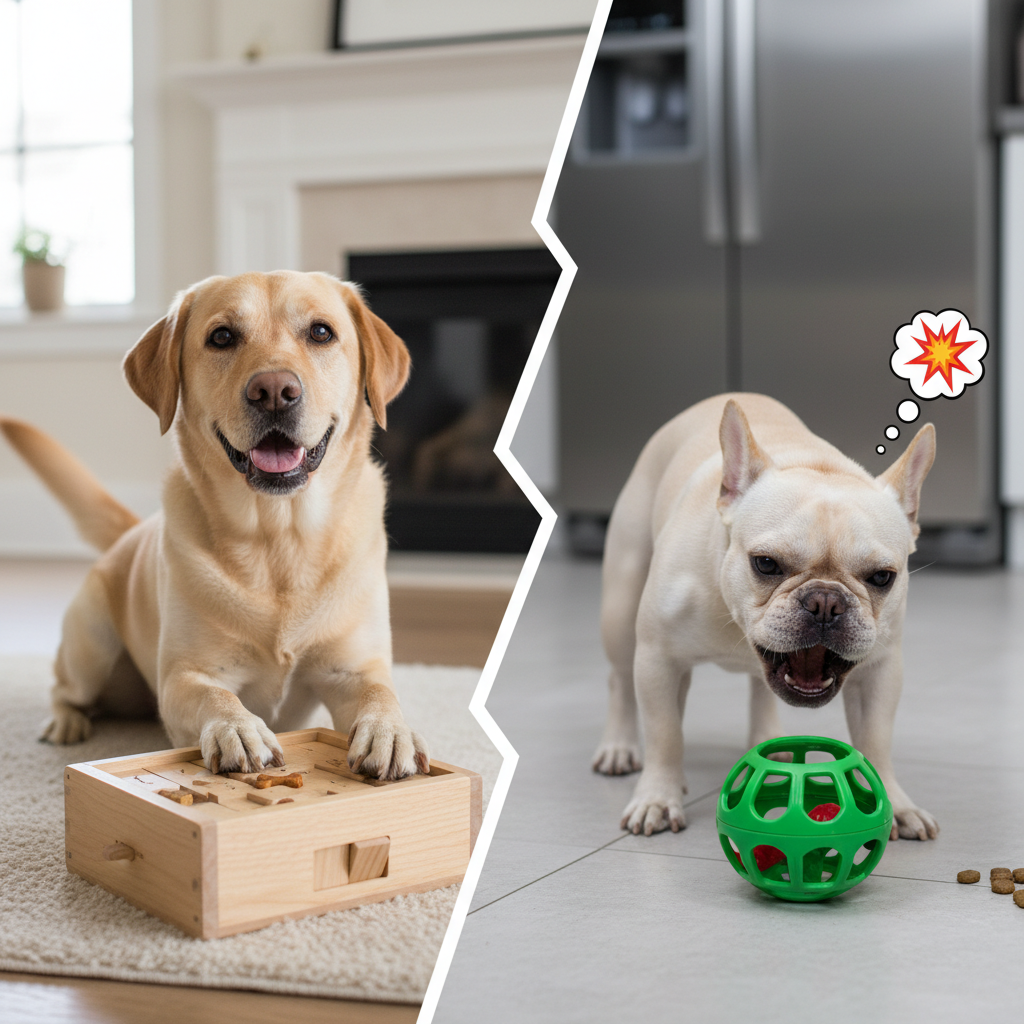
Becoming a puzzle master involves knowing when to push your dog and when to pull back. A little bit of challenge is good—it encourages problem-solving. Too much challenge leads to frustration, which can make your dog give up entirely. Learning to read your dog’s body language is your secret weapon.
Pay close attention to the subtle signals they’re sending. An engaged dog looks different from a frustrated one. Your goal is to keep them in that happy, ‘I’m thinking!’ state of mind.
Remember: If you see signs of frustration, don’t be afraid to make the puzzle easier or put it away for another day. The goal is enrichment, not a stressful exam.
| Body Language Signal | Engaged & Thinking (Green Light) | Frustrated & Stressed (Red Light) |
|---|---|---|
| Ears | Relaxed and forward, listening and focused. | Pinned back against the head. |
| Tail | Held in a neutral position or giving a slow, thoughtful wag. | Tucked low or wagging stiffly and rapidly. |
| Mouth & Face | Soft, relaxed mouth. May be slightly open. Intense but ‘soft’ eyes. | Tense jaw, lip licking, yawning, showing teeth (‘whale eye’). |
| Body Posture | Loose, relaxed body. Leaning into the puzzle. | Stiff, tense body. May be trying to physically move away. |
| Vocalizations | Mostly quiet, maybe a soft whine of concentration. | Frustrated barking, whining, or growling at the toy. |
| Interaction | Methodically trying different approaches (nudging, pawing). | Frantically biting, chewing, or trying to destroy the toy. Picking it up and throwing it. |
Common Mistakes (and How to Easily Fix Them)
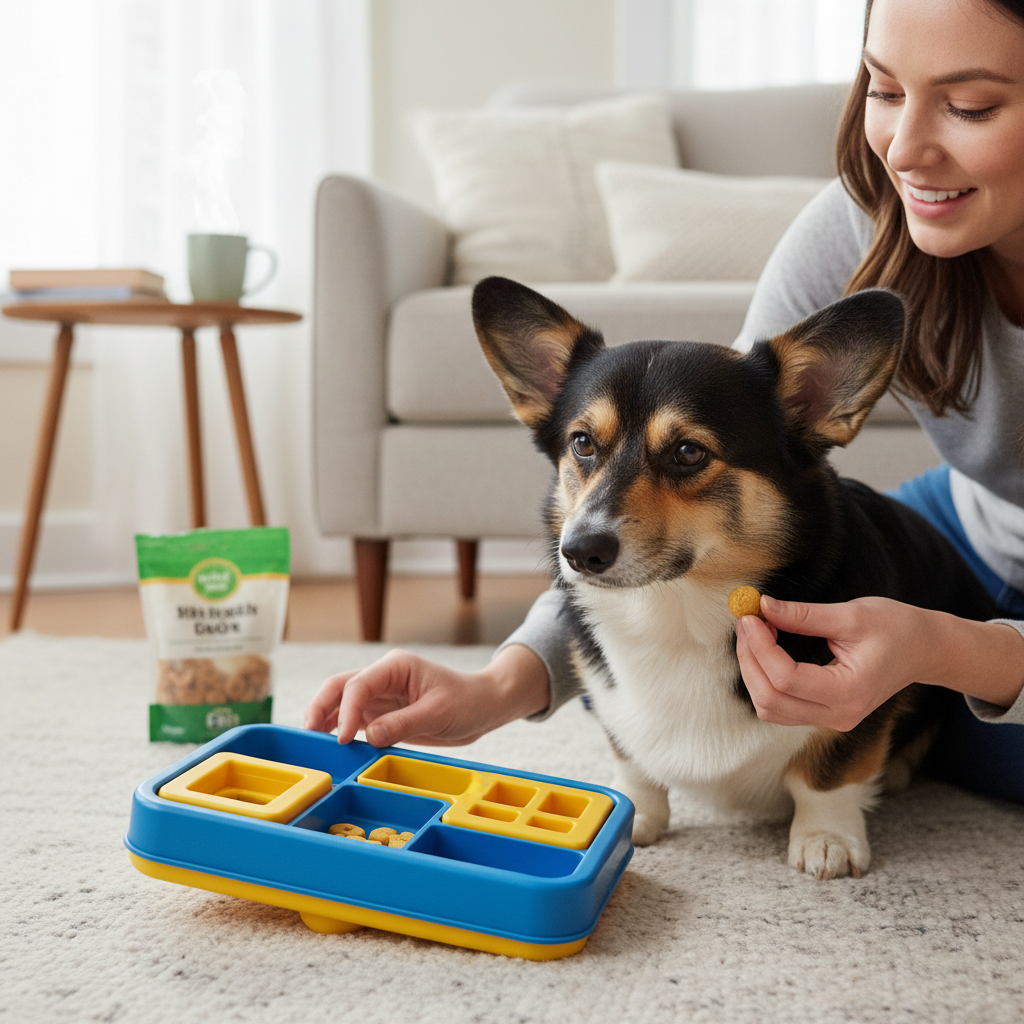
Even with the best intentions, it’s easy to make a few mistakes along the way. Here are some of the most common pitfalls and how to steer clear of them to keep puzzle time fun and productive.
- Mistake #1: The Puzzle is Too Hard.
This is the number one fun-killer. We’ve said it before, but it’s worth repeating! The Fix: Swallow your pride and go back to a Level 1 puzzle. Rebuild your dog’s confidence with easy wins before trying the harder one again. - Mistake #2: Using Boring Treats.
If your dog gets the same old kibble for dinner, using it in the puzzle might not be very motivating. The Fix: Use high-value, aromatic treats they don’t get all the time. The amazing smell will encourage them to work harder to find the source. - Mistake #3: Leaving Them to Figure It Out Alone.
Puzzle toys are training and bonding tools, not just doggy babysitters. Leaving a dog to struggle alone can create anxiety and frustration. The Fix: Always supervise your dog during puzzle time, especially when the toy is new. Be there to offer encouragement and guidance. - Mistake #4: The Environment is Too Distracting.
Trying to teach your dog a new skill while the kids are running around or another dog is trying to steal the toy is a recipe for failure. The Fix: Choose a quiet time and a calm space where your dog can focus without interruptions. - Mistake #5: Forgetting to Clean the Toy.
Old, dried-up treat residue can get moldy and gross. A dirty toy is unappealing and unhygienic. The Fix: Most puzzle toys can be easily washed with warm, soapy water. Clean them regularly, just as you would their food bowl.
Conclusion
Teaching your dog to solve puzzle toys faster is a journey, not a race. The real prize isn’t the speed at which they empty the toy, but the confidence they build, the mental energy they expend, and the focused time you spend together. By starting simple, celebrating every small victory, and learning to read your dog’s unique cues, you can unlock a world of enriching fun for your best friend.
So grab that Level 1 puzzle, find some extra-tasty treats, and get ready to watch your dog’s brilliant mind at work. You’ll be amazed at what they can accomplish with a little guidance and a whole lot of love.