Christmas morning is filled with magic, laughter, and the delightful chaos of unwrapping presents. But what if your four-legged family member could join in on the fun in a whole new way? Imagine the adorable photos and priceless memories of your dog eagerly unwrapping their very own gift from Santa Paws! It’s not just a cute trick; it’s a fantastic bonding activity and a wonderful source of mental enrichment for your pup.
Training your dog to unwrap a present is a fun challenge that engages their brain and natural instincts. However, the biggest concern for any pet parent is safety. We don’t want our festive fun to end with a trip to the emergency vet because someone ingested glittery paper or a stray ribbon. Fear not! This guide is designed to walk you through the entire process, step-by-step, with a huge emphasis on safety. We’ll teach you how to encourage the ‘tear and reveal’ while heavily reinforcing ‘leave the paper alone.’ With a little patience and a pocketful of treats, you can make this holiday season the most interactive one yet for your furry best friend.
Gathering Your Santa Paws Toolkit: What You’ll Need
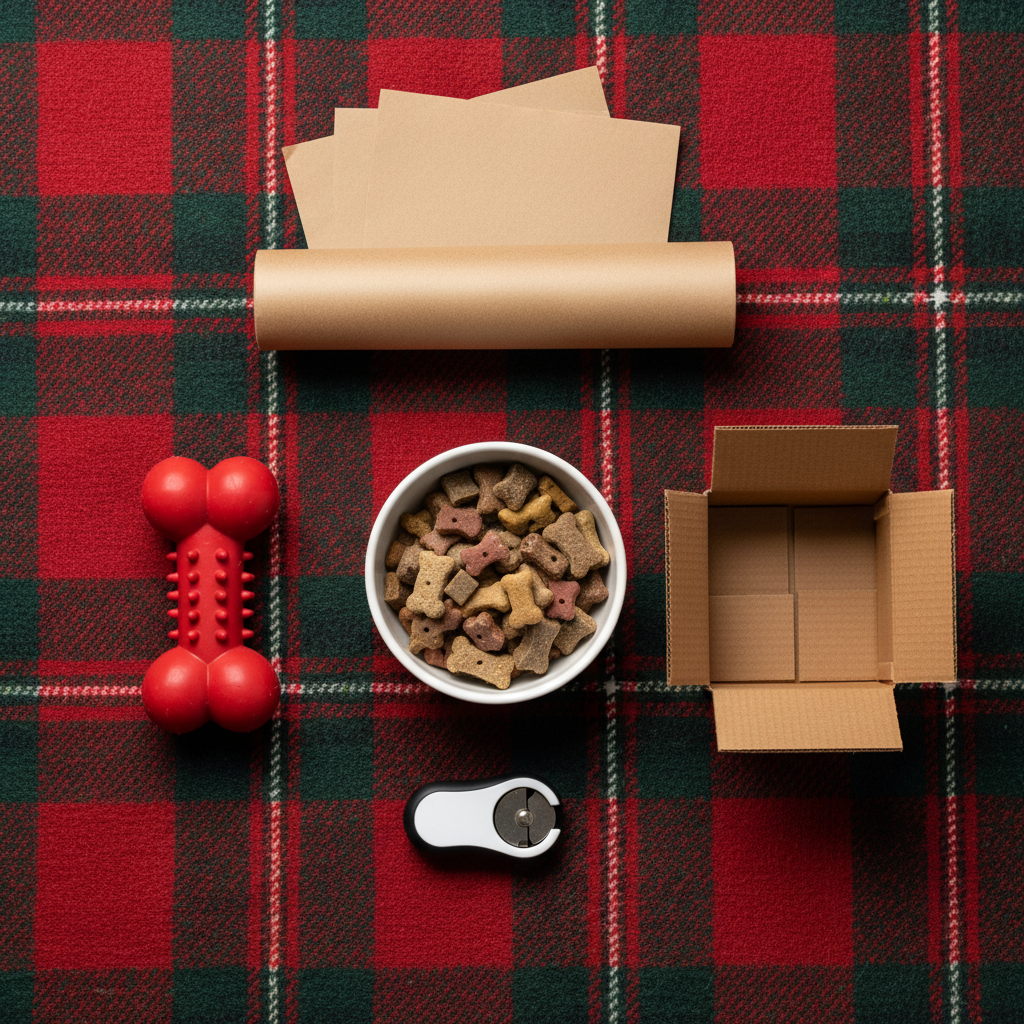
Before you and your pup can get down to business, you’ll need to assemble a few key items. Setting yourself up for success starts with having the right tools on hand. Think of this as prepping Santa’s workshop for your little elf-in-training!
Essential Supplies:
- High-Value Treats: This is the time to break out the good stuff! Small, soft, and extra-tasty treats (like tiny pieces of boiled chicken, cheese, or their absolute favorite store-bought training treats) will keep your dog motivated and focused.
- Dog-Safe Presents: The prize inside the wrapping needs to be worth the effort. Choose a new toy, a durable chew, or a special dog-friendly baked good. Make sure it’s something your dog will be genuinely excited about.
- Dog-Friendly Wrapping Materials: This is the most important part for safety. Stick to plain, uncoated paper like brown kraft paper, butcher paper, or even newspaper (with soy-based ink). Avoid anything with foil, glitter, plastic coatings, or a glossy finish.
- Empty Cardboard Boxes: Start with boxes of various sizes that are easy for your dog to manipulate. Shoeboxes or small shipping boxes work perfectly.
- A Clicker (Optional): If your dog is clicker-trained, a clicker can be an excellent tool for precisely marking the desired behavior (like touching the paper with their nose or paw).
- A Quiet Training Space: Choose a calm, distraction-free area of your home where your dog feels comfortable. This will help them concentrate on the task at hand without getting overwhelmed by other holiday festivities.
Expert Tip: The key to success is making the training session feel like a game, not a chore. Keep your energy high, your voice cheerful, and the sessions short and sweet (5-10 minutes at a time) to prevent your dog from getting frustrated or bored.
Unwrapping 101: Your Step-by-Step Training Guide
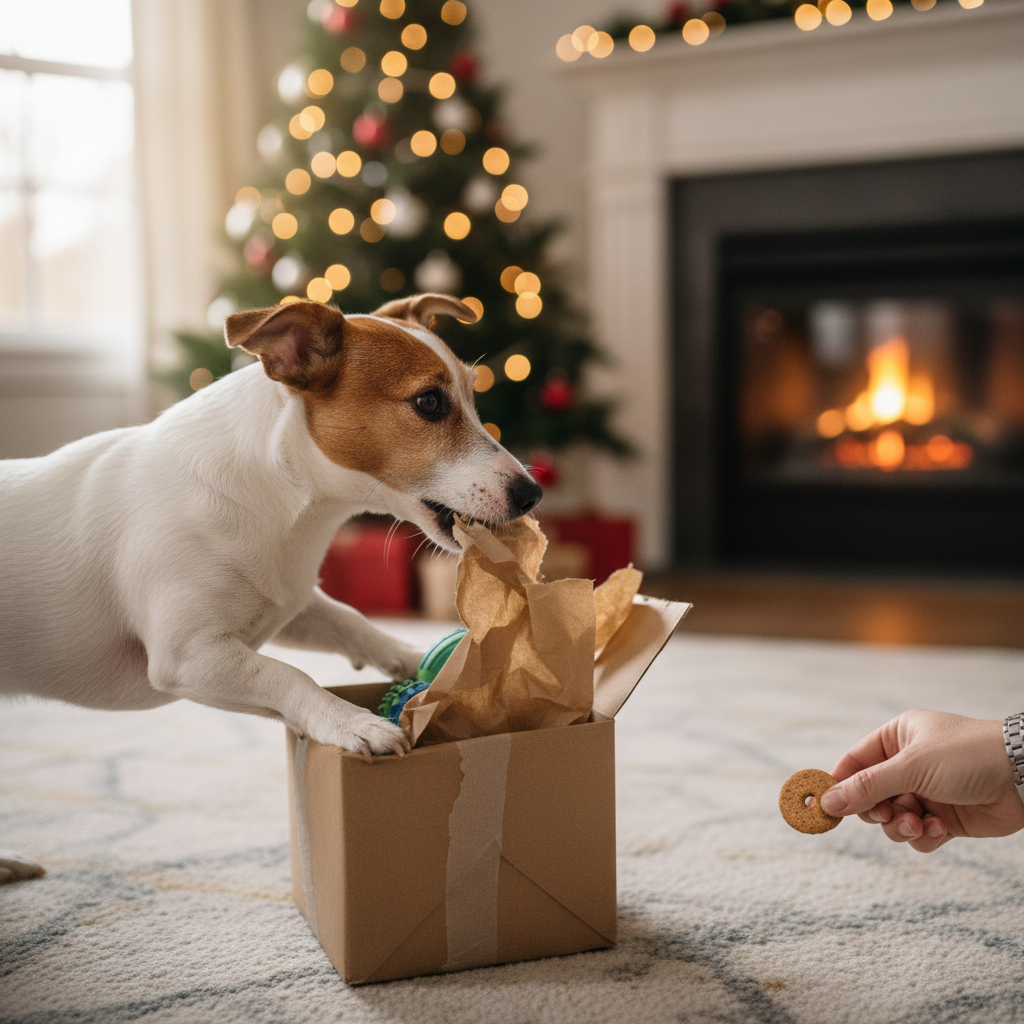
Alright, let’s get to the fun part! This process is all about breaking down the final behavior into tiny, achievable steps. Remember to go at your dog’s pace and celebrate every small success along the way. Patience is your best friend here!
-
Step 1: Introduce the Box
Before we even think about paper, your dog needs to be comfortable interacting with the box. Place an empty, open box on the floor. When your dog shows any interest—sniffing it, nudging it, or pawing at it—mark the behavior with an enthusiastic “Yes!” or a click, and give them a treat. Repeat this until they are eagerly interacting with the box.
-
Step 2: The ‘Leave It’ & ‘Drop It’ Foundation
This step is non-negotiable for safety. You need to have a rock-solid ‘Leave It’ or ‘Drop It’ cue. Practice this separately from the unwrapping game. Toss a low-value treat on the floor, say “Leave It,” and when they ignore it, reward them with a high-value treat from your hand. For ‘Drop It,’ give them a toy, say “Drop It,” and offer a high-value treat as a trade. You want them to understand that letting go of an item for you is always a good deal.
-
Step 3: Paper, Meet Pup
Now, let’s introduce the paper. Place a single, flat sheet of your dog-safe wrapping paper on the floor. Let your dog investigate. Reward any sniffing or pawing. Then, place a treat under the edge of the paper. Reward them for nudging the paper to get the treat. The goal here is to build a positive association with the paper and teach them that interacting with it gets them a reward.
-
Step 4: Combine Box and Paper (Loosely!)
Place a high-value treat inside the box. Instead of closing the lid, simply place a single, loose piece of wrapping paper over the top. Encourage your dog to get the treat. They’ll have to nudge or push the paper out of the way. Lavish them with praise when they succeed! This teaches them the core concept: paper is an obstacle to get to the good stuff.
-
Step 5: The First ‘Wrap’
Now, ‘wrap’ the box, but do it very loosely. Fold the paper around the box without using any tape. The paper should fall away easily if your dog nudges it. Again, praise and reward them enthusiastically for getting inside to the treat.
-
Step 6: Introduce a Little Tape
Once your dog is a pro at the no-tape version, add one or two small, easily-torn pieces of tape. This is where they will start to learn to use their teeth or paws to tear the paper. Encourage any tearing or ripping motion directed at the paper. If they get a piece in their mouth, immediately cue “Drop It” and reward them handsomely for spitting it out.
-
Step 7: The Dress Rehearsal
It’s time for the final performance! Wrap a real, dog-safe gift inside the box. Use a few pieces of tape, but keep it relatively easy to open for their first real go. Use a verbal cue like “Get your present!” and let them have at it. Supervise closely, manage the paper scraps, and celebrate like they just won the lottery when they finally reveal their new toy!
Safety First! The Naughty & Nice List for Holiday Wrappings
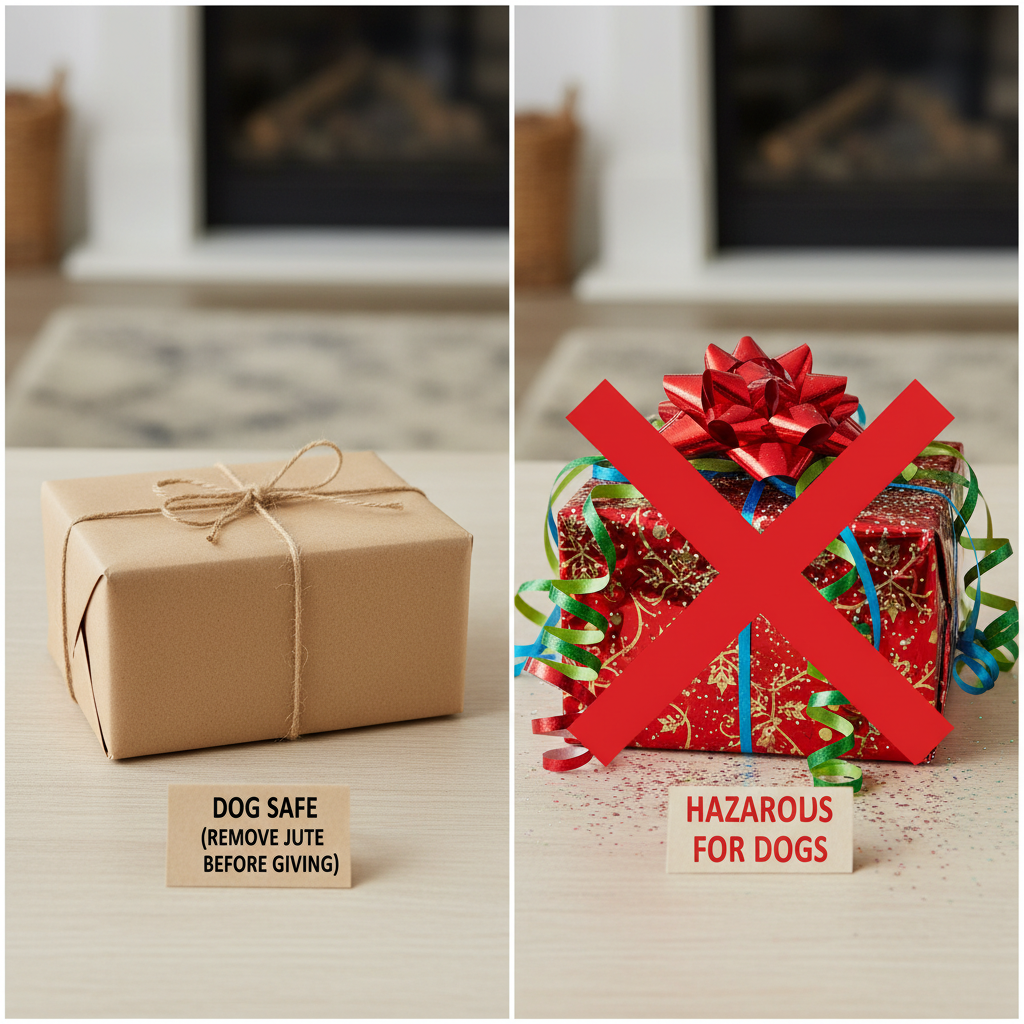
While this is a fun trick, your dog’s safety is the number one priority. Many common gift-wrapping materials can be incredibly dangerous if ingested, leading to choking or serious intestinal blockages. Constant supervision during this activity is mandatory. Never let your dog unwrap a present unsupervised, and be sure to clean up all paper scraps immediately.
To make it easy, we’ve created a simple ‘Naughty and Nice’ list for wrapping your pup’s presents.
| The Nice List ✅ (Safe Options) | The Naughty List ❌ (Dangerous Items to Avoid) |
|---|---|
| Plain Brown Kraft Paper | Foil or Metallic Wrapping Paper |
| Butcher Paper or Packing Paper | Paper with Glitter or Plastic Coatings |
| Newspaper (with soy-based ink) | Ribbons, Bows, and Strings of any kind |
| Pet-Safe Ink Stamps for Decoration | Tinsel or Curly Ribbon Accents |
| Minimal Use of Paper-Based Tape | Elastic Bands or Plastic Ties |
Why the Naughty List is So Bad:
- Ribbons & Strings: These are a major hazard. If swallowed, they can cause a linear foreign body obstruction, a life-threatening condition where the string can saw through the intestines.
- Foil & Plastic: These materials are not digestible and can cause blockages or stomach irritation.
- Glitter: While not typically toxic in small amounts, it’s an unnecessary additive that can cause upset stomach and is just plain messy.
- Bows & Ornaments: These are choking hazards. The small plastic or metal pieces can easily be swallowed.
A Vet’s Advice: When in doubt, leave it out. The simpler and more natural the wrapping, the better. Your dog won’t care about a fancy bow; they just want the fun of tearing the paper and getting to the prize inside!
Troubleshooting: When Your Elf-in-Training Needs a Little Help
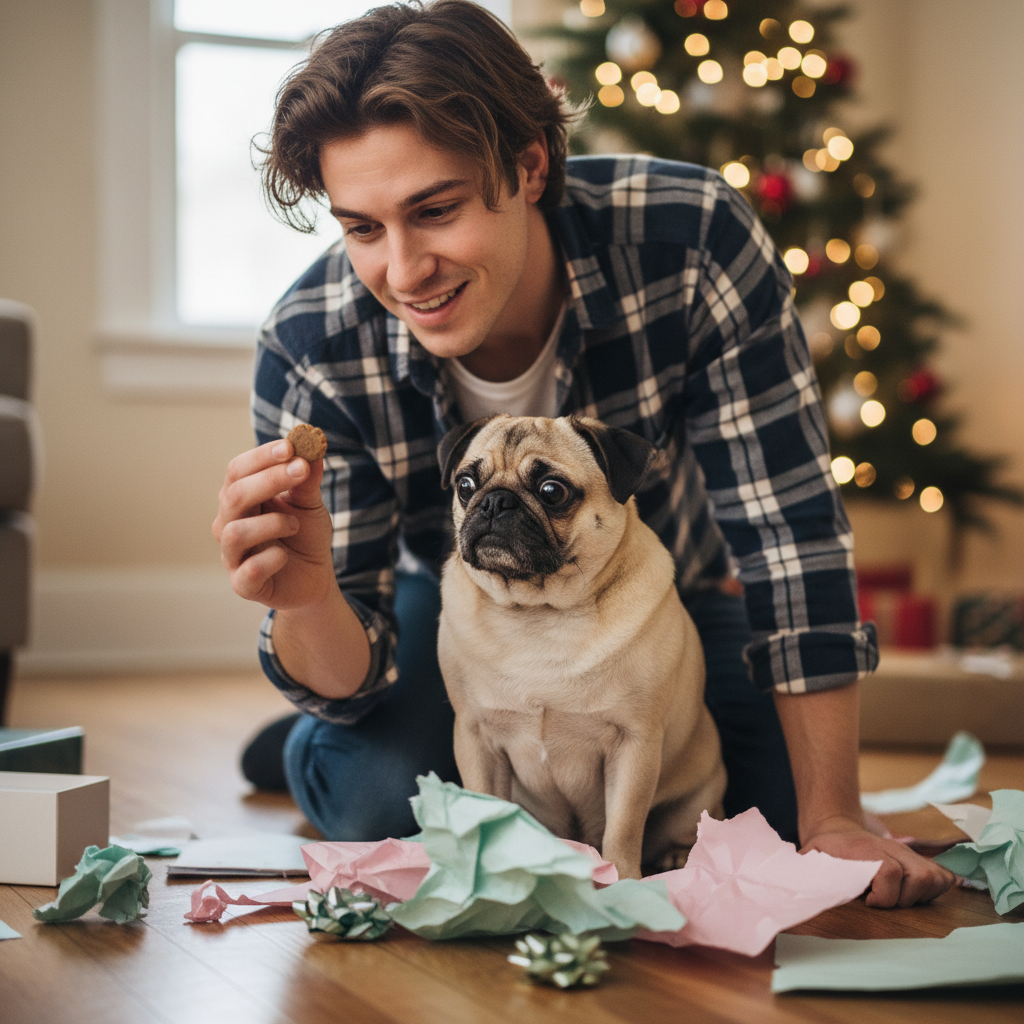
Sometimes, even the best students run into a little trouble. Don’t worry! Training is never a straight line. Here are some common hiccups you might encounter and how to navigate them with a positive attitude.
“Help! My dog just wants to eat the paper!”
This is the most common issue. It means you need to go back and make your ‘Drop It’ command the best game in the world. Make the reward for dropping the paper significantly better than the thrill of chewing it. Use your highest-value treats for this. If they grab a piece of paper, say “Drop It” cheerfully, and the second they do, shower them with treats and praise. Keep the actual gift-unwrapping sessions short to prevent them from getting overexcited and defaulting to chewing.
“My dog seems scared of the tearing sound.”
Some dogs are sensitive to new or loud noises. If the sound of ripping paper spooks your pup, you need to desensitize them. Start by having the paper on the floor while you do something they love, like a treat scatter. Then, from a distance, make a very small, quiet tear in the paper and immediately toss them a treat. Slowly decrease the distance and increase the volume of the tear over several sessions, always pairing the sound with something wonderful (treats!).
“My dog has zero interest in the present.”
First, check your prize! Is the toy or treat inside exciting enough? Try using something with a strong, enticing smell, like a jerky treat or a new, squeaky toy. Second, check your own energy. Dogs feed off our excitement. If you’re acting like this is the most amazing game ever, they’re more likely to join in. You can also try smearing a tiny bit of peanut butter (xylitol-free, of course) on the outside of the paper to encourage that initial interaction.
“My dog is too rough and just wants to shred everything, including the box!”
This is often a sign of over-arousal or a lack of impulse control. The goal is unwrapping, not total destruction. Reward more delicate interactions, like gentle nudging, soft pawing, or careful tearing. If they start shredding the box itself, calmly interrupt them and reset. Keep the training sessions very short to end on a successful, calmer note. This isn’t about speed; it’s about the process.
Conclusion
Congratulations, you’ve got all the tools and knowledge to turn your dog into a professional present-opener! Remember, the ultimate goal here is to have fun and create a special holiday memory together. Be patient, stay positive, and always, always prioritize your dog’s safety. Don’t worry if it’s not perfect on the first try; the training process itself is a wonderful gift of quality time spent with your best friend.
So get your camera ready for some of the most adorable Christmas morning moments you’ve ever had. From all of us here, we wish you and your talented furry helper a very happy, safe, and joyful holiday season filled with love, laughter, and perfectly unwrapped presents!