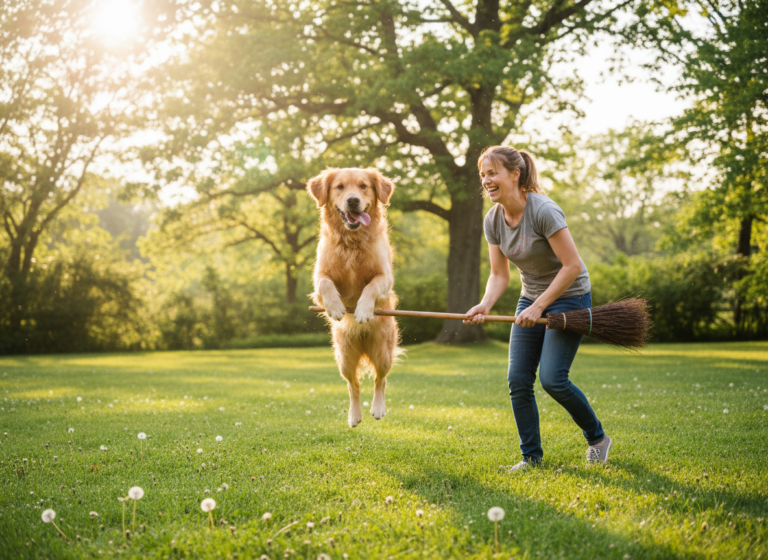
There are few things in this world as pure as the bond we share with our dogs. It’s a connection built on shared walks, cozy cuddles, and countless games of fetch. But what if you could take that connection to a whole new level? Imagine a trick that goes beyond a simple ‘sit’ or ‘stay’—one that is the ultimate demonstration of mutual trust and communication. That’s exactly what teaching your dog to jump over you is all about.
This isn’t just a cool trick to show off to friends (though it’s definitely that, too!). It’s a conversation between you and your canine companion. Your dog learns to trust that you will remain still and provide a safe ‘obstacle,’ and you learn to trust your dog’s athleticism and awareness. It’s a beautiful, dynamic exercise in partnership.
In this guide, we’ll walk you through everything you need to know, from ensuring your dog is physically and mentally ready, to a detailed, step-by-step training plan. We’ll use only positive, fun, and confidence-boosting methods. So, grab your tastiest treats, find a soft spot on the floor, and let’s get ready to build some serious trust and have a ton of fun doing it!
Is Your Dog Ready? Pre-Requisites and Safety First!
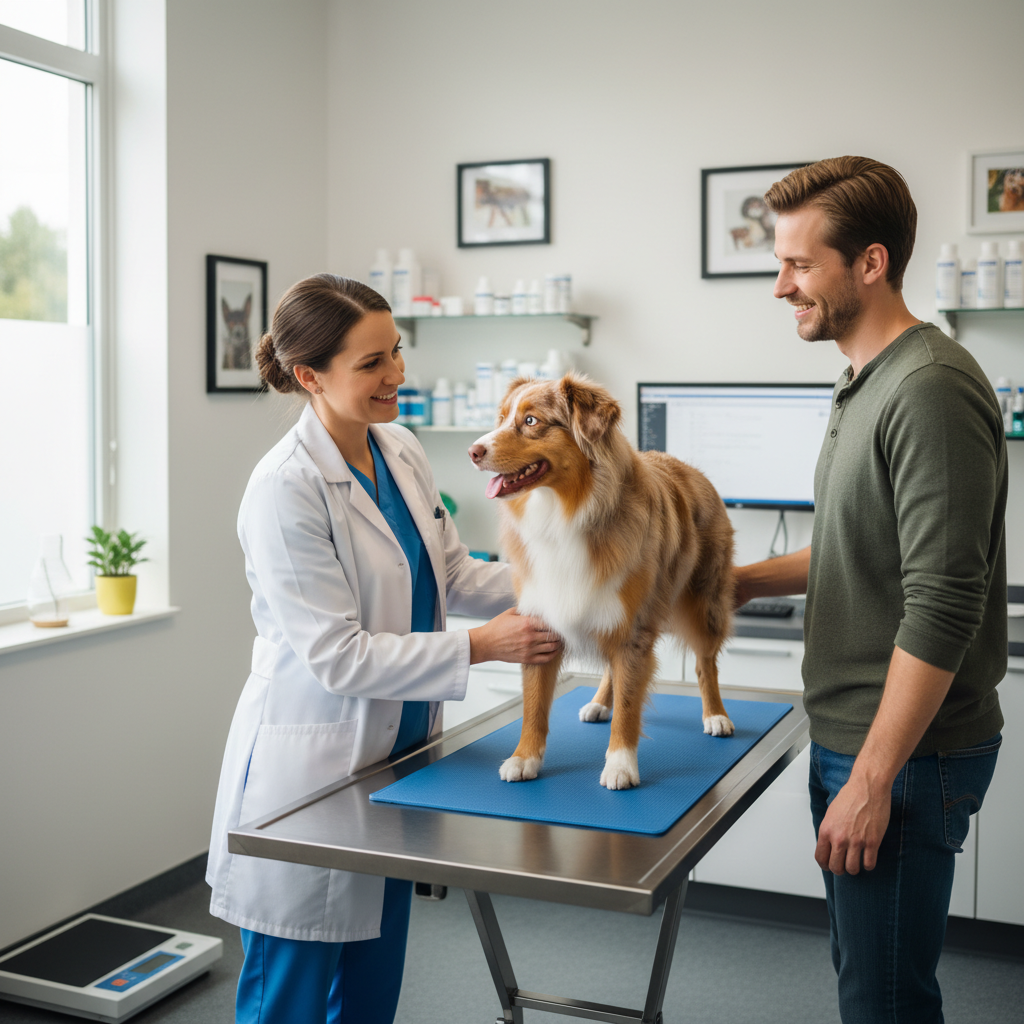
Is Your Dog Ready? Pre-Requisites and Safety First!
Before you even think about turning yourself into a human hurdle, we need to do a thorough check-in. Safety and your dog’s well-being are the absolute top priorities. Jumping is a high-impact activity, and this trick requires a high level of confidence from your pup. Let’s break down the essentials.
Veterinary Check-Up & Physical Health
First things first, consult your veterinarian. This is non-negotiable, especially for a physical trick like this. Your vet can perform a physical exam to ensure your dog’s joints, particularly their hips, elbows, and spine, are healthy and sound. Certain breeds are predisposed to conditions like hip dysplasia, and you’d never want to exacerbate an underlying issue.
- Age Matters: This trick is not for young puppies whose growth plates haven’t closed yet. Generally, wait until your dog is at least 12-18 months old, depending on the breed. Your vet can give you the green light. Senior dogs may also find this difficult, so listen to their bodies.
- Weight and Condition: A healthy, lean body condition is crucial. Excess weight puts unnecessary strain on joints during landing.
- Breed Considerations: While many breeds can learn this, dogs naturally built for agility like Border Collies, Australian Shepherds, or Jack Russell Terriers might pick it up faster than a Basset Hound or a Bulldog.
Foundation of Obedience
Your dog needs to have a few key skills mastered before attempting this advanced trick. These aren’t just about obedience; they’re about communication and control, which are vital for safety.
- A Rock-Solid ‘Stay’: Your dog needs to be able to hold a ‘stay’ while you get into position on the floor. This prevents them from getting overly excited and trying to jump before you’re ready.
- A Zippy ‘Come’ (Recall): A reliable recall ensures you can call your dog to you from their starting position.
- Basic Jump Command (Optional but helpful): It’s incredibly useful if your dog already understands the concept of jumping over a low object on cue (e.g., a pillow, a broomstick on two books). This gives you a verbal cue to build upon.
Expert Tip: Warm-ups are for dogs, too! Before a training session, engage in a few minutes of light play or a short walk to get their muscles warm and ready for action.
Setting the Stage for Safety
Your training environment is just as important as your dog’s readiness. Choose a space that is safe and sets you both up for success.
- Soft Landings: Always practice on a soft surface. A carpeted room, a grassy lawn (with no holes!), or a large yoga mat are all great options. Avoid hard, slippery surfaces like tile or hardwood floors.
- Clear the Area: Remove any potential hazards your dog could bump into, like coffee tables, lamps, or other furniture. You need a clear ‘runway’ and ‘landing zone’.
- Start Solo: In the beginning, make sure it’s just you and your dog. Keep other pets and small children out of the room to minimize distractions and potential accidents.
Gathering Your Tools for Success
Gathering Your Tools for Success
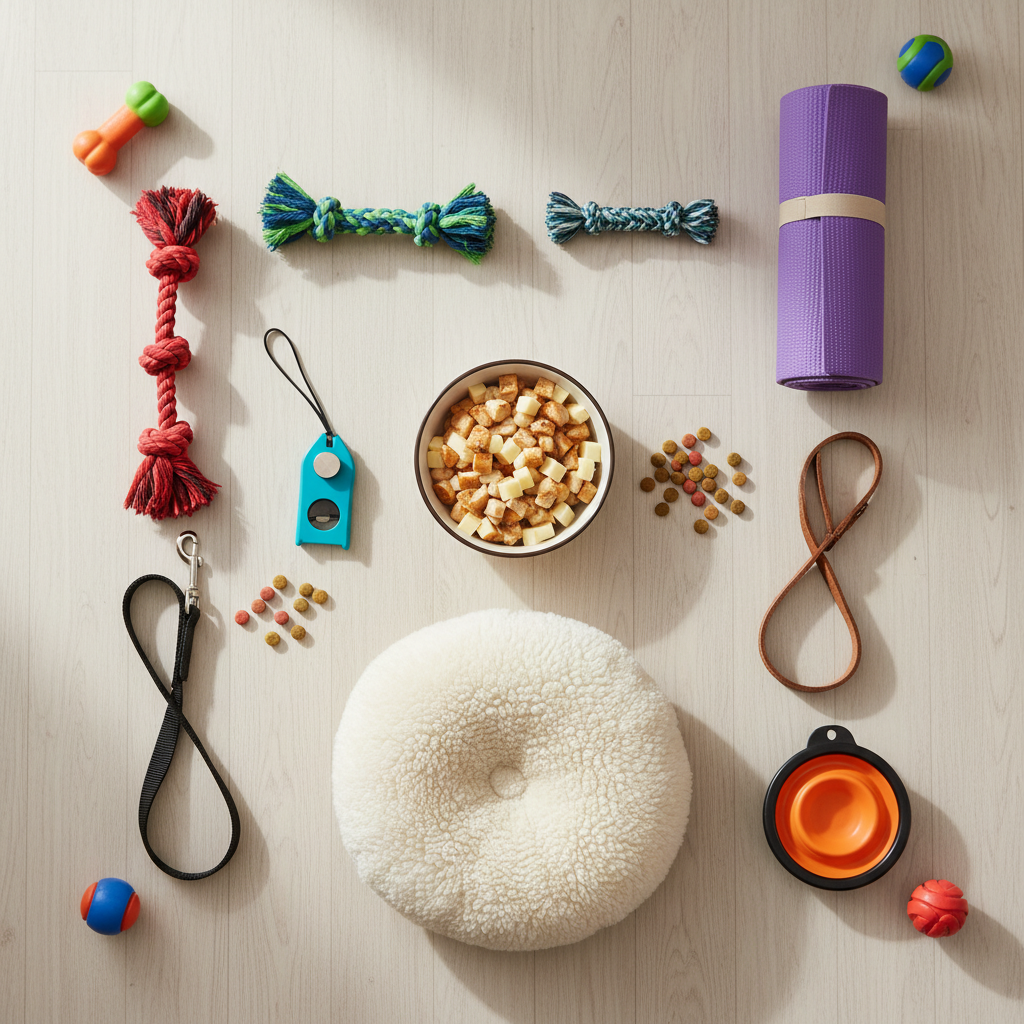
The best part about this trick is that you don’t need a lot of fancy or expensive equipment! The most important tools you bring to the table are your patience and a positive attitude. However, having a few key items on hand will make the process smoother, faster, and more fun for your furry friend.
- High-Value Treats: We’re not talking about their everyday kibble here. You need the good stuff! Think small, soft, smelly, and delicious treats that your dog absolutely loves. Pieces of cooked chicken, small cubes of cheese, or commercial training treats work wonders. The goal is to make the reward so amazing that your dog is super motivated to figure out the puzzle.
- A Comfortable Mat: Since you’ll be spending some quality time on the floor, a yoga mat, a thick blanket, or a soft rug will make it much more comfortable for you. This also helps define the ‘training zone’ for your dog.
- A Clicker (Optional): If you’re a fan of clicker training, this is a perfect time to use it. The clicker allows you to mark the exact moment your dog does something right—like lifting their paws to clear your body—with perfect timing, which can speed up the learning process significantly. If you’re not using a clicker, a consistent verbal marker like a happy ‘Yes!’ works just as well.
- A Low ‘Starter’ Hurdle: You won’t be the first hurdle! Grab a pillow, a rolled-up towel, or a stack of a few books. This will be your dog’s first introduction to the concept of jumping over something in this context.
- A Big Smile and Lots of Patience: Your dog is an expert at reading your energy. If you’re relaxed, happy, and patient, they’ll feel more confident and willing to try. If you get frustrated, they’ll get stressed. Keep sessions short (5-10 minutes max) and always end on a positive note!
The Step-by-Step Training Plan: From Crawl to Leap
The Step-by-Step Training Plan: From Crawl to Leap
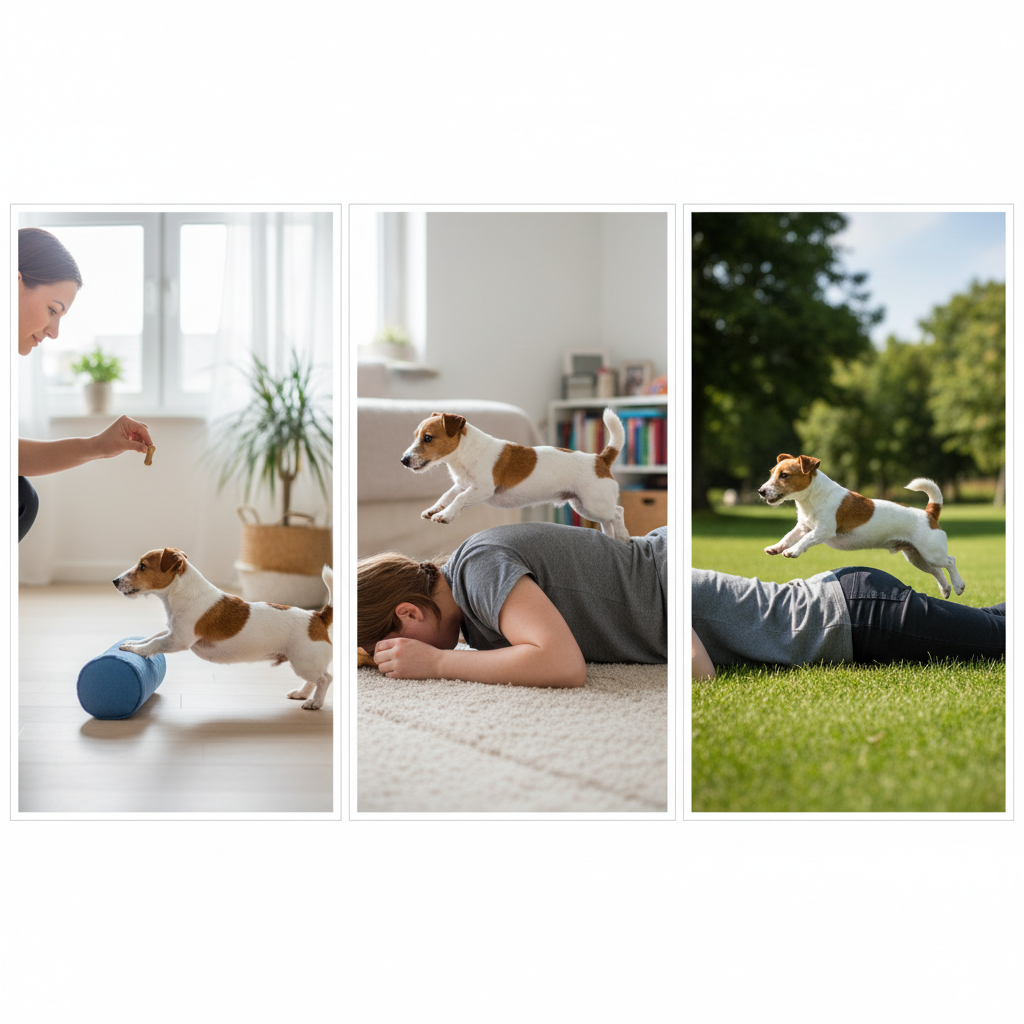
Alright, it’s time for the main event! Remember, the key here is to break the final behavior down into tiny, achievable steps. We want to build your dog’s confidence layer by layer, ensuring they are always successful and having fun. Never force your dog; let them choose to participate. Let’s begin!
- Step 1: The Pillow Hurdle.
Forget about you being the jump for now. Place a low object, like a pillow, on the floor. With your dog on one side and you on the other, use a tasty treat to lure them over the pillow. As they successfully cross it, say your marker word (‘Yes!’) or click, and give them the treat. Repeat this 5-10 times until they are happily hopping over the pillow. - Step 2: Add Yourself to the Picture.
Now, lie down on the floor right next to the pillow, parallel to it. You’re not the obstacle yet; you’re just part of the scenery. Repeat Step 1, luring your dog over the pillow while you lie beside it. This gets them comfortable with performing the action close to your body. Reward generously! - Step 3: Become a Tiny Mountain.
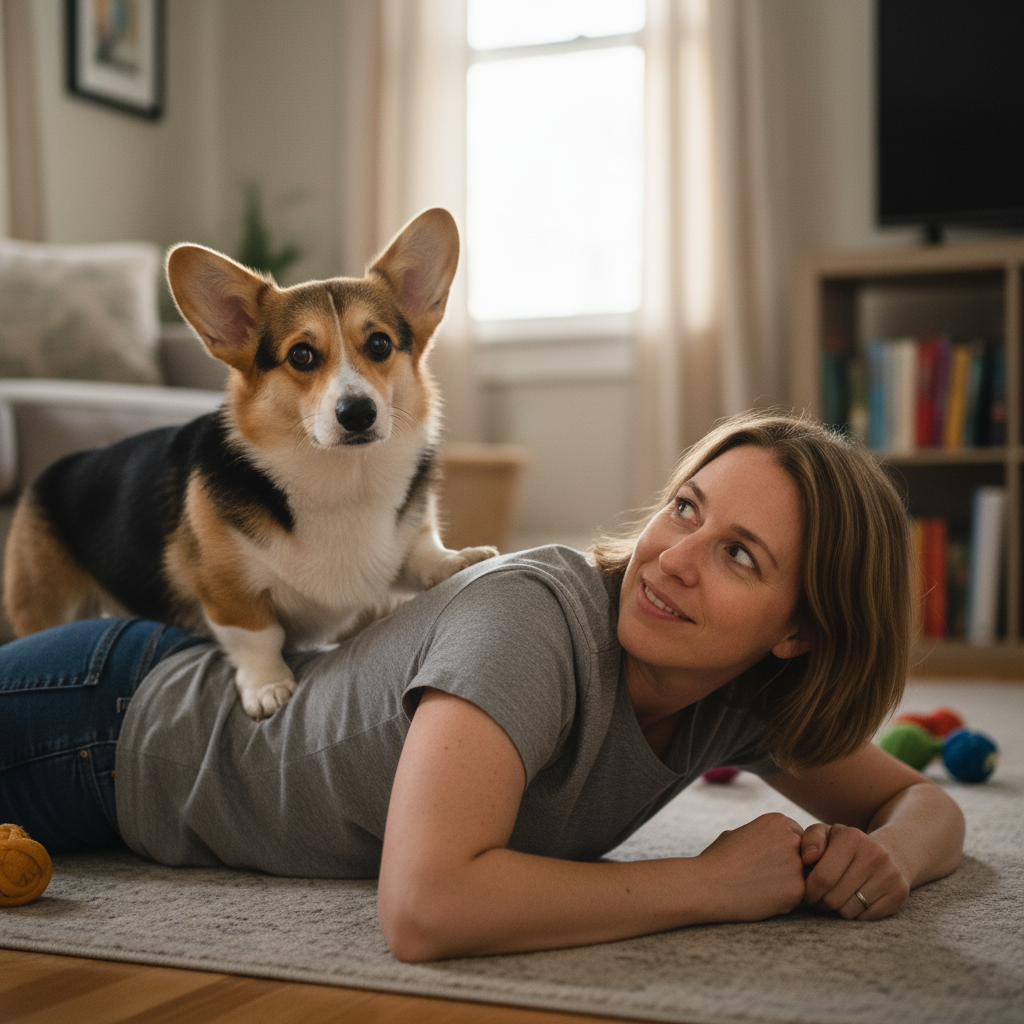
This is the first big step! Remove the pillow. Lie on the floor in a fetal position or on all fours in a low ‘cat’ pose from yoga. You want to make yourself as small and low as possible. Encourage your dog to come to one side. Use the treat lure to guide them over the lowest part of your body, like your waist or lower back. The moment they step or hop over, mark and reward with a jackpot of treats and praise! Make a huge, happy fuss. - Step 4: Gradually Raise the Bar (By Flattening Out).
As your dog gets more confident with Step 3, you can slowly start to change your position to be a little flatter and wider. Instead of a tight fetal position, you might lie on your side. Then, progress to lying on your stomach with your head and feet down. Go slowly! If your dog ever hesitates, just go back to the previous, easier position for a few repetitions before trying again. The goal is for them to confidently clear your body without touching you. - Step 5: Introduce the Verbal Cue.
Once your dog is reliably jumping over you with the treat lure, it’s time to name the behavior. Just before you lure them over, say your chosen cue in a happy, upbeat tone. Good cues are short and distinct, like ‘Over!’, ‘Hup!’, or ‘Jump!’. Say the cue, lure them over, and reward. After many repetitions, they will start to associate the word with the action.
- Step 6: Fade the Lure.
Now we want to transition from a food lure to a hand signal. Start by luring them over, but as they take off, pull the treat hand away and use your other hand to make a sweeping gesture over your body. Eventually, you can just use the hand signal without a treat in your lure hand (but still reward them after they jump!). The final step is to fade the hand signal so they respond to just the verbal cue. - Step 7: Practice and Proof.
Once your dog has mastered the jump in your quiet training space, you can start ‘proofing’ the behavior. Try it in the backyard. Try it with another family member sitting quietly in the room. This helps your dog generalize the command, understanding that ‘Over!’ means the same thing even when the environment changes slightly. Keep it positive and safe, always!
Common Roadblocks and How to Troubleshoot Them
Common Roadblocks and How to Troubleshoot Them
Even with the best plan, you might hit a few snags. That’s totally normal in dog training! The key is to stay patient and think like a detective to figure out why your dog is struggling. Here are some common issues and how to solve them.
Problem: My dog just runs around me instead of going over.
This is probably the most common issue! It’s often easier for a dog to go around an obstacle than over it. The solution is to make going around harder than going over. You can create a ‘channel’ or ‘chute’ that guides them toward you. Place two rows of pillows, couch cushions, or even boxes on either side of you, leaving only the path over your body open. This helps them understand the question you’re asking. Once they get the idea, you can gradually remove the guides.
Problem: My dog seems scared or hesitant to jump.
Hesitation is a clear signal from your dog that they’re not confident. It’s crucial that you listen to this! Never push them. The solution is always to go back a step to where they were successful and confident. Was it jumping over the pillow? Go back to that and make it a super fun party for a few sessions. Was it when you were in a tight fetal position? Go back to that. You may have increased the difficulty too quickly. Shorten your training sessions and use even higher-value treats to build their positive association.
Problem: My dog keeps stepping or clipping me when they jump.
This usually means they haven’t quite grasped the ‘up and over’ concept, or they’re underestimating the height/width. Go back to basics. Work on getting more enthusiastic jumps over the pillow or a slightly higher rolled-up blanket. You can reward them specifically for jumps with more clearance. Also, check your own position. Are you as low and flat as you can be? Make the obstacle smaller and easier for them to build that clean, confident jump before you make it more challenging again.
Remember this mantra: ‘If your dog is failing, your criteria is too high.’ It’s not the dog’s fault. Simply break the task down into an even smaller, easier step to help them succeed.
Problem: My dog gets the ‘zoomies’ and loses focus mid-session.
Zoomies are often a sign of over-excitement or a way for dogs to release a bit of nervous energy. It’s a compliment—it means they’re engaged! But it’s not productive for training. If this happens, it’s a good sign that the session should end. End on a positive note (maybe ask for a simple ‘sit’), give them a treat, and release them to play. It’s always better to have a short, focused 5-minute session than a sloppy, frustrating 15-minute one. Keep it short and sweet!
Beyond the Trick: The Deeper Bond You’re Building
Beyond the Trick: The Deeper Bond You’re Building
By now, you’ve likely spent a good amount of time on the floor, armed with treats and encouragement. Whether your dog is soaring over you like a champion or you’re still working on the pillow step, it’s important to pause and appreciate what’s really happening. You’re not just teaching a trick; you’re speaking a language of trust that transcends verbal commands.
A Two-Way Street of Trust
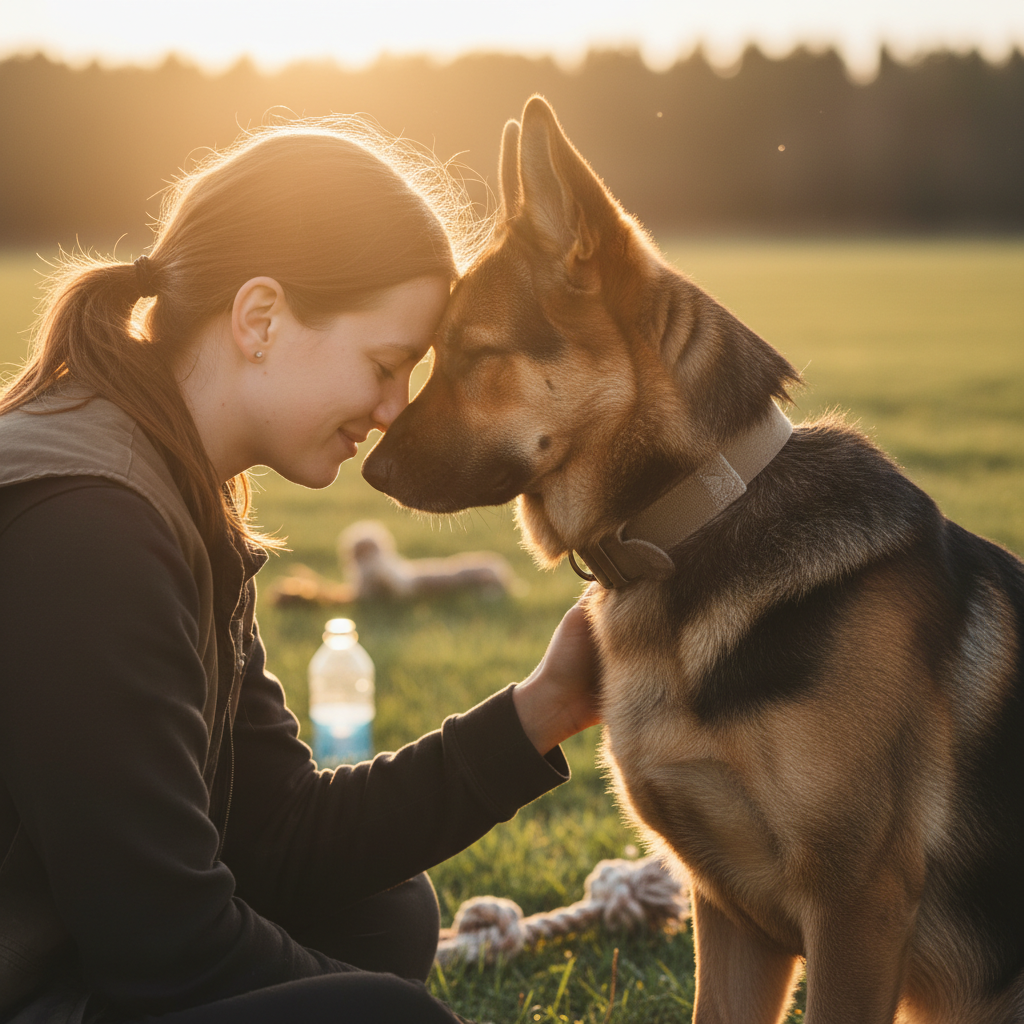
Think about what you’re asking of your dog. You’re asking them to launch themselves over you, trusting that you won’t suddenly stand up or move. You are, in that moment, the safest and most predictable thing in their world. Every successful jump reinforces their belief that you are reliable and will not put them in harm’s way. Simultaneously, you are placing your trust in them. You’re trusting their judgment, their body awareness, and their ability to complete the behavior safely. This mutual vulnerability is an incredibly powerful bonding agent.
Boosting Your Dog’s Confidence
Learning complex tasks is a huge confidence booster for dogs, especially for those that may be a bit timid or anxious. When a dog successfully figures out a puzzle and is showered with praise and rewards, you can almost see them stand a little taller. They learn that trying new things is fun and rewarding. This newfound confidence doesn’t just stay in your living room; it can translate to other areas of their life, making them a more resilient and well-adjusted companion.
The Power of Quality Time
In our busy lives, it’s easy for interactions with our dogs to become routine—feeding time, potty breaks, the usual walk. Dedicated training sessions like this are different. They are focused, one-on-one time where all your attention is on your dog, and all their attention is on you. There are no phones, no TV, no distractions. This focused engagement is like making a deposit in your relationship bank account. It tells your dog, ‘You are important to me. I enjoy working with you.’ That message is the foundation of any great human-canine partnership.
Conclusion
Teaching your dog to jump over you is so much more than a physical feat; it’s a journey of communication, patience, and incredible trust. As we’ve seen, success lies in starting with a foundation of safety, breaking the process into tiny, joyful steps, and celebrating every small victory along the way. Remember to listen to your dog—their body language will tell you everything you need to know about their comfort and confidence levels.
Whether your dog becomes an expert jumper or you simply have fun trying, the real prize is the time you spend together, strengthening your bond and understanding each other on a deeper level. The trust you build on that living room floor will follow you out the door and enrich every aspect of your shared lives. So keep the treats tasty, the praise enthusiastic, and enjoy the amazing process of learning together.