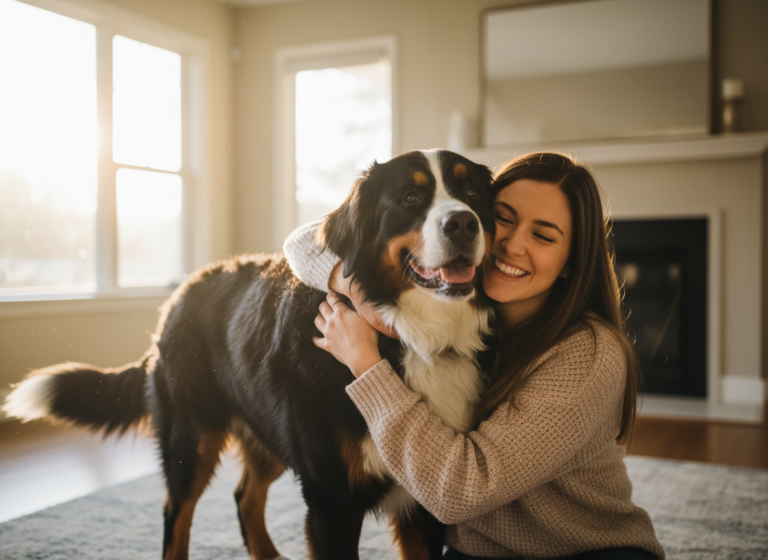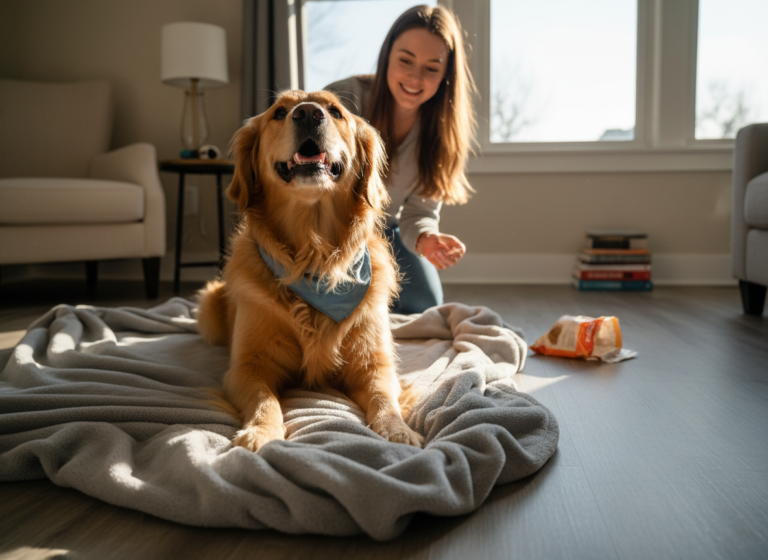
There’s nothing quite like the special connection we share with our dogs. It’s a bond built on trust, companionship, and countless moments of joy. One of the most delightful ways to deepen that connection is through positive, fun training sessions. And what could be more fun than teaching your pup to give you a sweet smooch on command?
Now, let’s be clear: we’re not talking about a full-on, slobbery French kiss! We’re aiming for a gentle, polite nose boop or a quick, delicate lick on the cheek. This trick is more than just a cute party favor; it’s a fantastic exercise in communication and positive reinforcement. It teaches your dog to focus, respond to a cue, and interact gently with you. So, if you’re ready to fill your days with more adorable, voluntary affection, you’ve come to the right place. Let’s get started on the path to perfect puppy pecks!
Getting Ready: What You’ll Need for a Successful Smooch Session
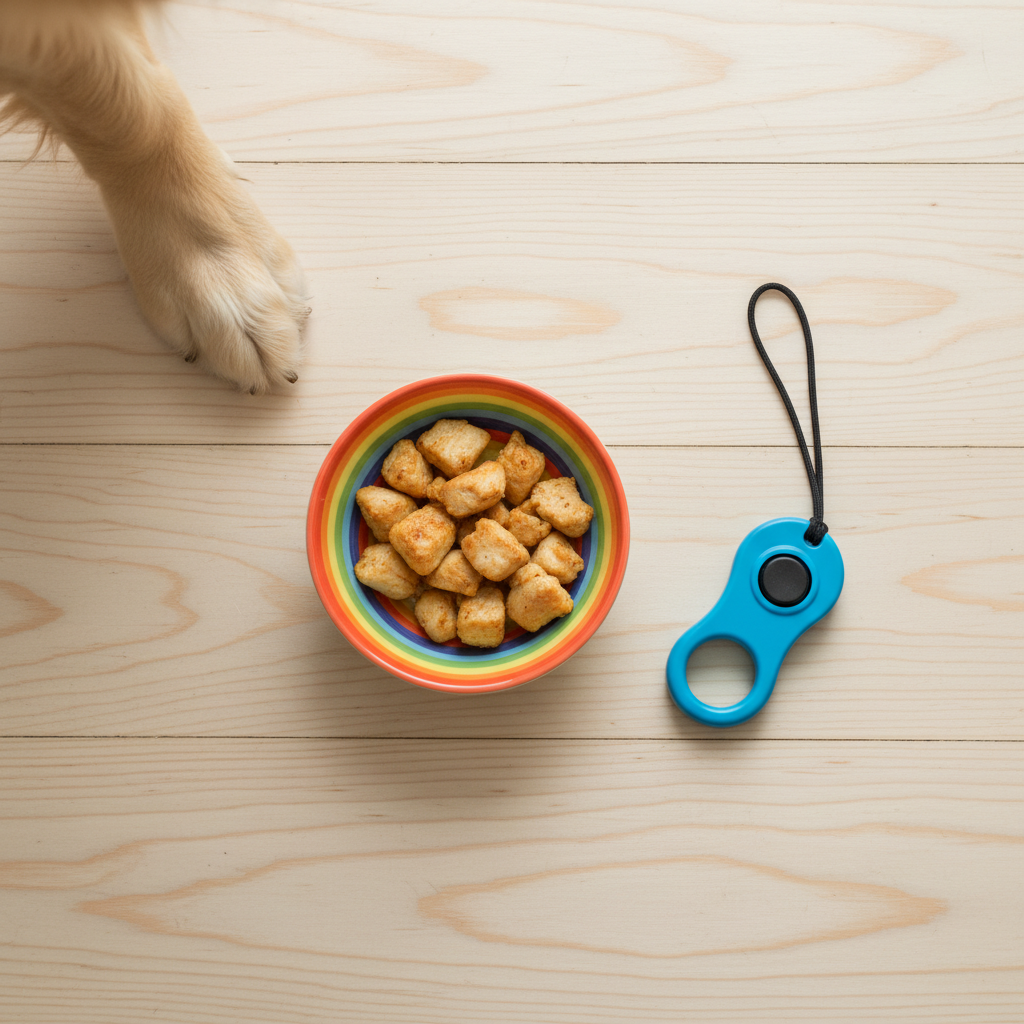
Before you pucker up, it’s important to gather a few supplies. Setting the stage for success will make the training process smoother and more enjoyable for both you and your canine student. Think of it as preparing for a fun date night with your best friend! You don’t need a lot of fancy equipment, just a few key items.
The Essentials for Kiss Training:
- High-Value Treats: We’re not talking about their regular kibble. To capture your dog’s full attention, you need something extra special. Think tiny pieces of cooked chicken, small cubes of cheese, or soft, smelly training treats they don’t get every day. The treat should be small enough to be eaten quickly so you can move on to the next repetition.
- A Quiet, Distraction-Free Space: Choose a room in your house where you won’t be interrupted by other pets, family members, or the mail carrier. A calm environment helps your dog focus on you and the task at hand.
- A Clicker (Optional but Recommended): A clicker is a fantastic tool for marking the exact moment your dog does something right. The ‘click’ provides a clear, consistent signal that means, “Yes! That’s what I want! A treat is coming!” If you don’t have a clicker, a verbal marker like a sharp “Yes!” works just as well. Consistency is key.
- Patience and a Positive Attitude: This is the most important tool in your kit! Training should always be fun. Bring your happy voice, a relaxed demeanor, and a bucketload of patience. Your dog feeds off your energy, so if you’re having a good time, they will too.
Expert Tip: Keep your training sessions short and sweet! Dogs, especially puppies, have short attention spans. Aim for several 3-5 minute sessions throughout the day rather than one long, grueling 30-minute session. Always end on a high note when your dog has successfully performed a step, even if it’s a small one.
The Kissing Booth: A Step-by-Step Guide to Teaching the ‘Kiss’ Command
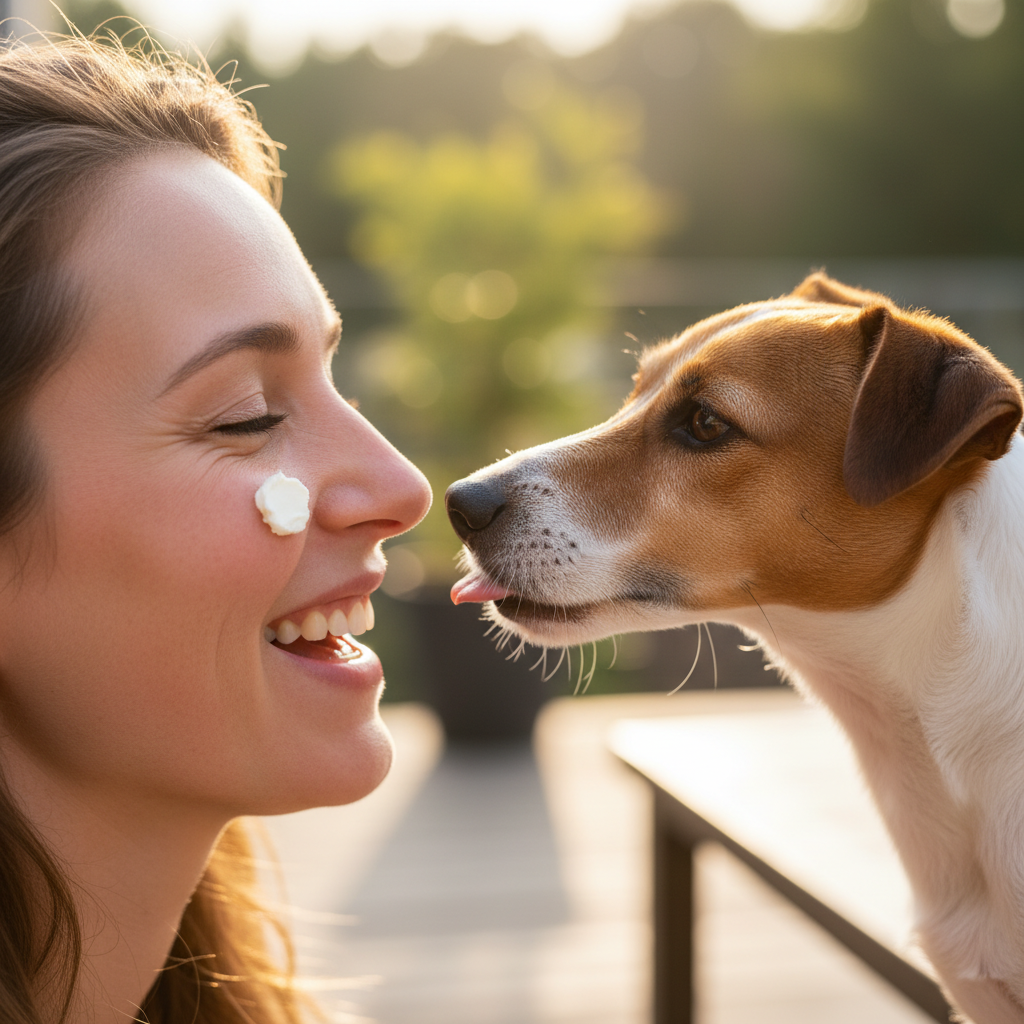
Alright, you’ve got your treats and your positive attitude is ready to go! Now it’s time for the fun part. We’re going to use a technique called ‘luring’ and ‘shaping’ to guide your dog toward the desired behavior. Remember to go at your dog’s pace and celebrate every small step forward.
- Step 1: Introduce the Target. The easiest way to get your dog’s nose to your cheek is to give them a reason to go there. Take a tiny dab of something lick-safe and delicious—like peanut butter (xylitol-free!), cream cheese, or a wet dog treat—and place it on your cheek. Sit on the floor to be closer to your dog’s level.
- Step 2: Lure and Mark the Touch. Lean toward your dog and present the cheek with the tasty target. The moment their nose or tongue makes contact with the spot, mark the behavior with your clicker or a hearty “Yes!” and immediately give them a high-value treat from your other hand. The treat on your cheek is the lure, but the real reward comes from your hand. Repeat this several times until your dog is confidently and eagerly touching the spot.
- Step 3: Fade the Lure. Once your dog gets the hang of it, it’s time to remove the food lure. Pretend to put a dab of the treat on your cheek, but don’t actually leave any there. Present your cheek in the same way. Your dog, expecting a treat, should still touch their nose to the spot. The instant they do, mark and reward enthusiastically! You are transitioning them from following the food to targeting your cheek. If they seem confused, you can take a step back and use a smaller and smaller amount of the lure before removing it completely.
- Step 4: Introduce the Verbal Cue. Now that your dog is reliably touching your cheek without a food lure, you can add the command. Just as you see them begin to lean in to give you a boop, say your chosen cue in a clear, happy voice. “Kiss!” or “Smooch!” are popular choices. When they make contact, mark and reward. After a few repetitions, start saying the cue first, right before you present your cheek, to teach them that the word predicts the action.
- Step 5: Practice and Generalize. Your dog now knows what “Kiss!” means! The final step is to practice. Keep sessions short and fun. Start asking for the behavior in different rooms of the house, then maybe in the backyard. This helps your dog ‘generalize’ the command, understanding that “Kiss!” means the same thing whether you’re in the living room or the kitchen.
Troubleshooting Tussles: What to Do When Kisses Go Awry
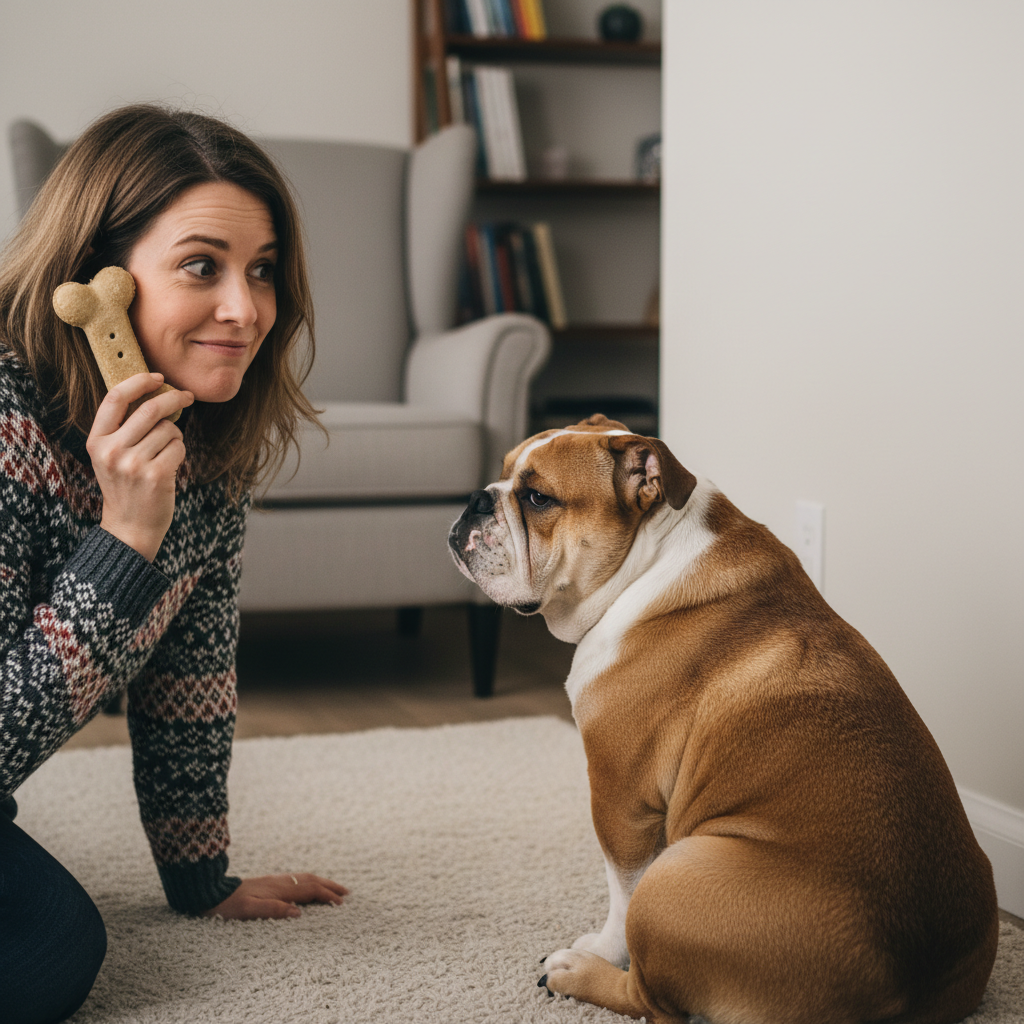
Sometimes, our training plans don’t go exactly as we envisioned. That’s completely normal! Every dog learns differently. If you hit a roadblock, don’t get discouraged. Here are some common challenges and how to navigate them with a cool head and a patient heart.
My Dog Just Stares at Me Blankly
If your dog isn’t showing any interest, the reward might not be motivating enough. Try switching to an even higher-value treat—something they absolutely can’t resist. Also, make sure you’re training at a good time. A dog who has just eaten a full meal might be less food-motivated. Try a session before dinner when they’re a bit hungrier.
My Dog is Too Enthusiastic and Nippy!
Some dogs get so excited they might offer a nip instead of a gentle boop. If this happens, do not reward the behavior. Say “Oops!” in a neutral tone and briefly turn your head away. You’re teaching them that gentle contact gets the reward, while teeth do not. When they try again and offer a softer nose touch or a lick, reward that lavishly. You are shaping the behavior from a rough mouth-touch to a delicate kiss.
My Dog Only Does it With the Food Lure on My Face
Getting stuck on the lure is a common issue. The key is to fade it very gradually. Instead of going from a full dab of peanut butter to nothing, try just touching the peanut butter to your cheek to leave a scent, but no visible food. Reward any attempt to touch the scented spot. You can also try putting the lure on a small, skin-colored bandage on your cheek and then eventually removing the bandage. The goal is to make the transition so small that your dog barely notices.
Remember: If your dog is struggling, you may be moving too fast. It’s always okay to take a step back to a point where they were successful and practice there a bit more before moving forward again. Training is a dance, not a race!
Kiss Etiquette: Setting Boundaries and Understanding Consent
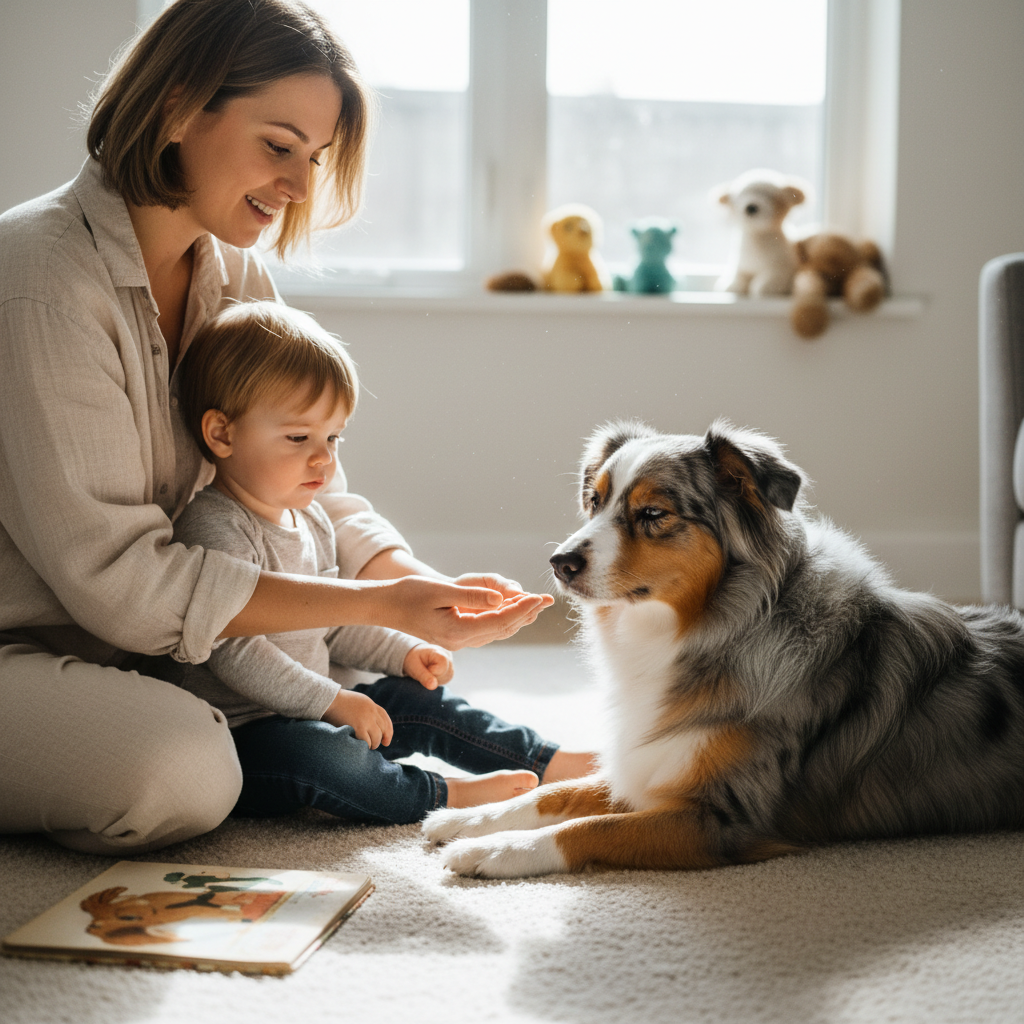
Teaching a fun trick like “kiss” comes with a little bit of responsibility. It’s a wonderful way to interact, but it’s crucial to establish boundaries for both your dog and the people they interact with. This ensures the trick remains a positive experience for everyone involved.
On Command, Not On Demand
The goal is to have your dog offer a kiss when you ask for it, not to have them constantly licking your face unsolicited. If your dog starts offering kisses to get attention or treats outside of training, simply ignore the behavior. Don’t say “no” or push them away; just turn your head and don’t give them the attention they’re seeking. When they stop, you can then ask for a different behavior, like a “sit,” and reward that. This teaches them that kisses happen on your terms.
Reading Your Dog’s Body Language
Consent is important, even for our pets. While most dogs will enjoy this affectionate trick, we must always be mindful of their comfort level. Pay attention to their body language. A happy, willing participant will have a relaxed body, a soft, wagging tail, and an eager expression. If your dog ever turns their head away, licks their lips, yawns, or shows a tense body, they’re communicating that they’re not comfortable. Never force the interaction. Respecting their signals will strengthen their trust in you.
Teaching People (Especially Kids) How to Interact
Once your dog is a kissing pro, friends and family will surely want to try it. It’s your job to be your dog’s advocate. Instruct people, especially children, not to put their face directly in your dog’s face. Instead, teach them to lean to the side and present their cheek, allowing the dog to approach them. Supervise all interactions and explain that if the dog doesn’t want to give a kiss, that’s okay. This protects both the person and your dog and ensures the experience remains safe and positive.
Conclusion
Congratulations, you’re now equipped with all the knowledge you need to teach your dog one of the most endearing tricks around! Remember that the journey of teaching your dog to “kiss” is about so much more than the final result. It’s about spending quality time together, improving your communication, and celebrating the small victories along the way. Be patient, stay positive, and cherish the process.
Every training session is a deposit in your relationship bank, building a stronger, more trusting, and more joyful bond between you and your furry best friend. So grab those treats, find a comfy spot, and get ready for some of the sweetest, most well-earned smooches you’ll ever receive.