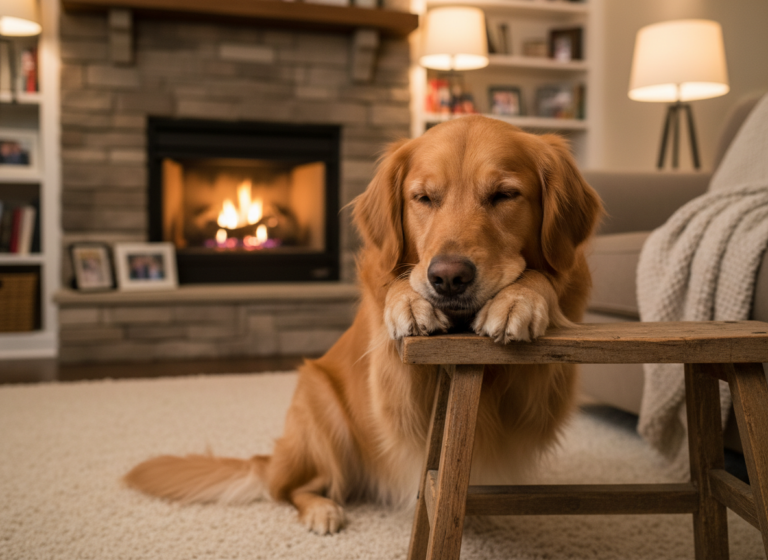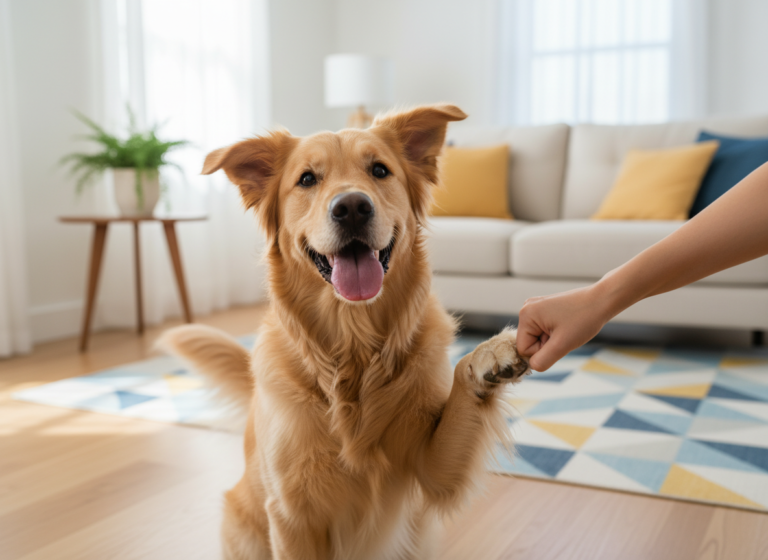
Have you ever seen a dog adorably cover its eyes with a paw and thought, ‘I wish my dog could do that!’? Well, you’re in luck! The ‘shy’ or ‘cover your eyes’ trick is not only incredibly cute, but it’s also a fantastic way to engage your dog’s brain and strengthen your bond. Trick training is more than just about showing off; it’s a form of communication, a confidence-booster for your pup, and a whole lot of fun for you both.
Forget complicated training manuals and frustrating sessions. We’ve broken down this charming trick into five simple, positive-reinforcement-based steps that any dog can learn. Whether you have a puppy just starting their training journey or an older dog ready for a new challenge, this guide is for you. So grab some tasty treats, find a comfy spot, and get ready to unlock your dog’s inner movie star!
Getting Started: What You’ll Need Before You Begin
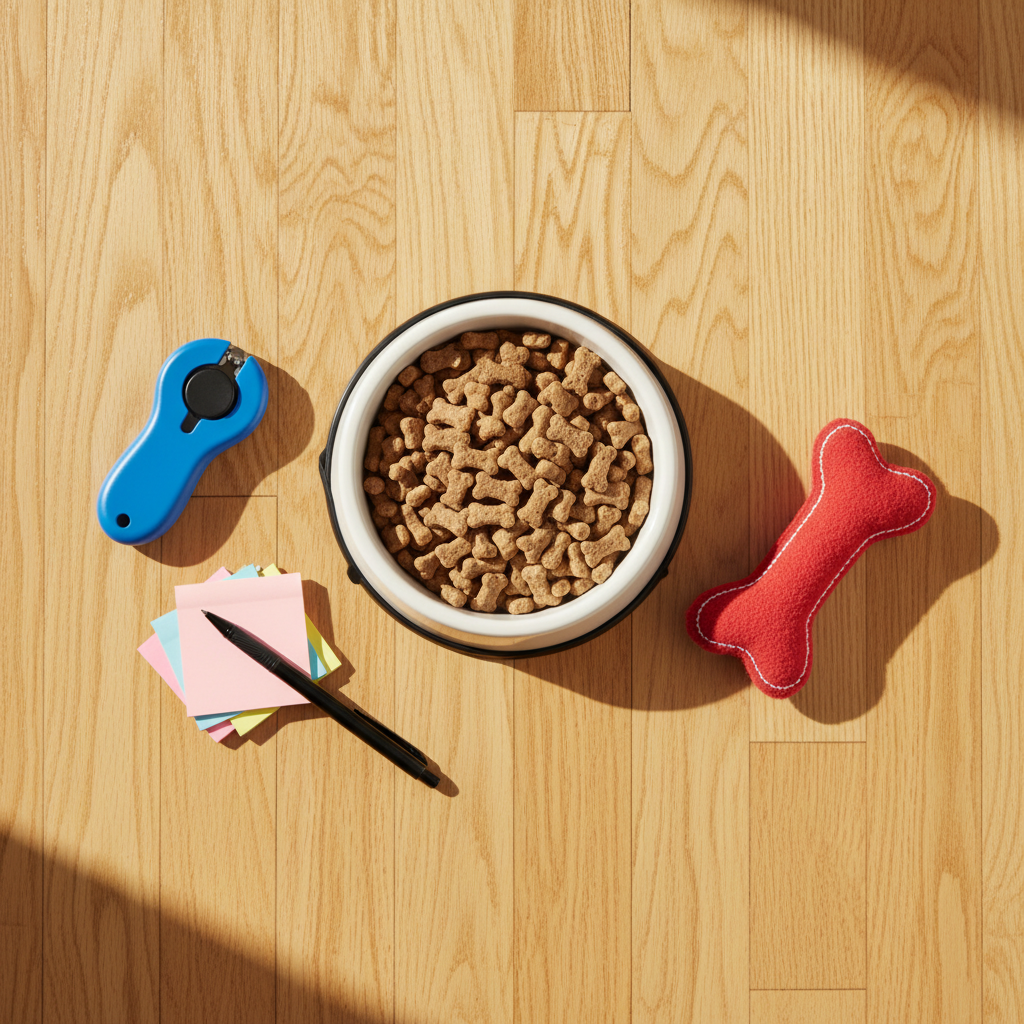
Before we jump into the fun part, let’s get our toolkit ready. A successful training session starts with good preparation. Having everything on hand means you can keep the session upbeat and flowing, which helps your dog stay engaged and happy. You don’t need a lot of fancy equipment—in fact, you probably have most of these things at home already!
Your Training Toolkit:
- High-Value Treats: We’re not talking about their regular kibble. For learning a new skill, you need the good stuff! Think small, soft, smelly treats that your dog absolutely loves. Pieces of cheese, boiled chicken, or commercial training treats work wonders. The goal is to make the reward so exciting that your dog is super motivated to work for it.
- A Clicker (Optional but Recommended): A clicker is a fantastic tool for marking the exact moment your dog does something right. The ‘click’ acts as a precise signal that says, ‘Yes, that exact movement earned you a treat!’ If you don’t have a clicker, a consistent marker word like ‘Yes!’ or ‘Good!’ works just as well.
- Sticky Notes or Tape: The secret weapon for this trick! A small, non-toxic sticky note or a piece of gentle painter’s tape is the perfect, lightweight prop to encourage your dog to touch their own face.
- A Comfortable Training Space: Choose a quiet area of your home where you and your dog won’t be distracted. A comfy rug or carpeted floor is ideal. Keep sessions short and sweet—around 5-10 minutes is perfect to start.
- A Positive Attitude: This is the most important tool of all! Your dog feeds off your energy. Stay patient, be encouraging, and remember to celebrate the small wins. Training should always be a fun game, not a chore.
Expert Tip: Keep your training sessions short and end on a positive note. It’s always better to stop when your dog is still engaged and successful, leaving them eager for the next session.
The 5-Step Method to Teaching the ‘Shy’ Command
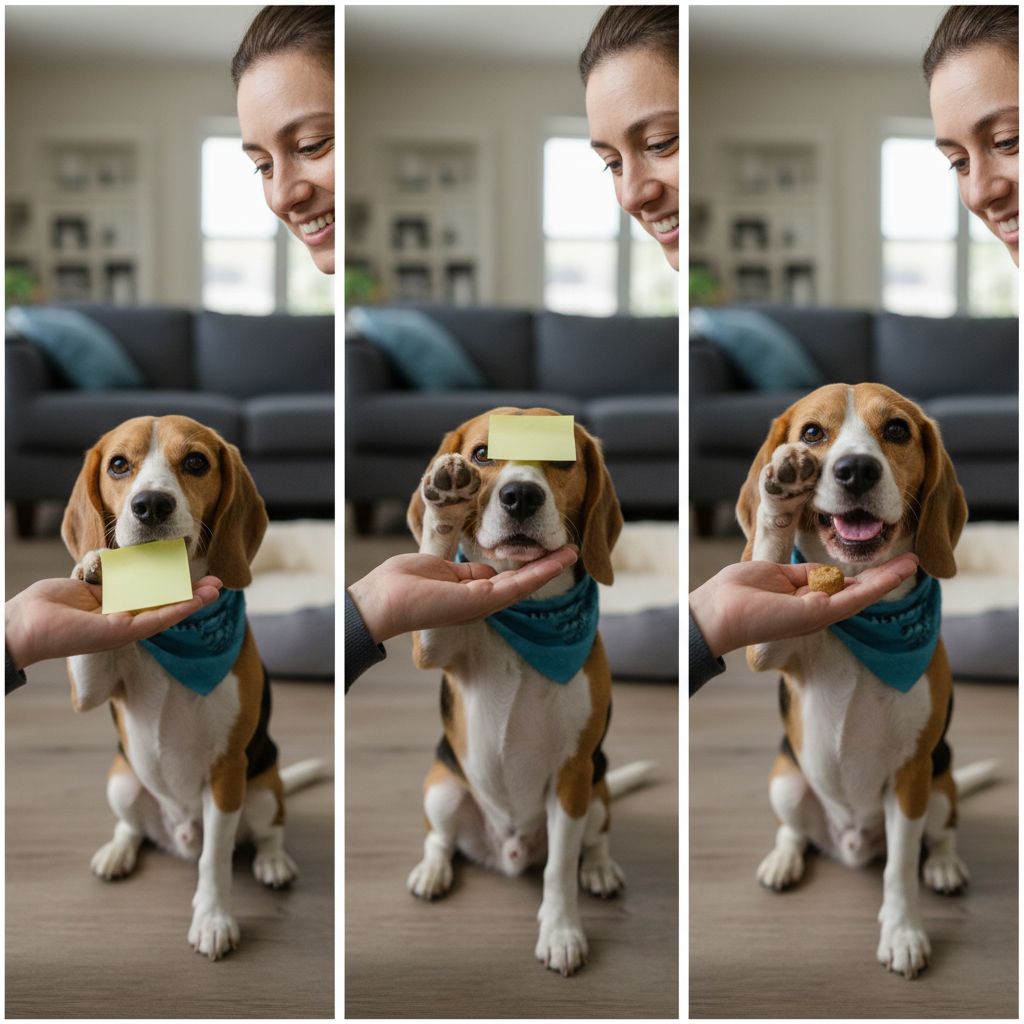
Alright, with your treats in your pocket and your positive attitude on full display, it’s time to teach! We’ll be using a training technique called ‘shaping,’ which means we’ll reward small approximations of the final behavior until we build up to the full ‘cover your eyes’ motion. Patience is key here. Let’s break it down.
Step 1: Introduce the Target (The Sticky Note!)
The first goal is simple: get your dog to touch the sticky note with their paw. Peel off a sticky note and hold it in your hand. Most dogs will be curious and sniff it. The moment their nose or paw touches it, click (or say ‘Yes!’) and give them a treat. Repeat this a few times. Once they are reliably touching the note in your hand, try sticking it lightly to a low surface like a wall or cabinet. When they touch it with their paw, click and treat. We are teaching them that interacting with this little piece of paper is a very rewarding game.
Step 2: Shape the Paw-to-Face Motion
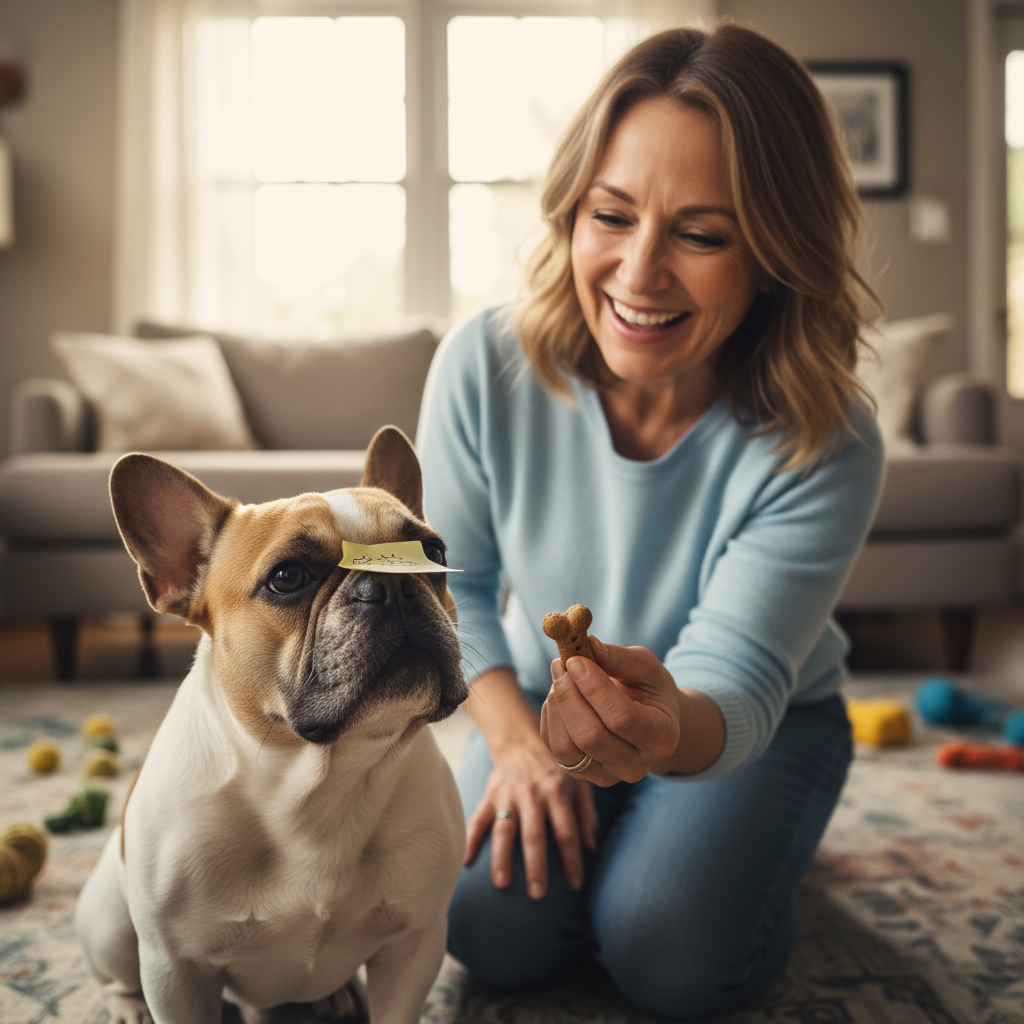
This is where the magic starts. Once your dog understands the ‘touch the sticky note’ game, gently place the sticky note on the side of their head, near their cheek or above their eye. Be very gentle and make this fun. Their natural instinct will be to remove it. The very instant their paw moves up toward their head to touch the note, click and treat! It doesn’t matter if they actually touch it at first. We are rewarding the upward motion of the paw. Repeat this, gradually waiting for their paw to get closer and closer to the sticky note before you click and treat. This shapes the ‘paw to face’ movement we need.
Step 3: Fade the Prop and Introduce a Hand Signal
After several successful sessions, your dog will start to anticipate the action. They’ll know that a sticky note on their head means ‘lift paw to face for a treat.’ Now, we’ll start to fade the prop. Pretend to place the sticky note on their head, but don’t actually leave it there. Use the same motion with your hand. As you do this, your dog will likely still make the paw-lifting motion. When they do, click and reward them enthusiastically! Your hand motion is now becoming the new cue. Refine this hand signal into something subtle, like tapping the side of your own head or making a small arc motion near your dog’s face.
Step 4: Add the Verbal Cue ‘Shy’
Your dog is now reliably lifting their paw to their face when you give your hand signal. It’s time to give this cool move a name! Just before you give your hand signal, say your chosen verbal cue clearly and happily—’Shy!’ or ‘Cover your eyes!’—then immediately give the hand signal. When your dog performs the action, click and treat. After many repetitions, your dog will start to associate the verbal cue with the action. You can then begin to test it by saying ‘Shy!’ without giving the hand signal. If they do it, throw a jackpot of treats! If they hesitate, that’s okay—just pair the verbal cue and hand signal a few more times before trying again.
Step 5: Practice and ‘Proof’ the Behavior
Your dog knows the trick! Now it’s time to make it rock-solid. This step is called ‘proofing,’ and it involves practicing the trick in different situations to help your dog generalize the command. Try asking for the ‘shy’ command in different rooms of the house. Then, try it in the backyard. Eventually, you can practice in a quiet park. Start with easy environments and gradually increase the distraction level. Also, work on asking them to hold the pose for a second or two before you click and treat. This builds duration and makes the trick even more impressive!
Oops! Troubleshooting Common Training Hiccups
Even with the best plan, sometimes we hit a little snag in training. Don’t worry, it’s completely normal! Every dog learns at a different pace. The key is to stay positive and figure out how to communicate more clearly with your pup. Here are some common issues and how to solve them.
‘My dog just wants to eat the sticky note!’
This is a common one! If your dog is more interested in eating the prop than interacting with it, try using something less appealing, like a small piece of painter’s tape. You can also work on the ‘leave it’ command separately. For this trick, you can also pivot. Instead of placing it on their head, hold it in your hand very close to their head, and reward them for touching it. The goal is the motion, not the interaction with the note itself.
‘My dog uses their nose instead of their paw.’
If your pup is nudging the sticky note with their nose, you’re simply rewarding the wrong action. For a moment, stop rewarding nose-touches entirely. Only click and treat for any slight paw movement, even if it’s just a small lift off the ground in the direction of the note. You may have to go back a step and reward any paw movement to remind them what you’re looking for.
‘My dog won’t lift their paw high enough.’
This is a classic shaping challenge. The solution is gradual approximation. If your dog is only lifting their paw an inch, start by rewarding that! Once they’re reliably lifting it an inch, wait just a moment longer to see if they’ll lift it an inch and a half. Only reward the slightly higher lift. Over time, you’ll incrementally raise the criteria until they are reaching their face. Remember to place the sticky note in a location that encourages a higher lift, like higher up on their head or brow.
‘My dog gets frustrated and gives up.’
Frustration is a sign that we’re asking for too much, too soon. If you see your dog yawning, sniffing the ground, or walking away, it’s time to take a break. End the session on a positive note by asking for a simple command they know well (like ‘sit’), rewarding it heavily, and then ending the game. In the next session, go back to the last step where they were confident and successful and work from there, taking even smaller, more achievable steps.
Remember: The goal of trick training is to have fun and build your relationship. If you or your dog are getting frustrated, it’s okay to stop and try again another day. Keep it light and positive!
Next-Level Fun: Variations and Taking it to the Next Level
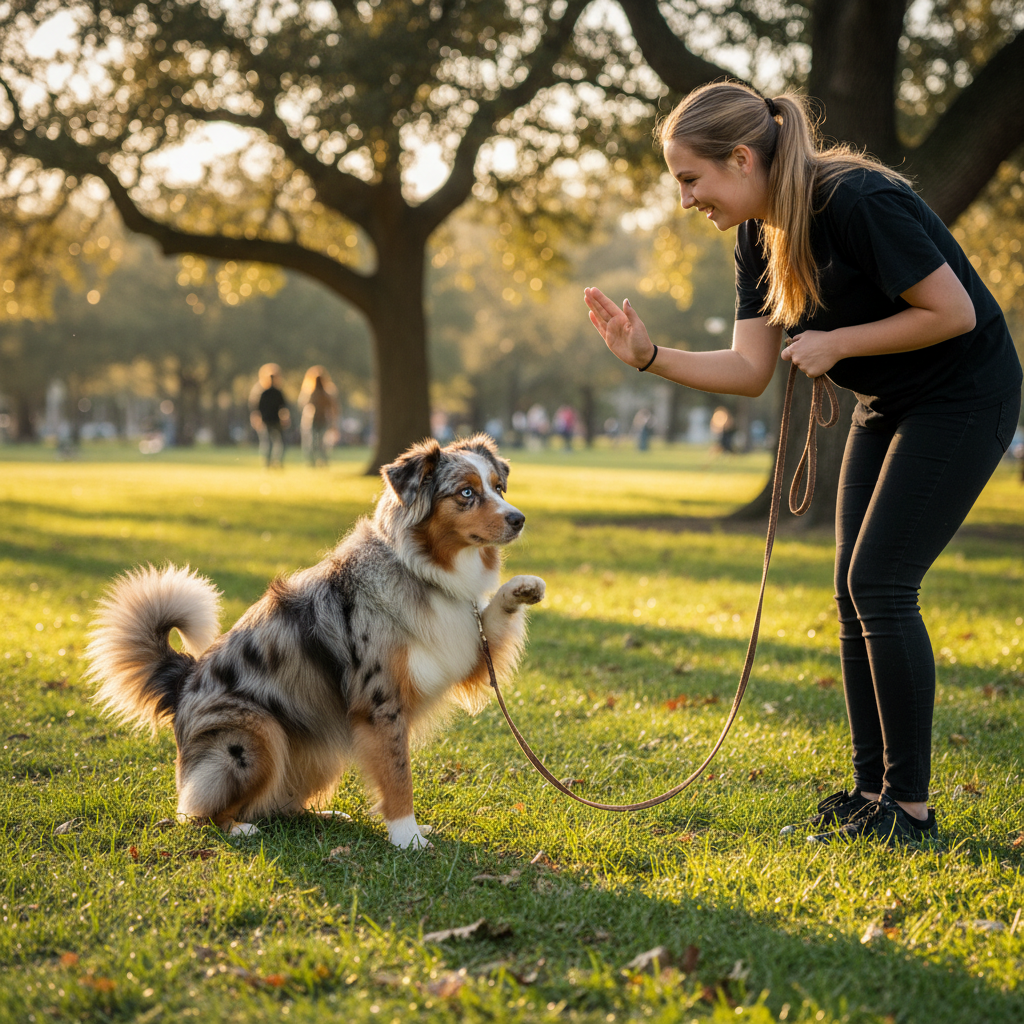
So your dog has mastered the basic ‘shy’ command. High five (or high paw)! But the fun doesn’t have to stop there. Once a behavior is learned, you can build on it in all sorts of creative ways. This not only keeps your smart pup engaged but also makes your trick-repertoire even more impressive.
The ‘Peek-a-Boo’ Add-On
This is a super cute variation. Once your dog is holding the ‘shy’ pose, use a treat to lure their paw slightly away from their eye and then back. Mark and reward this ‘peek’ motion. Over time, you can add a new verbal cue like ‘Peek-a-boo!’ for the action of moving their paw away and back. This turns a static pose into an interactive game.
Building Duration: Hold That Pose!
Can your dog cover their eyes for more than a split second? Building duration is a great challenge. Start by delaying your click and treat by just one second after they cover their eyes. Gradually increase the time. If they move their paw away too soon, that’s okay—next time, just ask for a slightly shorter duration. This teaches your dog impulse control and focus.
Distance and Distractions
As mentioned in the proofing step, a true test of a trick is whether your dog can do it from a distance or with distractions around. Start by taking one step back before giving the cue. If they succeed, reward them! Gradually increase the distance. You can also practice while another person is in the room, or with the TV on quietly in the background. This makes the command reliable in almost any situation.
| Trick Variation | Training Goal | Best For |
|---|---|---|
| Peek-a-Boo | Teach the dog to move their paw away from and back to their eye on cue. | Dogs that have mastered the basic ‘shy’ pose. |
| Hold the Pose | Increase the duration the dog holds their paw over their eye. | Building focus and impulse control. |
| Distance Work | Perform the trick while the owner is several feet away. | Advanced dogs who need a mental challenge. |
Combining the ‘shy’ trick with other commands can create fun behavioral chains. For example, you could ask your dog to ‘sit,’ then ‘lie down,’ then ‘cover your eyes.’ The possibilities are endless, so get creative and have fun with your talented pup!
Conclusion
Congratulations! You now have all the tools and knowledge to teach your dog the absolutely charming ‘shy’ trick. By following these five steps, staying patient, and keeping things positive, you’ll be amazed at what your furry friend can accomplish. Remember, the real prize isn’t just the trick itself, but the time you spend together, learning to communicate and strengthening your incredible bond.
Every dog is an individual, so don’t be discouraged if your pup takes a little longer to pick it up. Celebrate every tiny bit of progress, from the first paw lift to the final, flawless performance. The journey of training is filled with laughter, learning, and a whole lot of love. Now go have some fun and show off your dog’s new party trick!