We’ve all been there. You’ve just finished cleaning the floors, they’re sparkling and pristine. You let your dog out for a quick potty break on a damp day, and before you can grab a towel, a four-legged tornado of mud and joy comes sprinting back inside. Suddenly, your clean floors are decorated with a perfect Jackson Pollock of paw prints. It’s a classic pet owner struggle!
But what if I told you there’s a solution that doesn’t involve you standing guard by the door with a towel for the rest of your life? What if your dog could actually learn to… wipe their own paws?
It sounds like a magical trick reserved for circus animals, but it’s a completely achievable and incredibly useful behavior you can teach your canine companion. Teaching your dog to wipe their feet is more than just a cute party trick; it’s a practical skill that saves you time and cleaning effort. Plus, it’s a fantastic mental exercise for your dog and a wonderful way to strengthen your bond through positive, fun training sessions. In this guide, we’ll walk you through everything you need, from the right gear to the step-by-step commands and troubleshooting tips, to turn your muddy buddy into a clean and courteous housemate.
Gearing Up for Success: What You’ll Need
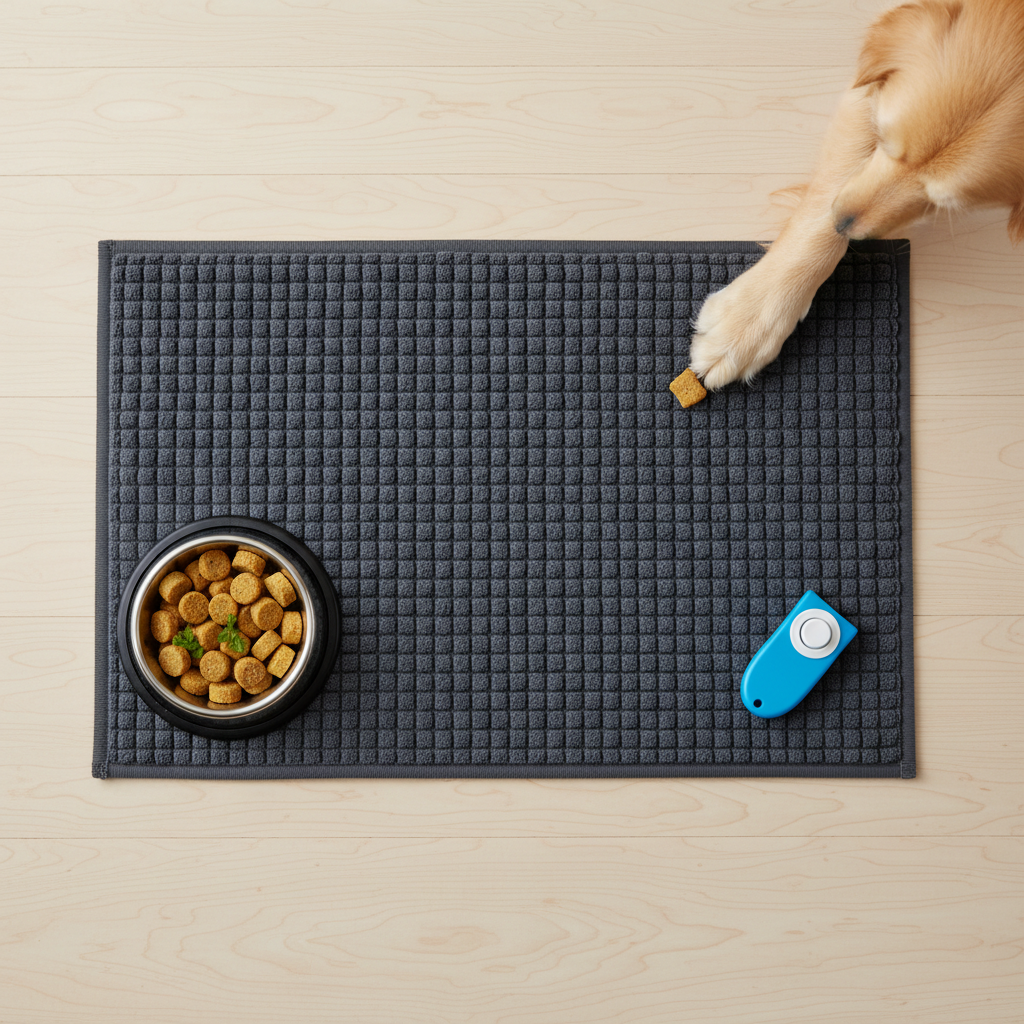
Before you jump into training, gathering a few key items will set you and your pup up for a smooth and successful experience. You don’t need a lot of fancy equipment, just the right tools to make learning easy and fun. Think of it as preparing your classroom for an eager student!
The Perfect Doormat
This is your most important tool! Not all doormats are created equal for this task. You’ll want something that is:
- Highly Absorbent: Look for mats made from microfiber or other materials designed to trap dirt and moisture. A regular coir or rubber mat might not provide the right texture or cleaning power.
- Large and Stable: The mat should be big enough for your dog to comfortably stand on and move around a bit. A non-slip backing is crucial to prevent it from sliding around and scaring your dog during training.
- Appealing Texture: Some dogs are sensitive to certain textures. Find a mat with a texture that your dog seems to enjoy standing on. You can even test a few out!
High-Value Treats
This is the secret weapon of dog training. High-value treats are extra-special goodies that your dog absolutely loves and doesn’t get all the time. They are your dog’s paycheck for a job well done. Think small, soft, and smelly, like tiny pieces of chicken, cheese, or commercial training treats. The goal is a quick, delicious reward that doesn’t take long to chew, so you can keep the training session moving.
A Clicker (Optional, but Recommended!)
A clicker is a small handheld device that makes a distinct ‘click’ sound. In training, you ‘charge’ the clicker by associating the sound with a treat. Once your dog understands that ‘click’ means a reward is coming, you can use it to mark the exact moment they perform the correct behavior—like scratching the mat. This precise timing can speed up the learning process significantly.
Expert Tip: If you’ve never used a clicker, it’s easy to start! In a quiet room, click the clicker and immediately give your dog a high-value treat. Repeat this 10-15 times. Your dog will quickly learn that the click sound predicts a delicious snack, and you’ll be ready to use it in your training sessions.
Patience and a Positive Attitude
This is the most essential ingredient! Your dog feeds off your energy. If you’re relaxed, happy, and patient, your dog will be more engaged and willing to learn. Remember, this is a fun game, not a chore. Keep sessions short (5-10 minutes is perfect) and always end on a positive note, even if you only made a tiny bit of progress.
The Paw-sitive Steps to a Clean Entrance: A Step-by-Step Guide
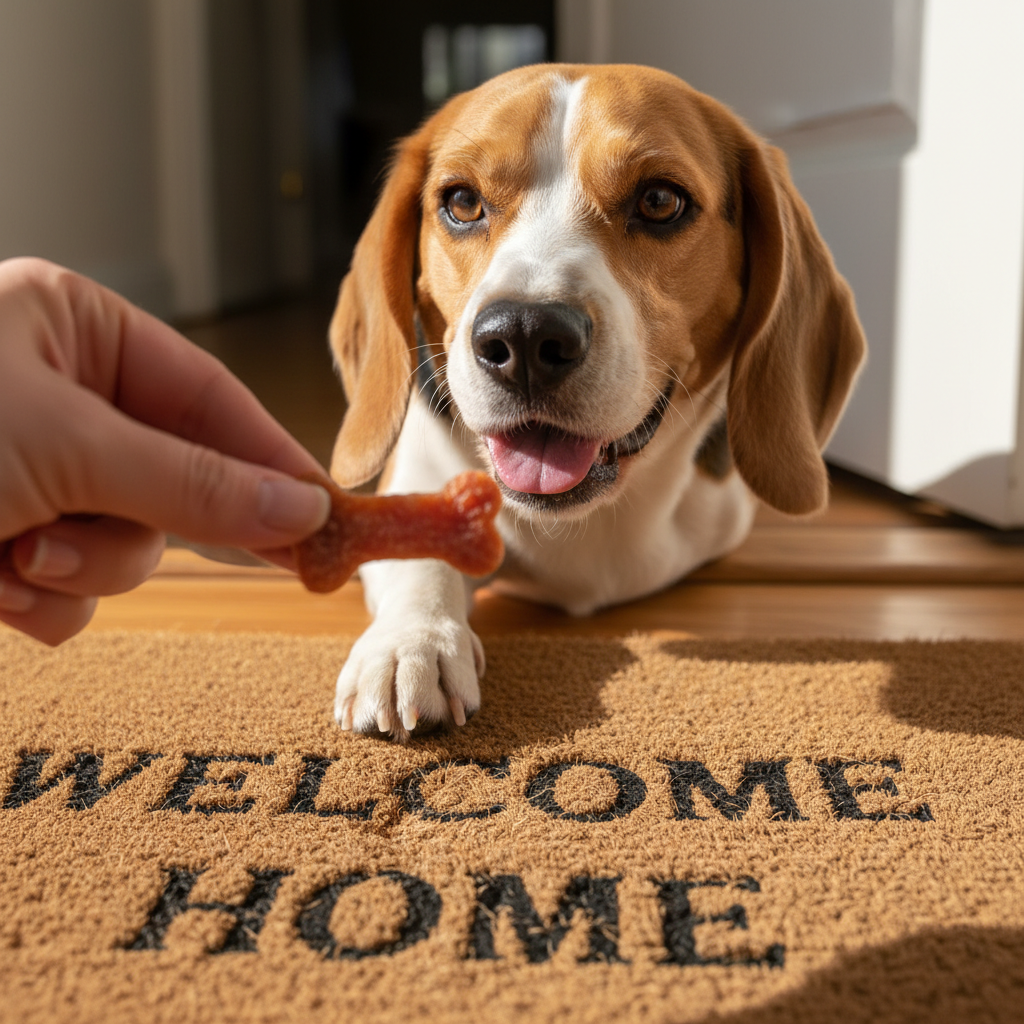
Alright, you’ve got your gear, your treats are ready, and your attitude is positive. It’s time to start training! We’re going to break this down into small, easy-to-manage steps. The key is to build the behavior piece by piece, rewarding every little success along the way. Let’s begin!
- Step 1: Make the Mat a Great Place to Be.
Before we ask for any action, your dog needs to love the doormat. Place the mat on the floor in a low-traffic area. Any time your dog interacts with it—sniffs it, looks at it, steps on it with even one paw—click (if using) and toss a treat onto the mat. We want them to associate the mat itself with wonderful things. Do this for a few short sessions until your dog willingly approaches the mat. - Step 2: Introduce the ‘Touch’ Cue.
Now, we’ll ask for a specific interaction. With your dog near the mat, wait for them to place a paw on it. The instant their paw touches the mat, click and treat. If they are hesitant, you can lure them by placing a treat on the mat. Once they are consistently offering a paw on the mat, you can add a verbal cue like “Paws” or “Mat” right before they do it. - Step 3: Encourage the ‘Wiping’ Motion.
This is where the magic happens! Once your dog is confidently touching the mat with one paw, we want to encourage a scratching or shuffling movement. Hold a treat in your closed hand near the mat. When your dog touches the mat with their paw, move your hand back slightly, encouraging them to drag or scratch their paw forward to follow the treat. Click and reward any forward or scratching motion, no matter how small. You can also try tossing the treat a short distance away from them on the mat, which can naturally cause them to ‘dig’ for it. - Step 4: Shape the Behavior and Add Other Paws.
As your dog starts to understand the scratching game, start rewarding more enthusiastic wiping. Reward two scratches in a row, then three. You can also start encouraging the use of the other paw by placing your treat hand on the other side. Don’t worry about perfection; just reward the effort. This is also when you can introduce a specific cue like “Wipe your feet!” or “Clean paws!” Say the cue right as they begin the wiping motion. - Step 5: Build Duration and Generalize.
Once your dog is reliably wiping with one or both paws on cue, start asking for a little more duration. Wait for 2-3 seconds of wiping before you click and treat. Slowly build this up. Now, it’s time to take the show on the road! Move the mat to the front door and practice there. Then the back door. The goal is for them to understand that “Wipe your feet!” means to perform this action on the mat by any door. - Step 6: Put It All Together in a Real-Life Scenario.
The final step is to integrate the new skill into your daily routine. The next time you come inside from a walk, have your high-value treats ready. As you open the door, cue your dog to “Wipe your feet!” on the mat. Be ready to give lots of praise and a jackpot of treats for a successful performance! Consistency is key. For the first few weeks, make sure you ask for and reward the behavior every single time you come inside.
Troubleshooting Tangles: Common Problems and Quick Fixes
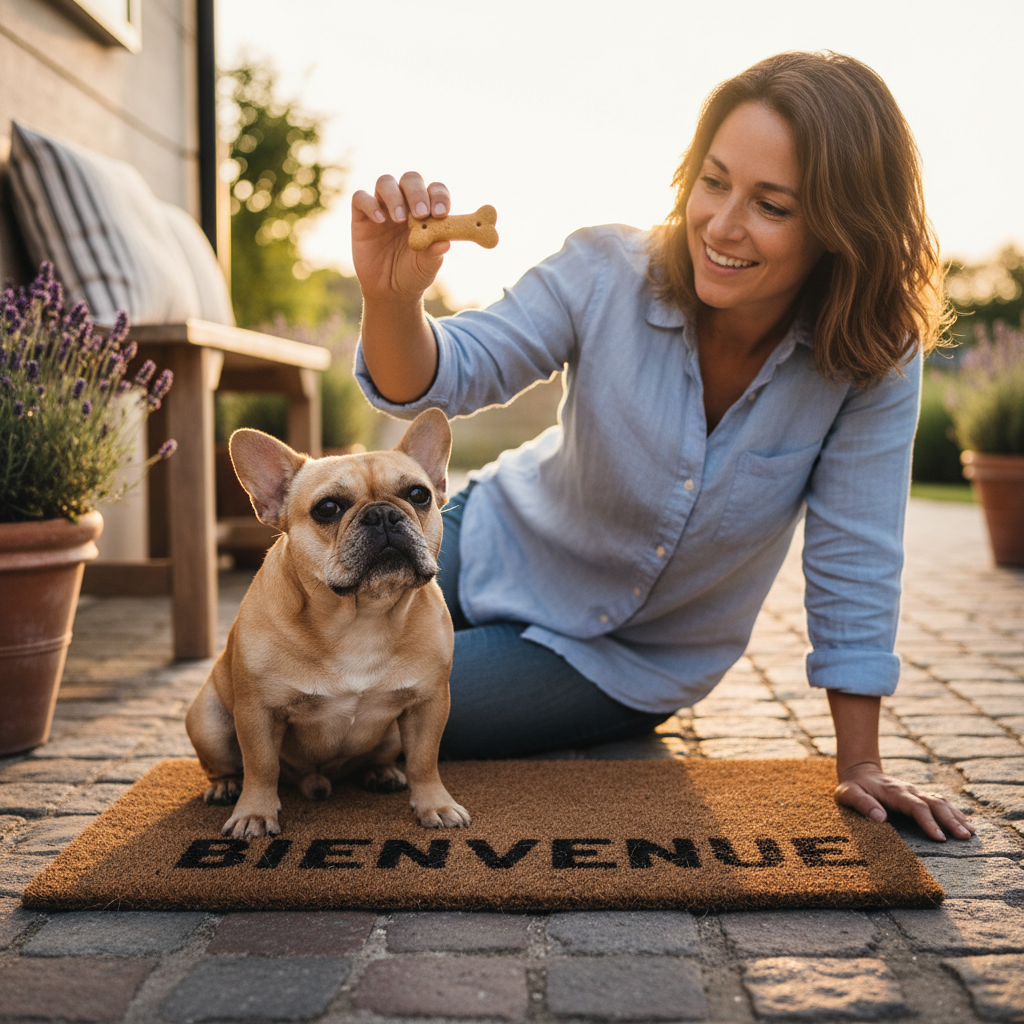
Even with the best plan, you might hit a few snags. That’s completely normal in dog training! Every dog learns at a different pace. The important thing is to identify the problem and adjust your approach without getting frustrated. Here are some common issues and how to navigate them like a pro.
Think of these challenges not as failures, but as your dog asking for a little more clarification. A small step back in the training process is often the fastest way forward.
| The Problem | The Pro Solution |
|---|---|
| My dog just stands on the mat and stares at me. | This usually means they’re not sure what you want next. Go back a step! Reward them just for being on the mat, then go back to rewarding a single paw touch. Make it super easy for them to succeed, and then slowly build back up to asking for the wiping motion. |
| My dog gets the ‘zoomies’ and gets too excited to focus. | Excitement is great, but too much can hinder learning. If your dog gets over-aroused, it’s a sign the session has gone on too long or the environment is too stimulating. Keep your training sessions very short (even just 2-3 minutes) and end before they get overexcited. You can also practice a ‘wait’ at the door to help them calm down before you ask for the ‘wipe feet’ cue. |
| My dog tries to chew or dig at the mat destructively. | This can happen if the dog misinterprets the goal. Redirect this energy. If they start chewing, say a calm “Oops!” and briefly withdraw your attention and the treats. When they offer the correct, gentler wiping motion, reward them enthusiastically. Ensure the mat is a durable material that can withstand some scratching. |
| They do it perfectly inside, but forget as soon as we come in from a walk. | This is a classic issue of ‘proofing’—the dog hasn’t generalized the behavior to all situations yet. The real world is full of exciting smells and sounds! You need to make the reward for wiping their feet even more exciting than the distractions. Use your absolute highest-value treats (think real meat or cheese) specifically for practicing at the door. |
| My dog only wipes one paw. | That’s a great start! Many dogs have a dominant paw. To encourage the other one, try holding the treat on the opposite side of their body. This will cause them to shift their weight and make it more likely they’ll use the other paw to reach for it. Reward any attempt to use the non-dominant paw with extra enthusiasm. |
Remember the Golden Rule: Never punish your dog for not getting it right. Training should always be a positive experience. If you or your dog are getting frustrated, it’s time to take a break and try again later with a fun, short session.
From Trick to Habit: Making ‘Wipe Your Paws’ a Reflex
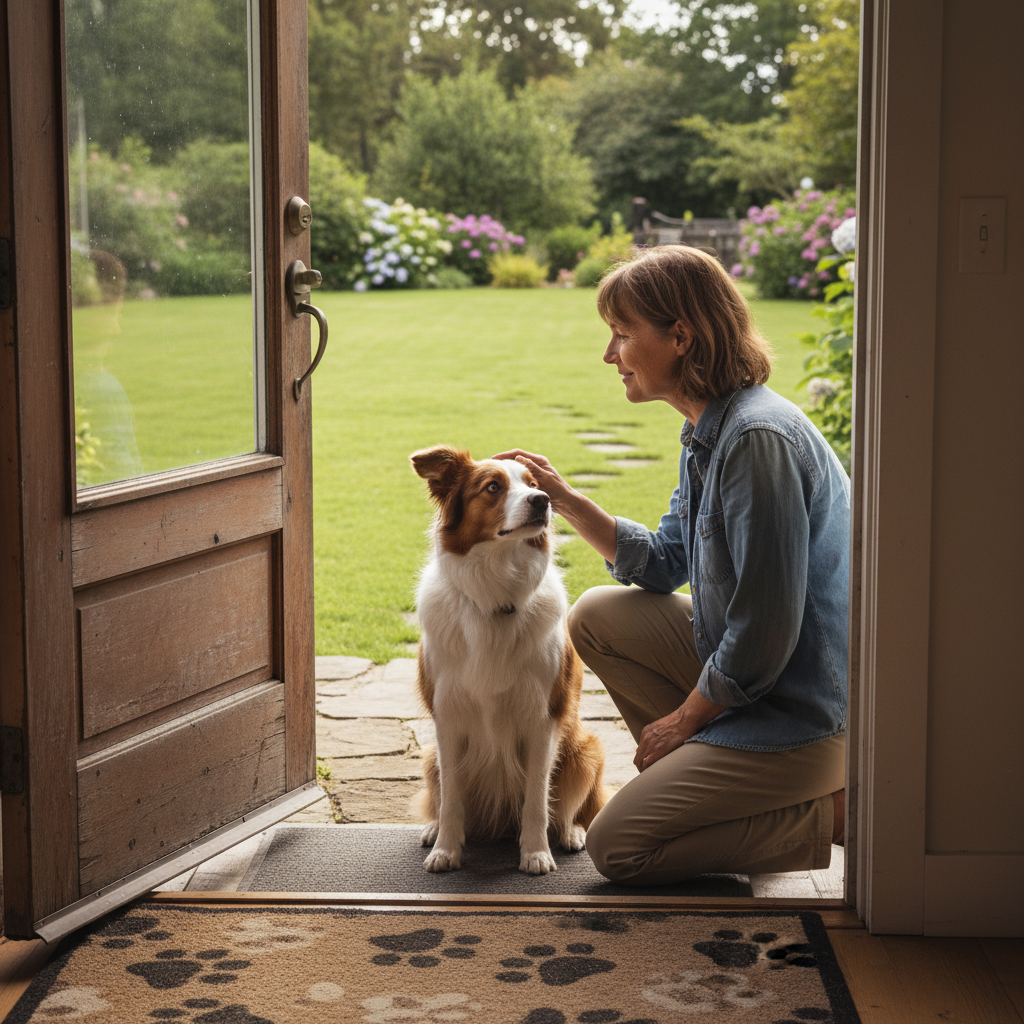
You’ve taught the steps and worked through the kinks. Congratulations! Now, the final frontier is turning this cool trick into an ingrained, automatic habit. The goal is for your dog to approach the door and offer to wipe their paws without you even needing to ask. This is where consistency and real-world practice become your best friends.
Practice in Every Context
A dog’s brain doesn’t always generalize well. They might think ‘Wipe Your Paws’ only applies to the back door after a rainy day. It’s your job to show them it applies everywhere, every time.
- Different Doors: Practice the routine at the front door, back door, garage door, and even at friends’ or family members’ houses (with their permission, of course!).
- Different Weather: Don’t just practice when it’s muddy. Practice on sunny days, snowy days, and windy days. The behavior should be linked to the act of entering the house, not the weather outside.
- Different ‘You’: Have other family members or friends ask for the behavior. This helps your dog understand the command isn’t just specific to you.
Fading the Lure and Phasing Out the Clicker
As your dog becomes more proficient, you can start to rely less on hand gestures and lures. Instead of holding the treat to guide their paw, simply say your verbal cue, “Wipe your feet!” and wait for them to perform the action. Once the behavior is solid and on a verbal cue, you no longer need to click for every repetition. The clicker’s main job is to teach a new behavior; once it’s learned, you can transition to using your verbal praise like “Yes!” or “Good job!” as the marker before giving the treat.
Introducing a ‘Life Reward’
While treats are fantastic for training, you can also start using ‘life rewards’ to reinforce the habit. A life reward is anything your dog loves that isn’t food. For example, the reward for wiping their paws could be you opening the door wider for them to come all the way inside, a favorite toy being tossed for them, or an enthusiastic belly rub. This makes the behavior itself part of the rewarding ‘coming home’ routine.
The Power of Routine
Dogs are creatures of habit. By consistently asking for a paw-wipe every single time you enter the house, you are building a powerful behavioral chain. Eventually, your dog will anticipate the request. They’ll approach the door, see the mat, and start wiping their paws because it’s simply ‘what we do when we come inside.’ This is the ultimate goal, and it’s achieved through patient repetition and positive reinforcement every single day.
Conclusion
And there you have it! The complete journey from muddy-pawed mayhem to a clean and courteous canine. Teaching your dog to wipe their feet is so much more than a way to keep your floors clean. It’s a testament to the incredible intelligence of our dogs and the strength of the bond we share with them. Every training session is a conversation, a puzzle you solve together that deepens your understanding and trust.
Remember to celebrate the small victories, keep your sense of humor when things don’t go as planned, and cherish the process. The pride you’ll feel the first time your dog voluntarily wipes their muddy paws after a romp in the rain is immeasurable. So grab your treats, pick out the perfect doormat, and get ready to be amazed by what your best friend can learn. Here’s to cleaner floors and happier, smarter dogs!