Living with a dog that has more energy than a toddler on a sugar rush can be both hilarious and exhausting. You’ve played fetch until your arm feels like it might fall off, gone on long hikes, and provided every puzzle toy imaginable. Yet, the moment there’s a pause, your dog is bouncing off the walls, ready for the next adventure. What if the solution wasn’t about tiring them out, but about teaching them how to chill out?
Enter the Relaxation Protocol, a training method developed by the brilliant veterinary behaviorist Dr. Karen L. Overall. Think of it less as a command and more as a life skill you’re teaching your furry friend. It’s a structured, 15-day program that guides your dog, step-by-step, to learn that being calm is a rewarding and wonderful choice. This isn’t about forcing submission; it’s about empowering your dog to find their own ‘off’ switch. Get ready to transform your hyper-pup into a master of zen. Your sanity (and your furniture) will thank you.
What Exactly is the Relaxation Protocol?

Before we dive into the ‘how,’ let’s unpack the ‘what’ and the ‘why.’ The Relaxation Protocol is often misunderstood as just a glorified ‘stay’ command. But it’s so much more profound than that. A dog can be physically still while its mind is racing with anxiety, excitement, or stress. The protocol’s goal is to address the root of the issue: the dog’s internal state.
At its core, the protocol is a form of differential reinforcement. In simple terms, you are systematically rewarding your dog for choosing to remain calm while you gradually introduce low-level distractions. It’s designed to create a powerful positive association with being settled on a specific spot, like a mat or bed. This spot becomes their ‘zen zone,’ a place where they understand that relaxation is the name of the game.
Why It Works: The Science of Calm
This isn’t just wishful thinking; it’s based on behavioral science. Here’s the breakdown:
- It Builds a New Default Behavior: Instead of defaulting to pacing, whining, or barking when uncertain or under-stimulated, your dog learns a new, more productive default: go to the mat and relax.
- It Changes the Brain: By repeatedly practicing this calm state and being rewarded for it, you are literally helping your dog build new neural pathways. The ‘calm’ pathway gets stronger and more accessible, while the ‘hyper-aroused’ pathway gets used less.
- It’s Predictable and Clear: Dogs thrive on predictability. The protocol is a clear, black-and-white game with simple rules. This clarity reduces anxiety and helps them learn faster. The dog always knows what’s expected of them: stay on the mat, and good things happen.
Expert Tip: The goal isn’t a rigid, tense ‘stay.’ You’re looking for physical relaxation. Watch for signs like a soft gaze, a deep sigh, relaxed ears, and maybe even a hip that flops over to one side. That’s the gold you’re mining for!
Gearing Up for Success: What You’ll Need
The beauty of the Relaxation Protocol is its simplicity. You don’t need a lot of fancy equipment to get started. Setting yourself up for success is all about preparing a few key items and the right mindset.
Your Training Toolkit:
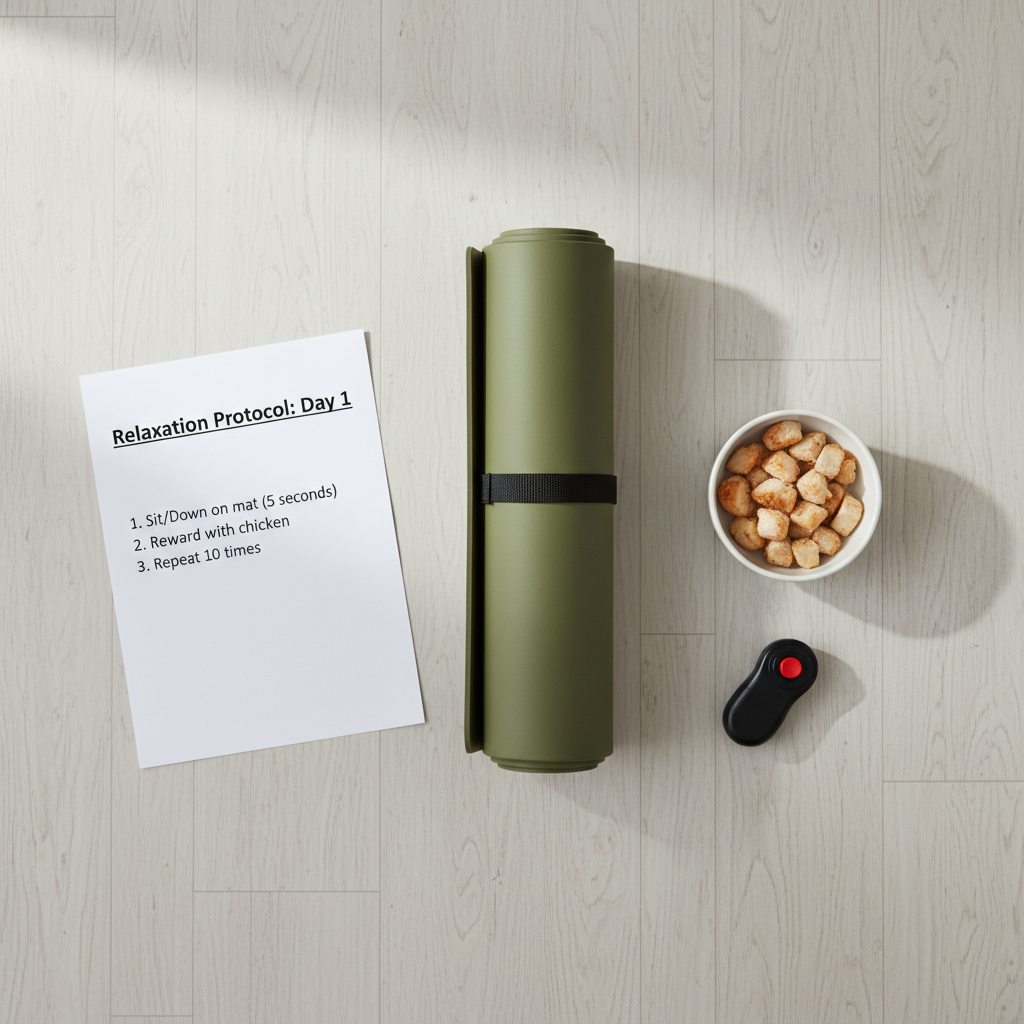
- A Designated ‘Settle’ Spot: This is crucial. Choose a comfortable mat, bed, or even a specific rug that will be used exclusively for this training. It should be portable enough to move to different rooms later on but big enough for your dog to lie on comfortably.
- High-Value Treats: Your dog’s regular kibble probably won’t cut it. You need something special that gets them excited to work. Think tiny, pea-sized pieces of boiled chicken, cheese, hot dogs, or a soft, smelly training treat. The key is small pieces so you can reward frequently without filling them up too quickly.
- The Protocol Task List: Dr. Karen Overall has made the 15-day task list available for free. A quick search for ‘Dr. Karen Overall Relaxation Protocol PDF’ will give you the day-by-day instructions. You can print it out or keep it handy on your phone or tablet.
- A Quiet Environment: For the first few days, start in the quietest room in your house with minimal distractions. Turn off the TV, put your phone on silent, and ensure other pets or family members won’t interrupt the session.
- Patience (Lots of It!): This is the most important tool. This is a marathon, not a sprint. There will be good days and not-so-good days. Your calm and patient energy will be a huge factor in your dog’s success.
The 15-Day Journey: A Step-by-Step Guide to Calm
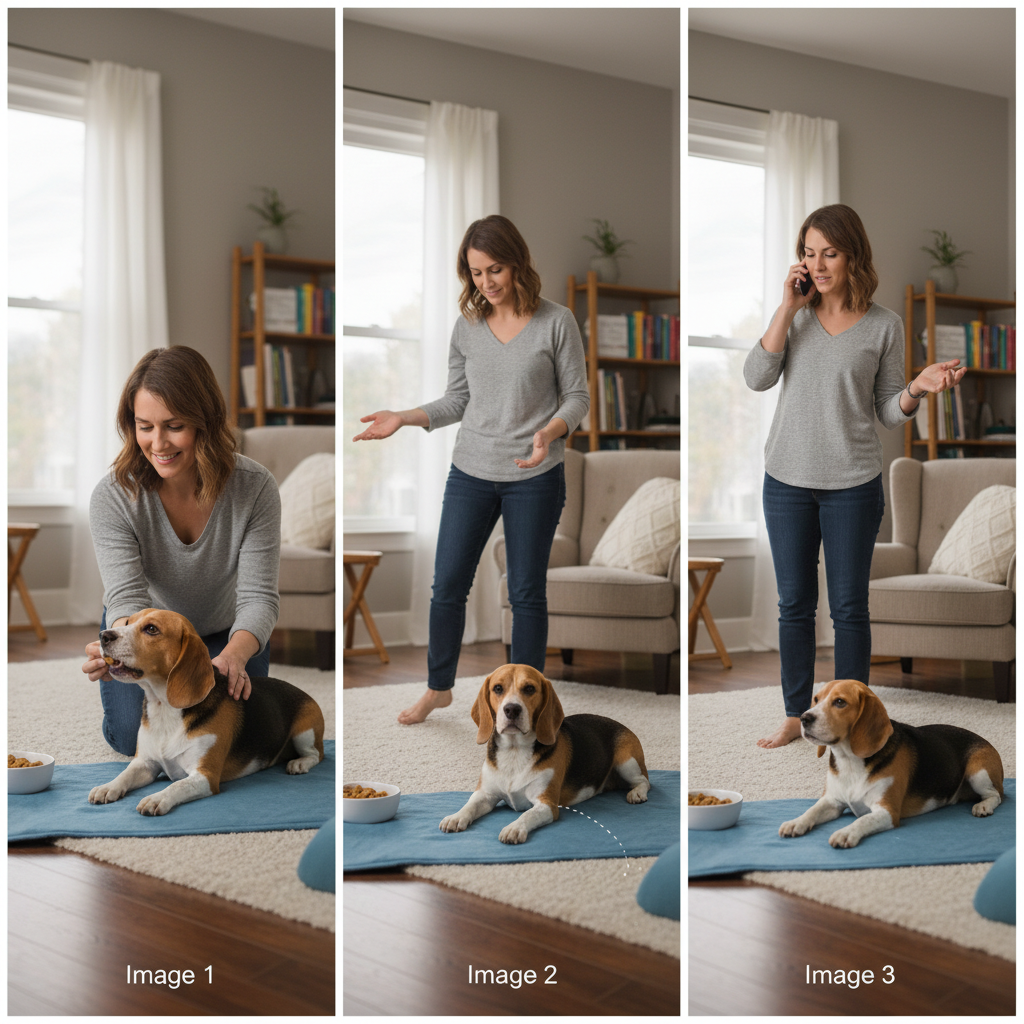
Alright, you’ve got your gear and you’re ready to start this transformative journey. Each day consists of a list of tasks. The entire session for one day should only take about 10-15 minutes. The key is consistency, not duration. Here’s a general overview of how the days progress.
Phase 1: The Foundation (Typically Days 1-5)
The first phase is all about building a rock-solid foundation. The goal is simple: your dog learns that lying on the mat is the best thing ever. You’ll start by rewarding your dog for simply going to the mat and lying down. The tasks are incredibly simple and designed for success.
- Day 1 Task Example: Lie down for 5 seconds.
- Day 3 Task Example: Take one step to the right and return while your dog stays down.
- Day 5 Task Example: Sit down in a chair next to the mat while your dog stays down.
During this phase, you are rewarding your dog for almost every task they complete successfully. You’re building enthusiasm and making it clear what behavior earns the reward.
Phase 2: Introducing Distractions (Typically Days 6-10)
Now that your dog understands the basic game, you’ll start to ‘proof’ the behavior by adding very mild distractions. These tasks mimic small, everyday movements and sounds. The challenge for your dog increases slightly, but the core job remains the same: stay relaxed on the mat.
- Day 7 Task Example: Clap your hands softly once.
- Day 8 Task Example: Walk around the mat (and your dog).
- Day 10 Task Example: Read a sentence from a book out loud.
If your dog gets up, it’s no big deal! Simply reset them calmly without comment and try an easier task they can succeed at. End the session on a positive note.
Phase 3: Real-World Scenarios (Typically Days 11-15)
The final phase ramps up the distractions to mirror real-life situations. This is where you’ll see the training really start to pay off. The tasks are designed to simulate the very things that would normally cause your dog to get up and get excited.
- Day 12 Task Example: Walk to the door, touch the doorknob, and return.
- Day 14 Task Example: Jog in place for 10 seconds.
- Day 15 Task Example: Have another person walk in the room and sit down.
By the end of Day 15, you will have practiced hundreds of repetitions of your dog choosing to stay calm in the face of various distractions. You have built a powerful behavioral pattern.
Troubleshooting Common Bumps in the Road
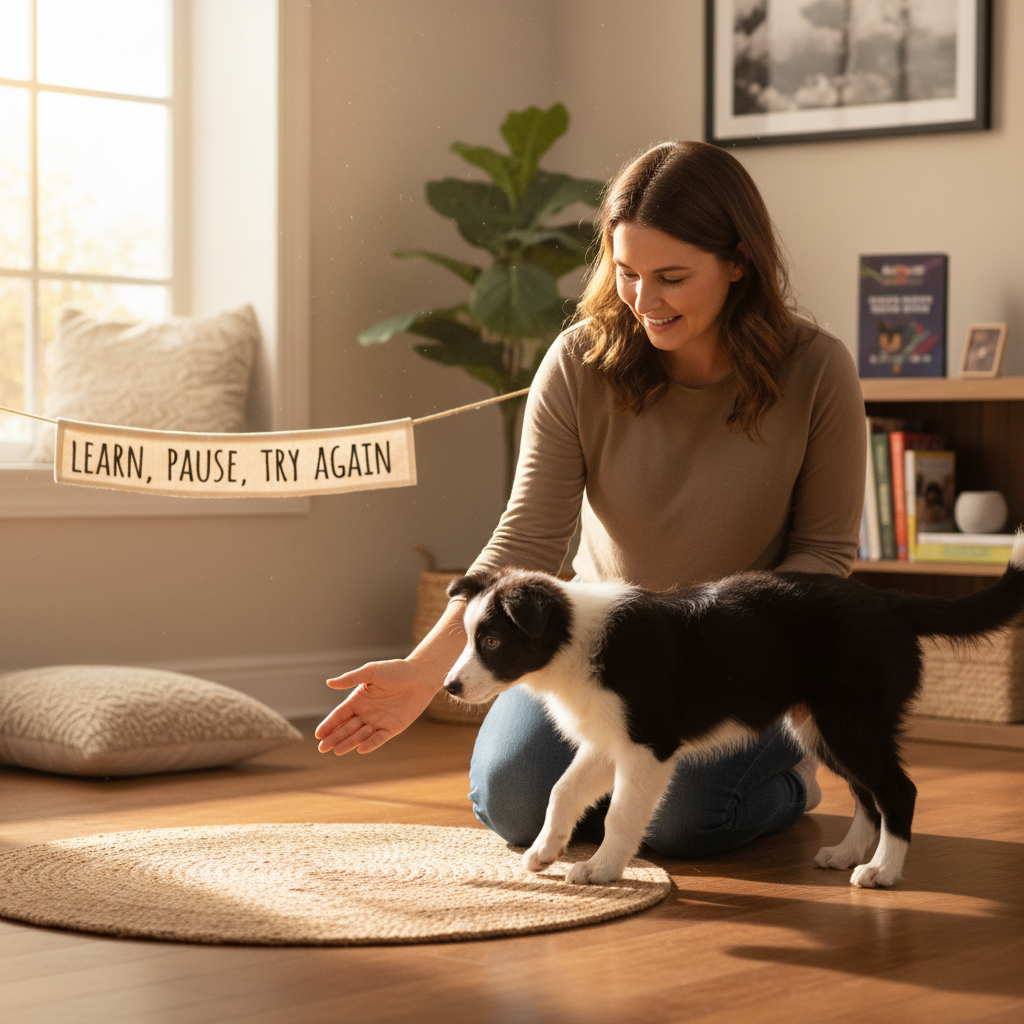
Even with the best intentions, you might hit a few snags. Don’t worry, it’s completely normal! Training is never a straight line. Here are some common challenges and how to navigate them with grace.
| The Problem | The Friendly Solution |
|---|---|
| “My dog keeps getting up!” | This is the most common issue. It usually means you’ve moved too fast. Take a deep breath and go back to the last step where your dog was successful. Maybe even go back to the previous day’s tasks. The goal is to build a history of success, not failure. Also, check your treats—are they exciting enough? |
| “My dog seems bored or antsy.” | Keep your sessions short and sweet! It’s better to do a 5-minute successful session than a 20-minute frustrating one. Always end on a high note with a task you know your dog can nail, followed by lots of praise and a ‘release’ cue (like ‘Okay!’ or ‘All done!’). |
| “This isn’t working ‘instantly’ like the title says!” | The ‘instantly’ part refers to the immediate calm you see during a successful rep, not a magic cure on Day 1. This protocol is an investment. It takes time and hundreds of repetitions to build a reliable behavior. Celebrate the small wins and trust the process. |
| “My dog just falls asleep on the mat.” | Congratulations! This is actually a huge win! It means your dog is truly relaxed, which is the ultimate goal. Give them a gentle pet and end the session quietly. You’ve achieved peak zen. |
Remember the Golden Rule: Set your dog up for success. If they are failing repeatedly, the task is too hard. Make it easier. The entire philosophy of the Relaxation Protocol is built on positive reinforcement and building confidence.
Beyond the Protocol: Integrating Calm into Everyday Life
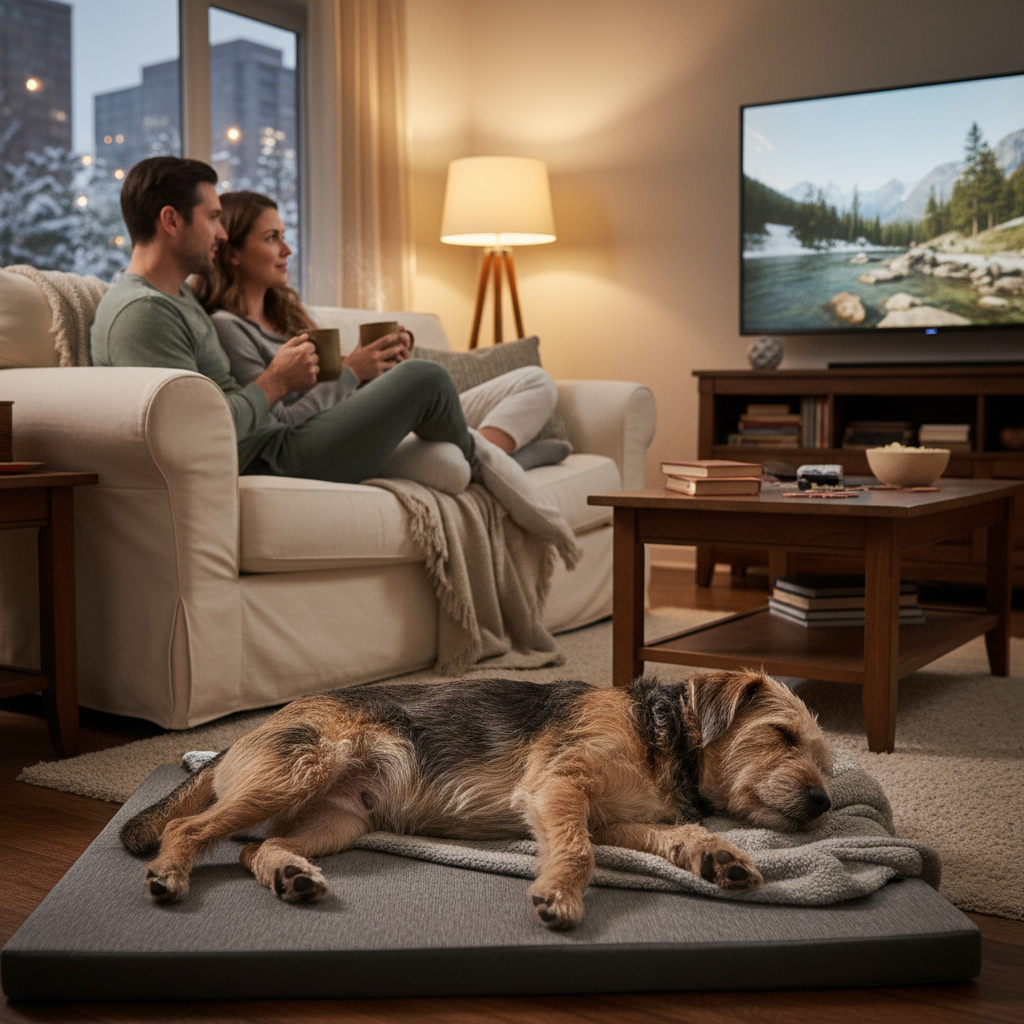
Completing the 15-day protocol is a fantastic achievement, but it’s just the beginning. Now you have a powerful tool in your training toolbox. The next step is to generalize this skill and use it in your daily life. The mat is no longer just a training prop; it’s a portable ‘calm-down’ button.
Putting the ‘Settle’ Skill to Work:
- The Doorbell Dilemma: Does the doorbell send your dog into a frenzy? Practice sending them to their mat before you open the door. Start with practice runs where no one is there, then have a family member ring the bell.
- Kitchen Chaos: If your dog is constantly underfoot while you’re cooking, make the mat their designated spot in the kitchen. Occasionally toss them a treat for staying there, reinforcing that good things happen when they are out of the way.
- Welcoming Guests: When guests arrive, the mat can be a game-changer. Ask your dog to go to their mat while your guests get settled. It gives your dog a clear job to do and prevents jumping or overwhelming visitors. Ask your guests to ignore the dog until it is calm.
- Movie Night: Want to relax on the couch without a dog dropping a soggy toy in your lap every five minutes? Cue them to their mat. This is a perfect, low-key time to practice long-duration settles.
By integrating the ‘go to your mat’ cue into your daily routines, you reinforce the idea that calm behavior is expected and rewarded in many different contexts. The mat becomes a symbol of relaxation, a safe space where your dog can go to decompress, knowing they won’t be bothered and might even earn a reward. You’ve given them the ultimate gift: the ability to control their own impulses and choose to be calm.
Conclusion
The Relaxation Protocol is more than just a party trick; it’s a profound communication tool that deepens the bond between you and your dog. It teaches them that there’s an alternative to frantic energy and provides them with a coping mechanism for a busy, often overwhelming human world. By investing just a few minutes each day, you’re not just training a behavior; you’re nurturing a state of mind.
So, say goodbye to the days of a non-stop canine cannonball. Embrace the journey, celebrate the small victories, and watch as your dog learns the incredible superpower of calm. You’re not just getting a better-behaved dog; you’re gaining a more peaceful and harmonious home for everyone.