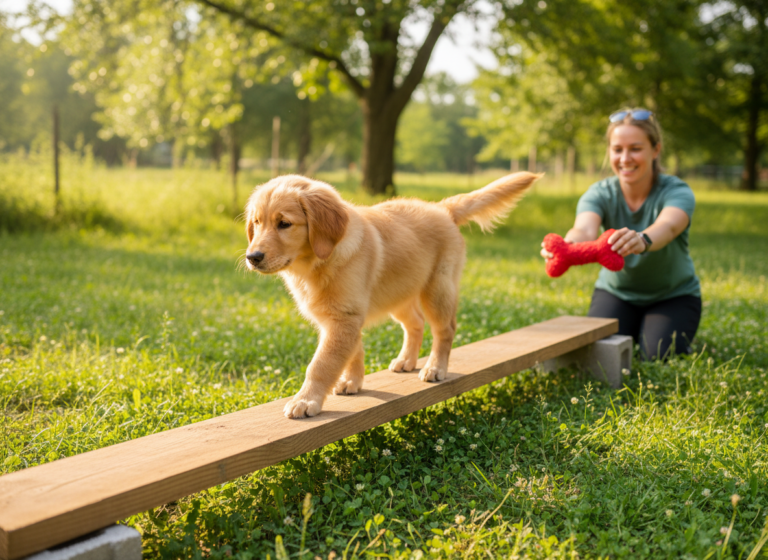
Have you ever watched a dog show and marveled at how those dogs stand like perfect little statues? That elegant, four-square stance is called a ‘stack,’ and it’s the cornerstone of a dog’s presentation in the conformation ring. But here’s a little secret: stacking isn’t just for primped show dogs! It’s an incredibly useful skill for any dog owner.
Teaching your puppy to stack can make vet visits smoother, grooming sessions easier, and builds a fantastic foundation of focus and body awareness. It’s a wonderful bonding exercise that teaches your pup patience and cooperation. Forget the intimidating image of stern handlers; we’re going to break down the process into fun, positive, and easy-to-follow steps. Whether you dream of winning Best in Show or just want a well-behaved companion, you’re in the right place. Let’s get started on turning your wiggly puppy into a poised professional!
Gearing Up for Success: Your Stacking Toolkit
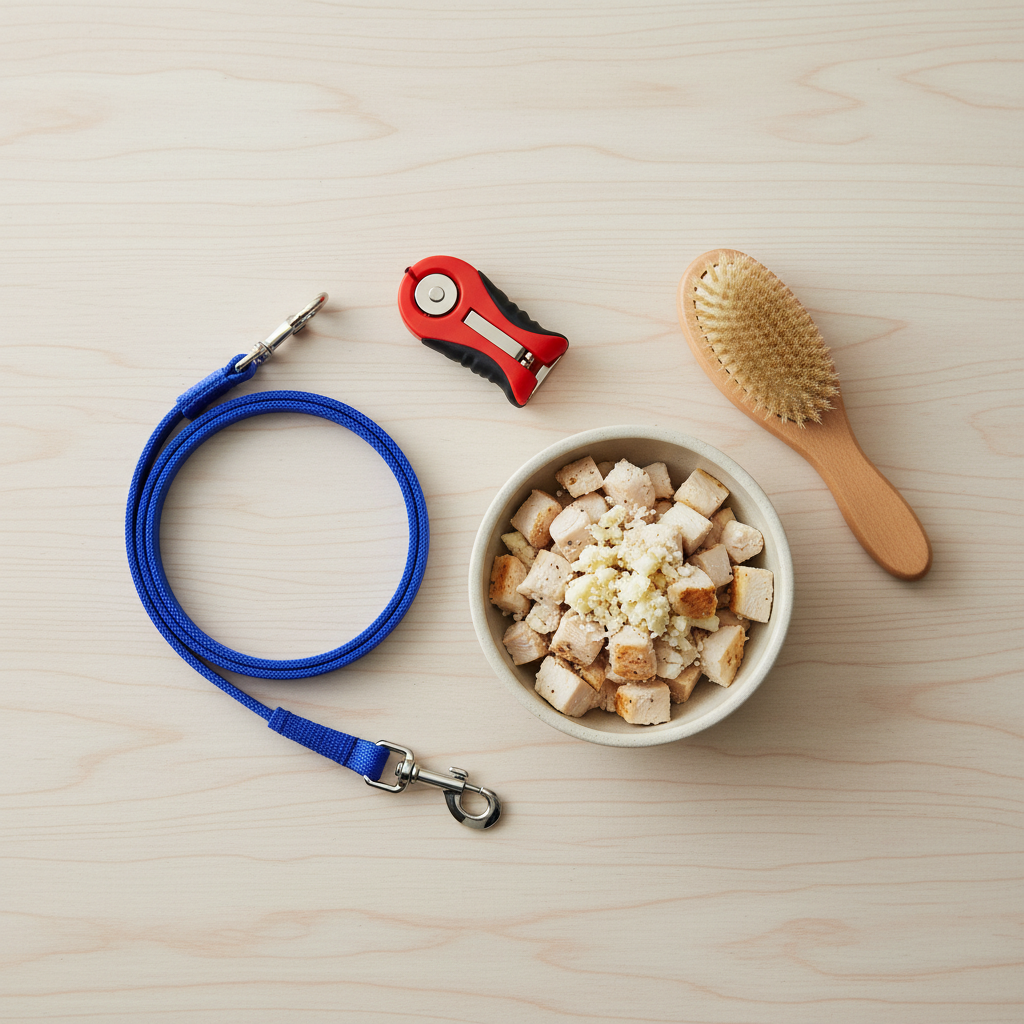
Before we jump into the training, let’s gather our supplies. Having the right tools on hand makes the process smoother and more enjoyable for both you and your puppy. Think of this as setting the stage for a successful performance!
The Essentials for Perfect Stacking
- High-Value Treats: We’re talking the good stuff! Small, soft, and extra tasty treats that your puppy goes crazy for will keep them motivated. Think tiny pieces of cheese, boiled chicken, or commercial training treats.
- A Non-Slip Surface: Safety first! A puppy who feels unstable will never relax into a stack. A grooming table with a rubber mat is ideal, but a sturdy coffee table with a yoga mat on top or even just a rubber-backed bath mat on the floor works perfectly.
- Show Lead or a Lightweight Collar and Leash: A show lead (also called a slip lead) is designed to be thin and unobtrusive, allowing you to guide your puppy’s head position without bulky equipment. If you don’t have one, a simple, light collar and leash will do just fine for learning.
- A Positive Attitude: This is the most important tool in your kit! Training should always be fun. Bring your patience, a happy tone of voice, and be ready to celebrate the small victories. Your puppy will feed off your calm and positive energy.
Expert Tip: Keep your training sessions short and sweet, especially with a young puppy. Aim for just 2-5 minutes at a time, a few times a day. Always end on a high note when your puppy has done something well, even if it’s just standing still for a second! This builds a positive association with the ‘stacking game.’
Step 1: Mastering the ‘Stand’ – The Foundation of the Stack
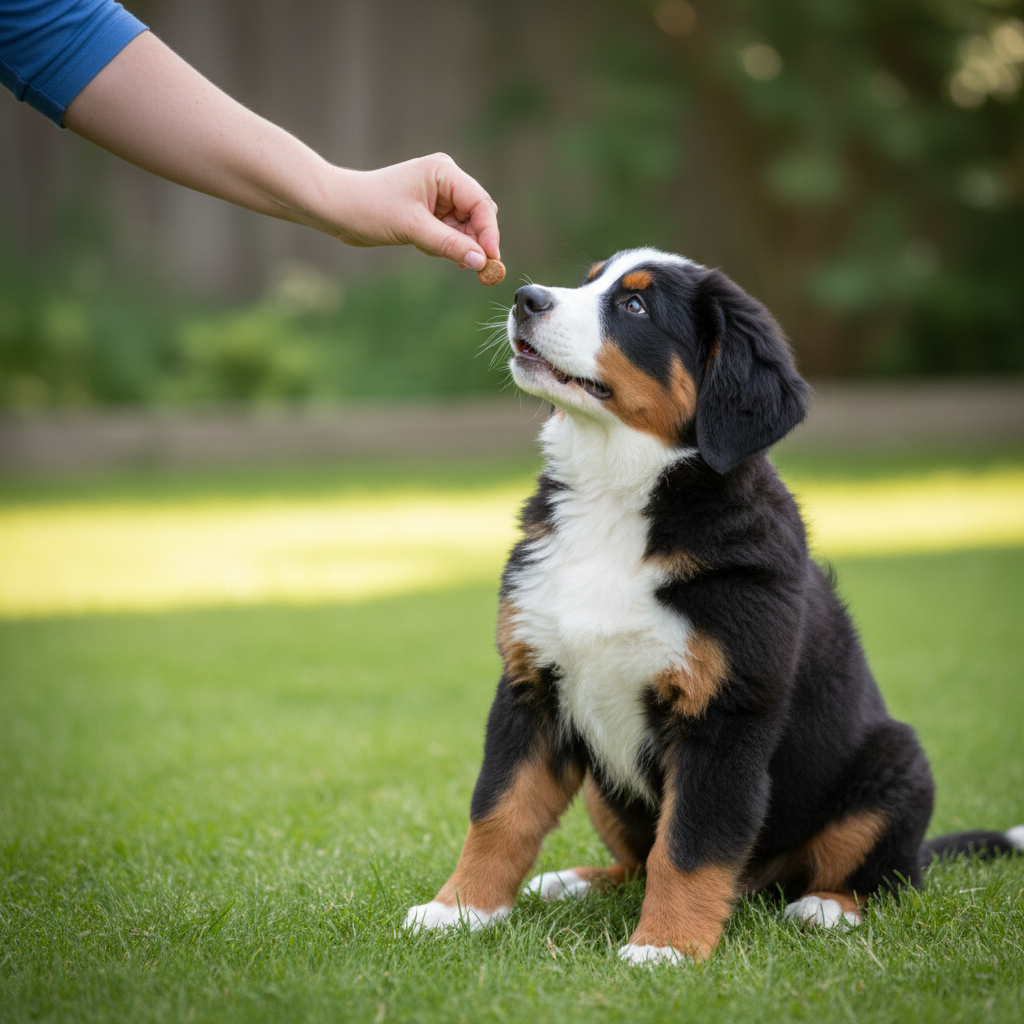
You can’t build a house without a solid foundation, and you can’t build a stack without a solid ‘stand.’ Before we worry about placing feet perfectly, your puppy needs to learn to simply stand still on command. This is the bedrock of the entire exercise.
Teaching the ‘Stand’ Command
- Lure into Position: Start with your puppy in a ‘sit.’ Hold a tasty treat near their nose and slowly pull it forward and slightly up, away from them. As they follow the treat, their back end will naturally lift into a stand. The moment they are standing, say your cue word, like “Stand!” or “Pose!”, in a happy voice and give them the treat.
- Mark the Moment: The key is to reward them for the act of standing still. Initially, reward them the second all four paws are on the ground. If you use a clicker, click the instant they are standing, then treat.
- Add Duration: Once your puppy understands how to get into the stand position, we’ll ask them to hold it for a little longer. Lure them into a stand, and then wait just one second before you treat. Gradually increase the time they must stand still before getting their reward. If they sit or move, that’s okay! Just reset and try again for a shorter duration.
- Fade the Lure: As they get better, start using the hand motion without a treat in your hand, but still reward them from your other hand after they stand. Eventually, your verbal cue and a simple hand signal should be enough to get them to pop into a stand.
Practice this in different locations around your house and yard. The goal is a puppy who will confidently stand still on your cue, waiting happily for their next instruction. This is a huge accomplishment and deserves lots of praise!
Step 2: The Art of Hand Stacking – Placing Paws with Precision
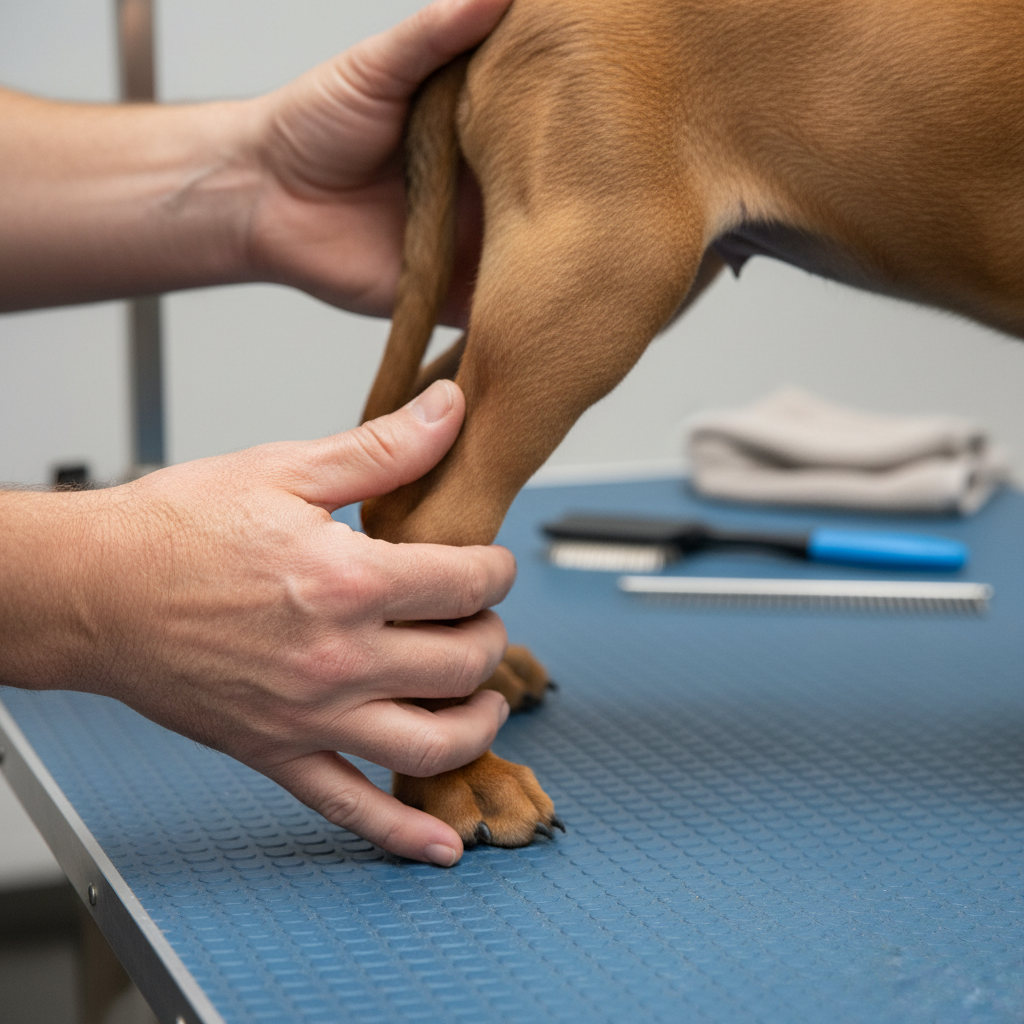
Once your puppy has a reliable ‘stand,’ it’s time to introduce the ‘hand stack.’ This is where you manually place their feet into the ideal position. This requires a gentle touch and a lot of patience. Remember, we’re teaching, not forcing.
The Hand-Stacking Process
First, get your puppy into their basic stand on your non-slip surface. Use your show lead to keep their head up and facing forward. Speak to them in a calm, reassuring voice throughout the process.
- Front Feet First: Start with the front legs. Gently cup your hand around your puppy’s elbow. Lift their leg just enough to take the weight off the paw, and place it directly under the withers (the highest point of the shoulders). The front legs should look like two straight, parallel posts from the front and the side. Place one foot, give a small treat and praise. Then place the other, and reward again.
- Move to the Rear: Now for the back legs. The goal is for the hocks (the dog’s ‘ankle’) to be perpendicular to the ground. Gently grasp the puppy’s rear leg above the hock and place the paw so it aligns correctly. For many breeds, this means the paw will be positioned slightly behind the dog’s rump, creating that powerful, alert look.
- Keep it Positive: Your puppy will likely move their feet as soon as you place them. This is normal! Don’t get frustrated. Simply reposition the foot calmly and reward the split second it’s in the right place. Your goal is to build up the duration over time.
- Head and Tail Position: Once the feet are in place, use the show lead to encourage your puppy to keep their head up. You can also gently hold their tail in the correct position for their breed standard.
- Use a Release Word: When the session is over, use a clear release word like “Okay!” or “Free!” and toss a treat for them to chase. This teaches them they must hold the position until you give the cue.
Pro Tip: Use a mirror! Setting your puppy up in front of a large mirror allows you to see their angles and posture from a judge’s perspective without having to walk around them, which can cause them to move.
Step 3: Going Hands-Free – The Magic of Free Stacking
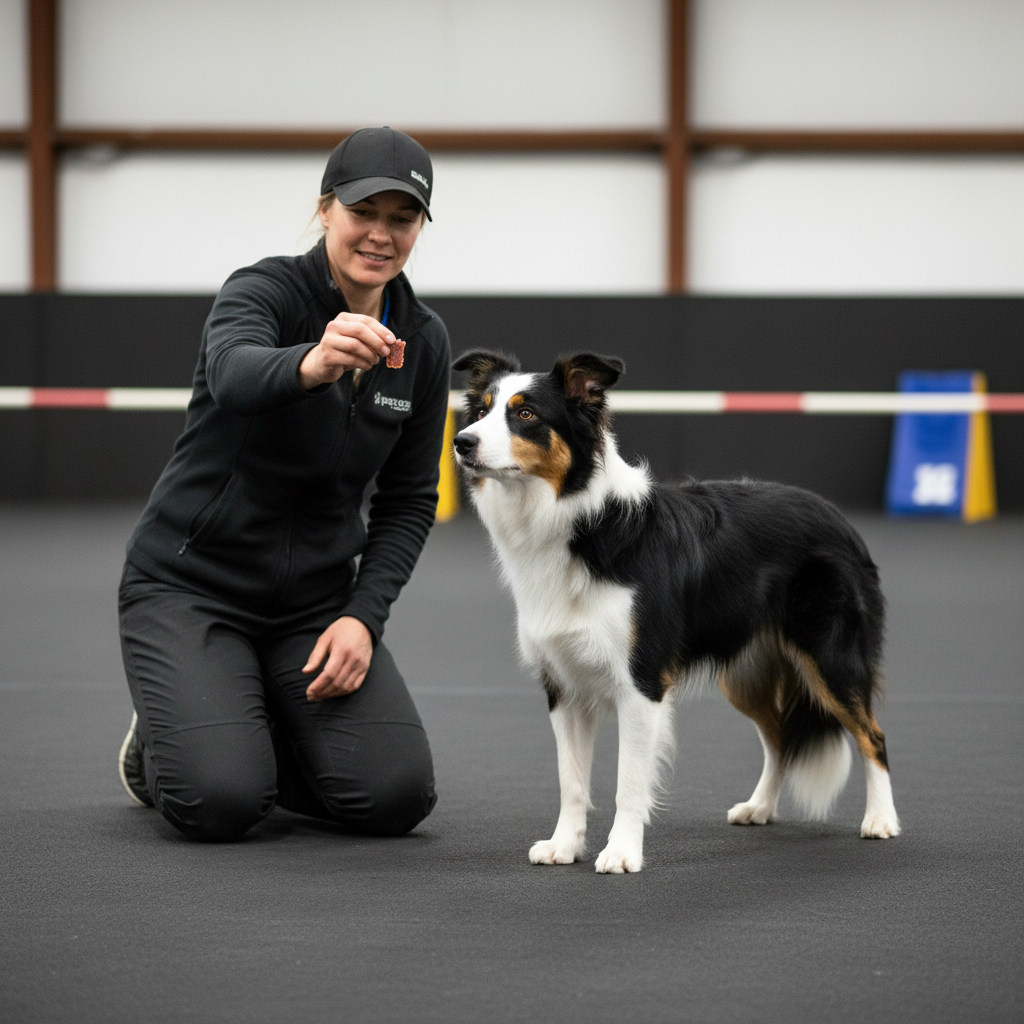
Free stacking is the advanced level, where the dog learns to move its own body into the perfect stack with minimal physical guidance from you. It’s a beautiful thing to watch and relies on the dog’s body awareness and your connection. It’s built upon a solid hand-stack foundation.
How to Teach Free Stacking
The core principle of free stacking is using bait (a treat or toy) to guide the dog’s movement. By controlling where the dog’s head goes, you control its center of gravity, which in turn controls where its feet land.
- Walk into the Stack: Start by walking your dog on a loose lead and stopping abruptly. As you stop, hold a piece of bait in front of them to keep their attention forward. Often, they will naturally stop in a decent stance. Reward this immediately!
- Baiting for Foot Placement: If a foot is out of place, you can use the bait to fix it. For example, if a back foot is too far forward, slowly move the bait forward and away from the dog. To get that foot to move back, the dog will have to take a small step. The moment it does, mark and reward! If a front foot is out of place, moving the bait slightly to the left or right can encourage them to shift their weight and reposition the foot.
- Teach Small Steps: This is a delicate dance. You are teaching your puppy to take tiny weight shifts and steps. Reward any effort in the right direction. It takes a lot of practice for a dog to develop this level of body awareness.
- Patience is Paramount: Free stacking takes much longer to perfect than hand stacking. It’s a process of shaping behavior over time. Keep sessions upbeat and don’t be afraid to go back to hand stacking to remind your pup of the correct final picture.
Ultimately, a combination of both techniques is often used in the show ring. A handler might free stack their dog into position and then make one or two tiny, quick hand adjustments before the judge’s examination.
Troubleshooting Common Stacking Struggles
Training a puppy is never a straight line to success. There will be wiggles, setbacks, and moments of frustration. Don’t worry, it’s all part of the process! Here are some common challenges you might face and how to work through them.
| The Problem | The Solution |
|---|---|
| The Wiggle Worm: My puppy won’t stand still for even a second! | This is usually a sign that the session is too long or the treats aren’t exciting enough. Cut your session time down to 30 seconds. Use your highest value treat and reward even a split-second of stillness. Gradually build from there. Make it the best game ever! |
| Table Terror: My puppy is scared of the grooming table. | Never force a scared puppy onto the table. Start by just rewarding them for sniffing the table. Then for putting one paw on it, then two. Lure them onto the surface with treats and let them just eat their rewards there without any stacking. Create a positive association with the table itself before you ever ask for a ‘stand.’ |
| Picky Paws: As soon as I place a foot, they move it right back. | This is very common. Your timing might be a little off. Be ready to mark and reward the exact moment the foot is in the correct position, even if it’s only there for a millisecond. You are rewarding the placement, not the duration (yet). You can also provide a ‘jackpot’ (multiple treats) when they hold it for a tiny bit longer than usual. |
| Losing Focus: My puppy is more interested in everything else in the room. | Choose your training environment wisely. Start in a quiet, boring room with no distractions. As your puppy gets better, you can gradually introduce training in more distracting environments, like the backyard or a park, to ‘proof’ the behavior. |
Remember the Golden Rule: Always end on a positive note. If you’re getting frustrated, or your puppy is, just ask for one simple, successful behavior (even a ‘sit’), reward it enthusiastically, and end the session with your release word and some playtime. Training should build your bond, not test it.
Conclusion
Teaching your puppy to stack is a journey, not a race. It’s a beautiful blend of art and training that deepens the communication and trust between you and your dog. By starting with a solid ‘stand,’ moving patiently through hand stacking, and celebrating every small step of progress, you are building more than just a pretty pose—you are building a confident, cooperative, and well-mannered companion.
Remember the keys to success: keep it positive, keep it short, and keep it fun. The consistency and patience you invest now will pay off tenfold, whether you’re stepping into a show ring, standing for a vet exam, or simply admiring your beautifully poised pup in the living room. Happy stacking!