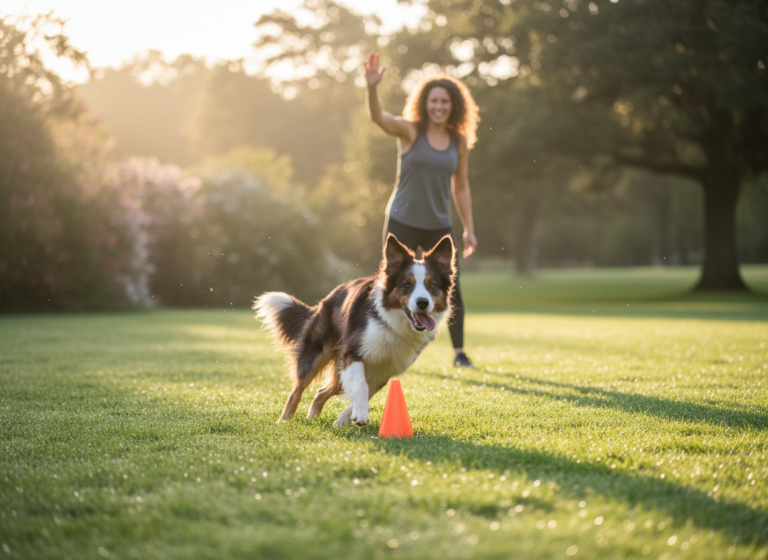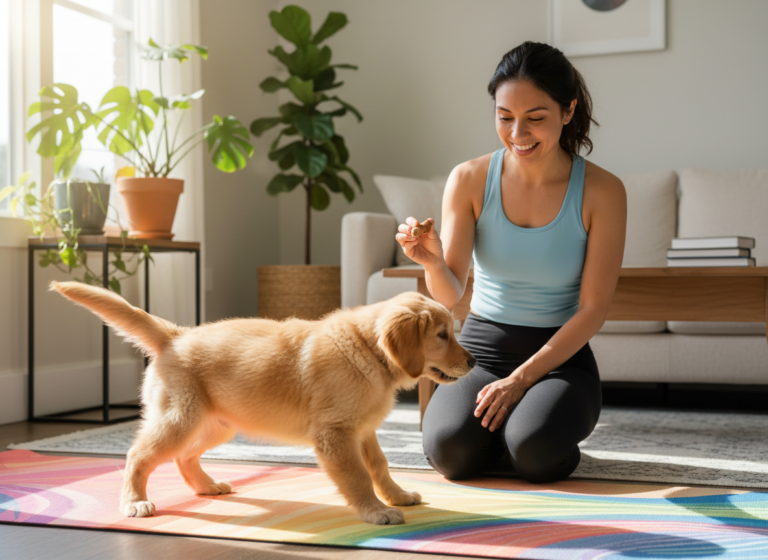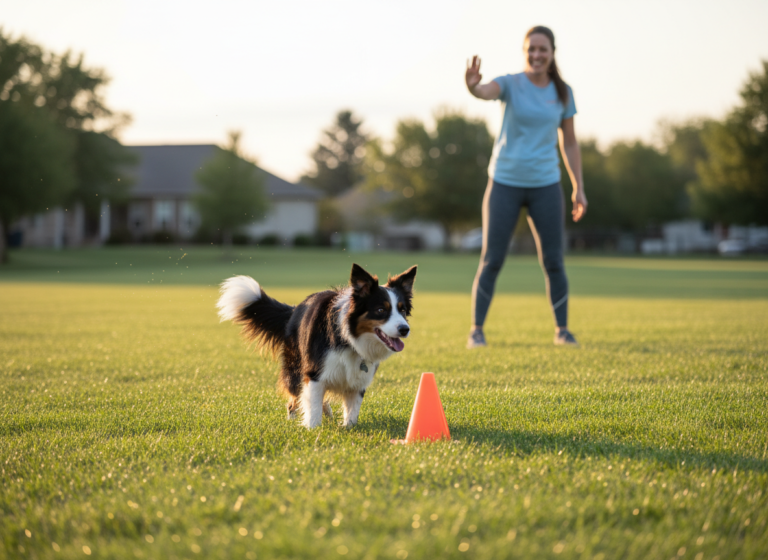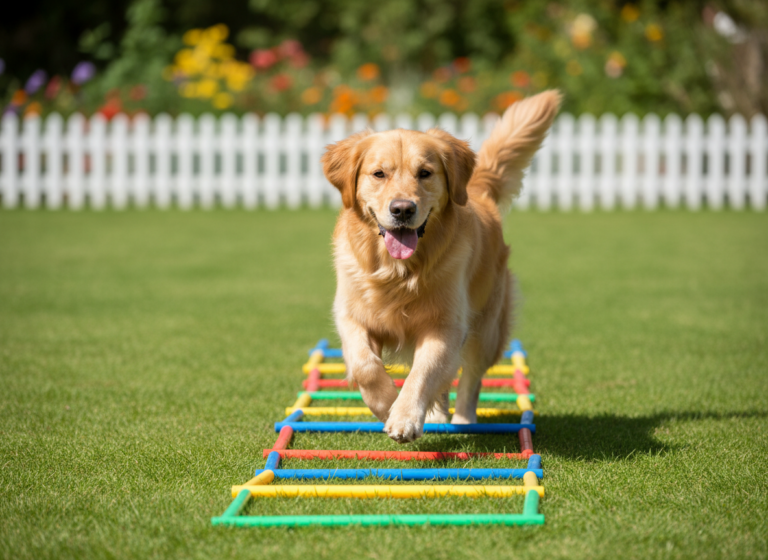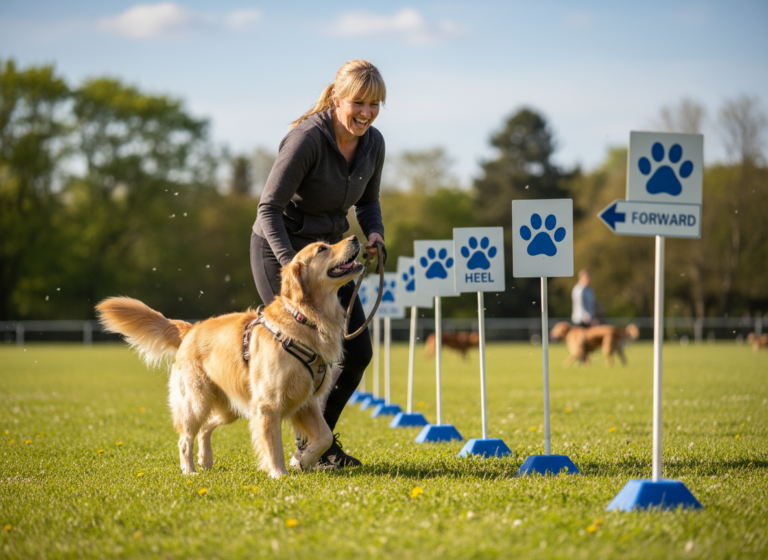
Hey there, fellow dog sports enthusiast! Ever watched a seasoned obedience team in the ring and marveled at that lightning-fast, stylish finish where the dog seems to glide into heel position? That, my friend, is the Swing Finish, and it’s a real head-turner. It’s more than just a pretty move; it’s a high-scoring element that showcases a deep connection and precise training between dog and handler.
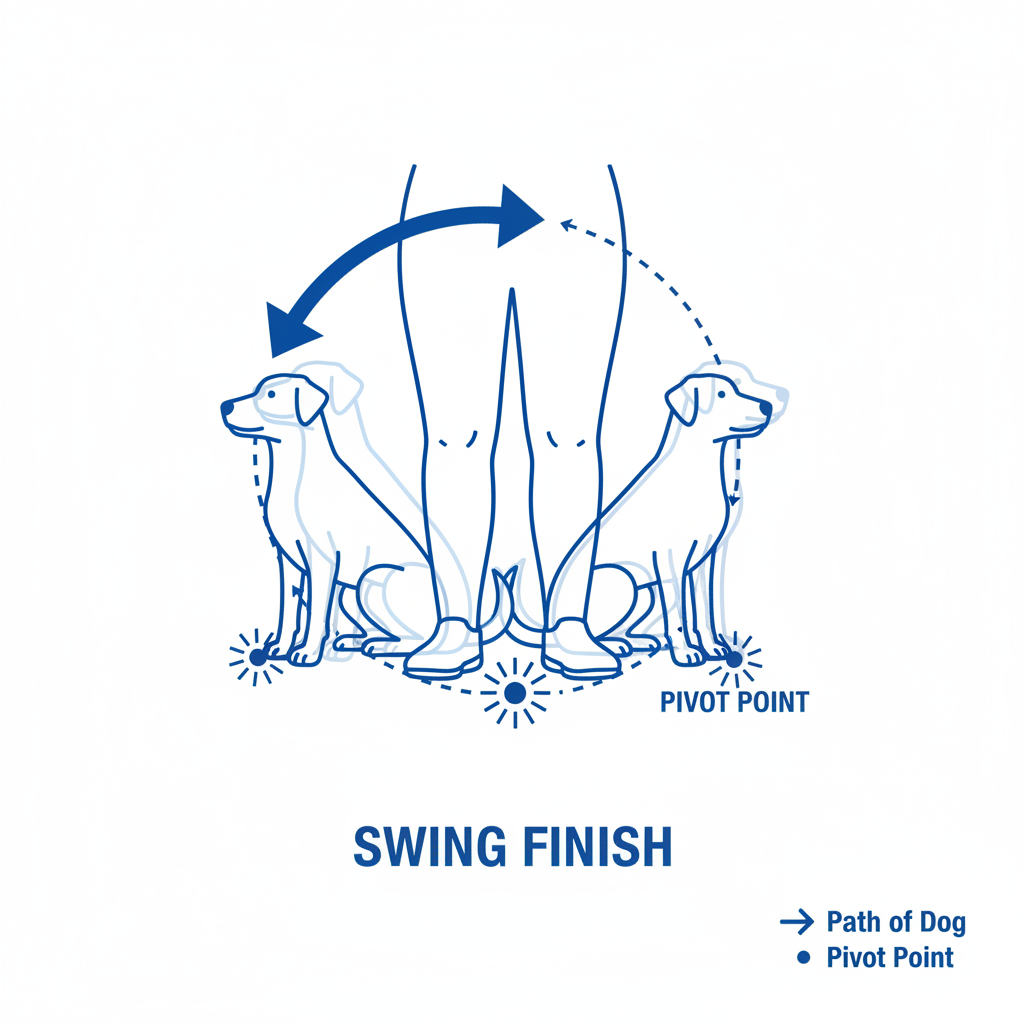
The swing finish is a thing of beauty: the dog, from a front-facing position, pivots on its front paws and swings its rear end around the handler’s left side, landing squarely in a perfect heel position. It’s fluid, it’s fast, and it screams “we’ve put in the work!”
Feeling intimidated? Don’t be! While it looks complex, the swing finish can be taught to any dog with a bit of patience and the right technique. We’re about to break down this fancy footwork into simple, fun, and achievable steps using positive reinforcement. Whether you’re aiming for the winner’s podium or just want to teach your dog an impressive new skill, you’ve come to the right place. Let’s get ready to swing!
Laying the Foundation: Understanding the Swing Finish
What is the Swing Finish, Really?
Before we jump into the ‘how,’ let’s fully understand the ‘what.’ The swing finish is a specific maneuver used in dog obedience and rally sports. When the handler cues the dog to ‘finish’ from a ‘front’ position (sitting facing the handler), the dog moves to the handler’s left side into heel position. In a swing finish, the dog keeps its front paws relatively stationary as a pivot point and swings its hindquarters around the handler in a smooth arc. This is different from an ‘around finish,’ where the dog runs behind the handler, or a ‘flip finish,’ where the dog flips around in front to get into position.
Why It Matters in Competition
In the world of competitive obedience, precision is everything. Judges look for:
- Speed and Enthusiasm: A dog that performs the move with happy confidence will score better than one that is slow or hesitant.
- Accuracy: The dog should land in a perfectly straight sit, parallel to the handler’s leg, without bumping into them.
- Style and Fluidity: The ‘swing’ part of the name is key. The motion should be a single, smooth pivot, not a series of choppy steps.
A well-executed swing finish is a hallmark of a well-trained team and can significantly boost your score. But even if you never plan to set foot in a competition ring, teaching this skill is fantastic for building your dog’s body awareness, focus, and coordination. It’s a brilliant way to strengthen your bond and communication.
Expert Tip: The key to a beautiful swing finish is teaching the dog to be aware of its rear end. Many of the initial exercises focus solely on getting the dog to understand it can move its back legs independently of its front legs.
Gearing Up for Success: Tools and Prerequisites
Gather Your Training Toolkit
You don’t need a lot of fancy equipment to teach the swing finish, but having the right tools will make the process much smoother and more fun for both you and your dog. Let’s get our gear in order!
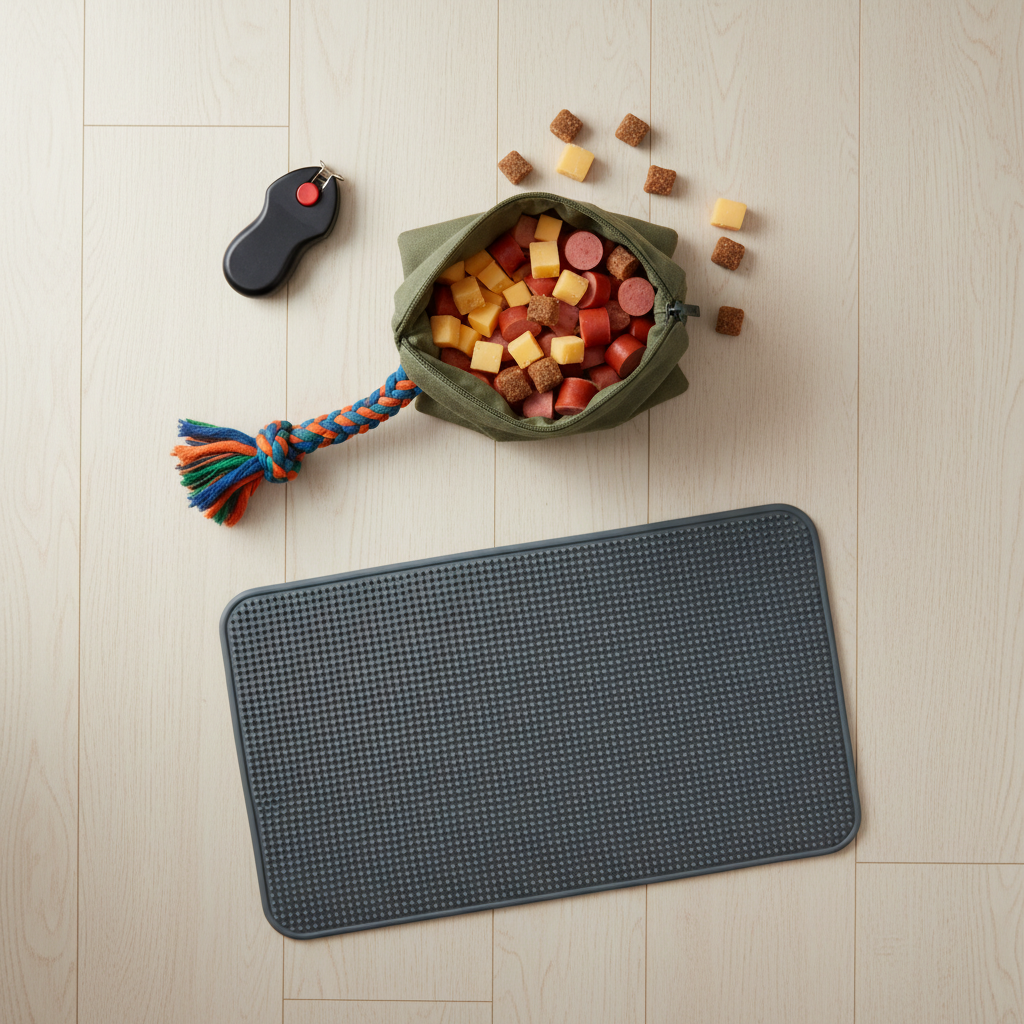
- High-Value Treats: We’re talking top-tier stuff! Think tiny pieces of cheese, cooked chicken, hot dogs, or commercial training treats your dog goes absolutely wild for. The reward needs to be worth the effort.
- Clicker (Optional but Recommended): A clicker is a fantastic tool for marking the exact moment your dog does something right. This precise communication helps your dog learn faster. If you’re not using a clicker, a consistent verbal marker like “Yes!” works too.
- Treat Pouch: You’ll want your hands free to guide your dog, so a treat pouch that clips onto your belt or waistband is a must-have.
- Non-Slip Surface: Practice on a rug, grass, or a rubber mat. Slippery floors like hardwood or tile can make it difficult and even dangerous for your dog to learn the pivot motion.
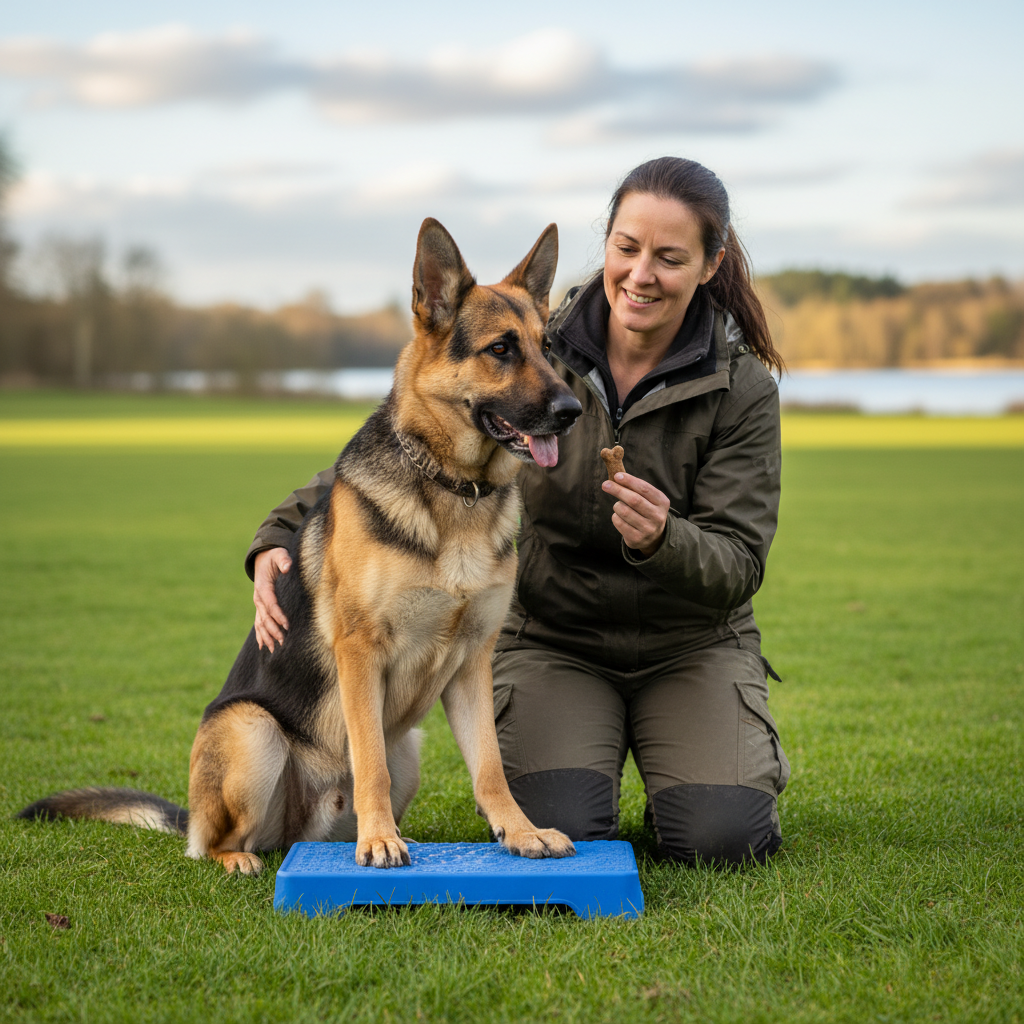
- Training Platform or Guides (Optional): Later in the training, a small, low platform or even two parallel 2×4 boards can help teach your dog to land in a perfectly straight sit.
Is Your Dog Ready to Swing?
Before you start, make sure your dog has a few foundational skills down. It’s like learning to run before you can sprint. Your dog should be comfortable with:
- A Solid ‘Sit’: Your dog should be able to sit calmly on cue.
- Focus on You: Your dog should be able to offer you attention, even for short periods.
- Lure Following: Your dog should be willing to follow a treat in your hand. This is how we’ll guide them through the initial movements.
- Basic Heel Position Understanding: While not essential, it helps if your dog has some idea of what ‘heel position’ (sitting at your left side) means.
If your dog has these skills, you’re ready to start building that beautiful swing finish!
The Main Event: Your Step-by-Step Swing Finish Training Plan
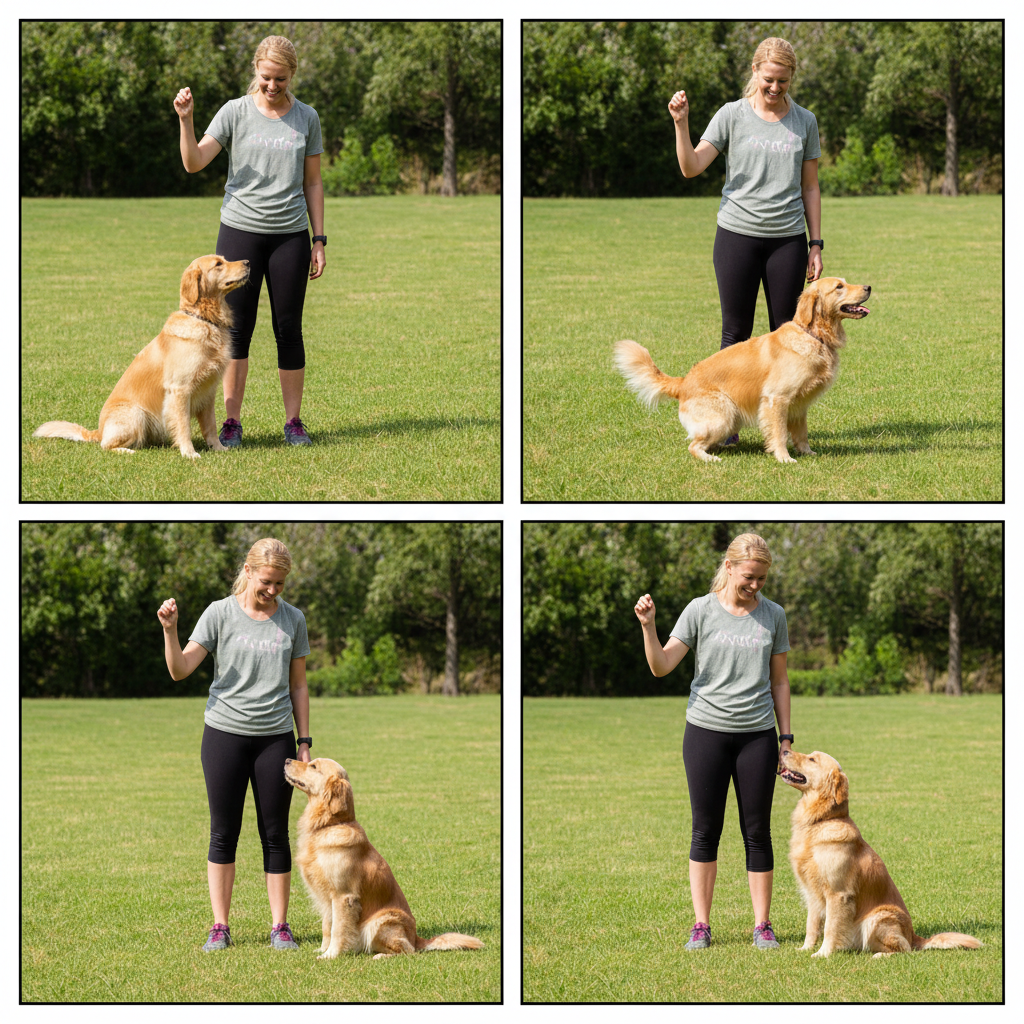
Let’s Get Training!
Alright, it’s time for the fun part! Remember to keep your training sessions short (5-10 minutes is plenty) and always end on a positive note. This is a marathon, not a sprint. Let’s break it down.
-
Step 1: Teach the Rear-End Pivot
The soul of the swing finish is the pivot. We need to teach the dog to move its back end while its front paws stay put. Start with your dog standing in front of you. Hold a treat lure by the side of their nose and slowly guide their head towards their shoulder. The goal is for them to turn their head without moving their front feet, which will cause their rear end to swing out slightly. The moment their rear foot moves, click (or say “Yes!”) and treat! Practice this in both directions to build body awareness.
-
Step 2: Introduce Your Body
Now, let’s put that pivot into context. Have your dog sit in the ‘front’ position, facing you. Place your left hand with a treat by their nose and your right hand on their collar to gently prevent them from moving forward. Lure their head to your left, around your body. As they turn their head to follow the treat, their rear end should start to swing around your leg. At first, just reward a small movement. Click and treat for any step in the right direction.
-
Step 3: Shape the Full Swing
Once your dog understands the basic idea, you can start asking for more. Gradually extend the lure further around your body, encouraging them to take more steps with their back feet until they complete the full swing into a basic heel position. Keep the motion fluid and use lots of verbal praise. Don’t worry about a perfect sit just yet; we’re building the ‘swing’ motion first.
-
Step 4: Fade the Lure
Your dog is now following the treat lure beautifully. The next step is to get them to perform the motion without a treat visible in your hand. Start by making the same hand motion but without a treat. As soon as they complete the swing, mark the behavior and deliver a treat from your other hand or your pocket. This teaches them to follow the hand signal, not just the food.
-
Step 5: Add the Verbal Cue
When your dog is reliably performing the swing on a hand signal alone, it’s time to add the verbal cue. Say your chosen word (e.g., “Heel,” “Finish,” or “Swing”) just before you give the hand signal. After several repetitions, your dog will begin to associate the word with the action. You can then start to test the verbal cue alone. Say the word and wait a second before giving the hand signal. If they move on the verbal cue, throw a party!
-
Step 6: Refine the Final Position
This is where we get picky. Now that the dog understands the swing motion, we can focus on a crisp, straight, and close finish. If your dog is sitting wide or crooked, this is where training aids can help. Place a small platform or two parallel boards where you want your dog to land. This physically guides them into the correct position. Reward heavily for perfect, straight sits. Over time, you can remove the guides as your dog’s muscle memory develops.
Oops! Avoiding Common Swing Finish Pitfalls
Troubleshooting Common Issues
Every training journey has a few bumps. Don’t get discouraged! If you run into a problem, it’s just a sign that you need to break the behavior down into smaller steps. Here are some of the most common issues and how to fix them.
| Common Problem | Why It Happens | How to Fix It |
|---|---|---|
| The dog moves its front feet. | The dog doesn’t understand the pivot concept and is moving its whole body. | Go back to Step 1. Use a small, stable object like a book or a small platform for your dog’s front feet. Reward heavily for keeping the front paws still while the rear moves. |
| The dog bumps into your legs. | The dog is cutting the corner too tight or lacks body awareness. | Make your lure path slightly wider to encourage a bigger arc. You can also place a small, soft object (like a shoe) next to your foot as a target for them to go around. |
| The finish is slow or lacks enthusiasm. | The reward isn’t high-value enough, the sessions are too long, or there’s been too much pressure. | Increase the value of your reward! Use a favorite toy as a reward for a fast finish. Keep sessions short and exciting, and always end on a successful repetition. |
| The dog sits wide, crooked, or too far back. | The dog is unsure of the precise final position. This is the most common issue! | Use physical guides like a training box, platform, or even the corner of a wall and your body to create a narrow ‘chute’ for your dog to sit in. This clearly defines the correct position. |
| The dog offers the behavior constantly. | The dog is trying to earn rewards, but it can become a nuisance. | Only reward the swing finish when you have given the cue. If the dog offers it without being asked, ignore it and ask for a different, simple behavior (like a ‘sit’) before trying again. |
Remember: If your dog is failing, the step is too hard. Go back to the last point where they were successful and work from there. Training should build confidence, not create frustration.
From the Living Room to the Ring: Proofing Your Swing Finish
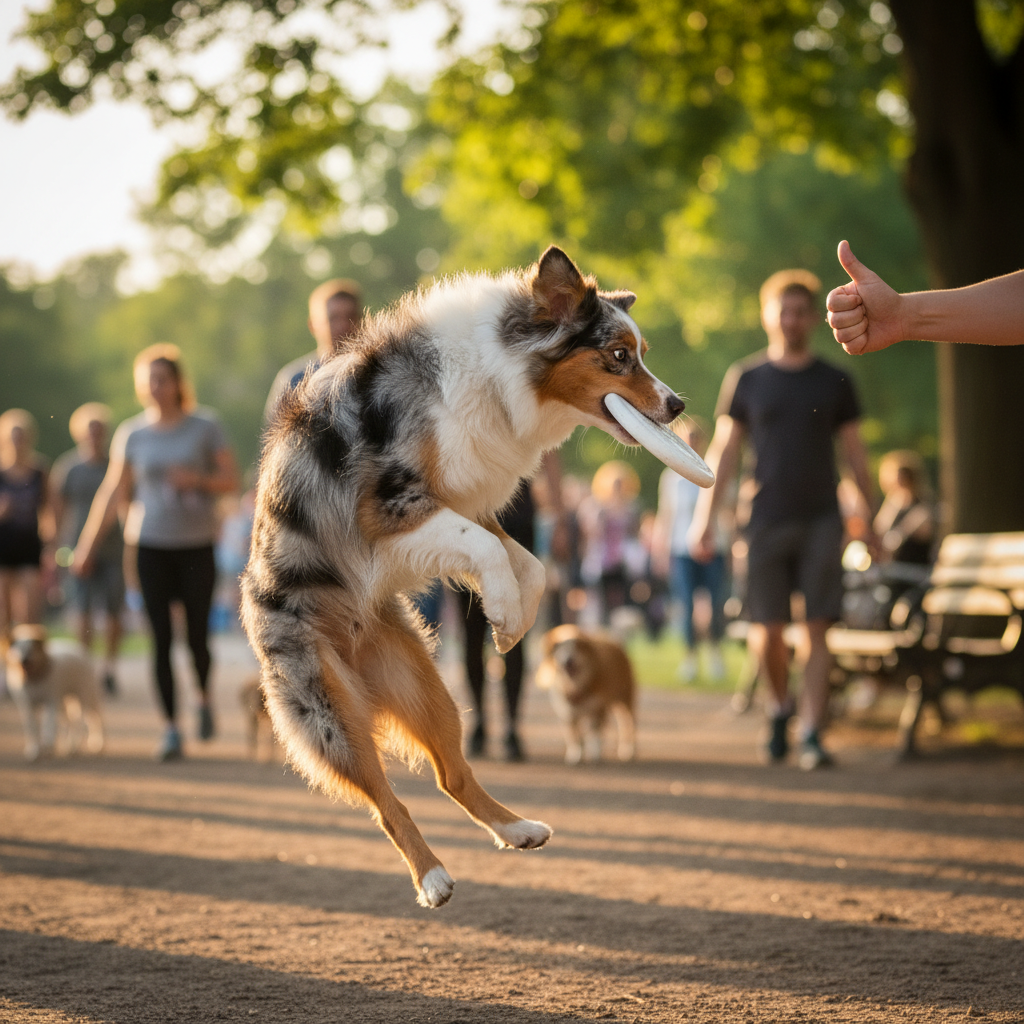
Making It Stick, Anywhere and Everywhere
Your dog has a gorgeous swing finish… in the living room. But what happens when you’re at the park, or at a busy training class? This is where ‘proofing’ comes in. Proofing is the process of teaching your dog to perform a behavior reliably in a variety of environments and with distractions. It’s the final polish that makes a skill truly solid.
The 3 D’s of Proofing: Distance, Duration, Distraction
We systematically add challenges to the behavior. For the swing finish, this primarily involves distractions.
- Start Small: Begin by practicing in different rooms of your house. Then move to your backyard. This is a new ‘picture’ for your dog, and you might need to briefly help them remember what to do.
- Increase Distractions Gradually: Once solid in the yard, try practicing on your driveway or on a quiet street. Next, go to a quiet corner of a park. The key is to work ‘sub-threshold’—at a level of distraction where your dog can still be successful.
- Introduce Moving Distractions: Practice with a family member walking by. Then try with another calm dog at a distance. Slowly decrease the distance to the distraction as your dog succeeds.
- Vary Your Position: Practice starting the swing finish with your back against a wall, in a corner, or out in the open. This helps the dog generalize the skill so they don’t depend on a specific environmental picture.
- Simulate a Competition Environment: If you compete, practice with a friend acting as a ‘judge.’ Have them walk around you, hold a clipboard, and even provide gentle distractions. This helps prepare your dog for the unique pressures of the ring.
Proofing is an ongoing process. By consistently and fairly challenging your dog, you build a swing finish that is not only beautiful but also incredibly reliable, no matter where you are.
Conclusion
You’ve Got This!
And there you have it! You’ve gone from wondering what a swing finish is to having a complete roadmap to teach this impressive and rewarding skill. We’ve broken it down, planned for problems, and strategized how to make it reliable in any situation.
Remember, the most important tools in your kit are patience, consistency, and a positive attitude. Every dog learns at a different pace. Celebrate the small wins, be patient with the setbacks, and most importantly, cherish the process of working and communicating with your amazing canine partner. The journey of training is just as rewarding as that perfect, snappy swing finish in the ring.
Now grab your treats, find a clear space, and start building that beautiful bond and even more beautiful swing finish. Happy training!