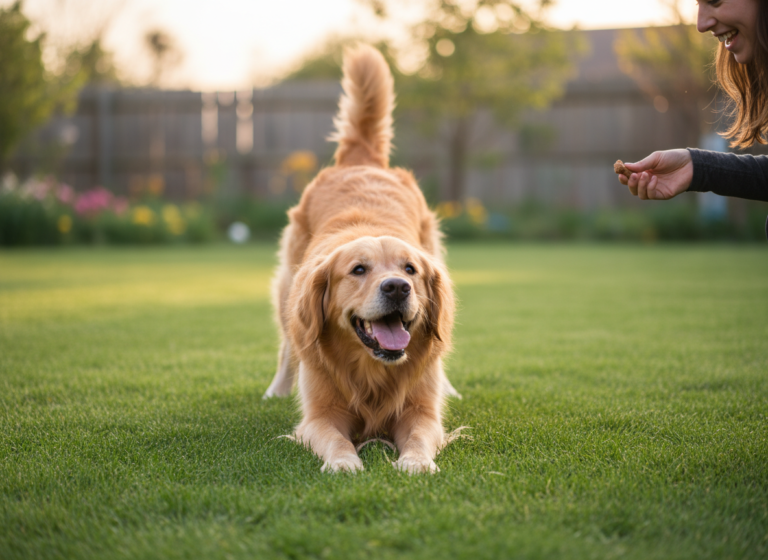
There are few things as universally recognized as the sight of a contented cat rhythmically pushing its paws in and out on a soft surface. This endearing behavior, often called ‘making biscuits’ or simply ‘kneading,’ is the pinnacle of feline coziness. But what if we told you that this charming trick isn’t just for cats? Welcome to the wonderful world of teaching your dog to be a ‘cat copycat’!
You might have even seen your own dog perform a similar motion—pushing at their bed before settling down or pawing at a blanket. This is a natural, instinctual behavior rooted in their puppyhood. Our goal isn’t to create a behavior from scratch, but to capture that existing instinct, shape it, and put it on a verbal cue. It’s a fantastic way to engage your dog’s brain, build their confidence, and add an incredibly cute trick to your list.
In this comprehensive guide, we’ll break down the entire process, step-by-step. Using only positive reinforcement techniques, we’ll show you how to identify the behavior, encourage it, and finally ask for it on command. Get your treats ready—it’s time to teach your dog how to make biscuits!
Why Do Dogs Knead? Understanding the Instinct
The Puppy Connection
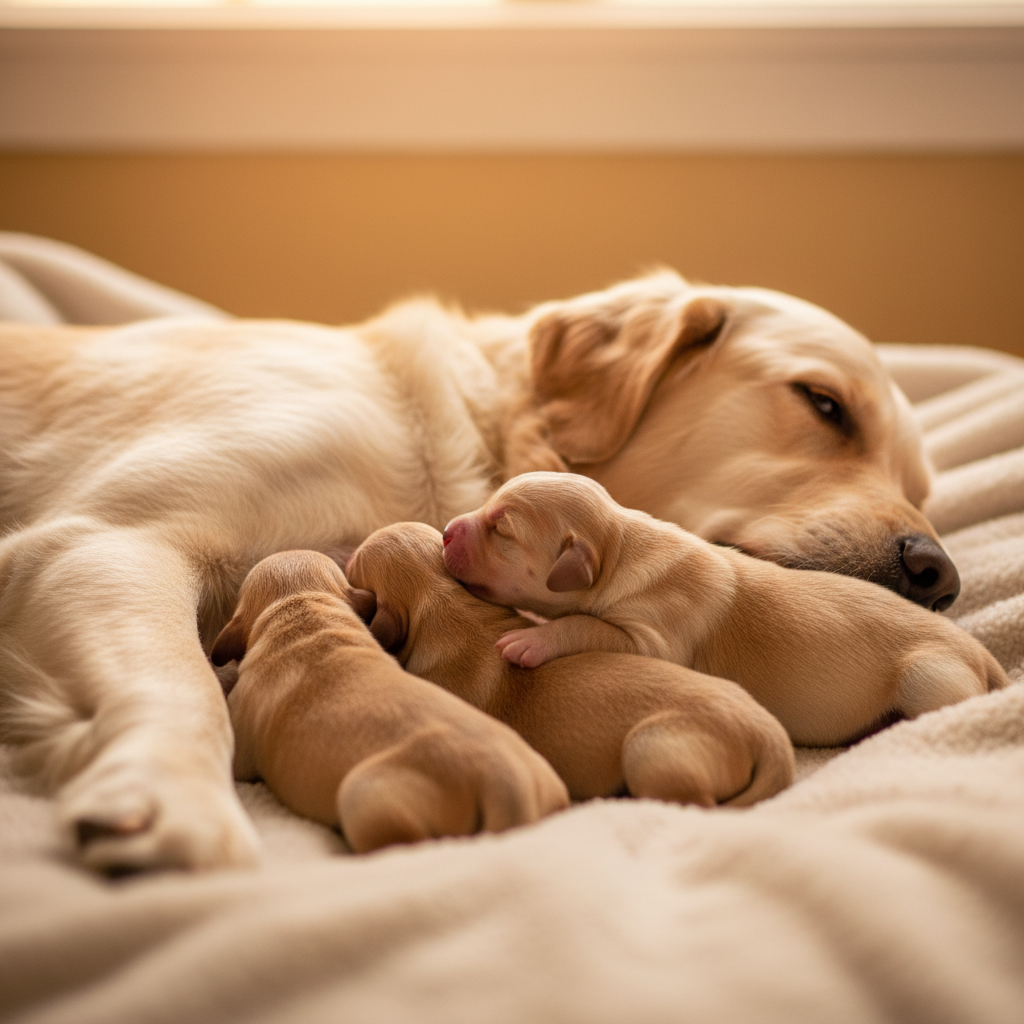
Before we dive into the ‘how,’ let’s explore the ‘why.’ The primary reason dogs (and cats) knead is rooted in a neonatal instinct. When puppies are nursing, they instinctively push their paws against their mother’s mammary glands to stimulate milk flow. This action is hardwired and deeply associated with comfort, nourishment, and the security of being with their mom and littermates. Even as adult dogs, this motion can resurface as a self-soothing mechanism, bringing back those feelings of warmth and safety.
Nesting and Comfort
You’ve likely seen your dog circle a few times and dig or push at their bed before finally lying down. This is another instinctual behavior, inherited from their wild ancestors who would pat down tall grass, leaves, and dirt to create a comfortable and safe nest for sleeping. This form of ‘kneading’ is about creating a cozy den. When your dog pushes at their blankets, they’re essentially arranging the furniture to their liking.
Scent Marking
Did you know your dog’s paws are packed with scent glands? It’s true! When they push their paws on a surface, they are depositing their unique scent. This is a subtle way of marking their territory and claiming a space as their own. So, when your dog kneads their favorite bed, they’re not just making it comfortable; they’re also leaving a message that says, ‘This cozy spot is mine!’
Expert Tip: Recognizing that kneading is a natural comfort behavior is key. Our training goal is not to force an unnatural action, but to encourage and reward an existing instinct so we can put it on cue. This makes the learning process much more positive and successful for your dog.
By understanding these origins, you can better identify when your dog is most likely to perform the behavior naturally. This is the first step in ‘capturing’ it for our training purposes. Does your dog do it when they’re sleepy? When they’re excited to see you? Pay close attention to these moments, as they will be your golden opportunities to begin the training process.
Gather Your Supplies: Setting Up for Success
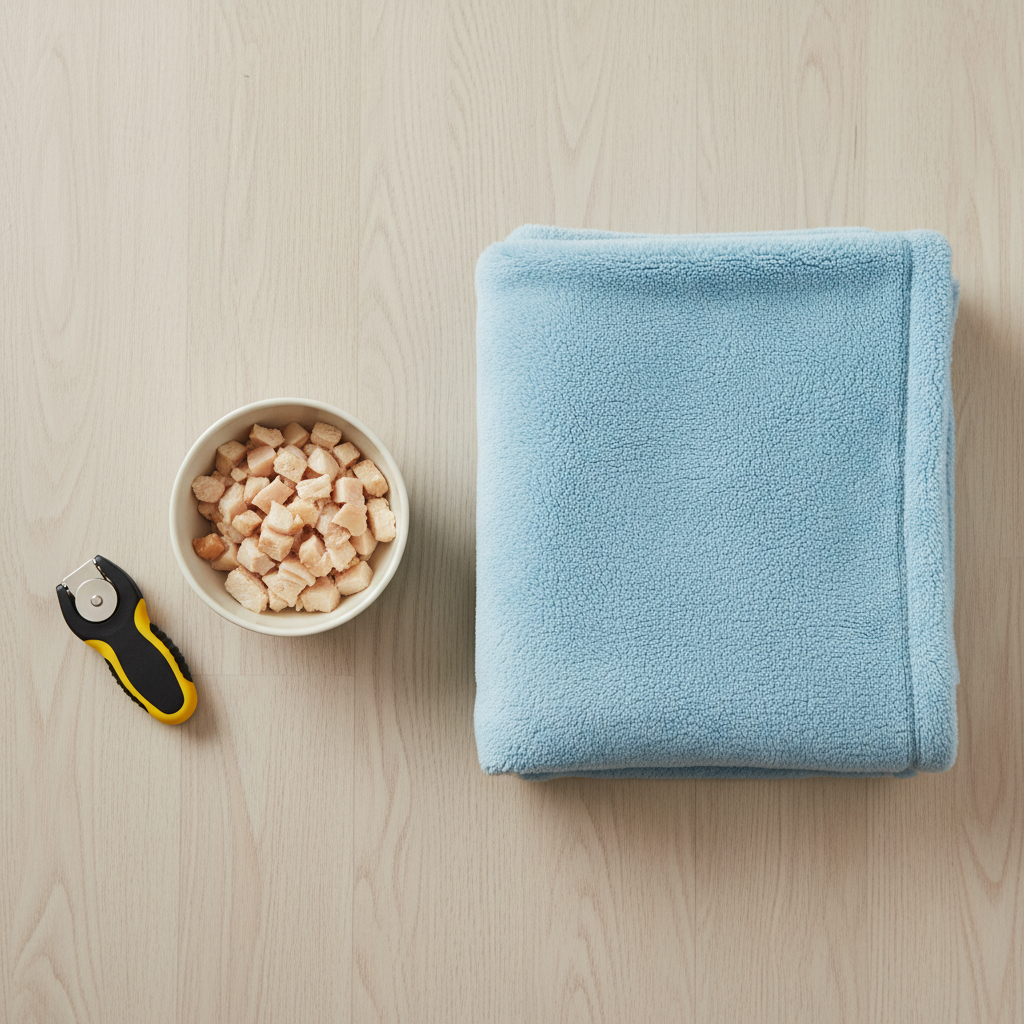
Great training sessions start with great preparation. Before you call your dog over, take a few minutes to gather everything you’ll need. Having your tools ready ensures the session flows smoothly and keeps your dog engaged without unnecessary interruptions. Think of it as your ‘biscuit-making’ toolkit!
The Essentials for Kneading Practice
- High-Value Treats: Standard kibble might not cut it for learning a new trick. You need something your dog finds absolutely irresistible! Think small, soft, smelly treats like tiny pieces of boiled chicken, cheese, or commercial training treats. The key is ‘high-value’—something that makes your dog’s eyes light up and say, ‘I will do anything for that!’
- A ‘Kneadable’ Surface: You need to provide a very inviting surface that encourages paw-pushing. A super soft, plush blanket, a fluffy dog bed, or even a soft pillow will work perfectly. The texture should be something your dog naturally wants to push their paws into.
- A Clicker (Optional but Recommended): A clicker is a fantastic tool for marking the exact moment your dog performs the correct behavior. The ‘click’ provides a clear, consistent signal that means ‘Yes! That’s what I want, and a treat is coming!’ If you’re not using a clicker, you can use a verbal marker word like ‘Yes!’ or ‘Good!’ said in a sharp, happy tone.
- A Quiet, Comfortable Space: Choose a training location with minimal distractions. Your living room or a quiet bedroom is perfect. Avoid areas with other pets, people coming and going, or loud noises that could break your dog’s focus.
The Right Mindset: Patience is Your Superpower
Your attitude is just as important as any physical tool. Remember these key principles:
- Keep it Short and Sweet: Dogs, especially when learning something new, have short attention spans. Aim for several short sessions of 3-5 minutes each throughout the day rather than one long, frustrating session.
- Stay Positive: This is all about fun! Keep your energy light, happy, and encouraging. Never punish your dog for not ‘getting it.’ If they get confused or frustrated, simply end the session on a positive note with an easy win (like a ‘sit’) and try again later.
- End on a High Note: Always finish your training session with a successful repetition, so your dog feels confident and is eager to train again next time.
The Step-by-Step Guide to Teaching ‘Knead’
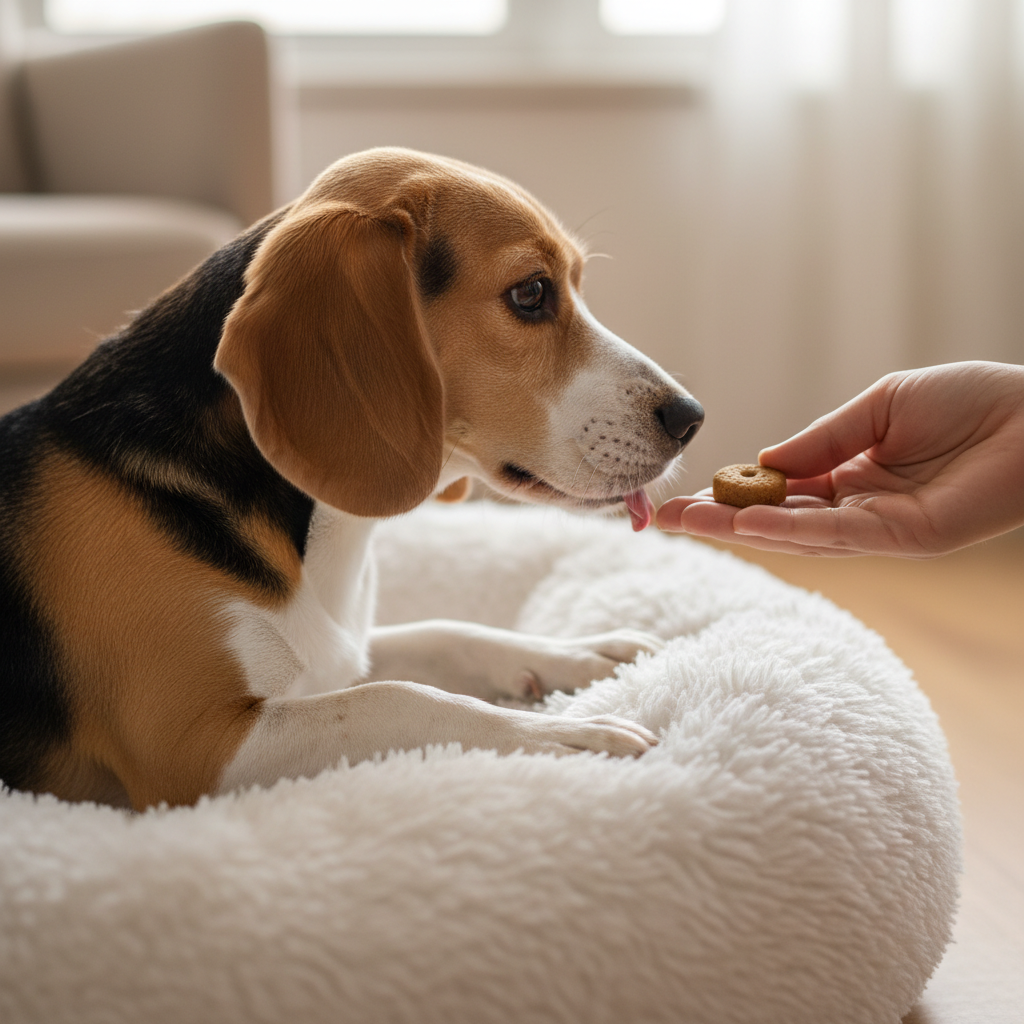
This is where the magic happens! We’re going to use a combination of ‘capturing’ and ‘shaping’ to teach this trick. Capturing means rewarding a behavior your dog does naturally, and shaping means rewarding small approximations of the final behavior until you get the desired result. Let’s get started!
-
Step 1: Capture the Initial Paw Movement
Place the soft blanket or bed on the floor and encourage your dog to interact with it. Don’t give any commands yet. Just wait and watch. The moment your dog places a paw on the blanket and pushes—even a tiny bit—CLICK! (or say ‘Yes!’) and immediately give them a treat. The treat should be delivered away from the blanket, so they have to reset and approach it again. Repeat this process many times. At this stage, you are simply teaching them: ‘Pushing on this blanket with my paw makes good things happen!’
-
Step 2: Shape the Kneading Motion
Once your dog is consistently pushing on the blanket with one paw to get a treat, it’s time to raise the criteria. Now, you will only click and treat for more than one push, or for a more rhythmic push-push motion. Initially, reward two pushes. Then, wait for three. You are ‘shaping’ the single push into a repeated, kneading-like motion. This requires patience! Your dog might get confused at first when a single push no longer earns a reward. Wait them out. They’ll likely try pushing again, maybe harder or more frequently. The instant they offer that ‘extra’ push, click and throw a jackpot of treats!
-
Step 3: Introduce the Verbal Cue
When your dog is reliably offering the kneading motion without any prompting, it’s time to name it! Just as they are about to start the behavior, say your chosen cue in a clear, happy voice. Good cues include ‘Knead,’ ‘Make Biscuits,’ or ‘Paws.’ Say the cue, and as soon as they perform the behavior, click and treat. After several repetitions, your dog will begin to associate the word with the action. The sequence is: Say Cue -> Dog Does Action -> Click/Treat.
-
Step 4: Test the Cue
Now it’s time to see if the connection has been made. In a quiet moment, when your dog is near the blanket but not already kneading, say your cue (‘Knead!’). If they perform the motion, celebrate! Give them lots of praise and a high-value reward. If they don’t, that’s okay! It just means you need a few more repetitions of Step 3. Don’t repeat the cue over and over; this will just devalue the word. Go back to saying it right before they do the action naturally.
-
Step 5: Generalize the Behavior
Once your dog has mastered the trick on their special blanket, start practicing in new contexts. Try it on a different blanket, on the sofa, or on your lap (if they’re a small dog). This process, called generalization, helps your dog understand that the ‘Knead’ cue applies everywhere, not just on one specific object. You may need to briefly go back a step or two in each new environment to help them succeed.
Remember: Every dog learns at a different pace. Your friend’s dog might pick this up in a day, while yours might take a week. That’s perfectly normal! The goal is progress, not perfection. Celebrate the small wins and enjoy the process.
Troubleshooting: When the Dough Won’t Rise
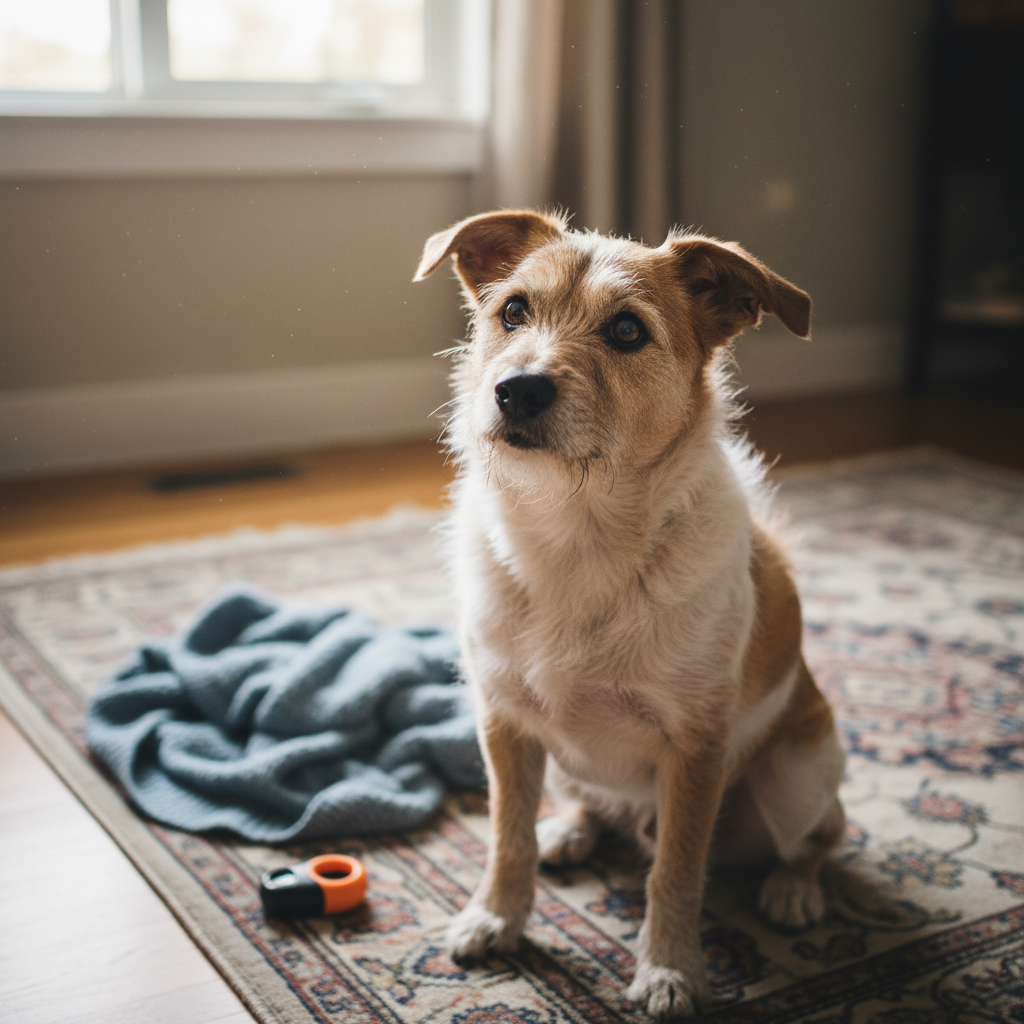
Even with the best plan, you might run into a few snags. Don’t worry, it happens to every trainer! Here are some common challenges and how to work through them.
My dog just stands there and won’t interact with the blanket.
Solution: You might need to make the blanket more interesting. Try luring them onto it. Toss a treat onto the blanket for them to find. You can even try a technique called ‘targeting.’ Teach your dog to touch your hand with their nose (‘touch’), then place your hand on the blanket and ask for the ‘touch.’ When their nose touches your hand, their paws will be on the blanket. You can then try to capture any small paw movements from there. Sometimes, just sitting on the floor with the blanket and showing interest yourself is enough to pique their curiosity.
My dog is using their mouth or biting the blanket instead of their paws.
Solution: This is common, especially with mouthy breeds or puppies. The key is to ignore the unwanted behavior and heavily reward the correct one. If they bite the blanket, say nothing and briefly withdraw your attention. The moment their paws touch it, even accidentally, click and treat. They will quickly learn that only paw interactions earn a reward, while mouthy behavior gets them nothing. Make sure the ‘game’ is about paws, not teeth.
My dog gets frustrated and walks away.
Solution: Frustration is usually a sign that we’re asking for too much, too soon, or that the session has gone on too long. If your dog gets frustrated, it’s a signal to you to take a step back. End the session immediately with an easy win (ask for a ‘sit’ or ‘down’) and give them a treat and praise. When you try again later, make the task easier. Go back to the previous step where they were successful and work from there for a bit before trying to advance again. Shorter, more frequent sessions are your best friend here.
My dog only does a single, half-hearted push.
Solution: This means you need to build more value for the behavior. Are your treats exciting enough? Is the surface soft enough? You can also try ‘building momentum.’ Click and treat the single push, but toss the treat a little distance away so they have to run back to the blanket. This can build excitement and energy, which might translate into more enthusiastic pawing. Be patient during the shaping phase; it can take time for them to understand that you’re looking for a repeated motion.
More Than Just a Trick: The Hidden Benefits
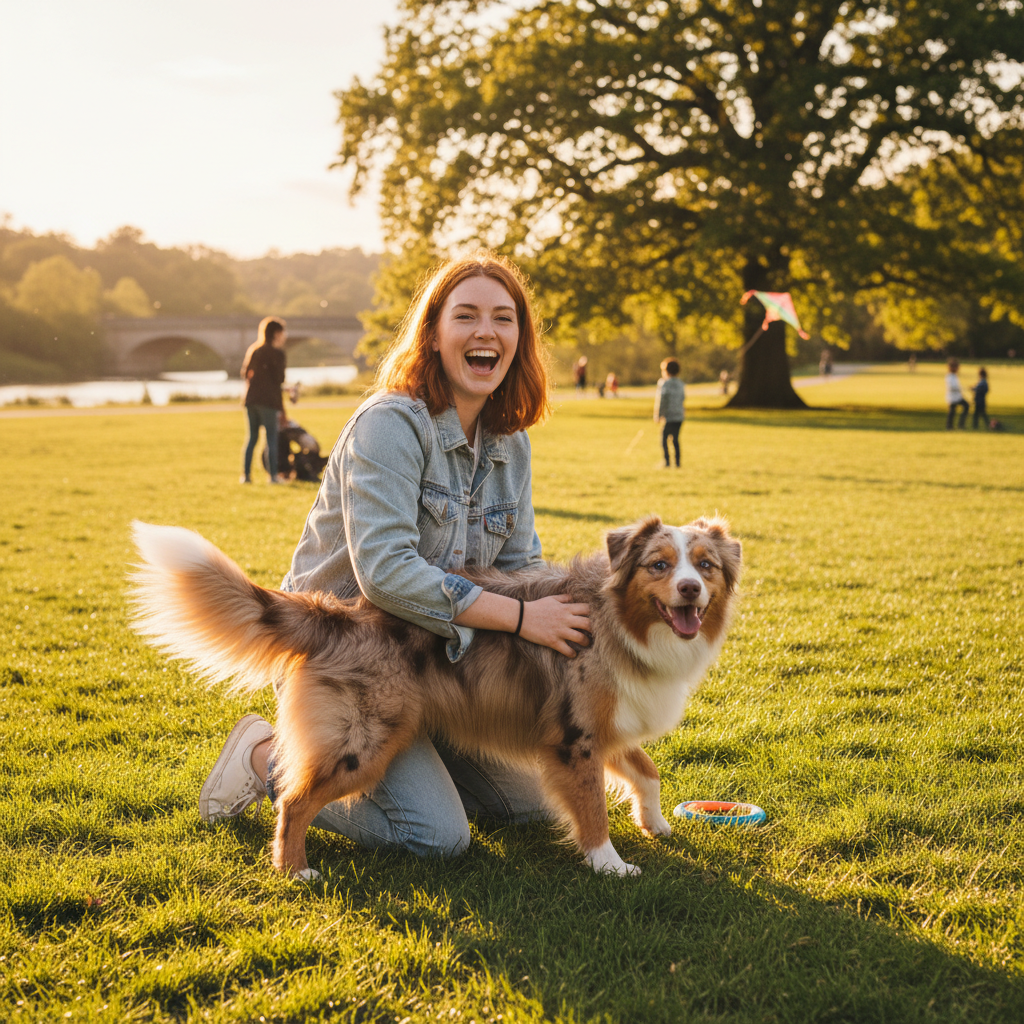
Teaching your dog to ‘make biscuits’ is undeniably cute, but the benefits of trick training go far beyond the adorable result. Every time you engage in a positive training session, you’re investing in your relationship with your dog in profound ways.
Strengthening Your Bond
Training is a two-way conversation. It teaches you to be a better observer of your dog’s body language, and it teaches your dog to focus on you and trust your guidance. Working together towards a common goal, like learning a new trick, builds a powerful bond based on cooperation and mutual understanding. These sessions are quality time that strengthens your connection more than a simple walk or passive cuddle session ever could.
Boosting Canine Confidence
For a timid or anxious dog, learning and succeeding can be a huge confidence booster. The process of trying something new, figuring out the ‘puzzle,’ and earning a reward empowers them. It shows them that they can affect their environment in a positive way. As they master ‘knead,’ and then other tricks, you’ll often see a more confident and resilient dog emerge in other areas of their life.
Providing Mental Stimulation
We often focus on our dogs’ physical exercise needs, but mental exercise is just as important. A bored dog is often a destructive dog. Trick training is a fantastic form of canine enrichment that works their brain, prevents boredom, and helps tire them out in a constructive way. A 10-minute training session can be just as exhausting for some dogs as a 30-minute run.
Building a Foundation for Other Training
The skills your dog learns while mastering ‘knead’—like focus, problem-solving, and offering behaviors—are foundational for all other types of training. A dog who knows ‘how to learn’ will pick up on obedience cues, agility skills, or other complex behaviors much more quickly in the future. You’re not just teaching a trick; you’re teaching your dog the process of learning itself.
Conclusion
Congratulations! You now have all the ingredients you need to teach your dog the adorable ‘cat copycat’ kneading trick. We’ve explored the deep-seated instincts behind the behavior, gathered the right tools for the job, and walked through the step-by-step process of capturing, shaping, and cueing this delightful motion. Remember that the journey is just as important as the destination. Every click, every treat, and every moment of shared understanding is another layer in the incredible bond you share with your canine companion.
Be patient, stay positive, and most importantly, have fun. Before you know it, you’ll be able to ask your dog to ‘make biscuits,’ and you’ll have a heartwarming, unique trick that’s sure to make everyone smile. Happy training!