Seeing your best friend struggle with anxiety is heartbreaking. The trembling during a thunderstorm, the frantic barking when the doorbell rings, or the shutdown at the vet’s office—it’s a heavy weight for both of you. You’ve probably tried everything from calming treats to thunder shirts, searching for that one thing that will offer your pup some genuine relief. What if I told you that one of the most powerful tools in your anxiety-busting toolkit is already with you? It’s your hand.
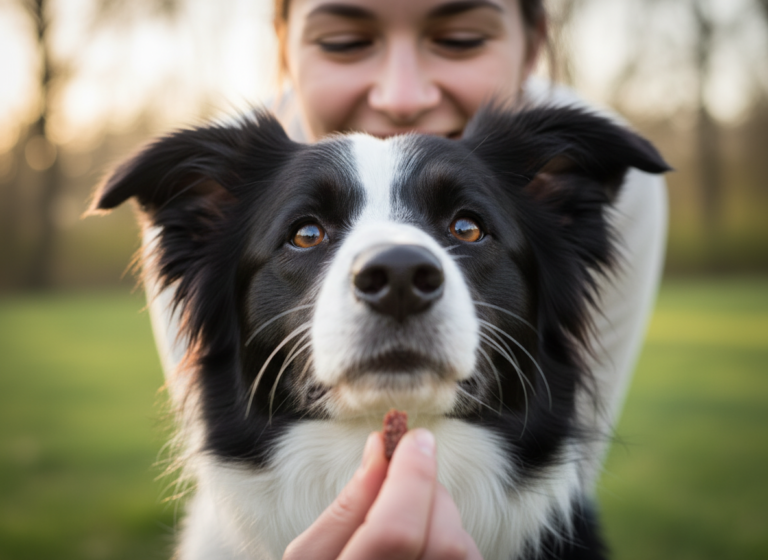
Welcome to the world of hand targeting, a deceptively simple training exercise with profound behavioral benefits. At its core, ‘touch’ or hand targeting is teaching your dog to touch their nose to your hand on cue. It sounds basic, right? But for an anxious dog, this simple action is a lifeline. It’s a predictable, positive, and empowering ‘job’ that can redirect their focus away from fear and onto you, their trusted leader. This gentle nudge is more than just a trick; it’s a communication tool that builds confidence, strengthens your bond, and gives your dog a concrete action to perform when their world feels overwhelming. In this guide, we’ll walk you through every step, from the very first nose-boop to using this skill in real-world scenarios that trigger your dog’s anxiety.
Why Hand Targeting is a Game-Changer for Anxious Dogs
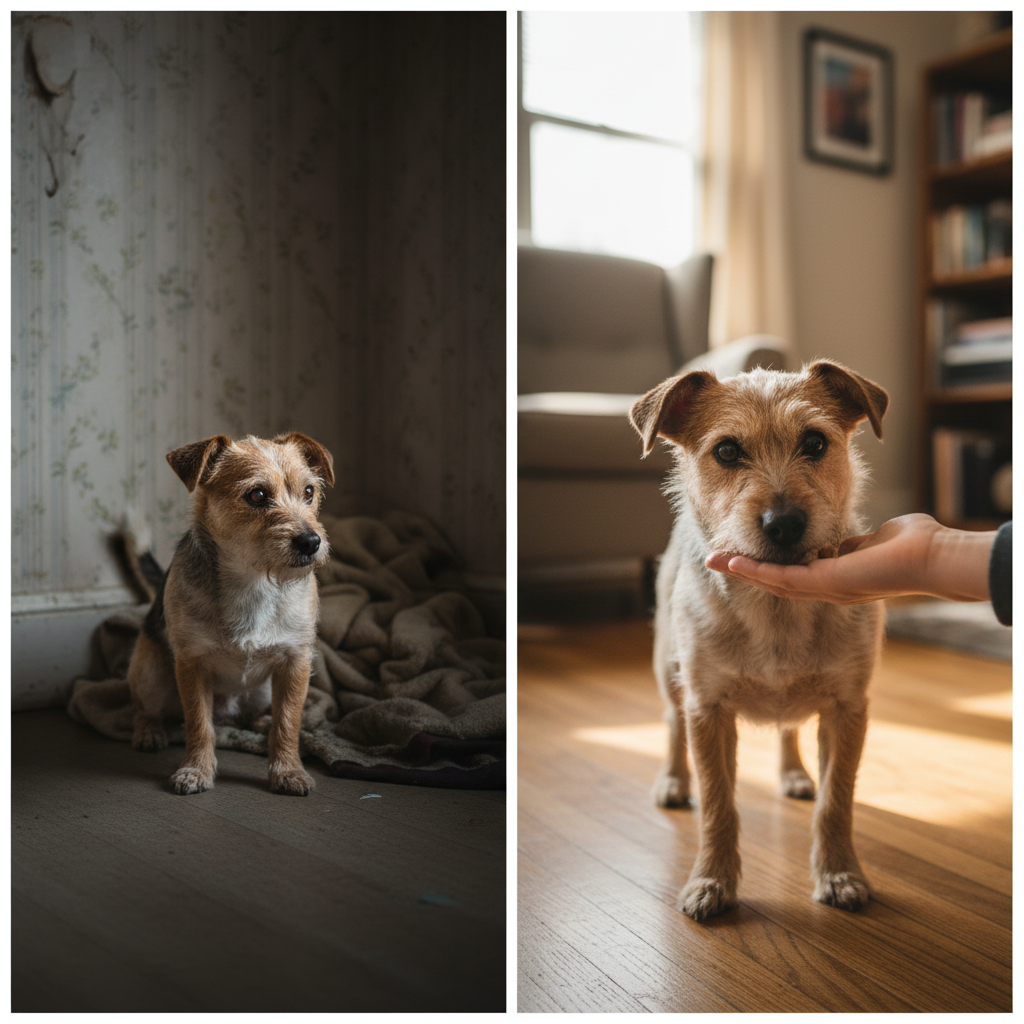
Before we dive into the ‘how,’ let’s understand the ‘why.’ Why does this simple nose-to-hand touch have such a significant impact on a dog’s emotional state? It’s all about canine psychology and giving your dog a sense of control and predictability in a world that can often feel scary and chaotic.
It Provides a Clear ‘Job’
Anxious dogs often don’t know what to do with themselves in stressful situations. Their brains are flooded with cortisol, the stress hormone, leading to fight, flight, or freeze responses. Giving them a known, simple task like ‘touch’ redirects their mental energy. Instead of focusing on the scary stranger or the loud noise, their brain switches to a familiar task with a history of positive reinforcement. It’s like giving a nervous human a specific, easy task to do during a panic attack—it grounds them.
It Builds Confidence Through Choice
Hand targeting is a cooperative exercise. Your dog makes the choice to move toward your hand and make contact. Every time they successfully perform this action and get rewarded, they get a little jolt of confidence. They learn, ‘I can do this! I can control this outcome!’ This sense of agency is incredibly empowering for a dog that often feels powerless against its fears.
It Creates a Positive Association
We use high-value treats and praise to teach hand targeting, which means your hand becomes a predictor of wonderful things. Over time, this positive association can be transferred to other things. For example, you can use your hand target to help your dog voluntarily move toward a scary object (like the nail clippers) or a new person, turning a potentially negative encounter into a positive one.
It’s a Portable Calming Signal
Once your dog masters the hand target, it becomes a mobile safety signal. You can use it anywhere—at the vet, on a busy street, or when visitors come over. Presenting your hand becomes a familiar, comforting cue that says, ‘Hey, focus on me. We’ve got this.’ It’s a non-verbal way to check in with your dog and offer reassurance without overwhelming them with petting or talking, which can sometimes increase arousal.
Getting Started: Your Hand-Targeting Toolkit
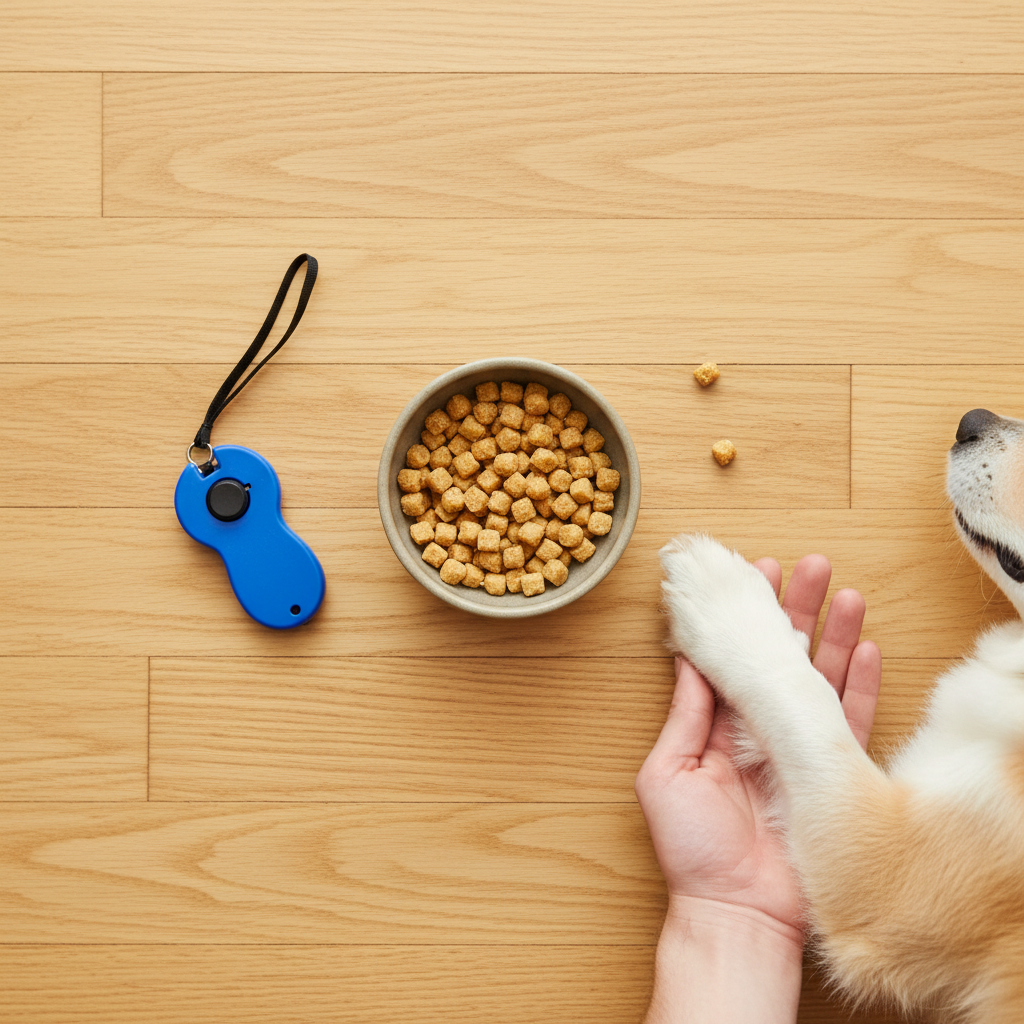
The beauty of hand targeting is its simplicity. You don’t need a lot of fancy equipment to get started. In fact, you probably have everything you need right at home. Setting yourself up for success is all about creating the right environment and having the right rewards.
What You’ll Need:
- High-Value Treats: This is crucial. We want your dog to be highly motivated. Forget the dry biscuits for this training. Think small, soft, smelly treats like tiny pieces of chicken, cheese, or commercial training treats. The treat should be something your dog can swallow quickly so you can move on to the next repetition.
- A Quiet, Distraction-Free Space: Start your training sessions in a calm environment where your dog feels safe and can focus. Your living room, a quiet bedroom, or a fenced backyard are all great options. Avoid areas with a lot of foot traffic, other pets, or loud noises initially.
- A Clicker (Optional, but Recommended): A clicker is a small handheld device that makes a distinct ‘click’ sound. In training, it’s used as a ‘marker’ to tell the dog the exact moment they performed the correct behavior. The ‘click’ is always followed by a treat. This creates a clear and precise line of communication. If you don’t have a clicker, you can use a verbal marker like a sharp, happy ‘Yes!’
- Patience and a Positive Attitude: This is the most important tool of all! Training should be fun for both of you. Keep sessions short (just 2-5 minutes at a time) and always end on a positive note. Your dog feeds off your energy, so stay relaxed and encouraging.
The Step-by-Step Guide to Teaching a Perfect Hand Target
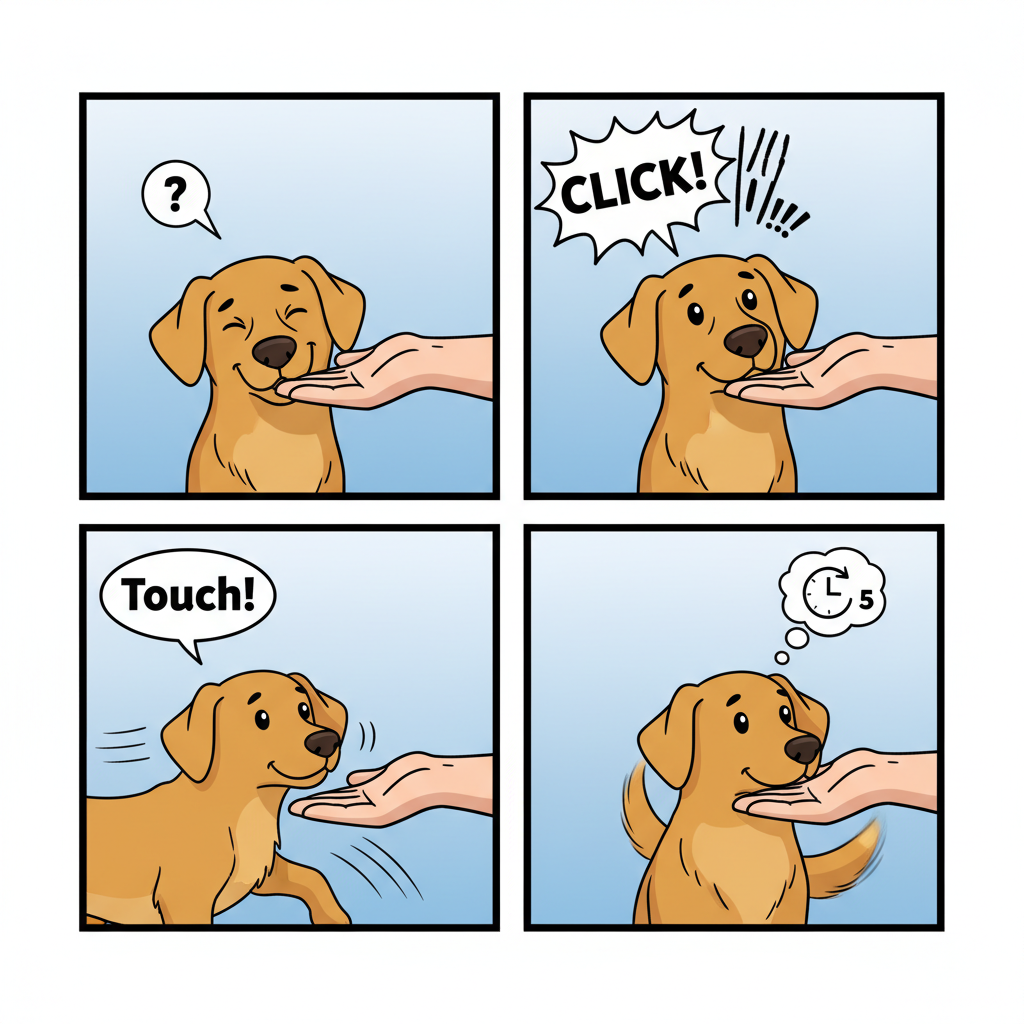
Alright, let’s get down to the fun part! We’re going to build this behavior in small, easy-to-digest layers. Remember to keep sessions short and upbeat. If your dog gets frustrated or loses interest, just end the session with an easy win and try again later.
Phase 1: Charging the Marker (Clicker or ‘Yes!’)
If you’re using a clicker or verbal marker for the first time, you need to ‘charge’ it. This means teaching your dog that the sound predicts a treat.
- Sit with your dog in your quiet space.
- Click the clicker (or say ‘Yes!’).
- Immediately give your dog a treat. Don’t ask for any behavior; the sound itself is what earns the reward.
- Repeat this 10-15 times. You’ll know it’s working when your dog’s ears perk up at the sound, and they look at you expectantly for the treat.
Phase 2: Introducing the Target (Your Hand)
The goal here is to get your dog to voluntarily interact with your hand.
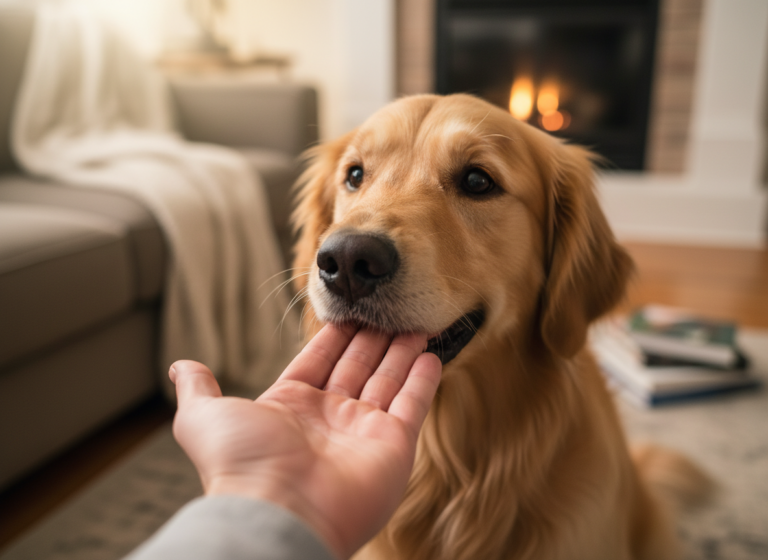
- Hold your hand out to the side of your dog’s head, about 2-3 inches away. Keep your hand open with your palm flat or with your fingers loosely curled.
- Stay silent. Don’t say anything. Wait for your dog to investigate. The moment their nose touches your hand—even for a split second—click or say ‘Yes!’ and give them a treat from your other hand.
- Pull your target hand away as they eat the treat.
- Repeat. Present your hand again. If your dog is hesitant, you can rub a treat on your palm to make it more enticing, but try to fade this out quickly. We want them targeting your hand, not the food on it.
- Practice in short bursts until your dog is eagerly and consistently booping your hand as soon as you present it.
Phase 3: Adding the Verbal Cue (‘Touch’)
Once your dog is reliably touching your hand without any prompting, it’s time to name the behavior.
- As you present your hand, just before your dog is about to touch it, say your chosen cue word in a clear, happy voice. ‘Touch’ or ‘Target’ are common choices.
- When their nose makes contact, click/say ‘Yes!’ and reward.
- Repeat this process many times. The sequence is: Say the cue -> Present hand -> Dog touches -> Click/Yes! -> Reward.
- Soon, your dog will associate the word ‘Touch’ with the action of touching your hand.
Phase 4: Building Duration and Distance
Now we want to make the behavior stronger and more useful.
- Duration: Start asking for a slightly longer touch. Present your hand and say ‘Touch.’ The instant their nose touches, wait just one second before you click/reward. Gradually increase the time they must keep their nose on your hand, working up to 3-5 seconds. This is fantastic for helping a dog hold their focus.
- Distance: Start presenting your hand a little further away, requiring your dog to take a step or two to reach it. This turns the target into a tool for movement.
- Generalization: Practice with your other hand. Practice while you are standing up, sitting on the floor, or in different rooms of the house. This helps your dog understand that ‘Touch’ means the same thing no matter the context.
Putting It to Work: Using Hand Targeting in Anxious Situations

Teaching the ‘touch’ cue is one thing; using it as a tool for anxiety is where the magic really happens. The key is to start small and manage the environment so your dog can be successful. Don’t throw them into the deep end by trying this for the first time during a full-blown panic moment.
Scenario 1: Nervousness Around New People
Many dogs are wary of strangers reaching out to pet them. Hand targeting changes the dynamic.
- The Setup: Ask a friend your dog doesn’t know well to help. Instruct them not to talk to, look at, or try to pet your dog.
- The Action: Have your friend stand still. From a comfortable distance, ask your dog for a hand target on your own hand. Reward. Then, hold your hand out closer to your friend and ask for a ‘touch.’ Gradually, you can use the target to guide your dog to voluntarily move closer to the person.
- The Goal: The dog learns that new people are not a threat and that focusing on you and your hand is a safe, rewarding choice. Eventually, you can even have the new person present their own hand (palm out, sideways) for a target.
Scenario 2: Vet Visit Jitters
The vet’s office is a cocktail of scary smells, sounds, and experiences. A hand target can be a comforting anchor.
- The Setup: Practice in the car, the parking lot, and then the waiting room (if it’s not too chaotic).
- The Action: In the exam room, use hand targeting to keep your dog’s focus while the vet tech or veterinarian is talking to you. You can use it to help position your dog on the scale or guide them onto the exam table. A sustained ‘touch’ (holding the nose to hand) can be incredibly helpful for keeping them still during a basic examination or even a vaccination.
- The Goal: To give your dog something predictable and positive to do in an unpredictable and scary environment.
Scenario 3: Navigating Scary Outdoor Environments
Is your dog scared of traffic, skateboards, or other dogs on walks? Hand targeting can help you move past triggers.
- The Setup: Identify your dog’s trigger distance—the point at which they see the scary thing but aren’t reacting yet.
- The Action: When you spot a trigger from a safe distance, get your dog’s attention and ask for a rapid-fire series of easy hand targets while you calmly walk past. Use very high-value treats.
- The Goal: To teach your dog that they can see a scary thing and choose to disengage and focus on you instead. It turns a scary experience into a fun, rewarding game.
Common Stumbling Blocks and How to Troubleshoot Them
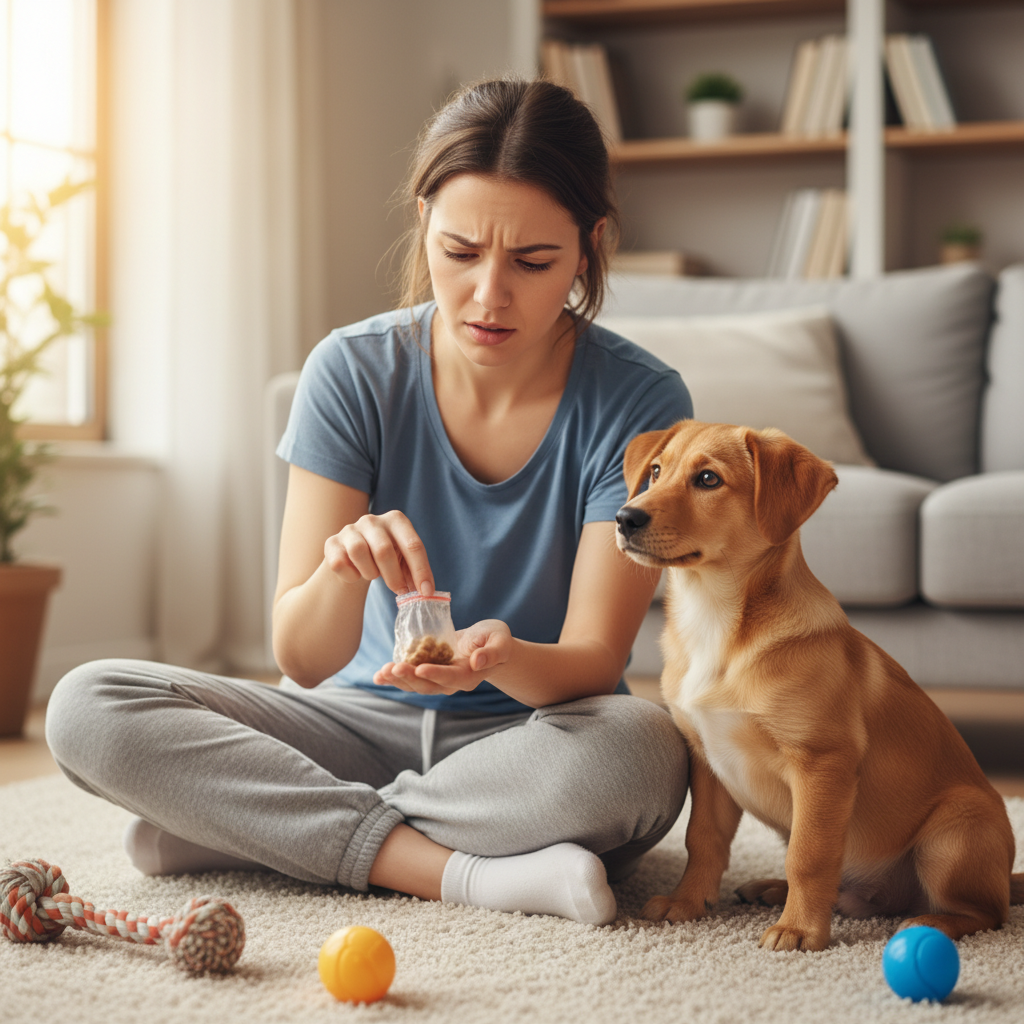
Even with the best plan, you might hit a few bumps in the road. That’s completely normal! Dog training is rarely a straight line. Here are some common issues and how to navigate them with patience and understanding.
| The Problem | The Solution |
|---|---|
| My dog keeps trying to nibble or mouth my hand. | This is common, especially with puppies or mouthy breeds. The solution is to be quicker with your click/marker! Mark the very instant their nose touches, before their mouth opens. If they do mouth you, calmly pull your hand away for a few seconds without any reaction, then present it again. They will learn that only a gentle nose touch earns the reward. |
| My dog isn’t interested and won’t approach my hand. | First, check your rewards. Are they high-value enough? Second, make it easier. Hold your hand very close to them so they barely have to move. You can also try rubbing a smelly treat on your hand to get them started. For extremely timid dogs, you may need to start by rewarding them just for looking at your hand, then for taking a step toward it, and so on. |
| My dog was doing great, but now they’ve stopped. | Your training sessions might be too long. Keep them short and sweet, around 2-5 minutes max. Always end on a high note when your dog is still engaged and successful. It’s also possible they’re bored. Try practicing in a new room or using a different, extra-special treat to renew their enthusiasm. |
| My dog will only target one of my hands. | Dogs don’t generalize well. They might think the ‘game’ only works with your right hand in the living room. You need to specifically teach them that the cue applies everywhere. Practice with your left hand, hold your hand high, hold it low, practice while sitting, standing, and in different rooms. Start easy each time you change the picture. |
Expert Tip: Remember that this is a tool, not a magic wand. It’s most effective when combined with overall management, like avoiding situations that are too overwhelming for your dog and working with a professional trainer or veterinary behaviorist for severe anxiety.
Conclusion
Teaching your dog a hand target is so much more than just a party trick. It’s a profound act of communication and a powerful way to build a bridge of understanding between you and your anxious companion. By giving them a simple, predictable job, you empower them to make good choices, build their confidence, and look to you for guidance when they feel overwhelmed. This gentle nudge can transform scary situations into manageable training opportunities, strengthening your bond every step of the way.
Remember to be patient with your pup and with yourself. Celebrate the small victories—the first hesitant nose-boop, the first time they choose to target your hand instead of barking at a stranger. Each successful ‘touch’ is a step toward a more confident, relaxed, and happier dog. You have the power to help your best friend navigate their world with a little less fear and a lot more joy, and it all starts with the simple, gentle nudge of a hand target.