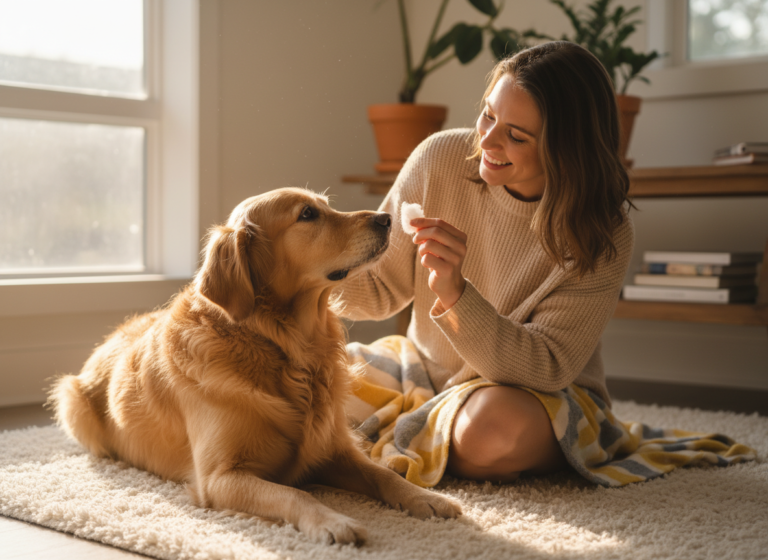
We’ve all been there. You’ve just finished mopping the floors, and they’re sparkling. You let your dog out for a quick potty break, and before you know it, a set of perfectly-shaped, muddy paw prints are decorating your pristine floors. It’s a classic dog owner struggle! But what if you could stop the mud at the door, without any wrestling, chasing, or stress?
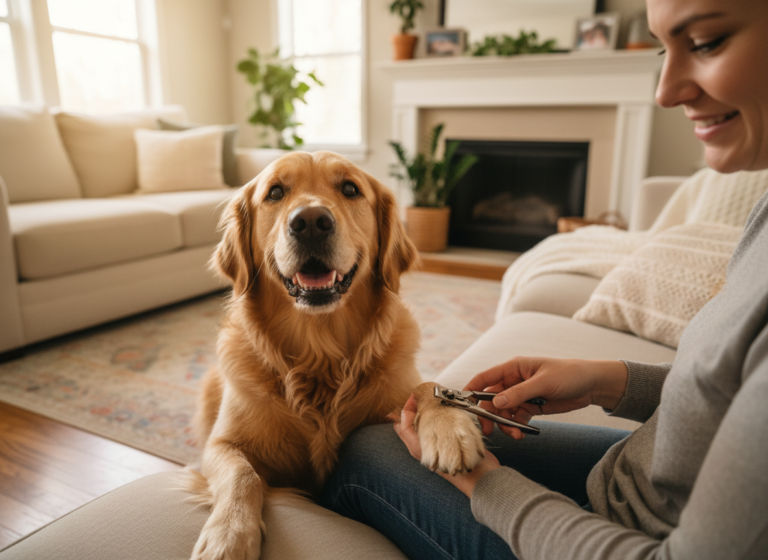
The secret isn’t a magic mat or an army of robot vacuums; it’s a simple, fun training exercise. Teaching your dog to voluntarily lift each paw for cleaning is a game-changer. It transforms a frustrating chore into a positive bonding moment. Plus, this skill has benefits far beyond clean floors! It makes nail trims, paw pad inspections, and winter salt removal a breeze. In this guide, we’ll walk you through the simple, positive-reinforcement steps to teach your furry friend the ‘lift a paw’ trick, turning muddy days into training opportunities.
Gearing Up for Success: What You’ll Need
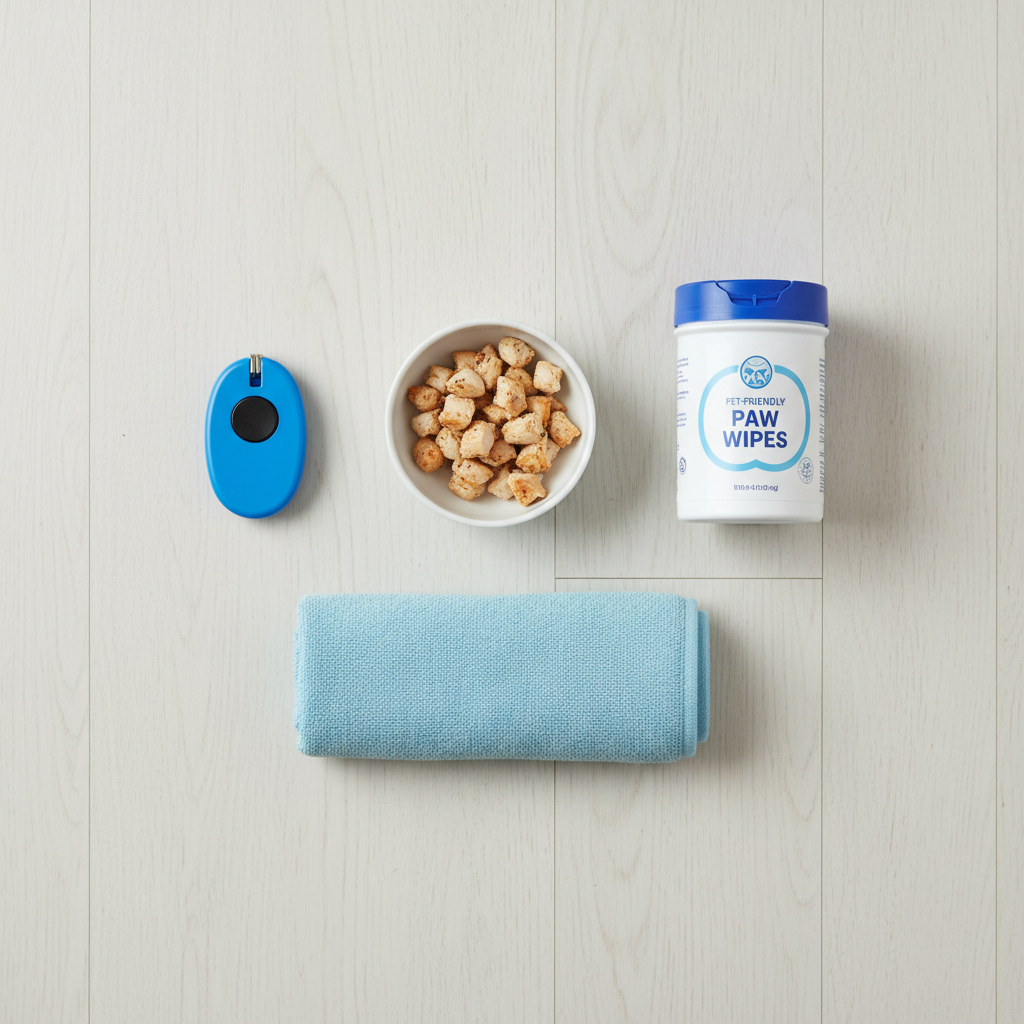
Before you jump into training, gathering a few key items will set you and your pup up for a smooth and successful session. Think of it as preparing your ingredients before you start cooking! Having everything ready means you can focus all your attention on your dog. Here’s your simple toolkit:
- High-Value Treats: We’re not talking about their everyday kibble. You need the good stuff! Think tiny pieces of cooked chicken, cheese, hot dogs, or their absolute favorite store-bought training treats. The goal is to make this training session the most exciting part of their day. The treats should be small so you can reward frequently without filling them up too quickly.
- A Clicker (Optional, but Recommended): A clicker is a fantastic tool for marking the exact moment your dog does the right thing. The ‘click’ acts as a precise signal that means, “Yes, that’s it! A treat is coming!” If you’re not using a clicker, you can use a consistent verbal marker word like “Yes!” or “Good!”.
- Paw Cleaning Supplies: Have your chosen cleaning tool nearby so your dog can get used to its presence from the start. This could be a soft, damp towel, a dedicated paw-wiping mitt, or a container of pet-safe grooming wipes.
- A Comfortable, Quiet Space: Choose a location with minimal distractions. Your living room floor, a cozy rug, or a quiet corner of the kitchen are all great options. Comfort is key for both of you, so make sure the surface isn’t slippery for your dog.
Expert Tip: Keep your training sessions short and sweet! Aim for 3-5 minute sessions a few times a day. This keeps your dog engaged and excited to learn, rather than bored or frustrated. Always end on a positive note when your dog has successfully completed a step!
The Step-by-Step Guide to a Perfect Paw Lift
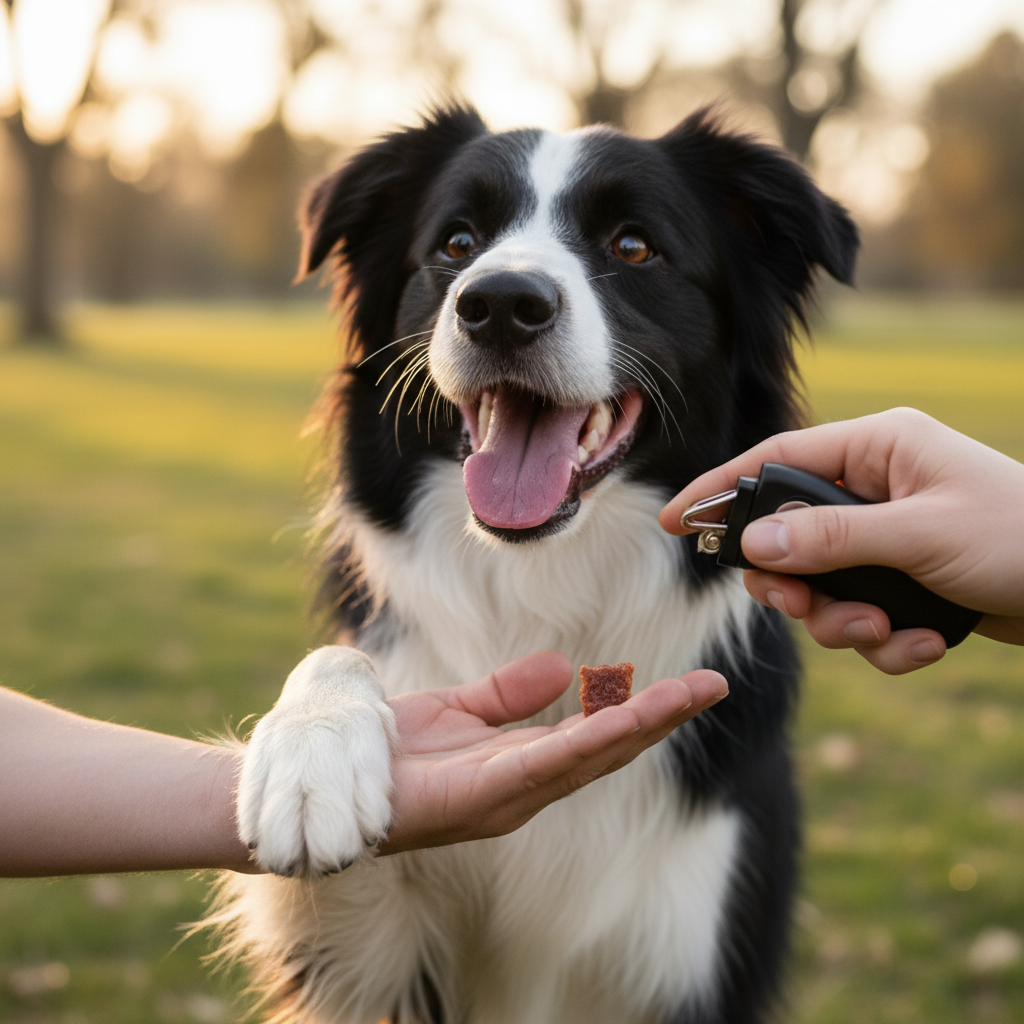
This is where the magic happens! Remember, the key is to break the process down into tiny, easy-to-win steps. We’re building a chain of behaviors using positive reinforcement. Be patient, stay upbeat, and celebrate every small victory. Let’s begin!
-
Step 1: The Touch Association Game
The first goal is to make your dog completely comfortable with you touching their legs and paws. Many dogs are sensitive about their feet. Start by touching your dog on their shoulder. The second they feel your touch, click (or say “Yes!”) and give them a treat. Repeat this a few times. Then, move your touch down their leg. Touch, click, treat. Work your way down slowly until you can gently touch the top of their paw. Touch paw, click, treat. Keep it light and quick. We’re just building a positive association: Human hand on my leg/paw = yummy treat!
-
Step 2: Introducing the Cue Word
Once your dog is comfortable with the paw touch, you can add a verbal cue. Choose a simple word like “Paw,” “Shake,” or “Foot.” Say your chosen word clearly right before you touch their paw. So, the sequence becomes: Say “Paw,” touch their paw, click, treat. Repeat this several times. Your dog will start to connect the word with the action of you touching their paw.
-
Step 3: The Gentle Lift
Now, we ask for a tiny bit more. Say your cue word, and as you touch their paw, gently apply the slightest upward pressure with your fingers, just enough to lift their paw off the ground by half an inch for a split second. The instant their paw lifts, click and treat! This is a major milestone. If they pull back, you’ve moved too fast. Go back to just touching for a few reps before trying the lift again. The lift should be so small and quick they barely notice it at first.
-
Step 4: Building Duration
When your dog is confidently lifting their paw into your hand, it’s time to build a little duration. Ask for their paw, and wait just one second before you click and treat. Then try for two seconds. Gradually increase the time you hold their paw in your hand. If they pull away, you’ve held it for too long. Simply go back to a shorter duration they were successful with and build up more slowly. The goal is a calm, steady 3-5 second hold.
-
Step 5: Generalize to All Four Paws
Your dog doesn’t automatically understand that the “Paw” cue applies to all four feet! You need to teach each one. Once one front paw is solid, start the entire process over from Step 1 with the other front paw. Then move to the back paws. You might find the back paws are a bit trickier, as dogs are often more sensitive about their back feet. Be extra patient and use lots of high-value rewards.
Putting It All Together: The Full Cleaning Routine
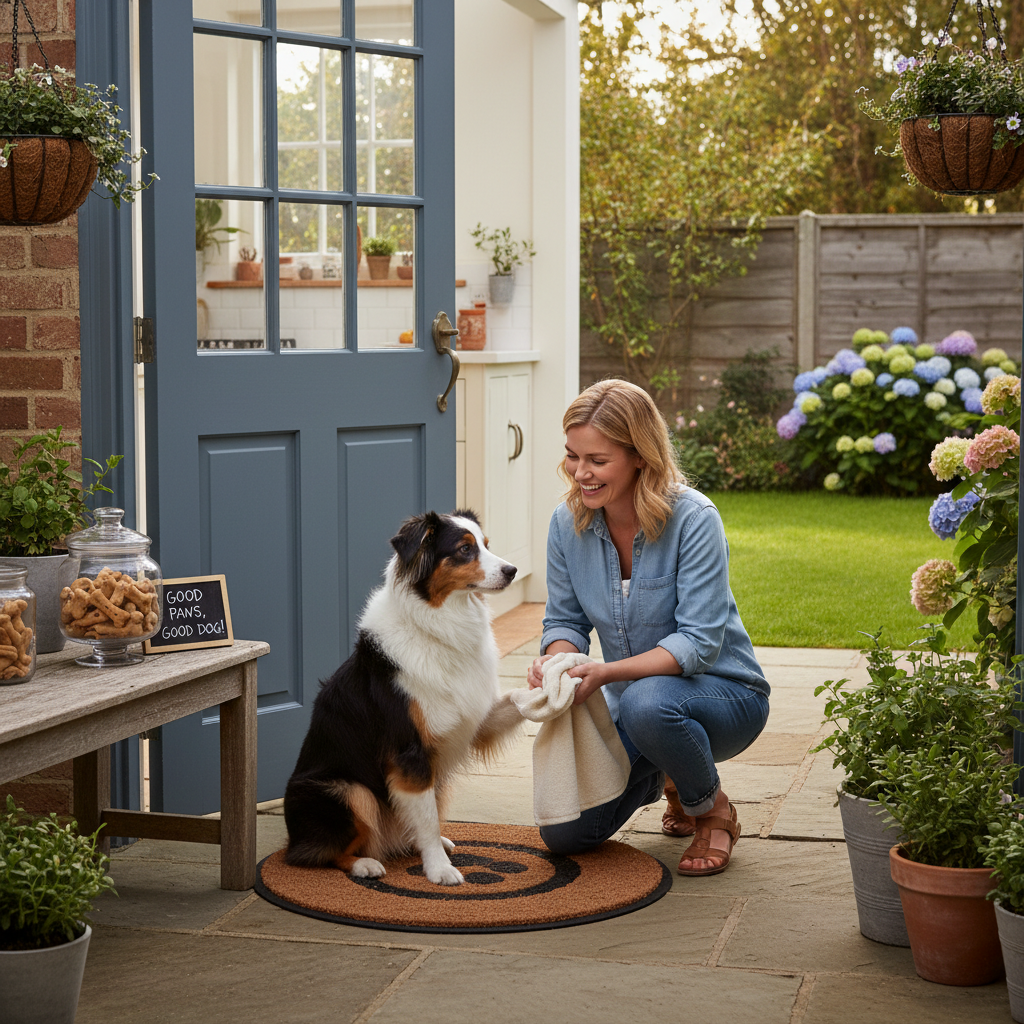
You’ve successfully taught your dog to offer each paw—congratulations! Now it’s time to transition this cool trick into a reliable, everyday routine. The goal is to make paw cleaning at the door an automatic habit for both of you.
Creating a ‘Paw Spa’ Station
First, set up a designated cleaning station right by the door you use most often. This creates a predictable environment for your dog. Your station should include:
- A durable, absorbent doormat or a special ‘mud mat’ for your dog to sit on.
- Your cleaning supplies (towel, wipes, or a paw plunger) within easy reach.
- A sealed jar of treats to reward a successful cleaning.
By having everything in one place, you’re signaling to your dog what’s expected as soon as you come inside. This consistency is crucial for building a strong habit.
Integrating the Wipe
Once your dog is calmly holding their paw in your hand for a few seconds, you can introduce the actual cleaning motion. Don’t surprise them! First, just show them the towel or wipe and let them sniff it. Click and treat for calm curiosity. Then, while they are holding their paw up, gently touch the paw with the towel for a split second. Click and treat. Gradually build up to a single, gentle wipe. Then two wipes. The key is to integrate the cleaning tool slowly and positively, so it just becomes part of the ‘paw’ game they already love.
Remember this: The wipe ends the ‘hold.’ As soon as you’re done wiping, release their paw and give them their jackpot reward! This teaches them that calm cooperation leads to a quick and rewarding finish.
Making it a Daily Habit
Now, practice every single time you come in from outside, even if their paws aren’t muddy. Go to your station, ask your dog to sit, and then ask for each paw. A quick wipe, a treat, and then they’re free to go. This constant repetition will solidify the behavior until it’s as natural as taking off your own shoes. Soon enough, you’ll find your dog automatically sitting at the mat and lifting a paw, waiting for their ‘toll’ before entering the house!
Help! My Dog Won’t Cooperate: Troubleshooting Common Issues
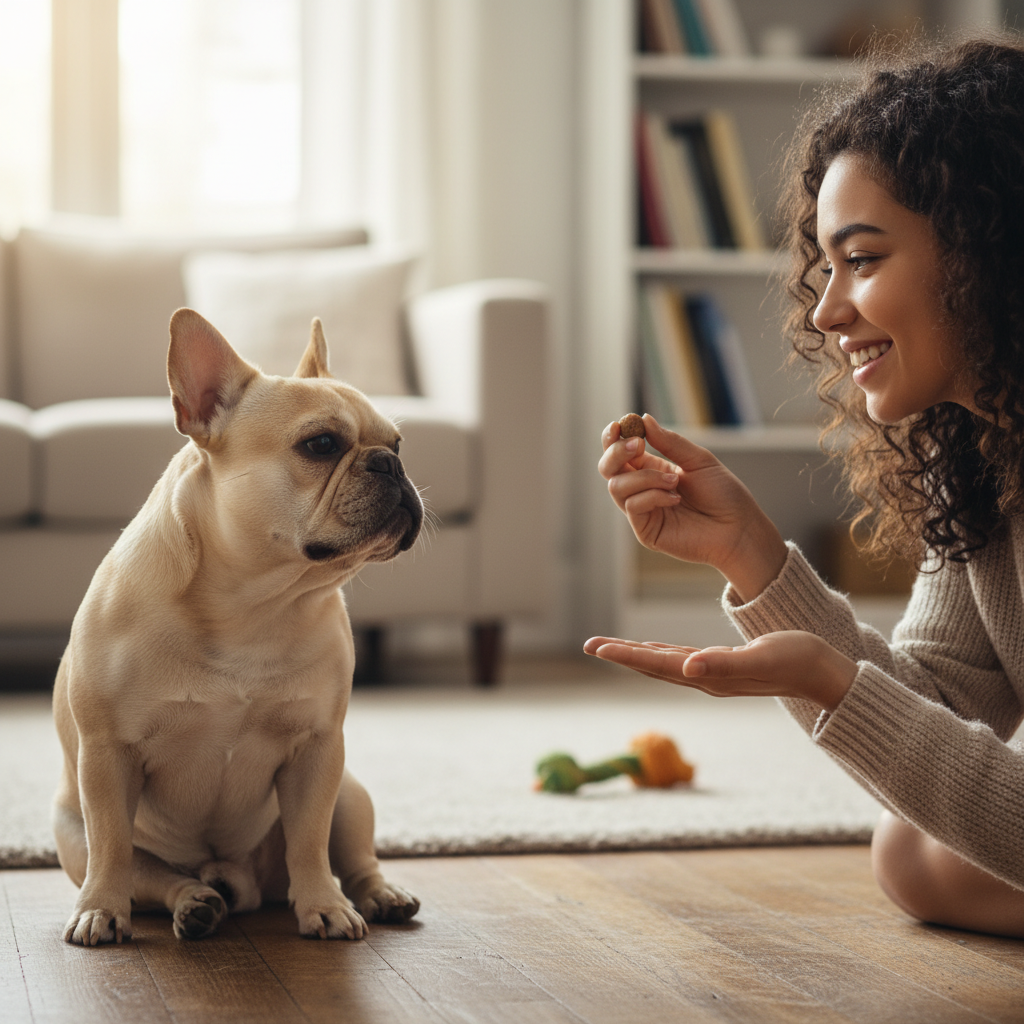
Even with the best plan, you might hit a few bumps in the road. Don’t worry, it’s completely normal! Every dog learns at a different pace. If you’re feeling stuck, one of these common issues is likely the culprit. Here’s how to troubleshoot them with patience and positivity.
| The Problem | The Trainer’s Solution |
|---|---|
| My dog pulls their paw away instantly. | This is the most common issue and it almost always means you’ve moved a little too fast. Go back a step! If they pull away when you try to lift, go back to just touching the paw for a reward. If they pull away when you touch, go back to touching their leg. Find the last point where they were comfortable and successful, and work from there, breaking the next step into even smaller increments. |
| My dog mouths or nips my hand. | This can happen if your dog gets over-excited or thinks this is a game of bitey-hand. If the mouthing is gentle, try holding the paw with one hand and delivering the treat with the other to redirect their mouth. If they are truly nipping, say a calm “Oops!” and briefly withdraw your hands for a few seconds to show them that nipping makes the fun game stop. Never punish them; just reset and try again. |
| My dog is scared of the towel or wipes. | This is a classic case of a scary new object. We need to change their emotional response through desensitization. Put the towel on the floor. When your dog looks at it or sniffs it, click and treat. Do this until they are happy to be near it. Then, hold it in your hand (not moving it towards them) and reward them for staying calm. Next, touch them with it on their back, then their leg, rewarding each step. Only after they are totally fine with the object should you try to use it on their paws. |
| My dog runs away when it’s time to train. | This is a sign that the training sessions are becoming stressful for them. Are your sessions too long? Are you showing frustration? Are the treats not valuable enough? Shorten your sessions to just 1-2 minutes, increase the value of your treats, and be sure to maintain a happy, upbeat tone. Make it the best, most rewarding game in the world, and they’ll soon be running towards you for training time. |
Conclusion
Congratulations on taking the first step towards cleaner floors and a happier, more cooperative dog! By following these steps, you’re not just teaching a simple trick; you’re building communication, trust, and a deeper bond with your best friend. Remember the core principles: keep it positive, be patient, and celebrate the small successes along the way. Every quick touch and tiny lift is a victory worth rewarding!
Soon, what started as a solution for muddy paws will become a seamless part of your daily routine—a quick, happy check-in at the door that you both enjoy. You’ll have peace of mind, a cleaner home, and a wonderful skill that will serve you well for years to come, from nail trims to first-aid. Happy training!