Hey there, fellow dog lover! Are you constantly on the lookout for new, fun ways to connect with your canine companion? Do you scroll through social media and marvel at the adorable tricks other dogs can do? Well, get ready to be the one posting the cutest content, because today we’re diving into one of the most heartwarming tricks imaginable: teaching your dog to hug a pillow.
Now, the word ‘instantly’ in the title is a bit of fun—while this trick is surprisingly simple, it does require a few short, positive training sessions. But don’t worry! With our step-by-step guide, a handful of tasty treats, and a little bit of patience, you’ll have your pup cuddling up to a pillow in no time. This trick isn’t just about the ‘aww’ factor; it’s a fantastic mental workout for your dog and a wonderful bonding experience for you both. So, grab your favorite pillow (one you don’t mind sharing!) and let’s get started on this adorable adventure.
Setting the Stage for a Successful Snuggle Session
Prepping for Pillow Hugging Success
Before you and your furry student jump into the training, a little preparation goes a long way. Setting up the right environment and having the right tools on hand will make the process smoother, faster, and much more fun for everyone involved. Think of it as setting the stage for a blockbuster performance!
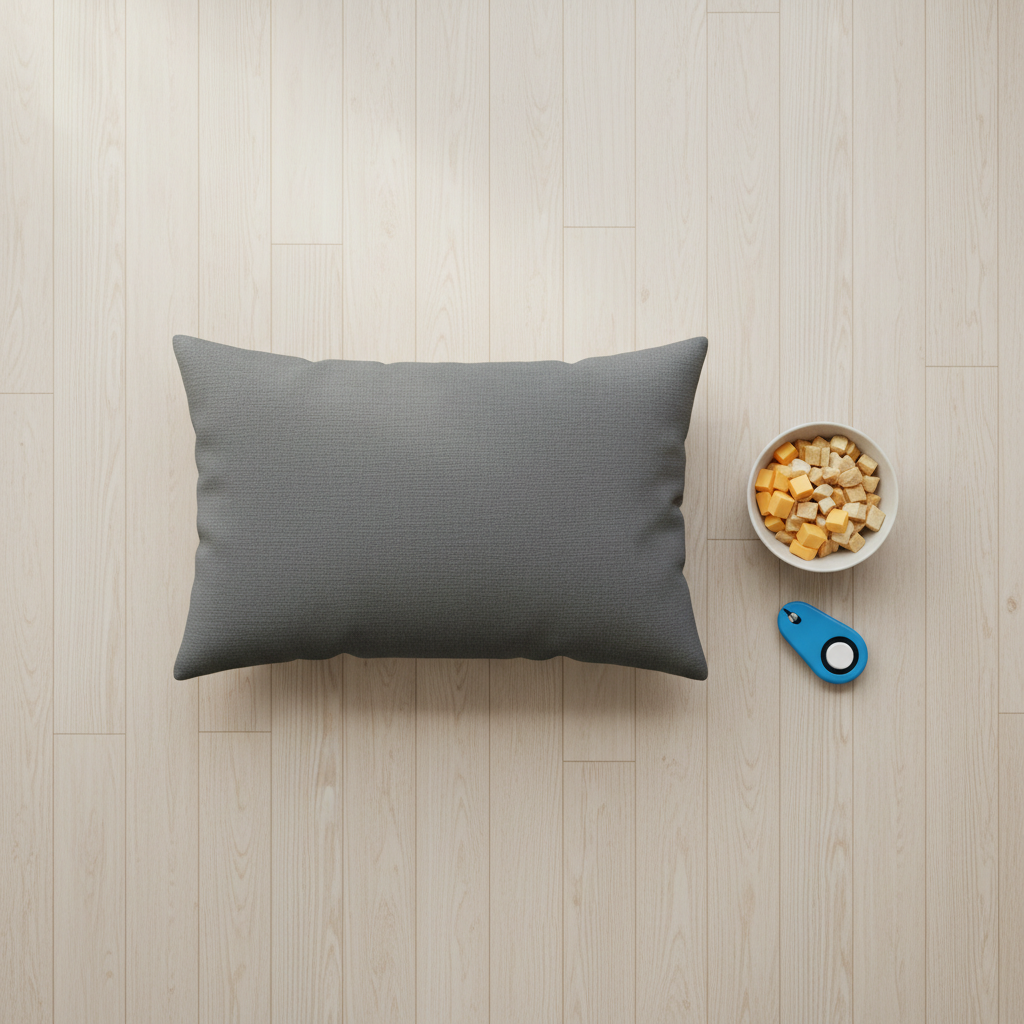
What You’ll Need:
- A Suitable Pillow: Start with a pillow that’s an appropriate size for your dog. A small dog might be intimidated by a giant king-sized pillow, while a Great Dane would barely notice a tiny throw pillow. Choose one that’s soft but has enough substance for them to wrap their paws around. Important: Make sure it’s a pillow you don’t mind getting a little slobbery or furry. Avoid pillows with buttons, zippers, or tassels that could be chewed off and become a choking hazard.
- High-Value Treats: This is the time to break out the good stuff! We’re talking small, soft, extra-tasty treats that your dog absolutely loves. Think tiny pieces of cooked chicken, cheese, or their favorite commercial training treats. The goal is to make them think, ‘Wow, touching this pillow is the best thing ever!’
- A Quiet Training Space: Choose a comfortable, familiar area of your home with minimal distractions. The living room floor is often a perfect spot. Turn off the TV, ask other family members to give you some space, and create a calm atmosphere where your dog can focus on you and the task at hand.
- A Clicker (Optional): If you’re a fan of clicker training, this is a great trick to use it with! The clicker helps you mark the exact moment your dog does the right thing, making communication crystal clear. If you’re not using a clicker, a consistent verbal marker like a happy ‘Yes!’ works just as well.
Expert Tip: Keep your training sessions short and sweet! Dogs, especially puppies, have short attention spans. Aim for 5-10 minute sessions once or twice a day. Always end on a positive note, even if it’s just for a simple nose touch to the pillow. This keeps them excited for the next session!
The Step-by-Step Guide to the Perfect Pillow Hug
Your Four-Step Plan to Cuddle Command
Alright, you’ve got your treats, your pillow, and an eager pup. It’s time for the main event! We’re going to break this down into four simple, manageable steps using a technique called ‘luring.’ This means we’ll use a treat to guide your dog into the correct position. Remember to be patient, positive, and celebrate every little bit of progress!
Step 1: Introduce the Pillow as a Friend
First things first, we need to make sure your dog sees the pillow as a fun, positive object. Place the pillow on the floor between you and your dog. The moment your dog shows any interest in it—sniffing it, looking at it, or even just flicking an ear in its direction—mark the behavior with your ‘Yes!’ or a click, and give them a treat. Toss the treat a short distance away so they have to ‘reset’ and approach the pillow again. Repeat this 5-6 times until your dog is happily approaching the pillow, associating it with delicious rewards.
Step 2: Luring the First Paw
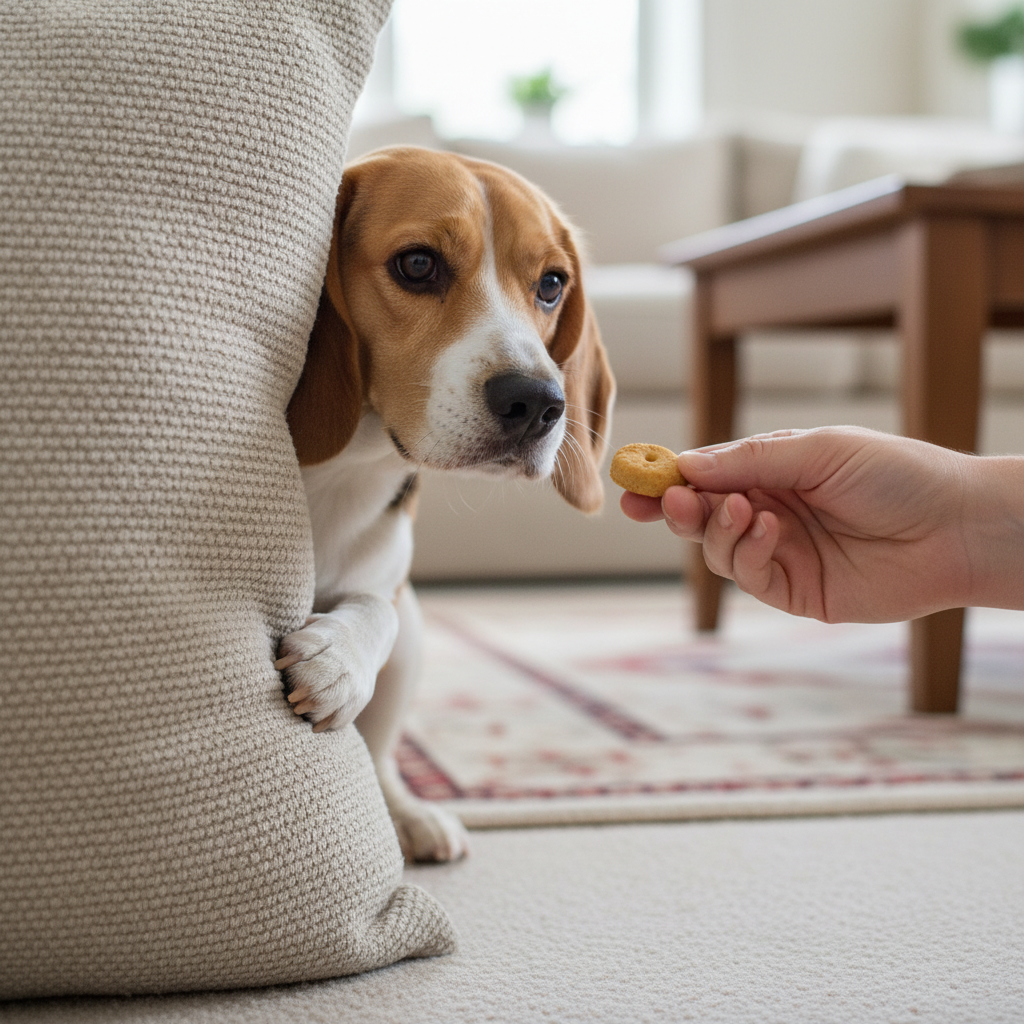
Now that the pillow is a certified ‘good thing,’ let’s get those paws involved. Sit on the floor with your dog in front of you and the pillow lying flat between their front paws. Hold a treat in your hand and slowly lure their head down towards the pillow. As their head goes down, their weight will shift, and they will likely put a paw on the pillow to steady themselves. The instant a paw touches the pillow, mark (‘Yes!’) and reward. If they don’t put a paw up, you can gently tap the pillow to encourage them. The goal here isn’t a full hug yet—we’re just rewarding any paw-on-pillow interaction.
Step 3: Encouraging the ‘Wrap Around’ Motion
This is where the ‘hug’ starts to take shape. Once your dog is consistently putting one paw on the pillow, we’ll up the ante. This time, hold the pillow upright, bracing it with your hands or against your legs. With a treat in your hand, lure your dog’s head around one side of the pillow. As they reach for the treat, they will naturally have to bring their paws up and around the pillow to keep their balance. Mark and reward the slightest ‘wrap around’ motion. At first, you might just be rewarding them for putting both paws on the pillow. Gradually, you’ll start waiting for a more pronounced ‘hug’ before you reward them. This process is called ‘shaping’—rewarding successive approximations of the final behavior.
Step 4: Adding the Verbal Cue
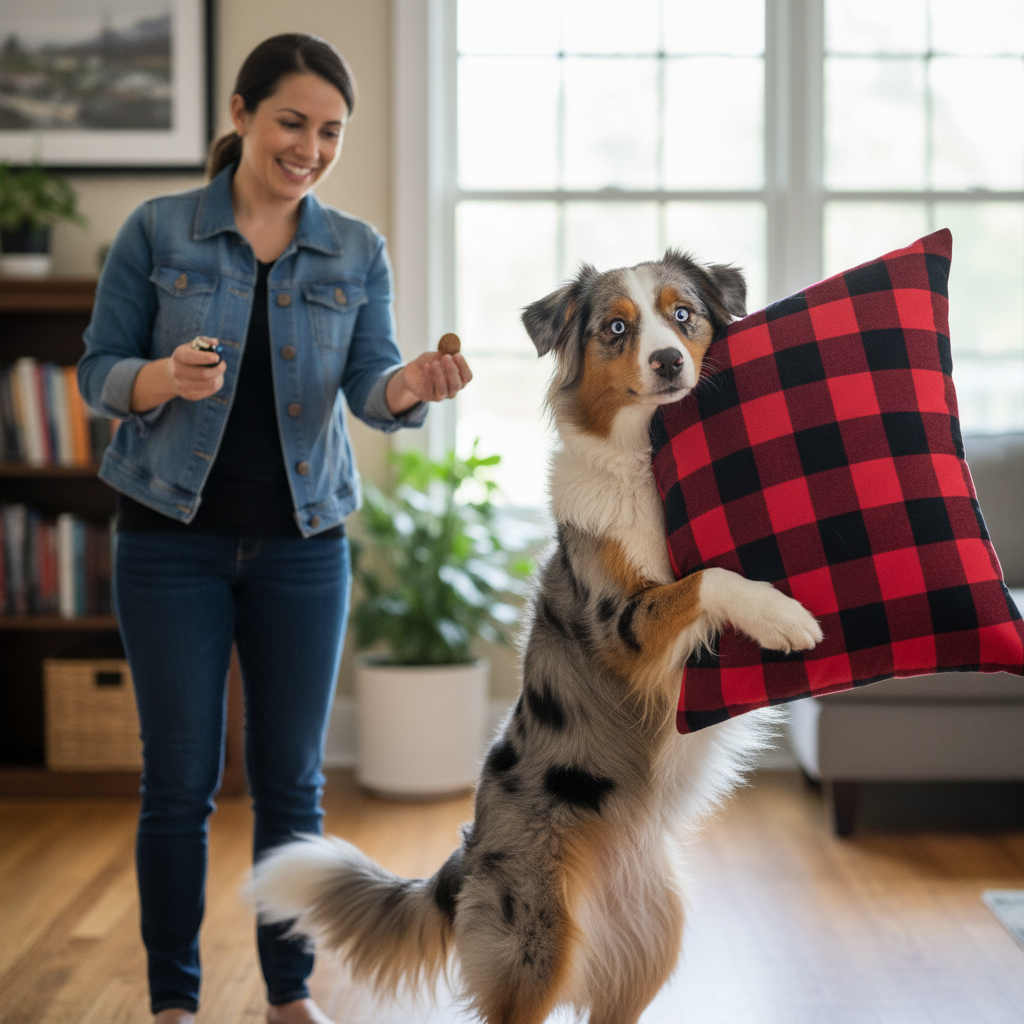
Your dog is now starting to understand the physical motion of hugging the pillow! It’s time to give this awesome trick a name. Just as your dog is beginning the motion to hug the pillow, say your chosen verbal cue clearly and happily. ‘Hug,’ ‘Cuddle,’ or ‘Love your pillow’ are all great options. Say the cue, let them perform the action, and then mark and reward. After several repetitions, your dog will begin to associate the word with the action. You can then start to test it by saying the cue first, before you start luring. When they respond to just the word, throw a jackpot of treats and praise! You’ve done it!
Refining the Trick: Building Duration and Fading the Lure
From a Quick Squeeze to a Lingering Embrace
Congratulations, your dog is hugging a pillow on command! That’s a huge accomplishment. Now, let’s polish this trick to make it even more impressive and reliable. Our two main goals are to get them to hold the hug for longer and to perform the trick without you needing to guide them with a treat every time.
Building Duration
Right now, your dog probably gives the pillow a quick squeeze and then immediately looks to you for a treat. To build duration, we’ll delay the marker and reward.
- Ask your dog to ‘Hug.’ The moment they do, instead of marking immediately, wait just one second. Then mark (‘Yes!’) and reward.
- Practice this a few times. Once they are comfortable holding the hug for one second, try waiting for two seconds before you mark and reward.
- Gradually increase the time in small increments. If you increase the time and your dog lets go, you’ve gone a bit too fast. Simply go back to the previous, successful duration for a few more reps before trying to increase it again.
Remember this: The key to building duration is to be unpredictable. Sometimes reward after 1 second, sometimes after 3, sometimes after 2. This keeps your dog engaged and prevents them from just going through the motions.
Fading the Lure
The ultimate goal is for your dog to perform the trick with just a verbal cue, not a hand signal with a treat. Fading the lure is a gradual process.
- Empty Hand Lure: Start by going through the exact same luring motion you did before, but with no treat in your hand. As soon as they complete the hug, mark it and then give them a treat from your other hand. This teaches them that the reward comes from you, not necessarily the hand that’s guiding them.
- Shrink the Hand Signal: Once they respond well to the empty hand lure, start making the hand signal smaller and smaller. Instead of a big, sweeping motion around the pillow, maybe it’s just a point towards the pillow. Continue to mark and reward for success.
- Rely on the Verbal Cue: As your hand signal gets smaller, your verbal cue becomes more important. Eventually, you should be able to stand upright, say ‘Hug,’ and your dog will perform the trick. This is the final stage! When this happens, make sure to give them lots of praise and a high-value reward to solidify the behavior.
Troubleshooting: When the Hug Doesn’t Go as Planned
Common Hiccups and How to Fix Them
Even with the best instructions, sometimes our canine students have their own ideas about how training should go. Don’t get discouraged! Every dog learns at a different pace, and hitting a snag is a normal part of the process. Here are some common issues and how to navigate them with a positive attitude.
| The Problem | The Solution |
|---|---|
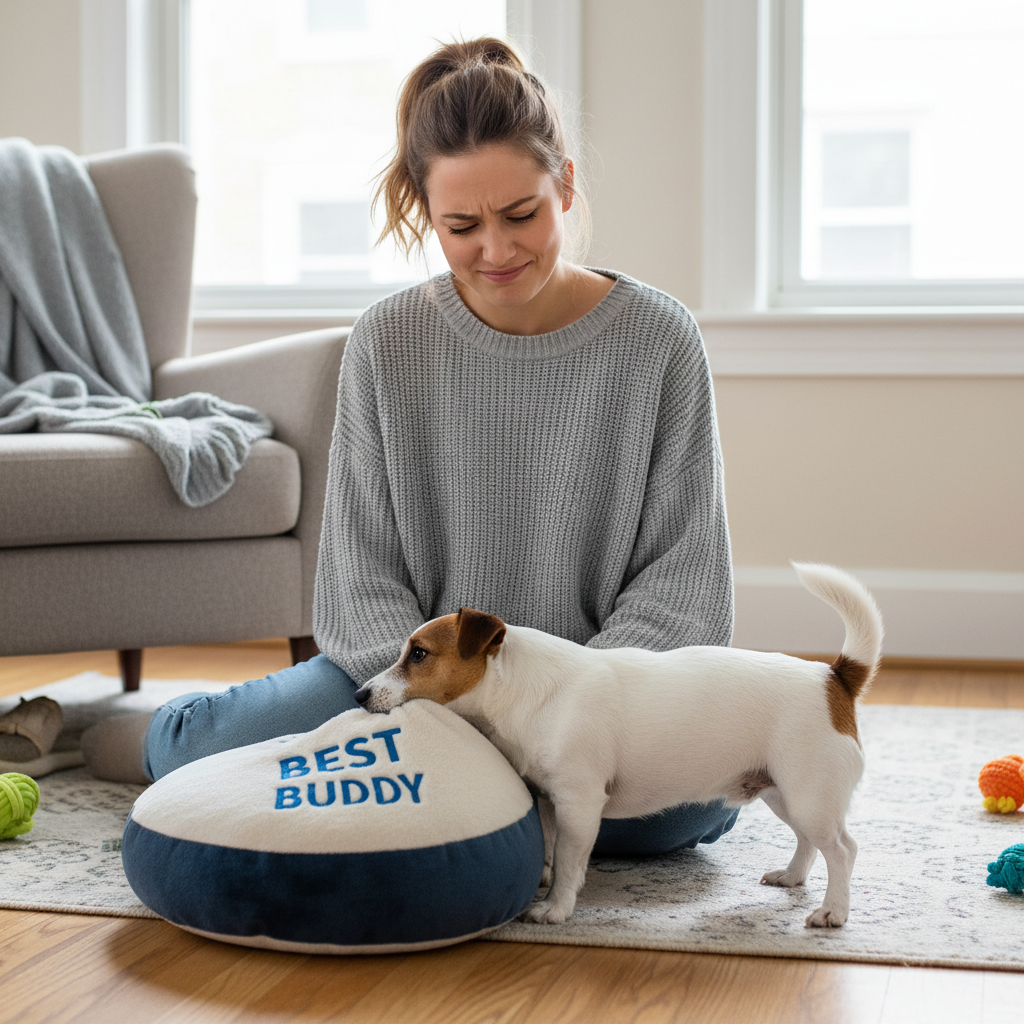
| My dog just wants to chew the pillow. | This is very common! If your dog starts mouthing or chewing the pillow, immediately and calmly say ‘Uh-uh’ and withdraw the pillow for a few seconds. This is not a punishment, but a removal of the fun object. Re-introduce it and reward heavily for any non-chewing interaction, like a sniff or a paw touch. You may need to use a less ‘fluffy’ or toy-like pillow initially. |
| My dog is scared of the pillow. | Never force your dog to interact with something they fear. Go back to Step 1 and work on creating a positive association from a distance. Place the pillow on the floor and reward your dog just for looking at it. Gradually reward them for getting closer, until they are comfortable sniffing it. This may take several sessions. Let your dog set the pace. |
| They lose interest quickly. | This is a sign your training session is too long, the treats aren’t exciting enough, or your dog is tired or distracted. Keep sessions under 5 minutes, use extra-special treats they only get for training, and make sure you’re training in a low-distraction environment. Always end on a high note to keep them wanting more! |
| They only put one paw on the pillow. | That’s a great start! Don’t get stuck waiting for perfection. Reward the one-paw touch enthusiastically for a bit. Then, try luring their head to the opposite side of the pillow. This will shift their weight and naturally encourage them to use the other paw for balance. You can also try holding the pillow at a slight angle to make it easier for them to get both paws on. |
The most important thing is to stay patient and positive. Training is a journey, not a race. Celebrate the small victories, have a good laugh when things go sideways, and remember that the time you’re spending together is strengthening your bond, regardless of how perfect the final trick looks.
Conclusion
You’ve Unleashed the Ultimate Cuddle Trick!
And there you have it! You’ve successfully navigated the steps to teaching one of the most endearing tricks around. Whether your dog is giving a quick squeeze or a long, loving embrace, you’ve accomplished something wonderful. You’ve not only taught them a complex new behavior but also spent quality time engaging their mind and strengthening the incredible bond you share.
Remember to practice the ‘pillow hug’ in short, fun bursts to keep it sharp and enjoyable. Show it off to friends and family, and don’t forget to capture plenty of photos and videos of your talented pup. Every time you see them give that pillow a squeeze, you’ll be reminded of the patience, love, and teamwork that made it happen. Now, go give your clever canine a well-deserved victory cuddle—from you this time!