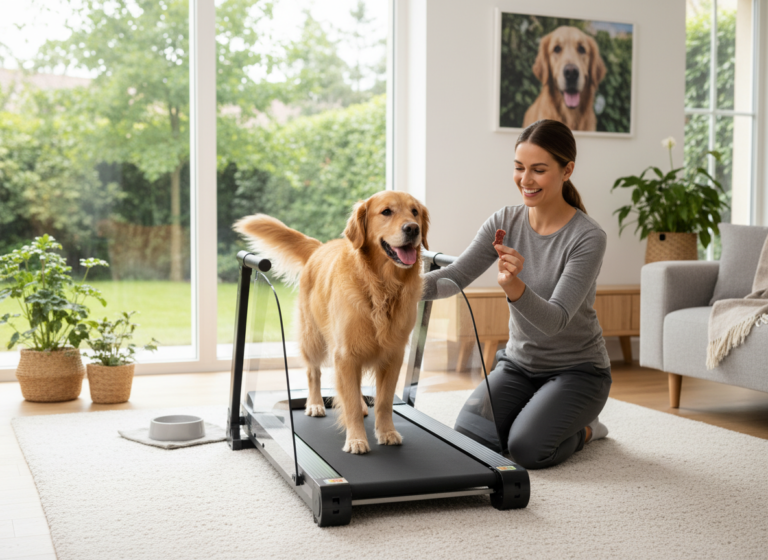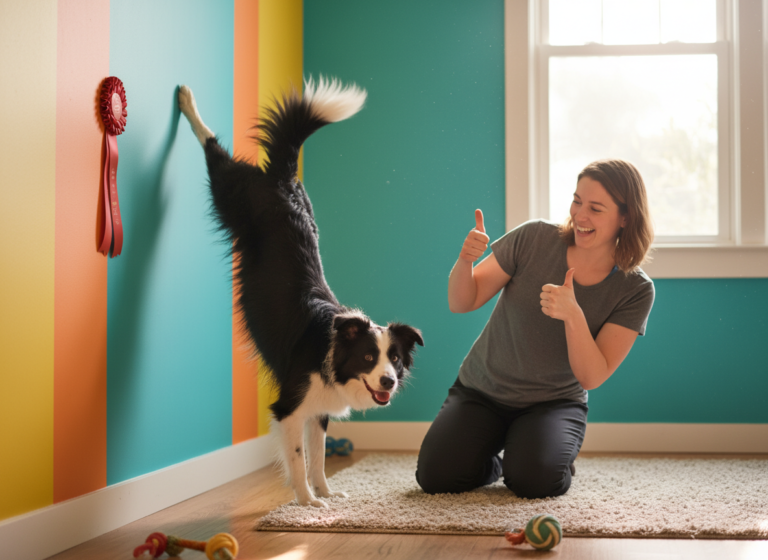
Have you ever watched your dog do a big, satisfying stretch after a nap and thought, ‘I wish I could help them stretch out those hard-working muscles more often’? Well, you can! And you can have a ton of fun doing it. Welcome to the world of the ‘Police Search’ trick—a playful command that doubles as a deep, beneficial stretch for your canine companion.
This trick mimics the classic ‘assume the position’ pose you see in movies, with your dog placing their front paws up against a wall and stretching their back and shoulders. But it’s not just about looking cute or showing off for friends. This specific movement is a form of active stretching, which is fantastic for improving your dog’s flexibility, boosting their body awareness, and even preventing injuries. It’s a brilliant way to combine mental stimulation with physical conditioning. In this guide, we’ll walk you through everything you need to know, from the amazing benefits to a step-by-step training plan that will have your pup stretching like a pro in no time. Let’s get started!
The Pawsitive Perks: Why the ‘Police Search’ is More Than Just a Cute Trick

The Pawsitive Perks: Why the ‘Police Search’ is More Than Just a Cute Trick
Before we jump into the ‘how-to,’ let’s talk about the ‘why.’ Understanding the incredible benefits of this exercise can be a huge motivator for you and your dog. This simple stretch is a powerhouse of physical and mental advantages wrapped in a fun activity.
Improves Flexibility and Range of Motion
Just like humans, dogs can get stiff. Regular stretching helps keep their muscles, ligaments, and tendons pliable. The ‘Police Search’ specifically targets the shoulders, spine, and hamstrings. This extended stretch helps lengthen the muscles along the back and the back of the legs, which is especially beneficial for active dogs who run and jump a lot, or for senior dogs who may be experiencing age-related stiffness.
Reduces the Risk of Injury
Warm, flexible muscles are less likely to tear or get strained. By incorporating this stretch into your dog’s routine, especially before or after vigorous activity like a long hike, a game of fetch, or an agility class, you’re helping to prepare their body for action and aid in recovery. Think of it as your dog’s personal warm-up and cool-down session.
Enhances Body Awareness (Proprioception)
Body awareness, or proprioception, is your dog’s ability to know where their body parts are in space without looking. It’s a crucial skill for navigating their environment safely and efficiently. Tricks like the ‘Police Search’ that require deliberate placement of paws and shifting of weight are fantastic for fine-tuning this internal GPS. Better body awareness leads to better coordination and can reduce clumsiness-related accidents.
Provides Mental Stimulation
Training sessions are brain games for your dog. Learning a new multi-step trick like this one challenges their mind, encourages problem-solving, and prevents boredom. A mentally tired dog is a happy and well-behaved dog. This kind of focused work can be just as exhausting and satisfying for them as a long walk.
Expert Tip: The mental energy your dog expends during a 10-15 minute training session can be equivalent to the physical energy they’d use in a 30-minute walk. It’s a perfect activity for rainy days!
Strengthens Your Bond
Any time you spend in a positive, collaborative activity with your dog, you’re strengthening your relationship. Training with positive reinforcement builds trust and improves communication. Your dog learns to look to you for guidance, and you learn to better understand their body language and learning style. Every successful stretch and every treat-filled reward is another positive deposit in your shared memory bank.
Setting the Scene: What You’ll Need for a Successful ‘Police Search’
Setting the Scene: What You’ll Need for a Successful ‘Police Search’
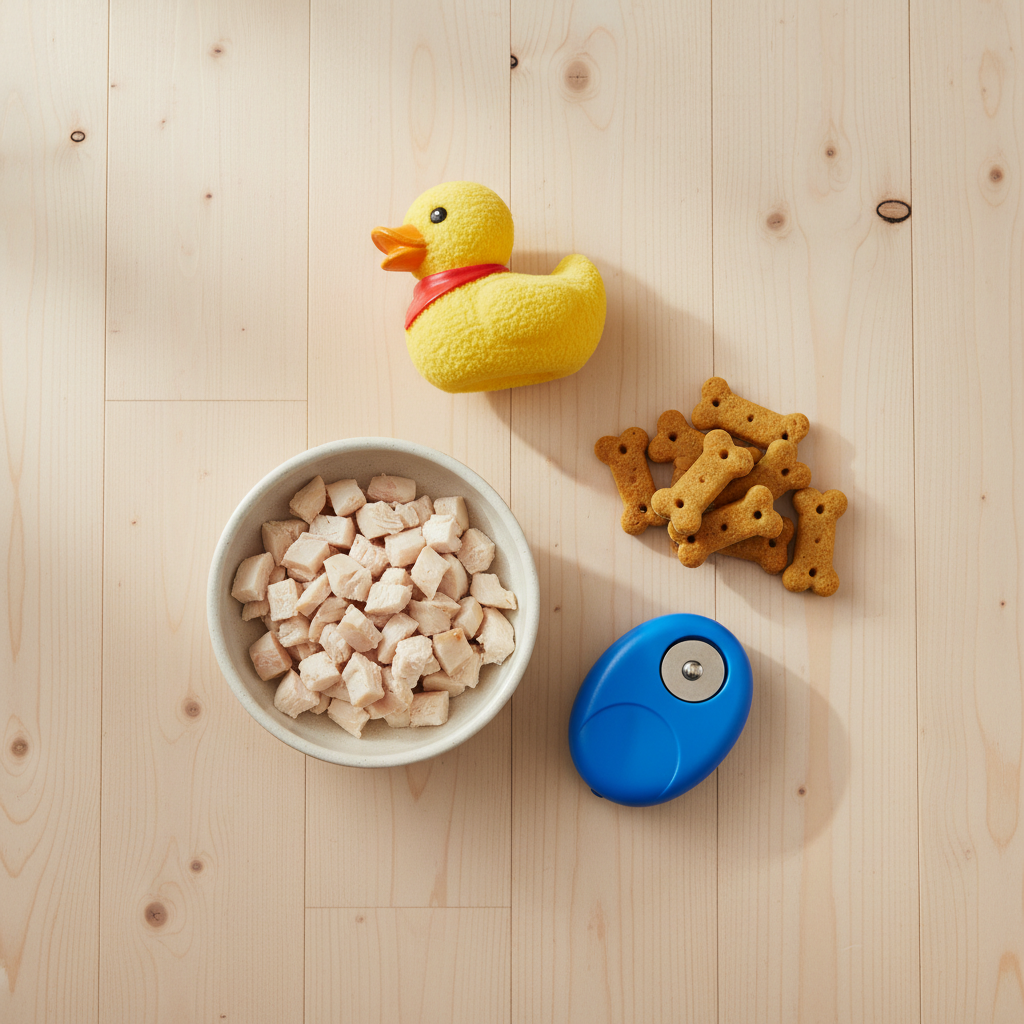
Great news! You don’t need a lot of fancy equipment to teach this trick. The most important tools are patience and a positive attitude. Here’s a quick checklist to make sure your training sessions are set up for success from the very beginning.
- A Sturdy, Vertical Surface: A wall is the most obvious choice, but you could also use a solid, heavy piece of furniture (that won’t tip over!), a large tree trunk in your yard, or even a sturdy fence. The key is that it must be stable and tall enough for your dog to comfortably place their paws on it. Make sure the floor surface in front of it isn’t too slippery. A rug or yoga mat can provide extra grip.
- High-Value Treats: We’re asking our dogs to do something new, so we need to pay them well! High-value treats are extra-special goodies that your dog absolutely loves and doesn’t get all the time. Think small pieces of cooked chicken, cheese, hot dogs, or a favorite brand of soft, smelly training treats. They should be small enough to be eaten quickly so you can keep the training moving.
- A Clicker (Optional): If you use clicker training, have your clicker ready. A clicker is a fantastic tool for precisely marking the exact moment your dog does the right thing. If you’re not a clicker user, no worries! A consistent verbal marker like a cheerful “Yes!” works just as well.
- A Quiet, Distraction-Free Space: Choose a time and place where you and your dog can focus. Turn off the TV, put your phone on silent, and if you have other pets or kids, try to train when things are calm. A peaceful environment helps your dog relax and concentrate on the task at hand.
- A Positive Mindset: This is the most crucial ingredient. Your dog can sense your energy. If you’re relaxed, patient, and having fun, they will too. Keep sessions short and sweet (5-10 minutes is plenty to start) and always end on a positive note, even if it’s just for a simple ‘sit.’
Gather your supplies, take a deep breath, and get ready to have some fun. Your dog is about to learn their coolest—and most beneficial—new trick!
Step-by-Step: Teaching the ‘Police Search’ Stretch
Step-by-Step: Teaching the ‘Police Search’ Stretch
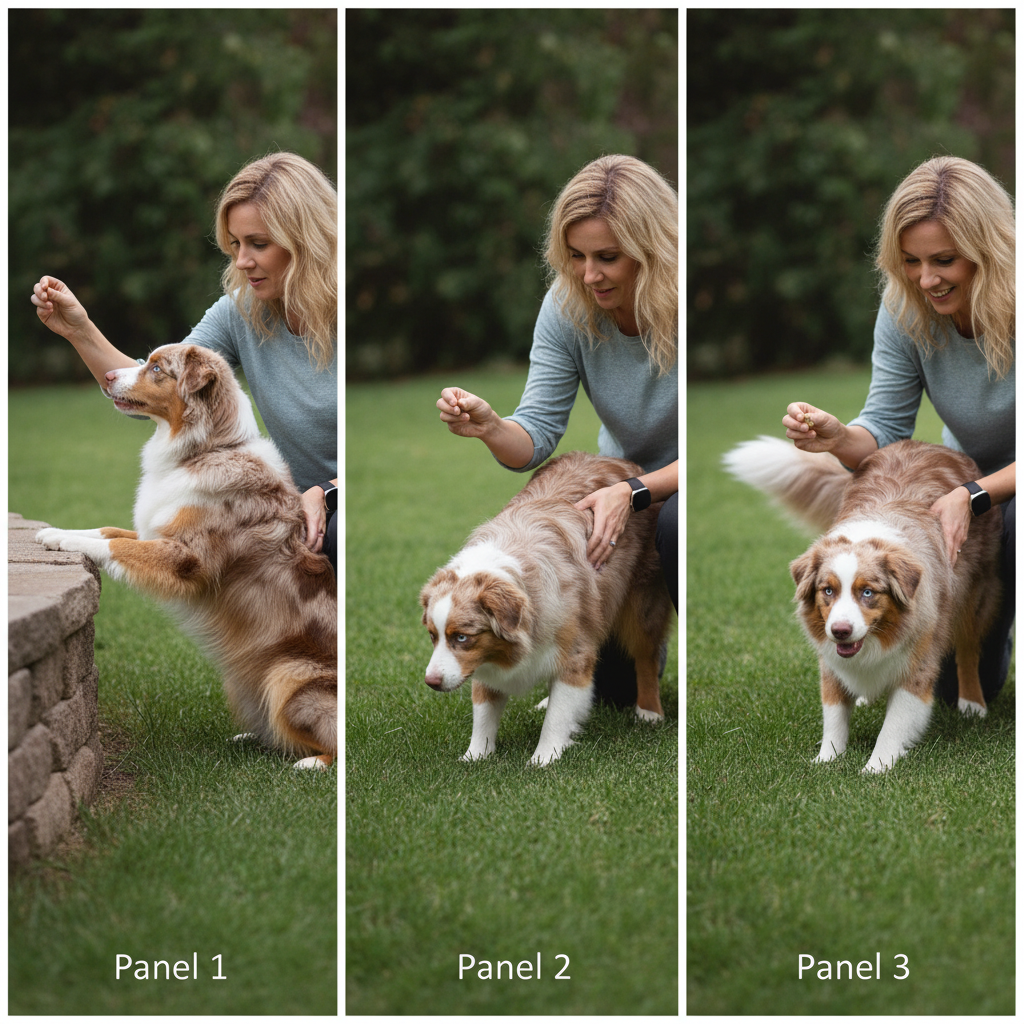
Alright, it’s time for the main event! Remember to break this process down into tiny, achievable steps. Celebrate every small success and don’t rush. Every dog learns at a different pace. We’ll use a technique called ‘luring,’ where you use a treat to guide your dog’s nose, and therefore their body, into the desired position.
- Step 1: Introduce the Wall. Start by simply getting your dog comfortable near the wall you’ve chosen. Stand with your dog between you and the wall. Reward them with a treat and praise just for being calm in that spot. Do this a few times until they seem relaxed.
- Step 2: Lure the Paws Up. Hold a high-value treat in your hand. Let your dog sniff it, then slowly move the treat upwards against the wall, just above their head. To follow the treat, most dogs will naturally lift their front paws and place them on the wall. The very second their paws touch the wall, mark the behavior with your clicker or a hearty “Yes!” and give them the treat. Repeat this several times. At this stage, we’re just rewarding the act of putting paws on the wall.
- Step 3: Encourage the Stretch. Once your dog is confidently placing their paws on the wall, we’ll add the stretch. With their paws still on the wall, take another treat and lure their nose down from the wall and back between their front legs. This movement will cause their back to lengthen and stretch. At first, they may only dip their head a tiny bit. That’s perfect! Mark and reward that small movement. Gradually ask them to lower their head further and further to deepen the stretch.
- Step 4: Add the Verbal Cue. When your dog is reliably performing the full movement (paws up, head down), you can start adding a verbal cue. Just before you begin the lure, say your chosen cue in a clear, upbeat voice. Good options include “Search!”, “Pat Down!”, “Stretch!”, or “Wall Up!”. After you say the cue, lure them through the motion as before. With enough repetition, your dog will begin to associate the word with the action.
- Step 5: Increase Duration and Fade the Lure. Now, start building duration. Once your dog is in the full stretch position, wait just one second before you mark and reward. Gradually increase this to two seconds, then three, and so on. At the same time, start to ‘fade’ the food lure. Go through the same hand motion but without a treat in your hand, then reward from your other hand after they complete the stretch. Eventually, the verbal cue and a simple hand signal will be enough to prompt the behavior.
Training Schedule Tip: Consistency is more important than session length. Short, frequent sessions are much more effective than one long, frustrating one.
| Day | Goal | Session Length | Notes |
|---|---|---|---|
| Days 1-3 | Get Paws on the Wall | 5 minutes, twice a day | Focus on making the wall a fun place. Lots of praise and rewards! |
| Days 4-6 | Introduce the Head Dip | 5-7 minutes, twice a day | Reward even the smallest head movement downwards. Keep it positive. |
| Days 7-10 | Deepen the Stretch & Add Cue | 7-10 minutes, once a day | Start saying your verbal cue right before you lure the full movement. |
| Days 11+ | Build Duration & Fade Lure | 10 minutes, once a day | Start asking for a 1-2 second hold. Begin using an empty hand for the lure motion. |
Level Up: Variations and Advanced ‘Police Search’ Techniques
Level Up: Variations and Advanced ‘Police Search’ Techniques
Once your dog has mastered the basic ‘Police Search’ on their favorite wall, you can start getting creative! Generalizing a behavior to different environments and adding variations not only keeps things interesting but also improves your dog’s confidence and adaptability. Here are a few ways to level up.
Take the Show on the Road
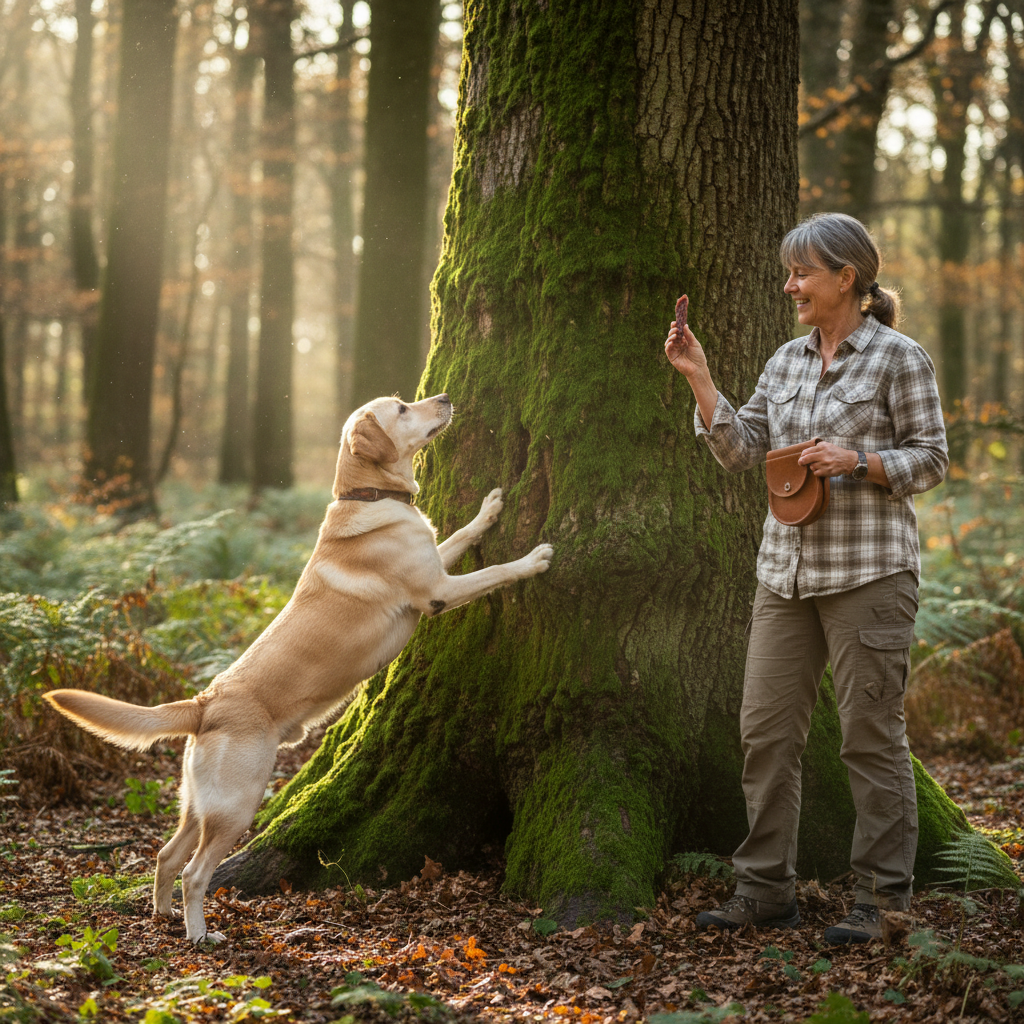
Start practicing the stretch in new locations. This is called ‘generalizing’ the behavior. Ask for a ‘Police Search’ on different surfaces. Try it on:
- A tree trunk at the park: This adds a new texture and environment. Great for a pre-hike warm-up!
- A large, smooth rock: This challenges their balance and paw-grip.
- Your car’s bumper (while parked!): A practical way to get a quick stretch in before or after a car ride.
- A sturdy park bench: This changes the height and angle of the stretch.
When you first try a new surface, go back a few steps in your training. You may need to re-lure the behavior and use lots of rewards until your dog understands that the cue “Search!” means the same thing here as it does at home.
Introduce Dynamic Stretching
Instead of just a static hold, you can add movement. Once your dog is in the ‘Police Search’ position, use a treat to lure their head from side to side, as if they are looking behind them under each ‘armpit’. This adds a wonderful lateral (side-to-side) stretch to their neck and shoulders. Do this slowly and gently, and reward each small movement.
Build a Canine Fitness Routine
The ‘Police Search’ can be one component of a larger fitness routine. You can chain it together with other tricks that double as exercises. For example, you could ask your dog for a sequence like:
- Spin Left & Spin Right: Good for spinal flexibility.
- Play Bow: Another great shoulder and back stretch.
- Police Search: For the deep back and hamstring stretch.
- Paws Up: Having them place their front two paws on a low stool or book to work their core and rear leg muscles.
Creating a mini-routine turns training into a fun, flowing ‘doga’ (dog yoga) session that provides both physical and mental benefits.
Safety First: Always pay attention to your dog’s body language. If they seem hesitant, uncomfortable, or tired, it’s time to end the session. Never force your dog into a stretch. The goal is a fun, voluntary activity.
Oops! Troubleshooting Common ‘Police Search’ Problems
Oops! Troubleshooting Common ‘Police Search’ Problems
Even with the best plan, sometimes you hit a snag. Don’t worry, it’s a normal part of the training process! Most problems have simple solutions. Here are some of the most common challenges and how to work through them with a positive approach.
My dog won’t put their paws on the wall.
This is very common, especially with more cautious dogs. The wall can seem like a weird, unrewarding object at first.
- Solution: Go back to basics. Heavily reward any interaction with the wall. Did they sniff it? Click/Yes and treat! Did they accidentally bump it with a paw? Click/Yes and treat! You can also try a technique called ‘shaping,’ where you reward successive approximations of the final behavior. Reward a head turn toward the wall, then a step toward it, then a paw lift, and so on, until they are touching the wall. Also, make sure your treat is smelly and exciting enough to be worth the effort!
They put their paws up but immediately take them down.
This usually means you’re asking for too much, too soon. They haven’t yet built up the confidence or muscle strength to hold the position.
- Solution: Speed up your reward delivery. Be ready to mark and treat the instant their paws touch the surface. Your goal is to be faster than they are! Once they learn that ‘paws on wall’ equals an immediate treat, they’ll start to hold the position for a fraction of a second longer in anticipation. From there, you can slowly build duration.
My dog won’t lower their head to get the stretch.
Some dogs are hesitant to lower their head, especially if they are a bit anxious or not used to the movement.
- Solution: Break it down even further. Start without the wall. Simply practice luring their head down towards the floor and between their legs while they are standing. Reward any small dip of the head. Once they are comfortable with that motion on its own, reintroduce it while they are at the wall. You can also try using a lickable treat (like peanut butter on a spoon) to keep their head in the lowered position for a bit longer.
They seem bored or get distracted easily.
This is a clear sign that your training session might be too long, the rewards aren’t valuable enough, or the environment is too distracting.
- Solution: First, check your treats. Are they truly high-value? Switch to something more exciting if needed. Second, shorten your sessions. Three 3-minute sessions are often more productive than one 10-minute session. Finally, assess your environment. Are there too many sounds or sights? Move to a quieter room. Always aim to end the session while your dog is still engaged and having fun, leaving them wanting more for next time.
Conclusion
Congratulations! You now have all the tools and knowledge to teach your dog the amazing ‘Police Search’ stretch. More than just a neat trick to show off to your friends, you’re giving your dog the gift of better health, improved flexibility, and a sharper mind. This exercise is a beautiful example of how training can and should be about so much more than just obedience—it’s about communication, trust, and enhancing your dog’s quality of life in a fun and engaging way.
Remember to be patient, keep your sessions positive, and celebrate every tiny step of progress. The journey of teaching this trick is just as rewarding as the final result. You’ll be strengthening your bond with every treat, every click, and every successful stretch. So grab those high-value goodies, find a wall, and start your stretching adventure today. Your dog’s happy, healthy muscles will thank you for it!