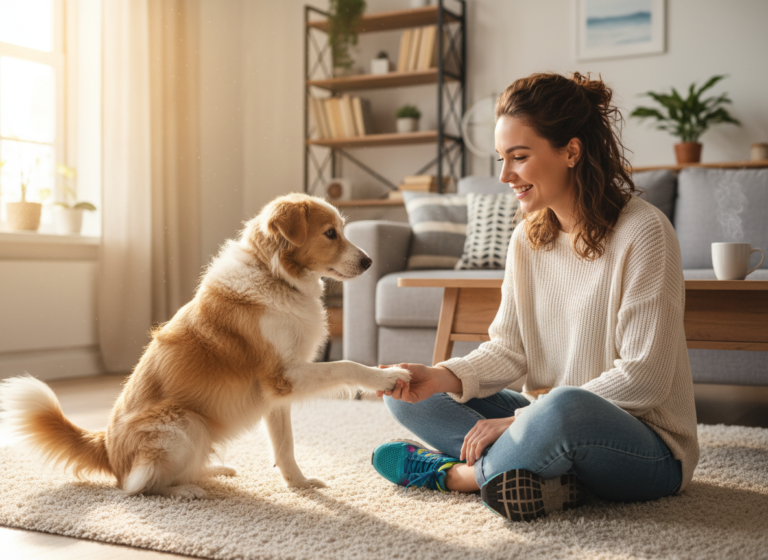
Hey there, fellow dog lover! Are you looking for a new, fun way to connect with your canine companion? Forget the standard ‘sit’ and ‘stay’ for a moment. Let’s teach them something with a little more flair, something that will make your friends say, ‘Wow, how did you do that?’ We’re talking about the fist bump—the ultimate symbol of camaraderie, now for you and your pup!
Teaching your dog to fist bump isn’t just an adorable party trick; it’s a fantastic mental workout for your dog and a brilliant bonding exercise for you both. It reinforces your connection, builds their confidence, and proves that training can be all about fun and games. Best of all? It’s surprisingly easy. Using positive reinforcement, you can have your dog tapping your fist like a pro in just a few short sessions. In this guide, we’ll walk you through everything you need, from the tastiest treats to the exact steps, and even how to troubleshoot any little hiccups along the way. So, grab some snacks (for your dog, of course!), find a comfy spot, and let’s get ready to bump it!
Gearing Up for Success: What You’ll Need
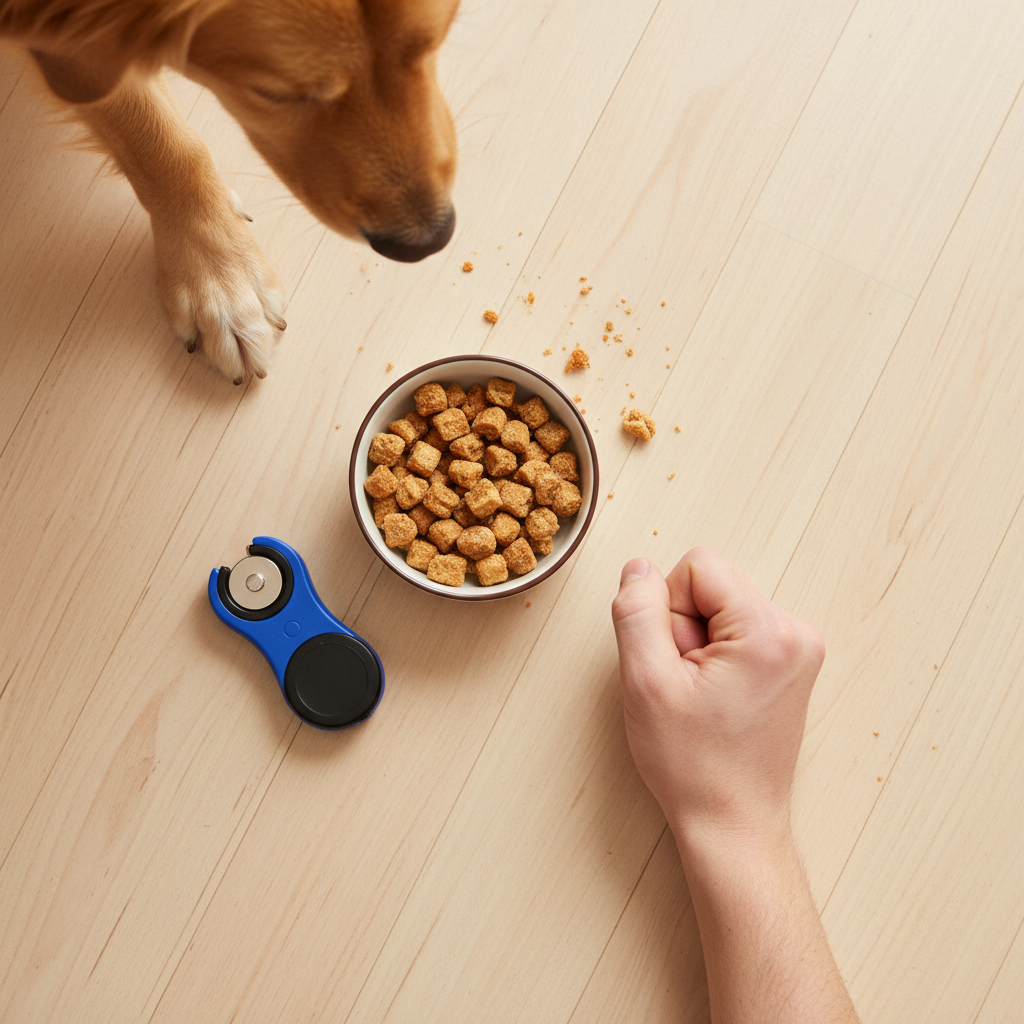
Before we jump into the fun part, let’s make sure we have all our tools for a successful training session. The right setup can make all the difference between a frustrating attempt and a triumphant fist bump! The good news is, you probably have everything you need right at home. Simplicity is key here; we want to set our dogs up for a win.
Your Fist Bump Toolkit:
- High-Value Treats: This is the most important tool! We’re not talking about their regular kibble. We need the good stuff—tiny pieces of cheese, boiled chicken, hot dogs, or their favorite smelly, soft training treats. The goal is to make the reward so exciting that your dog is super motivated to work for it. Remember to keep the pieces small, about the size of a pea, so you can do lots of repetitions without filling them up too quickly.
- A Quiet, Distraction-Free Space: Choose a time and place where your dog can focus. The living room when the kids are home from school or during a lively dinner party is probably not the best setting. A quiet room with the door closed is perfect. Fewer distractions mean more focus on you and the awesome trick you’re about to teach.
- A Clicker (Optional, but Recommended): A clicker is a fantastic tool for marking the exact moment your dog does something right. The ‘click’ is a clear, consistent sound that says, ‘YES! That’s what I wanted!’ followed immediately by a treat. If you don’t have a clicker, no worries! A simple, sharp marker word like ‘Yes!’ or ‘Good!’ works just as well. The key is to use it consistently.
- A Positive Attitude and Patience: This is non-negotiable! Training should always be fun. Bring your happy voice, plenty of praise, and a lot of patience. Your dog feeds off your energy. If you’re excited, they’ll be excited. Remember to keep sessions short—five minutes is a great length to keep them engaged and wanting more.
Expert Tip: End every training session on a high note! It’s always better to stop when your dog has just successfully completed the trick and is still eager to learn, rather than pushing until they’re tired or frustrated. This makes them excited for the next session.
The 5-Minute Fist Bump: A Step-by-Step Guide
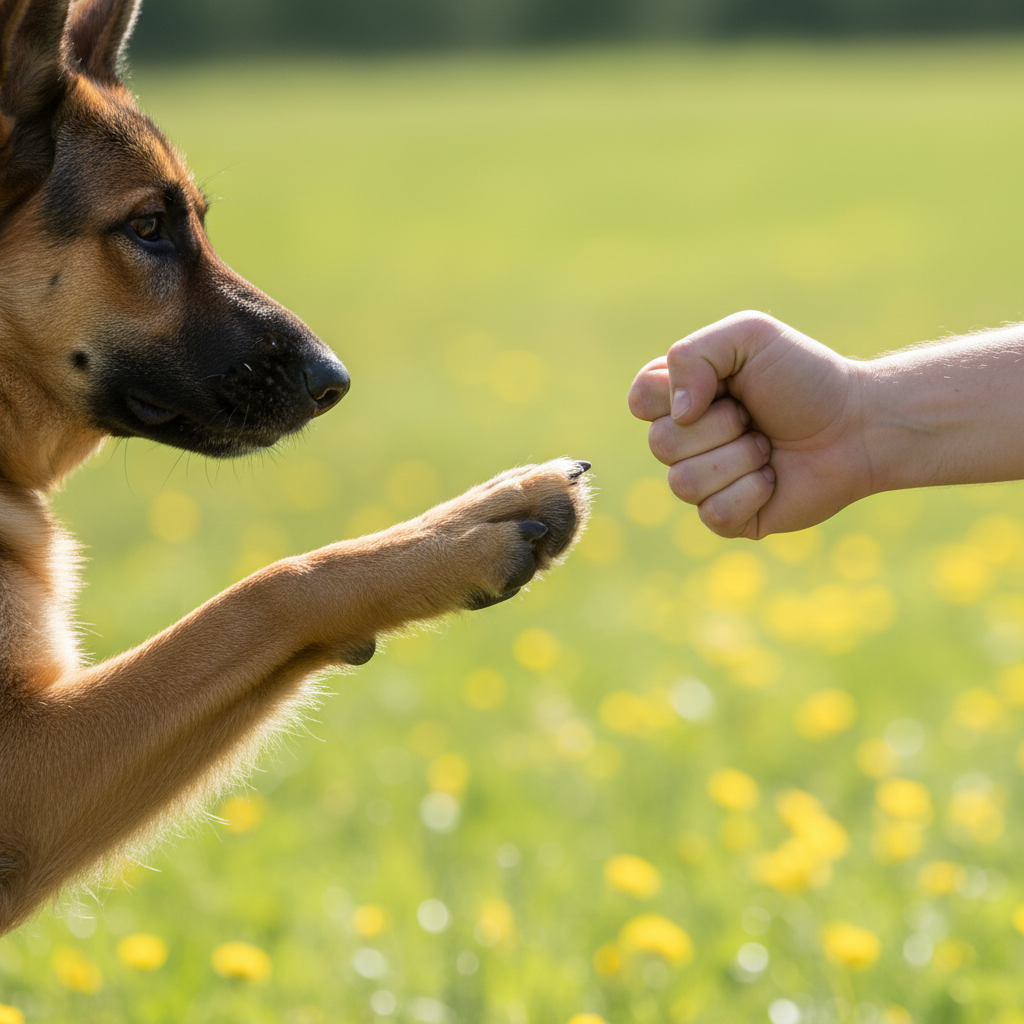
Alright, you’ve got your treats and your positive vibe is on point. It’s go-time! This method is all about shaping your dog’s natural curiosity into a cool new trick. We’ll break it down into five simple steps. Remember to go at your dog’s pace and shower them with praise for every small success.
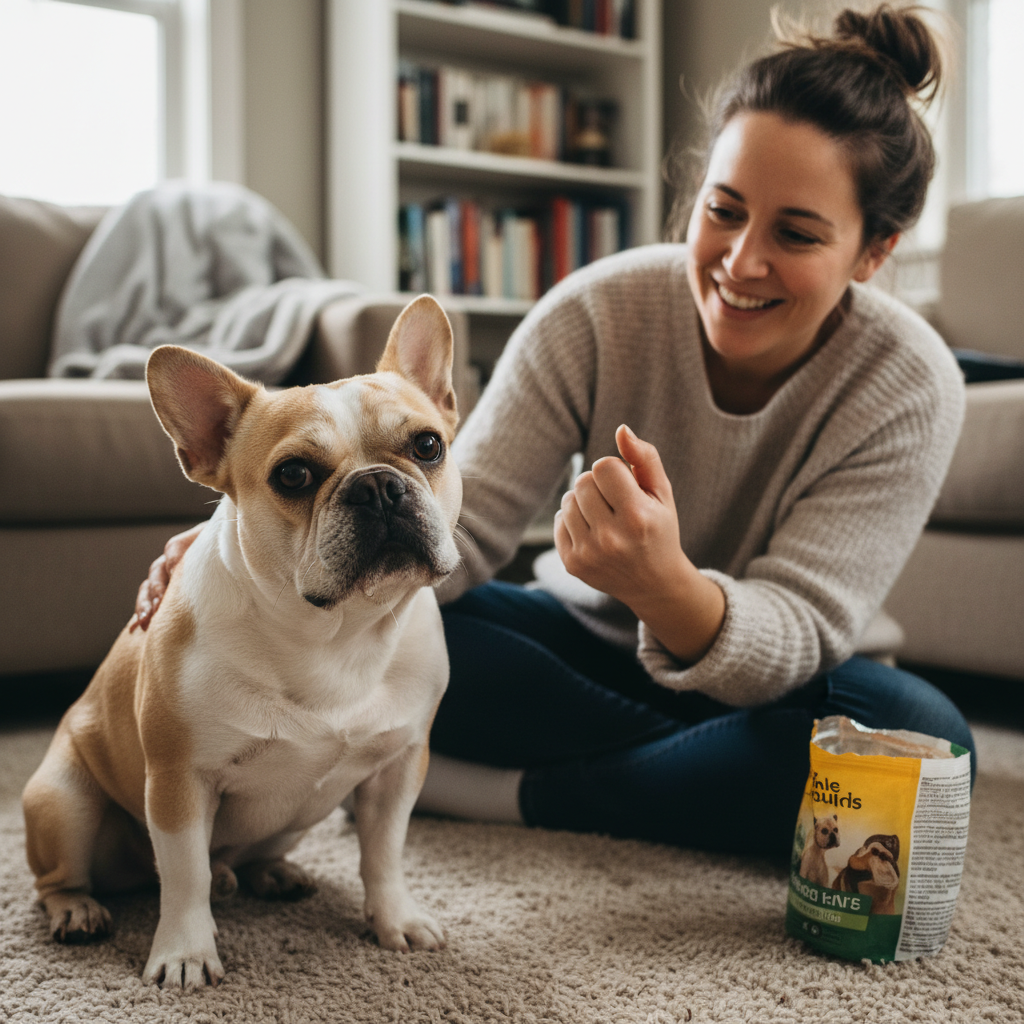
- Step 1: Introduce the Target (Your Fist): Start by simply making a fist and placing it on the floor or holding it low in front of your dog. Don’t say anything yet. Your dog will likely be curious and come over to sniff it. The very instant their nose or paw touches your fist, click your clicker or say ‘Yes!’ and give them a treat from your other hand. This is crucial—the reward shouldn’t come from the fist itself. Repeat this several times until your dog understands that touching the fist makes a good thing happen.
- Step 2: Encourage a Paw Touch: Most dogs will initially nudge with their nose. We want to shape this into a paw touch. If your dog is already using their paw, great! You’re ahead of the game. If not, you can slightly lift your fist off the ground as they approach. This small change in elevation often encourages them to lift a paw to investigate. The moment that paw makes contact—even the slightest tap—click/’Yes!’ and reward enthusiastically. We are now only rewarding for paw touches, not nose boops.
- Step 3: Add the Verbal Cue: Once your dog is consistently and confidently tapping your fist with their paw, it’s time to name the behavior. Right before you present your fist, say your chosen cue in a clear, upbeat voice. Popular choices are ‘Fist Bump,’ ‘Bump It,’ or ‘Pound It.’ Say the cue, present your fist, and when they tap it, click/praise and reward. Repetition is key here to build the association between the words and the action.
- Step 4: Fade the Lure and Raise the Fist: Now we want the trick to look more like a real fist bump. Gradually start holding your fist higher off the ground, at a more natural ‘fist bump’ height. Your dog will have to reach a bit more to make contact. Continue to use your verbal cue, and reward every successful touch. At this stage, ensure you are presenting an empty fist every time. The trick is the action of touching your hand, not getting a treat out of it.
- Step 5: Practice, Perfect, and Party!: You’ve done it! Your dog now understands what ‘Fist Bump’ means. The final step is to practice in short, fun bursts throughout the day. You can start to ‘generalize’ the trick by practicing in different rooms, in the backyard, or with very mild distractions. Keep it positive, and always end with a ‘jackpot’—a few extra treats and lots of praise for a job well done!
Oops! Troubleshooting Common Fist Bump Hiccups
Sometimes, even with the best treats, our furry students can get a little confused. That’s totally normal! Training is a two-way street, and sometimes we need to adjust our communication. If you hit a snag, don’t worry. Here are some common issues and how to solve them with a bit of patience.
Common Problems & Simple Solutions:
- The Problem: My dog keeps nibbling or mouthing my hand.
The Solution: This usually happens because your dog thinks the treat is inside your fist, or they’re just getting a bit overexcited. The key is to never reward the mouthy behavior. If they nibble, pull your hand back for a second without saying anything. Present it again. Only click/reward for a gentle paw touch. Ensure the treat is always delivered from your other hand, well away from the fist-bumping action. - The Problem: My dog just sniffs my hand and won’t lift a paw.
The Solution: Go back a step! Your dog might not have made the connection yet. Try holding a treat between your fingers and closing your fist over it. Let them sniff and lick. They will likely start to paw at your hand to get to the treat. The moment a paw touches, open your hand and let them have it. After a few successes, try again with an empty fist and reward from the other hand. You can also try gently tickling the top of their paw to encourage them to lift it. - The Problem: My dog was doing great, but now seems bored.
The Solution: This is a classic sign that the training session has gone on too long or the reward isn’t exciting enough. Always aim to end your session while your dog is still having fun. Cut your training time down to just 1-2 minutes per session, but maybe do a few sessions throughout the day. You could also try ‘upping the ante’ with an even more delicious treat they don’t get often. - The Problem: My dog only offers one paw.
The Solution: This isn’t really a problem—it’s a preference! Most dogs have a dominant paw, just like we have a dominant hand. There’s no need to force them to use the other one. However, if you’d like to teach them to use both, you can simply present your fist on the opposite side of their body, which makes it more natural for them to use the other paw. Treat it like a brand new trick and reward any effort to use the non-dominant paw.
Why Trick Training is More Than Just Fun and Games
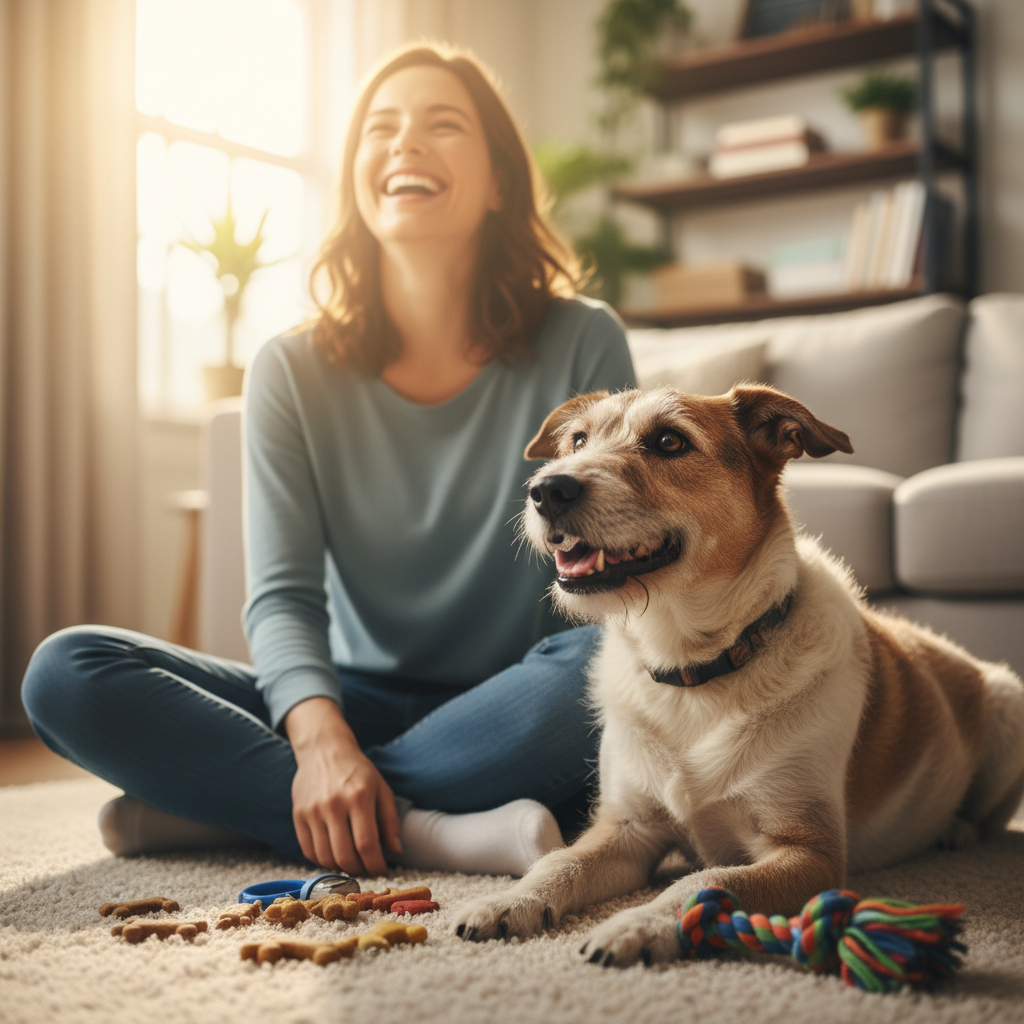
Sure, a fist bump is an undeniably cute trick that will impress your friends, but the benefits of trick training go so much deeper than that. Every time you and your dog work together on a new skill, you’re doing so much more than just teaching a command. You’re building a stronger, healthier, and happier relationship.
The Deeper Benefits of a Simple Trick:
- Strengthens Your Bond: Shared activities and clear, positive communication are the bedrock of any strong relationship. Trick training is a fantastic way to spend quality, focused time together. Your dog learns to trust you and look to you for guidance, strengthening the bond between you every step of the way.
- Provides Crucial Mental Stimulation: Think of trick training as a puzzle for your dog’s brain. It challenges them to think, problem-solve, and learn. A mentally stimulated dog is a happy dog, and is much less likely to engage in destructive boredom-based behaviors like chewing on furniture or excessive barking.
- Builds Confidence: For shy or anxious dogs, learning new skills can be a huge confidence booster. Each successful fist bump and every bit of praise that follows tells them they are smart, capable, and can successfully navigate challenges. You’ll see this newfound confidence carry over into other areas of their life.
- Improves Overall Obedience: The skills learned during trick training—like focus, listening, and offering behaviors—are foundational to all other types of training. A dog who loves to learn tricks is often a dog who is more engaged and eager to please during regular obedience training, making things like ‘come’ and ‘stay’ easier to master.
Remember, it’s not about creating a perfectly obedient robot. It’s about opening a line of joyful communication with another species and celebrating the incredible intelligence of the dogs we share our lives with. Every ‘fist bump’ is a tiny conversation and a shared success.
Conclusion
And there you have it! In just a few easy steps, you’ve unlocked one of the most charming tricks in the book. You’ve learned how to prepare for success, how to break down the training into bite-sized pieces, and how to navigate any little bumps in the road. More importantly, you’ve spent quality time engaging your dog’s mind and strengthening the incredible bond you share.
Remember that every dog learns at a different pace, so be patient, stay positive, and celebrate every little bit of progress. The real prize isn’t the finished trick, but the fun you have learning together. Now go out there and show off your pup’s new skill. You’ve both earned those bragging rights! Happy training!